Boeing 747-400M (Combi)
The 747-400M Combi carries passengers and containerised cargo on the same main deck.
The 747-400M is the last and most numerous 747 Combi - 61 built - and the final expression of an idea that had been in the family since 1975: carry passengers and freight on the same main deck, and change the split whenever the market does.
How it works
A large side cargo door sits behind the left wing. Passenger seats in the rear main deck can be removed and cargo tracks installed, letting the airline carry containers or pallets on the main deck behind the passenger cabin. A locked partition separates the two, accessible only by the crew.
Roller trays in the aft floor take 8-foot-wide containers or pallets up to 20 feet long - any container or pallet in standard aviation use.
The turnaround trick
The Combi's cleverest feature is one almost nobody notices: it can be turned round in the same time as an ordinary passenger 747.
Main-deck cargo loading happens aft, in a part of the aircraft where nothing else is going on, while passengers board through the forward doors. The two operations do not interfere with each other at all.
That works because of the 747's landing gear layout. The fore-and-aft arrangement of the wing and body gear gives enough stability to load heavy freight into the rear fuselage without the aircraft sitting back on its tail - something a conventionally geared aircraft could not do safely.
What it carried
The list is unusual for a passenger aircraft: automobiles, small boats, heavy machinery, drilling equipment, and small aircraft and helicopters. Environmental control in the cargo area allowed live animals, perishable food and cut flowers, with the passenger cabin conditioned separately.
Improvements over earlier Combis
The -400M added extra fire protection, the two-crew digital flight deck of the 747-400, advanced engines, wingtip extensions with winglets and new interiors.
The fire protection was not incidental. Main-deck cargo on a Combi sits on the same deck as passengers, and after the loss of a South African Airways 747-200M to an in-flight cargo fire in 1987, the standards applied to those compartments were tightened substantially.
The stretched upper deck also matters here more than on a normal airliner: on the -300 and -400 Combis it accommodates 44 more passengers than the standard 747-200 Combi, recovering upstairs some of the main-deck seating given over to freight.
KLM was the launch customer and the archetypal operator. Across the whole family, more than 30 customers flew a total of 144 747 Combis, 58 of them -400s.
Why it ended
Two forces closed the configuration down. Compliance costs for main-deck fire suppression rose, and the economics of splitting an aircraft between two jobs stopped competing with running dedicated freighters alongside dedicated passenger aircraft.
The last passenger-carrying 747 Combis left service in the 2010s. Note also that the 747-400C does not exist - the "C" is a common mix-up with this aircraft's "M".
| Manufacturer | Boeing |
|---|---|
| Variant | 747-400M (Combi) |
| Introduced | 1975 |
| Number built | 61 |
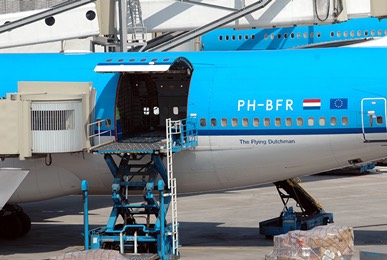
Freight going in through the main-deck side door, aft of the wing, while passengers board forward. 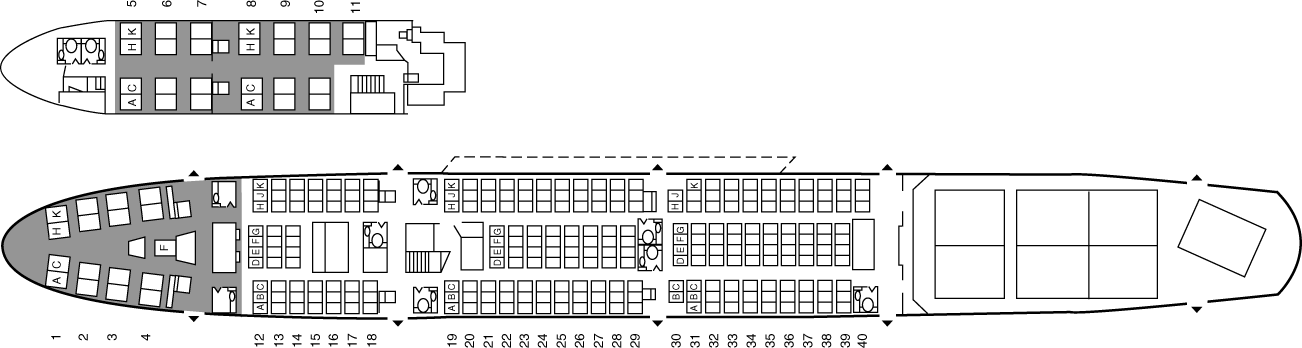
The layout in plan: seats forward, pallets aft, and an upper deck given over entirely to passengers.Boeing 
An operator's own Combi layout, as flown by Asiana.

Video
Sources
Facts on this page are checked against the primary and institutional references below.
Related topics

Asiana 991, 28 July 2011
A 747 freighter was destroyed by an in-flight cargo fire in 18 minutes, helping to force new rules on carrying lithium batteries by air.
The engine family that spanned four decades of the 747
The General Electric CF6 powered 747s from the -200 through the -400ER, beginning with the first CF6 747 ordered by KLM in 1975.
The 747 Combi and the fire rule that caught up with it
The 747 Combi carried passengers and freight on one deck under 1940s-era fire rules. After South African Airways Flight 295, those rules were rewritten.
KLM 747 Seat Maps
KLM's Boeing 747 cabins - the 353-seat 1971 -200, the 408-seat -400 and the 268-seat -400M Combi that closed the airline's jumbo era in 2020.
KLM Boeing 747 fleet history
KLM operated 52 passenger Boeing 747s from 1971 to 2021, including the largest fleet of 747-400M Combi conversions.

PH-BFB: City of Bangkok
PH-BFB served KLM from 1989 before a spectacular 2019 move to Corendon's Amsterdam hotel grounds; its history now includes a 2025 artwork project.
More in Boeing 747 Family
Boeing 747 Family
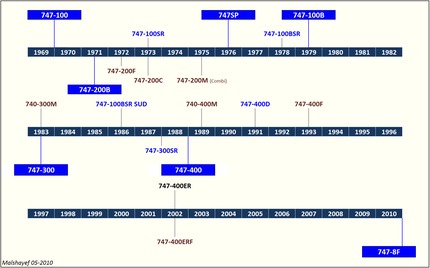
Every Boeing 747 variant built between 1968 and 2023 - the 747-100, -200, -300, -400 and 747-8, with freighter, combi and short-range models explained.
Boeing 747 Production Data
Download Boeing 747 production totals by generation, with a transparent method and links to Boeing's final programme record and technical documents.
747-100
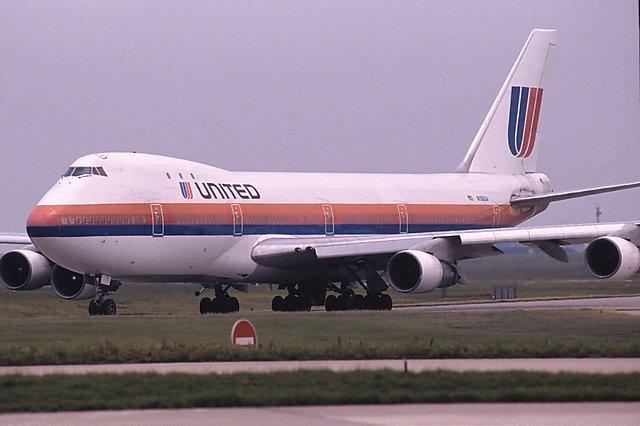
The original Boeing 747-100 entered service in 1970 with six upper-deck windows and a lounge; later aircraft offered a ten-window upper deck.
747-100B
The 747-100B added a stronger airframe and undercarriage and a 750,000 lb maximum takeoff weight. Only Iran Air and Saudia took delivery.
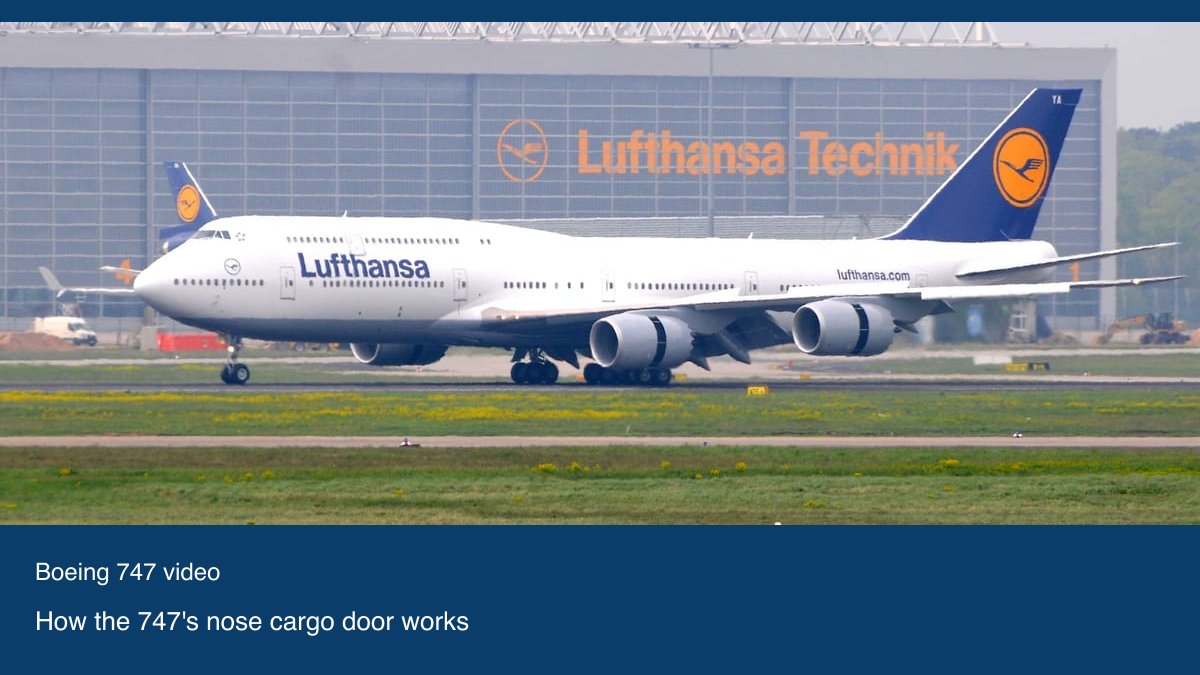
747-100F
Freighter specification for the Boeing 747-100F, covering main-deck and belly cargo volumes, pallet counts and upper-deck crew lounge options.
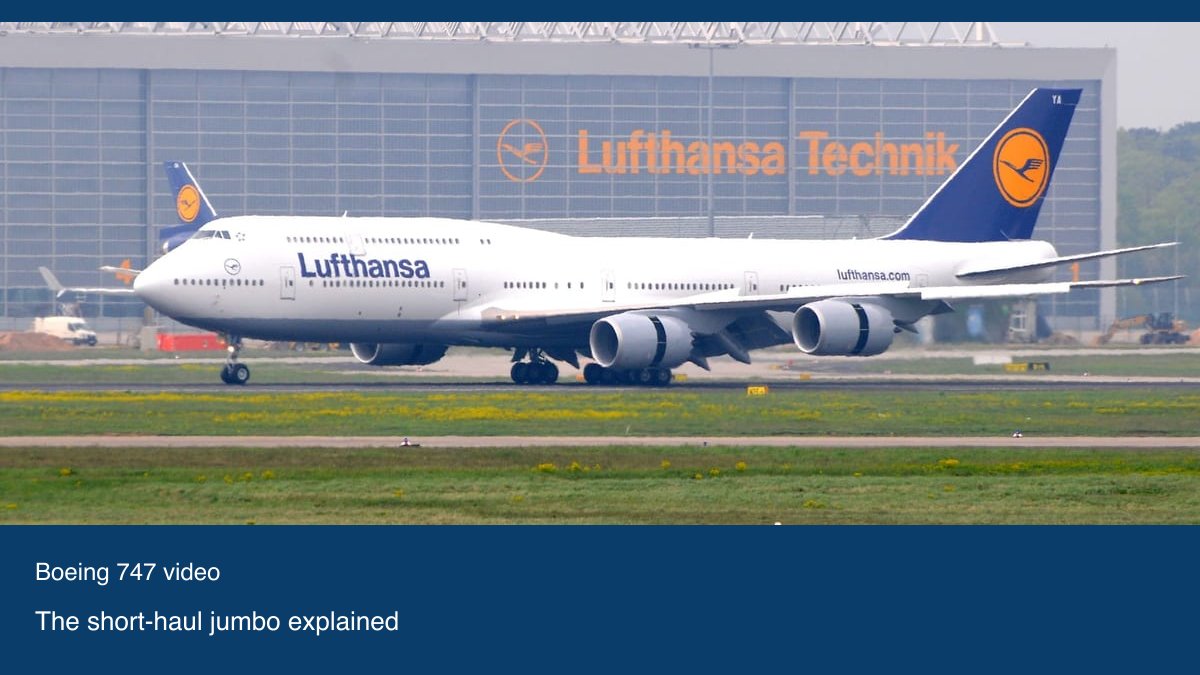
747-100SR
Built for Japanese domestic routes, the 747-100SR traded fuel capacity for seats, carrying up to 550 passengers on short high-frequency sectors.