Special Boeing 747s
Beyond the airlines, 747s have carried presidents, space shuttles, telescopes, fire retardant, aeroplane parts and a laser.

The 747 was designed as an airliner and a freighter. What made it useful for everything else was the combination the airlines never especially wanted: an enormous fuselage, four engines, transcontinental range, and a structure strong enough to be cut about without falling apart.
That is why a type designed in the 1960s ended up carrying a Space Shuttle, a telescope, a laser, 24,000 gallons of fire retardant, entire sections of other aeroplanes, and several heads of state.
The categories
Heads of state. The VC-25A has carried American presidents since 1990, and in 2026 was joined by the VC-25B Bridge, a 747-8 given to the United States by Qatar. Other governments have flown their own VIP 747s.
Command and control. The E-4B is a hardened flying command post, designed to keep working when ground facilities cannot.
Outsize cargo. The Dreamlifter was rebuilt with a swollen fuselage and a swing tail to carry 787 assemblies - an aeroplane whose cargo is other aeroplanes.
Science. SOFIA carried an infrared telescope and flew with a hole open in the side of the fuselage.
Space. The Shuttle Carrier Aircraft ferried Space Shuttle orbiters across the United States on their backs.
Firefighting. The Evergreen Supertanker and its successor the Global SuperTanker could drop tens of thousands of gallons of retardant in a single pass.
Weapons. The YAL-1 Airborne Laser carried a megawatt-class chemical laser intended to shoot down ballistic missiles in their boost phase.
Heads of state, beyond Air Force One. A dozen governments have flown the 747 as VIP transport - Saudi Arabia, Oman, Brunei, Morocco, Qatar, Kuwait, Bahrain, Turkey, Korea and, until 2019, Japan.
Engine development. Every major engine maker has flown new engines on a converted 747 testbed, because three known engines can bring the aircraft home.
A tour bus. Iron Maiden chartered a 747-400 as Ed Force One, flown by the band's own singer.
The ones that stayed on paper. Several never flew: the 747 AAC flying aircraft carrier, the CMCA cruise missile carrier, the KC-33A tanker, the C-33 military airlifter and the 747 ASB.
Why so many were conversions
Almost none of these were built as special-mission aircraft from scratch. Most began as airliners or freighters and were converted, often decades into their lives - SOFIA was a former Pan Am and United 747SP, the Shuttle Carriers were an ex-American Airlines 747-100 and an ex-Japan Air Lines 747-100SR, and the Supertankers were converted freighters.
That is a consequence of how many were built. With 1,574 airframes produced and a long service life, there was a steady supply of sound aircraft coming off airline fleets at a fraction of new cost - and enough structural margin left in them to justify serious modification.
Now that production has ended, that supply is finite. Any future special-mission 747 has to come from an airframe that already exists.
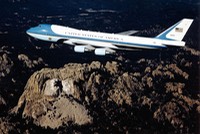
The VC-25A, better known by its call sign when the President is aboard.WikiMedia 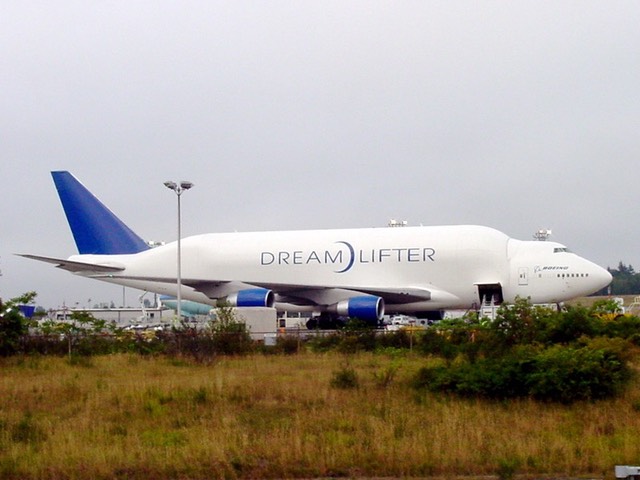
The Dreamlifter, rebuilt to swallow 787 fuselage barrels and wings.Boeing 
The YAL-1, which carried a megawatt-class laser in its nose.WikiMedia


Frequently asked questions
- What is the most unusual Boeing 747 ever built?
- Reasonable candidates are the Shuttle Carrier Aircraft, which flew with a Space Shuttle orbiter bolted to its back, and SOFIA, which flew with a 2.5 m telescope behind a door that opened in flight at altitude.
- Which special 747s are still flying?
- The Dreamlifter fleet still carries Boeing 787 assemblies, the E-4B airborne command post remains in USAF service, and the presidential fleet continues - now including a 747-8 that entered service in 2026.
Sources
Facts on this page are checked against the primary and institutional references below.
- Boeing 747 - Wikipedia
- Air transports of heads of state and government - Wikipedia
Related topics
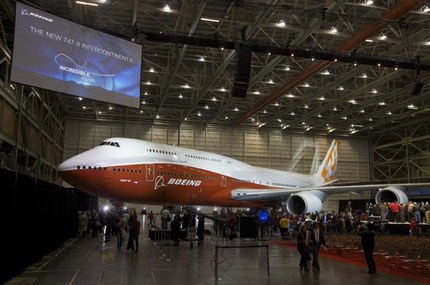
Photo Album
Photographs of every major Boeing 747 variant and special-mission jumbo - airline service, freight, Air Force One, the Dreamlifter and SOFIA.
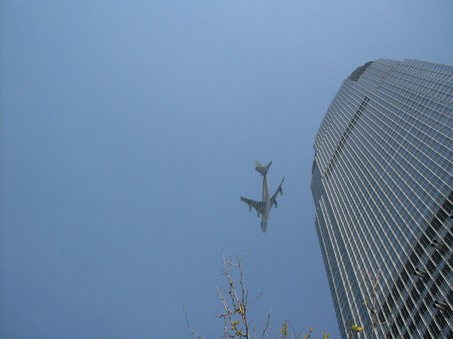
Air Force One Buzzing Over New York
In April 2009 a VC-25 flew low over Manhattan for a photo shoot with no public warning, sending office workers into the streets. An official resigned.
American Airlines
American was among the first US carriers to fly the 747, in March 1970, and one of its 747-100s became NASA's Shuttle Carrier Aircraft.

Qatar 747-8 enters service as Air Force One
The Boeing 747-8 given to the United States by Qatar flew its first presidential mission on 1 July 2026, designated the VC-25B Bridge.
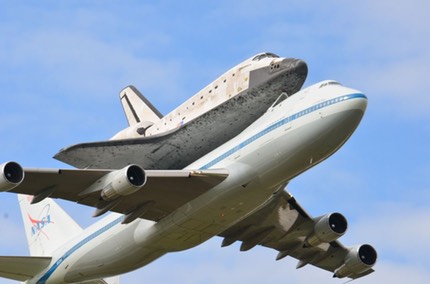
Space Shuttle Discovery's Final Flight on a Boeing 747
Space Shuttle Discovery made its final flight atop NASA's modified Boeing 747 Shuttle Carrier Aircraft on the way to retirement.
The 747 on screen
From the Airport disaster films to Air Force One and Executive Decision, the 747 is the most filmed airliner ever built.
In this section
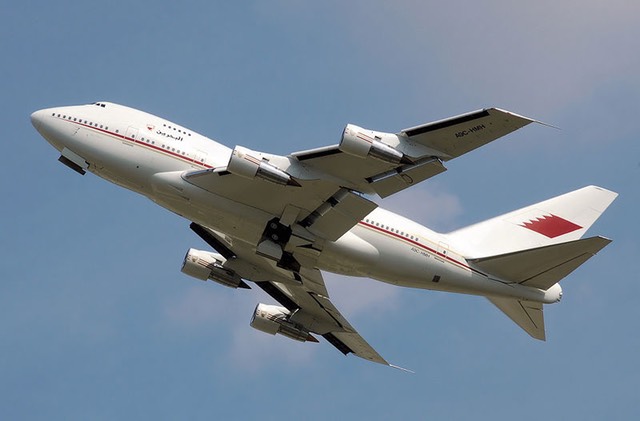
The 747 ASB
Boeing's 1986 answer to the Airbus A340 and MD-11 - a shortened 747 with 747-400 technology. It was never built.
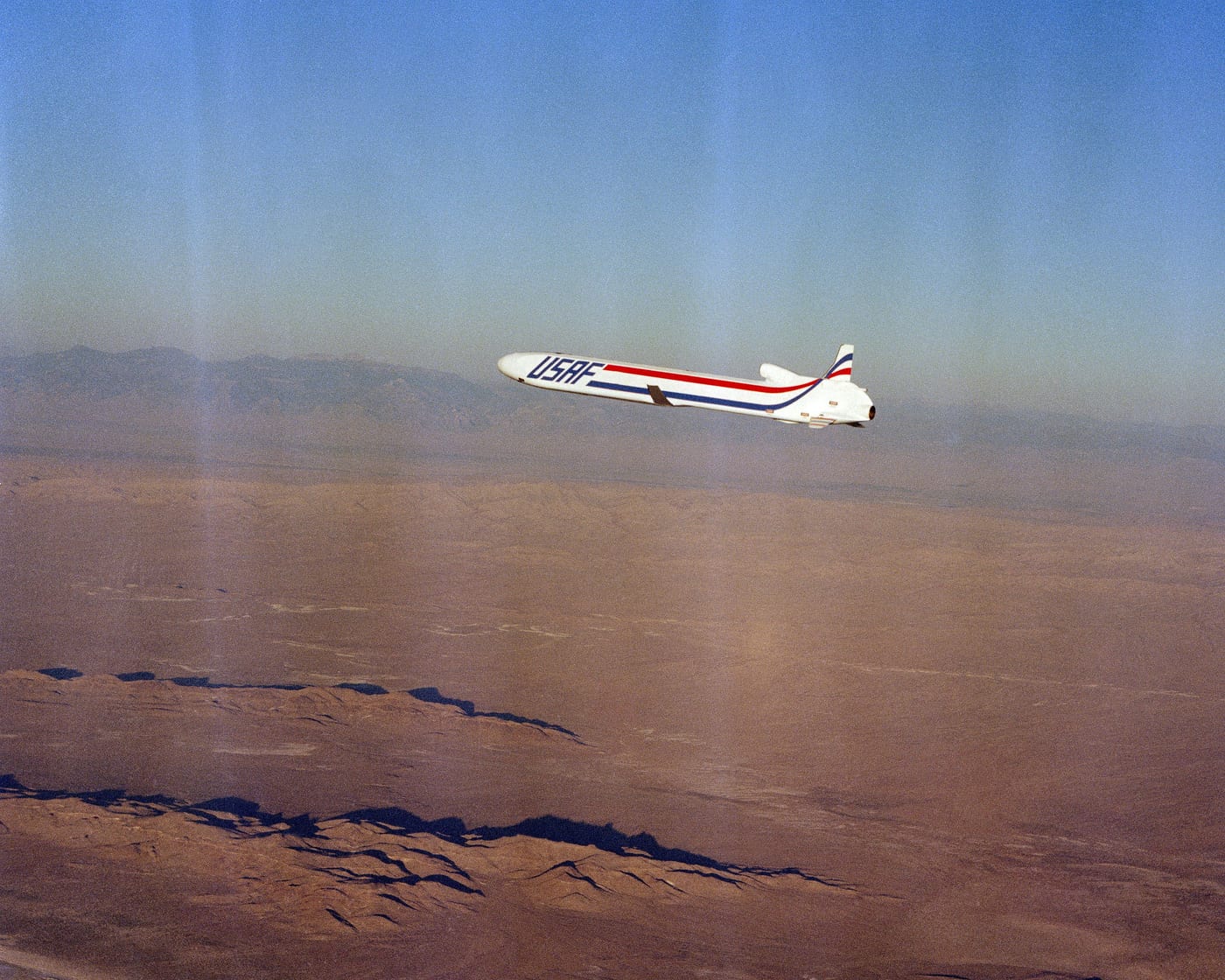
The 747 CMCA
A proposed USAF Boeing 747 armed with up to 72 cruise missiles on rotary launchers, studied during B-1 development. It was never built.
The Boeing Dreamlifter
Four 747-400s rebuilt with a swollen fuselage and a swing tail to carry Boeing 787 wings and fuselage barrels between factories.
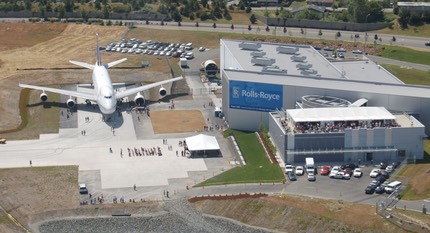
The 747 as a flying testbed
General Electric, Rolls-Royce and Pratt & Whitney all fly engines on 747s - because a four-engined aircraft can carry a strange engine safely.
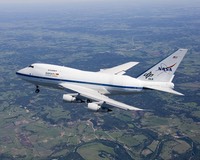
SOFIA - the flying observatory
A former airline 747SP carrying a 2.5 m infrared telescope, flying above the water vapour that blocks infrared light from the ground. Retired 2022.
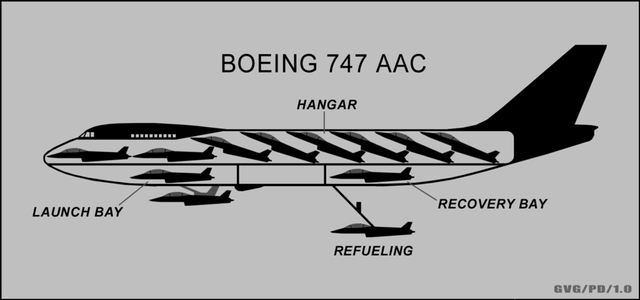
The Boeing 747 AAC
A 1970s study for a 747 flying aircraft carrier, launching and recovering up to ten parasite microfighters in flight. It was never built.

Ed Force One - Iron Maiden's 747
Iron Maiden toured six continents in a chartered 747-400 flown by their own singer, who took a type rating to do it.
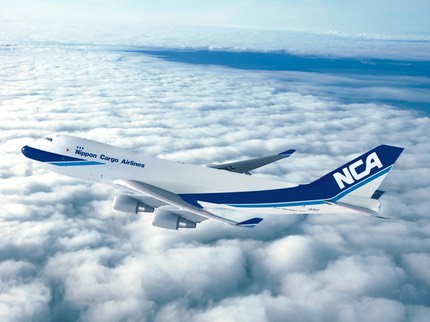
The Boeing C-33
A proposed military 747-400 freighter meant to supplement the C-17 fleet. Congress studied it, then bought more C-17s instead.
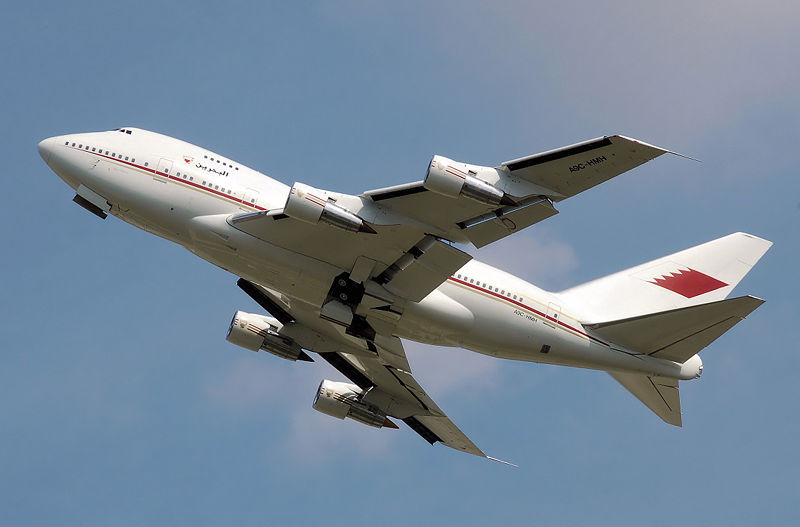
The head-of-state 747s
Beyond Air Force One - the 747s flown by Saudi Arabia, Oman, Brunei, Morocco, Qatar, Kuwait, Bahrain, Turkey, Korea and, until 2019, Japan.
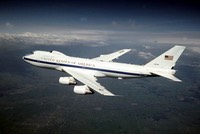
The Boeing E-4B "Nightwatch"
A hardened Boeing 747-200B built to serve as a survivable national command post, able to direct US forces when ground facilities cannot.

The Global SuperTanker
A 747-400 converted to drop 19,600 US gallons of retardant - the largest firefighting aircraft ever flown, retired in 2021.
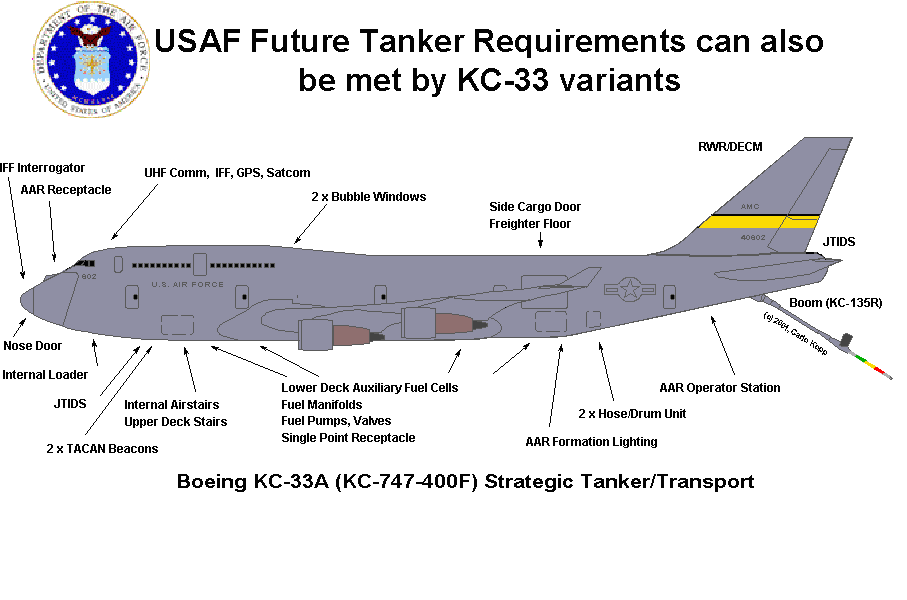
The Boeing KC-33A
A proposed 747 aerial refuelling tanker, bid against the DC-10-30 in the 1970s Advanced Cargo Transport Aircraft competition. It lost.
Boeing VC25 Air Force One
The VC-25A is the presidential Boeing 747-200B. A Qatar-gifted 747-8 now flies as an interim Air Force One while Boeing's VC-25B pair is completed.

VC-25B Bridge: the Qatar-gifted Boeing 747-8
A Boeing 747-8 given to the United States by Qatar in 2025, converted by L3Harris and flying as an interim Air Force One since July 2026.

The 747 Supertanker
A Boeing 747 converted into the largest aerial firefighting aircraft ever flown, able to drop tens of thousands of gallons of retardant in a single pass.
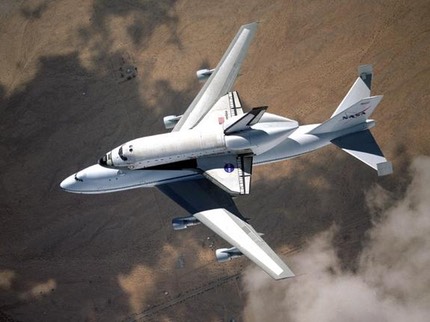
The Shuttle Carrier Aircraft
Two modified Boeing 747s that carried Space Shuttle orbiters across America on their backs, from 1977 until the programme ended.
The YAL-1 Airborne Laser
A modified 747-400F carrying a megawatt-class chemical laser in its nose, built to destroy ballistic missiles in boost phase. Cancelled 2011, scrapped 2014.