Boeing 747-300M
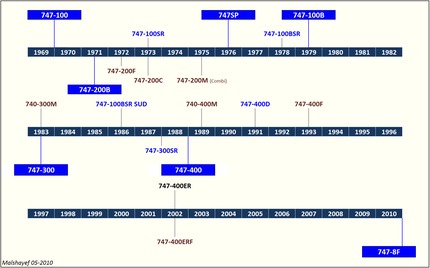
The 747-300M combined rear main-deck cargo with the stretched upper deck.
The 747-300M is a Combi built on the 747-300 airframe: freight in the rear of the main deck behind a movable partition, passengers forward, and a side cargo door behind the wing - the same arrangement as the 747-200M, but with the stretched upper deck.
21 were delivered.
Why the stretched upper deck helped a Combi more than anyone
On a Combi, main-deck floor space is the thing being fought over. Every pallet position aft is a block of seats you cannot sell.
The stretched upper deck changes that arithmetic. It adds roughly 44 seats' worth of cabin above the main deck, in a space that cargo can never use. So on a -300M the seats displaced by freight are partly recovered upstairs - which is why a -300M carried meaningfully more passengers than a -200M with the identical cargo load.
That is a neat illustration of why the SUD mattered commercially, and not just visually.
Operators and fate
The -300M went to airlines running routes with strong cargo demand and moderate passenger numbers - the same logic that drove every 747 Combi. KLM was the archetypal Combi operator across the whole family.
The configuration is now extinct in passenger service. The main-deck cargo compartment on a Combi sat on the same deck as passengers, and after the loss of a 747-200M to an in-flight cargo fire in 1987 regulators tightened fire-suppression requirements considerably. The cost of compliance, combined with the general shift to dedicated freighters, ended the layout.
Related
| Manufacturer | Boeing |
|---|---|
| Variant | 747-300M |
| Number built | 21 |
Video
Sources
Facts on this page are checked against the primary and institutional references below.
More in Boeing 747 Family
Boeing 747 Family
Every Boeing 747 variant built between 1968 and 2023 - the 747-100, -200, -300, -400 and 747-8, with freighter, combi and short-range models explained.
Boeing 747 Production Data
Download Boeing 747 production totals by generation, with a transparent method and links to Boeing's final programme record and technical documents.
747-100
The original Boeing 747-100 entered service in 1970 with six upper-deck windows and a lounge; later aircraft offered a ten-window upper deck.
747-100B
The 747-100B added a stronger airframe and undercarriage and a 750,000 lb maximum takeoff weight. Only Iran Air and Saudia took delivery.
747-100F
Freighter specification for the Boeing 747-100F, covering main-deck and belly cargo volumes, pallet counts and upper-deck crew lounge options.
747-100SR
Built for Japanese domestic routes, the 747-100SR traded fuel capacity for seats, carrying up to 550 passengers on short high-frequency sectors.