Boeing 747 specifications compared
Dimensions, weights, capacity, range and engines for every 747 generation, including the shortened 747SP and the stretched 747-8.

Every 747 generation compared. Figures are for a representative build of each variant; individual aircraft varied with engine choice and customer options, and maximum weights in particular were raised over a variant’s production life.
Dimensions
| Length | Wingspan | Height | Wing area | |
|---|---|---|---|---|
| 747-100 | 231 ft 10 in (70.66 m) | 195 ft 8 in (59.64 m) | 63 ft 5 in (19.33 m) | 5,500 sq ft (511 m²) |
| 747SP | 184 ft 9 in (56.31 m) | 195 ft 8 in (59.64 m) | 65 ft 5 in (19.94 m) | 5,500 sq ft (511 m²) |
| 747-200 | 231 ft 10 in (70.66 m) | 195 ft 8 in (59.64 m) | 63 ft 5 in (19.33 m) | 5,500 sq ft (511 m²) |
| 747-300 | 231 ft 10 in (70.66 m) | 195 ft 8 in (59.64 m) | 63 ft 5 in (19.33 m) | 5,500 sq ft (511 m²) |
| 747-400 | 231 ft 10 in (70.66 m) | 211 ft 5 in (64.44 m) | 63 ft 8 in (19.41 m) | 5,650 sq ft (525 m²) |
| 747-8 | 250 ft 2 in (76.25 m) | 224 ft 5 in (68.40 m) | 63 ft 6 in (19.35 m) | 5,960 sq ft (554 m²) |
Only two variants ever changed the fuselage length: the 747SP had nearly 48 ft removed, and the 747-8 had 18 ft 3 in added. Everything else in the family is the same length as the original.
The wingspan tells the other story. The classics all share one wing. The 747-400 added 6 ft wingtip extensions and 6 ft winglets; the 747-8 replaced the wing entirely with a new design using raked wingtips.
Weights
| Max takeoff weight | Notes | |
|---|---|---|
| 747-100 | 735,000 lb (333 t) | As first certified |
| 747-100B | 750,000 lb (340 t) | Strengthened airframe and gear |
| 747SP | 700,000 lb (318 t) | Lighter airframe, more fuel per seat |
| 747-200 | up to 833,000 lb (378 t) | |
| 747-300 | 833,000 lb (378 t) | Same weights as the -200 |
| 747-400 | 875,000 lb (396.9 t) | Empty weight 404,600 lb with PW4000s |
| 747-400ER / ERF | 910,000 lb (413 t) | The increase went to fuel |
| 747-8 | 987,000 lb (447.7 t) | Heaviest aircraft ever built in the US |
Two figures often quoted for the 747-8 are earlier ones: 970,000 lb was the programme design weight and 975,000 lb the initial freighter figure. The certified weight is 987,000 lb.
The 747-8F spent its weight increase differently from the 747-400ERF: the ERF’s went almost entirely into fuel, buying range, while the -8F’s went into zero-fuel weight, buying payload. That single decision is why the newer aircraft carries more but flies less far.
Capacity and performance
| Passengers (3-class) | Range | Cruise | |
|---|---|---|---|
| 747-100 | 366 | ~4,620–5,300 nmi | Mach 0.84 |
| 747SP | 276 | 5,830 nmi (10,800 km) | Mach 0.86 |
| 747-200B | 366 | ~6,560 nmi | Mach 0.84 |
| 747-300 | 400 | ~6,700 nmi | Mach 0.85 |
| 747-400 | 416 | 7,285 nmi (13,490 km) | Mach 0.855 |
| 747-400D | 568 (2-class), 660 max | Domestic sectors only | Mach 0.855 |
| 747-8I | 467 | 7,730 nmi (14,310 km) | Mach 0.855 |
| 747-8F | 308,000 lb payload | 4,120–4,390 nmi | Mach 0.845 |
Two rows deserve a second look. The 747SP carried the fewest passengers and flew the furthest of its generation — the entire point of the variant. The 747-400D carried the most people of any 747 ever certified and had no range to speak of, because it was built for one-hour sectors in Japan.
Freighter range is quoted at maximum payload, not maximum fuel, which is why the -8F’s figure looks so much lower than the passenger aircraft’s. A freighter’s useful range is the range it has when full.
Engines
| Options | Thrust | |
|---|---|---|
| 747-100 | Pratt & Whitney JT9D | ~46,000–50,000 lbf |
| 747-200 / -300 | JT9D, GE CF6, Rolls-Royce RB211 | ~46,500–54,750 lbf |
| 747-400 | PW4000, CF6-80C2, RB211-524G/H | 56,500–63,300 lbf |
| 747-8 | GE GEnx-2B67 only | 66,500 lbf |
More on all of them on the engines page, including why offering three engine choices on the -200 mattered more commercially than any technical improvement.
Fuel
| Capacity | |
|---|---|
| 747-400 | 57,285 US gal (216,840 L) |
| 747-400ER | plus one or two 3,240 US gal body tanks |
| 747-8I | 63,034 US gal (238,610 L) |
The fuel system page covers the tank layout, transfer and jettison.
Production
| Variant | Built |
|---|---|
| 747-100 | 168 |
| 747SR (all) | 29 |
| 747-100B | 9 |
| 747SP | 45 |
| 747-200 (all) | 393 |
| 747-300 (all) | 81 |
| 747-400 (all) | 694 |
| 747-8 (all) | 155 |
| Total | 1,574 |
Those figures sum exactly to the 1,574 aircraft built between 1968 and the final delivery in January 2023.
The same totals are available in CSV and JSON on the Boeing 747 production data page.
Related
- The 747 family — every variant in detail
- 747 systems — how the aircraft works
- The 747-8 compared to the 747-400
Frequently asked questions
- How long is a Boeing 747?
- Most 747s are 231 ft 10 in (70.66 m) long — the -100 through the -400 all share that length. The 747-8 is longer at 250 ft 2 in (76.25 m), and the 747SP is much shorter at 184 ft 9 in (56.31 m).
- What is the wingspan of a Boeing 747?
- 195 ft 8 in (59.64 m) on the classics, 211 ft 5 in (64.44 m) on the 747-400 with its wingtip extensions and winglets, and 224 ft 5 in (68.40 m) on the 747-8, which has an entirely new wing.
- How much does a Boeing 747 weigh?
- Maximum takeoff weight rose from 735,000 lb (333 t) on the earliest 747-100 to 987,000 lb (447.7 t) on the 747-8 — the heaviest aircraft ever built in the United States.
Sources
Facts on this page are checked against the primary and institutional references below.
Related topics
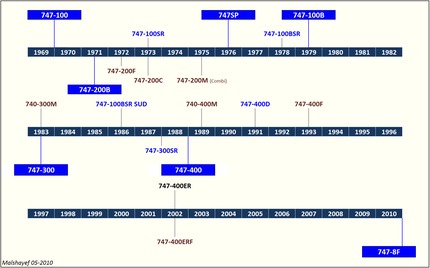
Boeing 747 Family
Every Boeing 747 variant built between 1968 and 2023 — the 747-100, -200, -300, -400 and 747-8, with freighter, combi and short-range models explained.
Boeing 747 Production Data
Download Boeing 747 production totals by generation, with a transparent method and links to Boeing's final programme record and technical documents.
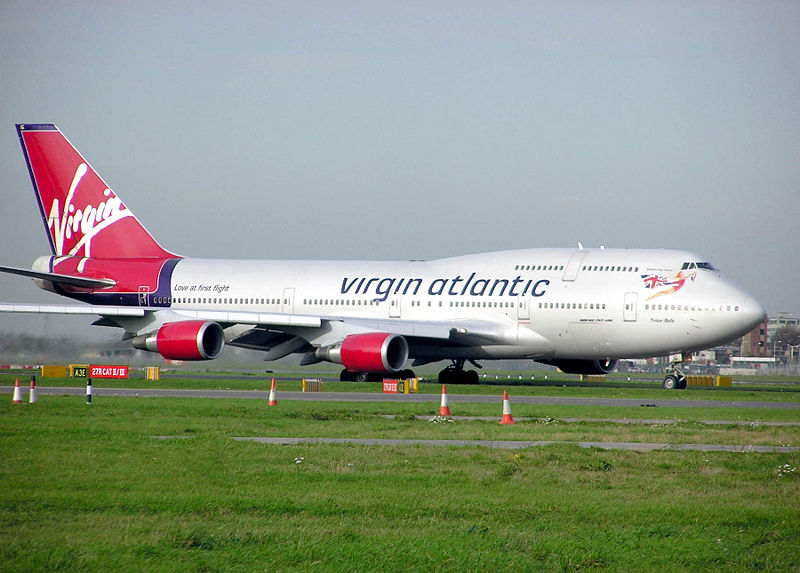
How to Identify Boeing 747 Variants
Identify Boeing 747 variants from photographs using upper-deck length, wingtip shape, fuselage length, engine nacelles and freighter doors.
Polar Air Cargo Boeing 747 fleet history
Polar Air Cargo has flown 44 Boeing 747s since 1994 and currently operates two 747-8 freighters for Atlas Air.
El Al Boeing 747 fleet history
El Al flew 26 Boeing 747s across the -100, -200, -300 and -400, retiring its last passenger 747 in November 2019.
Iberia
Iberia flew about 22 Boeing 747s of all four classic variants from 1970 to 2006, naming each one after a Spanish writer.
More in Aircraft Systems
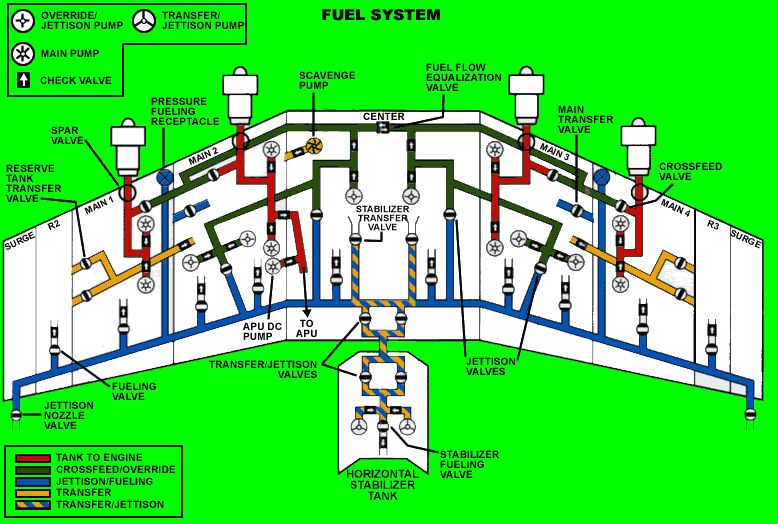
How the 747 works
The systems that make a 747 fly — fuel, hydraulics, landing gear, electrics and pressurisation, explained one at a time.
The four hydraulic systems
The 747 has four independent hydraulic systems, one per engine, each with a backup pump — and the reasoning behind splitting them that way.
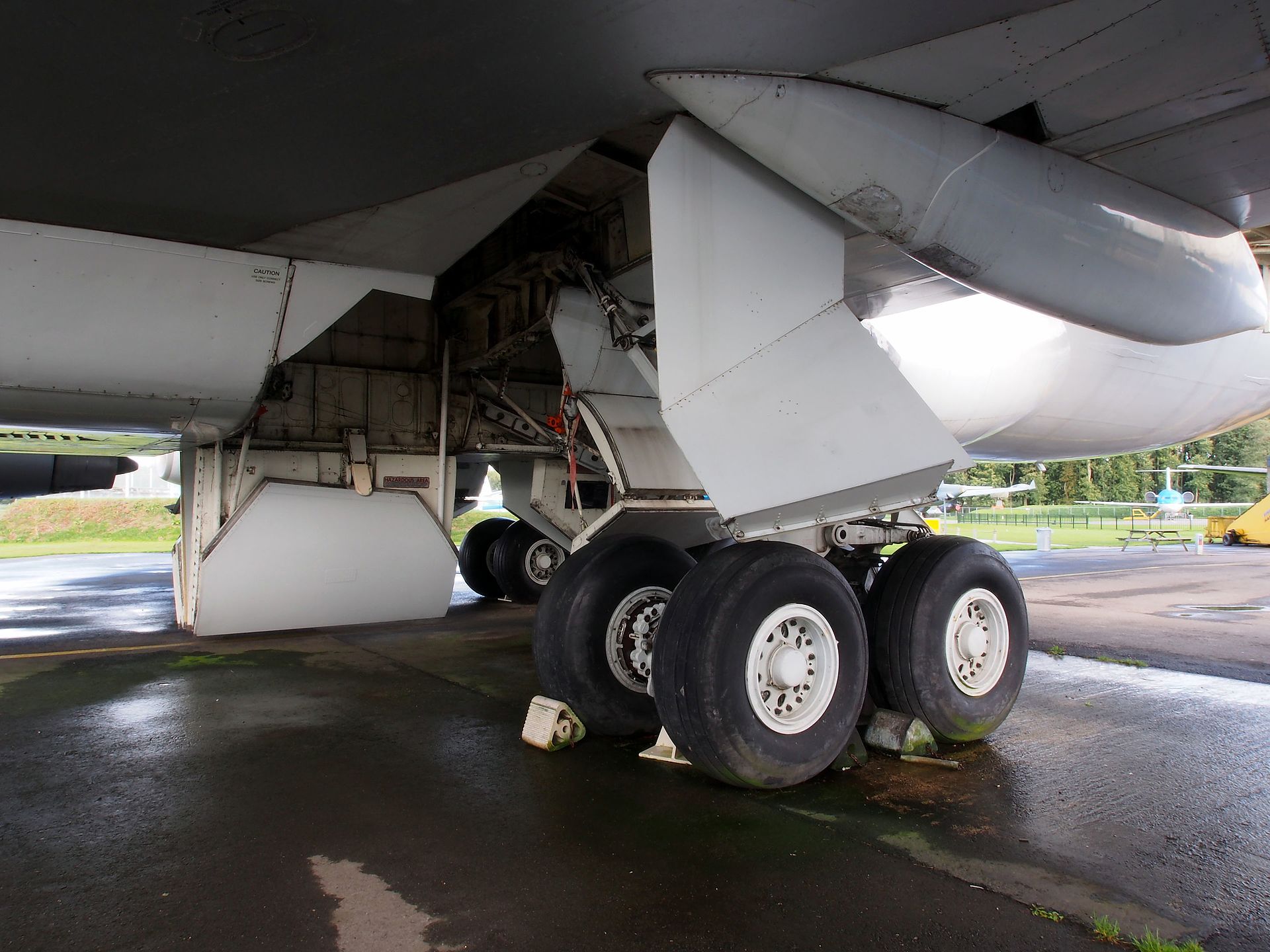
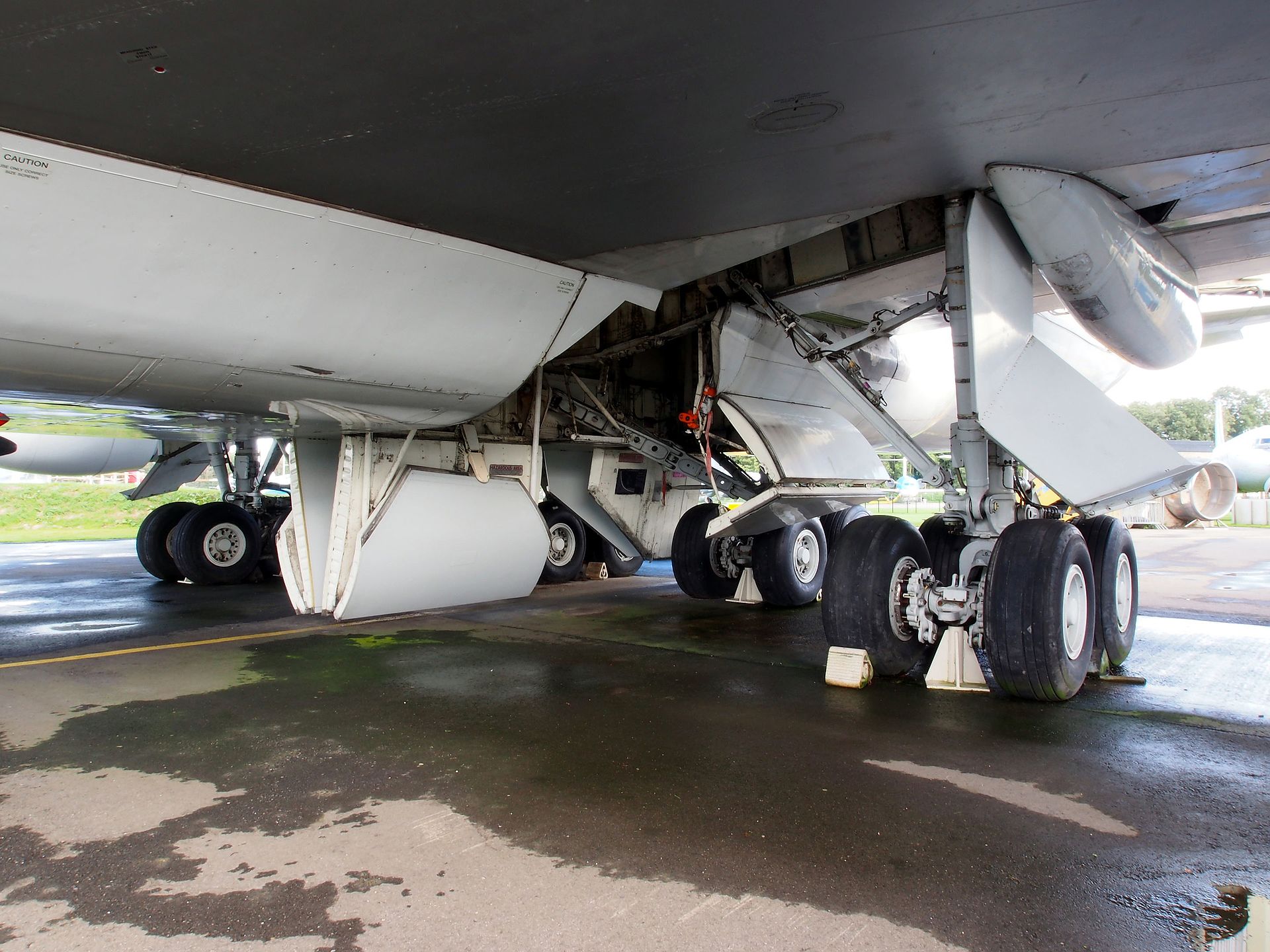
Eighteen wheels
The 747's five landing gear legs and 18 tyres, why the load is spread that way, and the body gear steering that stops it tearing up taxiways.
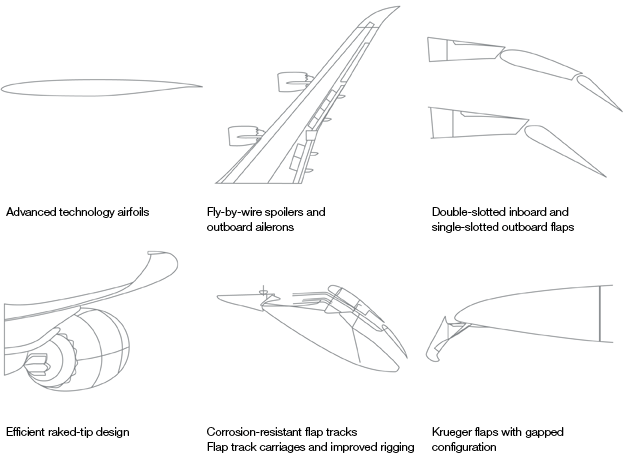
Flight controls and high-lift devices
How a 747 is flown — split ailerons, spoilers, triple-slotted flaps and Krueger leading edge devices, and what the 747-8 changed.
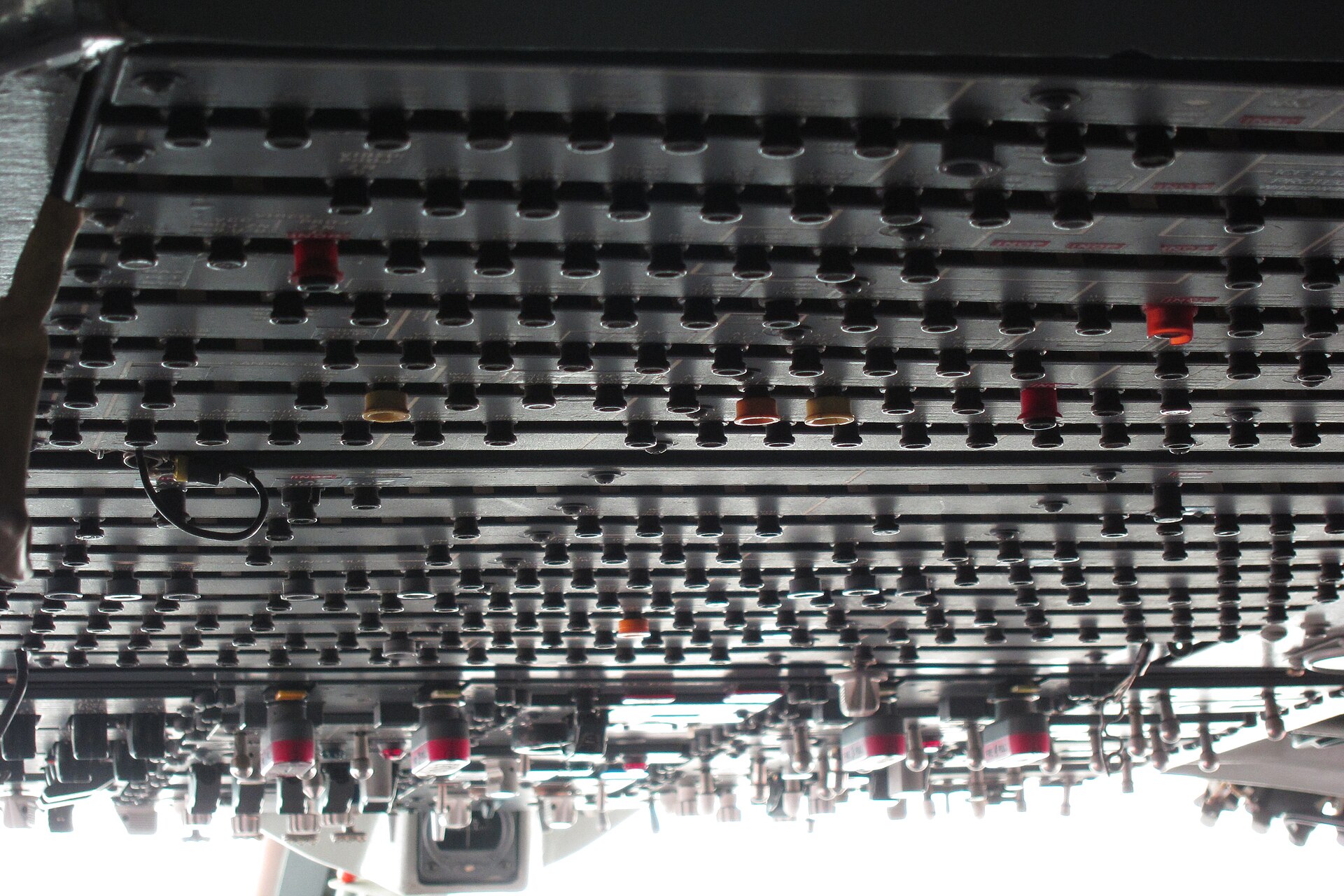
The electrical system
Four 90 kVA generators, one per engine, running in parallel through a tie bus — plus two APU generators for the ground.
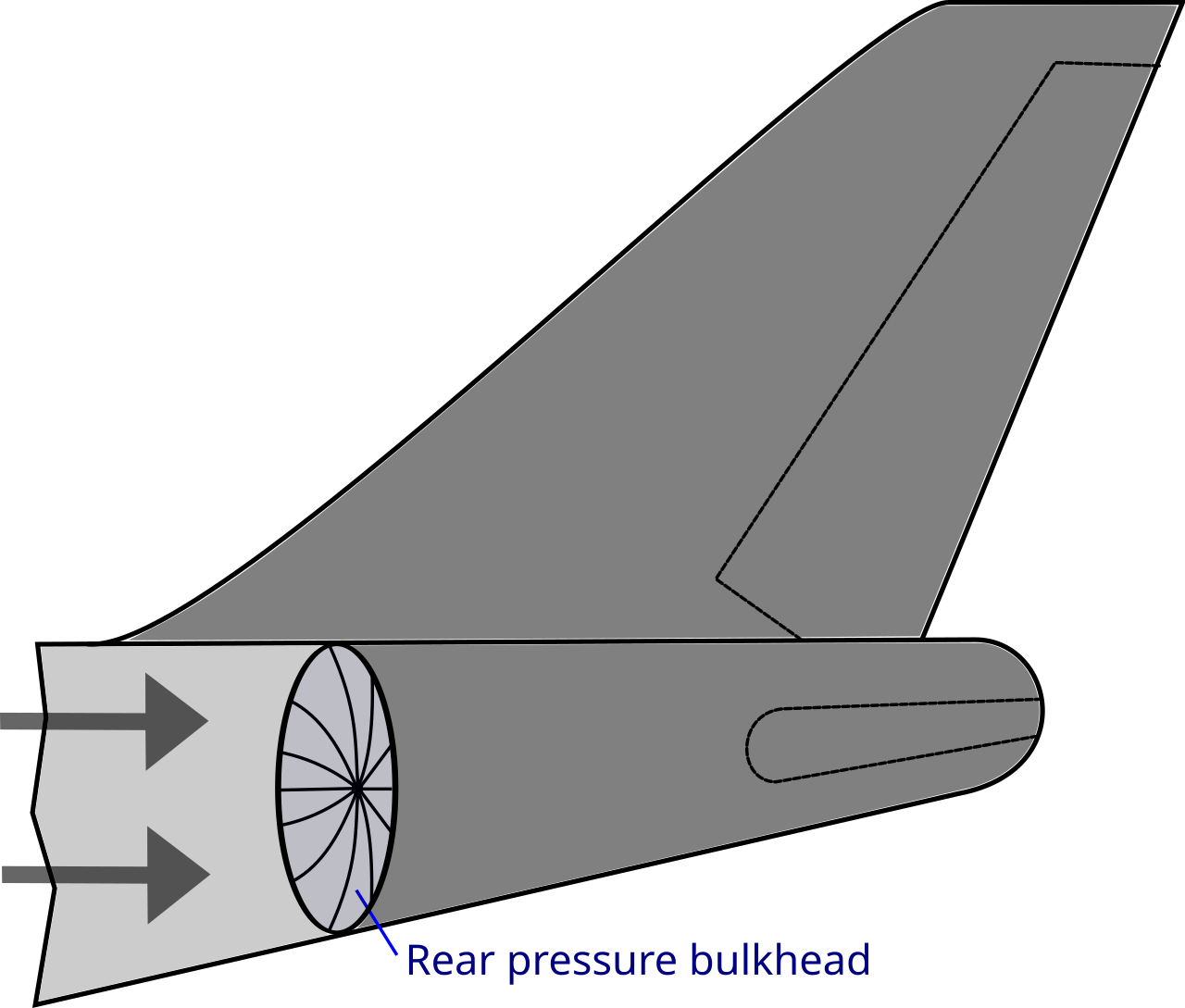
Pressurisation and air conditioning
How a 747 keeps a breathable cabin at 35,000 ft, why the fuselage is a pressure vessel, and why cycles matter more than hours.