The fuel system
The Boeing 747-400 has eight fuel tanks holding 57,164 US gallons of Jet-A.

Almost all of a 747’s fuel is in the wing, because the wing is where the weight needs to be. Fuel in the wing counteracts the upward bending load in flight, so a full wing is actually less stressed than an empty one — the reason aircraft burn centre tank fuel first and wing fuel last.
The tanks
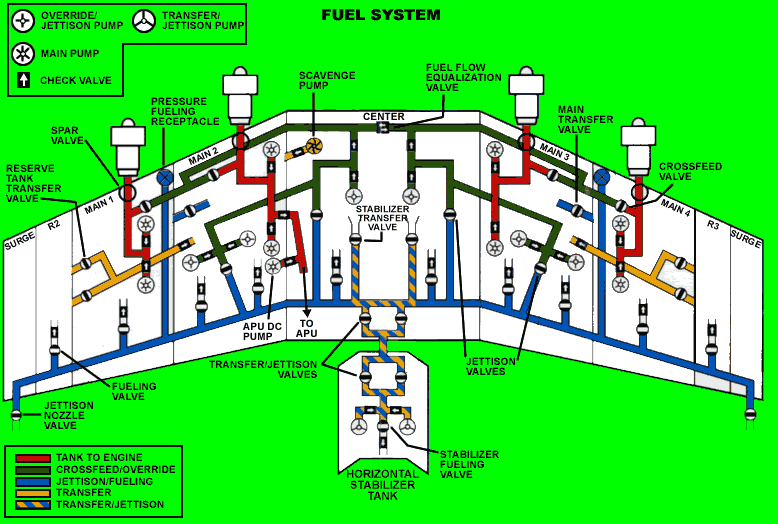
The diagram shows the standard arrangement:
- Main tanks 1, 2, 3 and 4 — one feeding each engine, numbered left to right.
- Reserve tanks 2 and 3 — outboard, feeding into the mains.
- The centre wing tank, in the wing box through the fuselage.
- Surge tanks at each wingtip, which catch fuel expanding or sloshing outboard rather than venting it overboard.
- The horizontal stabilizer tank in the tail, on aircraft fitted with it, which also acts as a trim device.
The 747-400ER could carry one or two additional 3,240 US gallon body tanks in the forward hold, built by Marshall Aerospace using metal-to-metal honeycomb bonding to keep the dry weight down. Every kilogram of tank structure is a kilogram of payload lost.
Moving fuel around
Each engine normally feeds from its own main tank, but the system is heavily cross-connected:
- Crossfeed valves let any tank feed any engine.
- Transfer and override pumps move fuel between tanks, which is how the crew manage lateral balance if one side burns unevenly.
- Main transfer valves move reserve fuel inboard as the mains empty.
The stabilizer tank is transferred forward in flight, which shifts the centre of gravity as well as supplying fuel — a small but real drag saving over a long sector.
Jettison
A 747 can take off far heavier than it can safely land, so it can dump fuel through nozzles at the wingtips to reach maximum landing weight after an early return.
Jettison pumps and valves are separate from the feed system, and the nozzles are at the tips so the fuel clears the aircraft. It atomises and evaporates rather than reaching the ground in any quantity when done at altitude.
Why the -8 needed none of the tail tricks
The 747-8’s new wing holds so much more fuel — 63,034 US gallons on the passenger version — that Boeing did not need to rework the horizontal tail for auxiliary tankage. A rare case of a bigger component making the rest of the aircraft simpler.
Related
Frequently asked questions
- How much fuel does a Boeing 747-400 carry?
- The Boeing 747-400 has eight fuel tanks with a combined capacity of 57,164 US gallons of Jet-A, weighing in excess of 380,000 pounds when full.
More in Aircraft Systems
How the 747 works
The systems that make a 747 fly — fuel, hydraulics, landing gear, electrics and pressurisation, explained one at a time.
Boeing 747 specifications compared
Every Boeing 747 variant side by side — length, wingspan, weights, capacity, range, cruise speed and engines, with sources noted.
The four hydraulic systems
The 747 has four independent hydraulic systems, one per engine, each with a backup pump — and the reasoning behind splitting them that way.
Eighteen wheels
The 747's five landing gear legs and 18 tyres, why the load is spread that way, and the body gear steering that stops it tearing up taxiways.
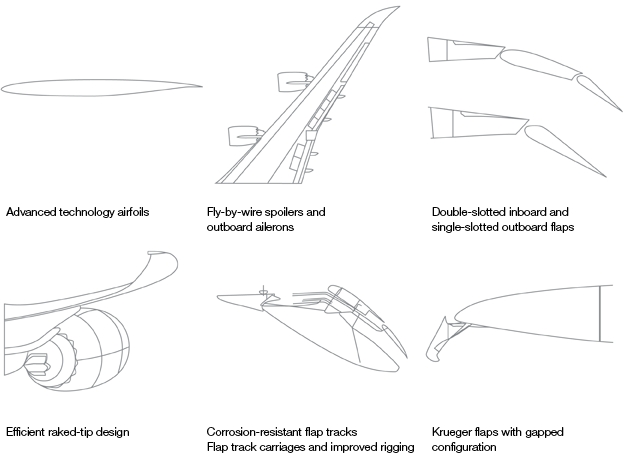
Flight controls and high-lift devices
How a 747 is flown — split ailerons, spoilers, triple-slotted flaps and Krueger leading edge devices, and what the 747-8 changed.
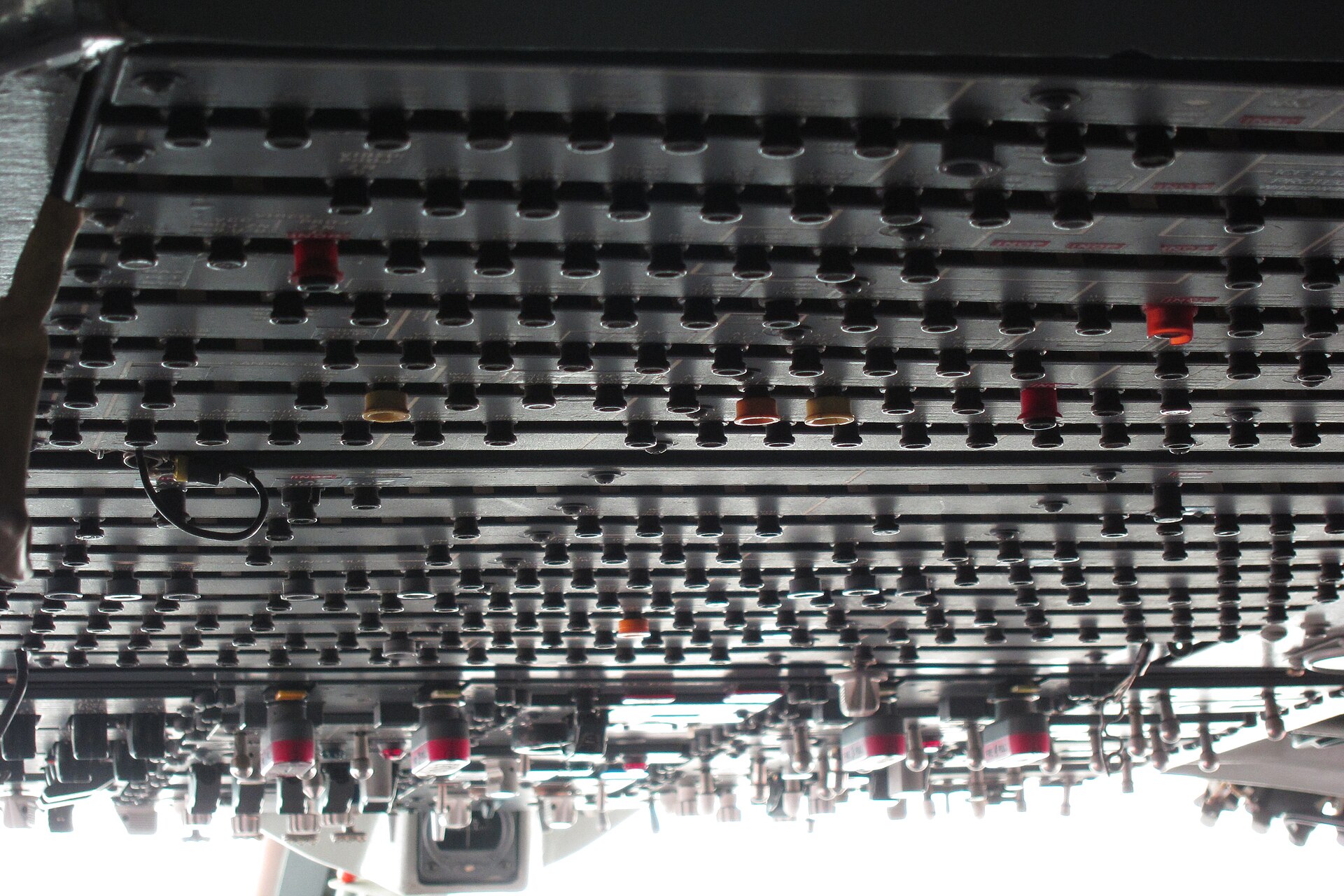
The electrical system
Four 90 kVA generators, one per engine, running in parallel through a tie bus — plus two APU generators for the ground.