Boeing 747-400ERF
The 747-400ERF is the freighter version of the extended-range 747-400ER.

| Manufacturer | Boeing |
|---|---|
| Variant | 747-400ERF |
| Introduced | 17 October 2002 |
| Length | 231 ft 10¼ in (70.67 m), nominal |
| Wingspan | 211 ft 5 in (64.44 m), jig position |
| Max takeoff weight | 910,000 lb (412,769 kg) |
| Max landing weight | 666,000 lb (302,093 kg) |
| Max zero-fuel weight | 611,000 lb (277,145 kg) |
| Representative operating empty weight | 362,400 lb (164,382 kg) |
| Representative structural payload | 248,600 lb (112,763 kg) |
| Usable fuel capacity | 53,765 US gal (203,522 L) |
| Main-deck container volume | 18,720 cu ft (530.1 m³) |
| Lower-deck cargo volume | 5,600 cu ft (158.6 m³) container space + 520 cu ft (14.7 m³) bulk |
| Number built | 40 |
| Configuration and assumptions | GE CF6-80C2B5-F planning example. Main-deck volume uses 29 ten-foot containers; lower-deck container volume uses LD-2s. OEW varies with equipment and operator. |
| Technical reference | Boeing D6-58326-1, Revision F (December 2024), printed page 2-12. |
The 747-400ERF is the freighter version of the 747-400ER, and it succeeded where the passenger version did not: 40 were built, against six of the airliner.
It was launched on 30 April 2001 and delivered to Air France, via ILFC, on 17 October 2002.
What it adds
| Maximum takeoff weight | 910,000 lb (413,000 kg) |
| Maximum payload | 248,600 lb (112,760 kg) |
| Range | About 9,200 km |
Against a standard 747-400F, the operator chooses between:
- 22,000 lb (9,980 kg) more payload, or
- 525 nautical miles (972 km) more range
The airframe is strengthened to carry it: reinforced fuselage, landing gear and sections of the wing, with new, larger tyres.
Why the freighter sold and the airliner did not
The 747-400ER attracted exactly one customer. The -400ERF attracted forty. The difference is worth understanding, because it explains something about how freight economics differ from passenger economics.
A passenger airline sizes an aircraft to a route's demand. Very few routes needed more than a standard 747-400 could carry, so the -400ER solved a problem almost nobody had.
Cargo operators have the opposite constraint. Carriers such as Cargolux routinely move machinery and indivisible loads - single items that cannot be split across two flights. For that work, maximum payload and landing weight are hard limits, and an extra 22,000 lb is the difference between accepting a shipment and turning it down.
It is also why cargo range figures are quoted at maximum payload, not at maximum fuel. A freighter's useful range is what it can fly while full.
How the weight was spent
When Boeing launched the ERF, the whole 35,000 lb increase in MTOW over the -400F (from 875,000 to 910,000 lb) was available as extra fuel - burned off in flight so the aircraft landed at the same weight as a standard -400F. That is what produced the extra range.
The 747-8F has a higher zero-fuel weight limit and more container volume. Boeing's current planning examples identify different empty weights and weight options, so compare those configurations before drawing conclusions about payload or range. The freighter specification table sets out the assumptions.
That trade - payload against range, decided at the design stage - is the clearest single difference between the last two generations of 747 freighter.
Video
Sources
Facts on this page are checked against the primary and institutional references below.
More in Boeing 747 Family
Boeing 747 Family
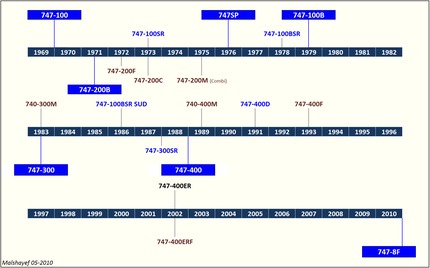
Every Boeing 747 variant built between 1968 and 2023 - the 747-100, -200, -300, -400 and 747-8, with freighter, combi and short-range models explained.
Boeing 747 Production Data
Download Boeing 747 production totals by generation, with a transparent method and links to Boeing's final programme record and technical documents.
747-100
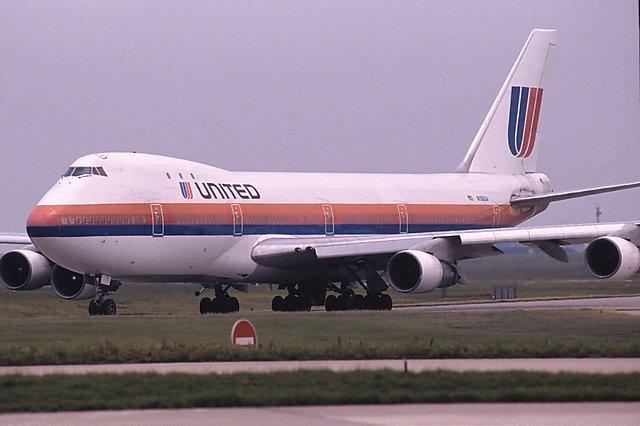
The original Boeing 747-100 entered service in 1970 with six upper-deck windows and a lounge; later aircraft offered a ten-window upper deck.
747-100B
The 747-100B added a stronger airframe and undercarriage and a 750,000 lb maximum takeoff weight. Only Iran Air and Saudia took delivery.
747-100F
Freighter specification for the Boeing 747-100F, covering main-deck and belly cargo volumes, pallet counts and upper-deck crew lounge options.
747-100SR
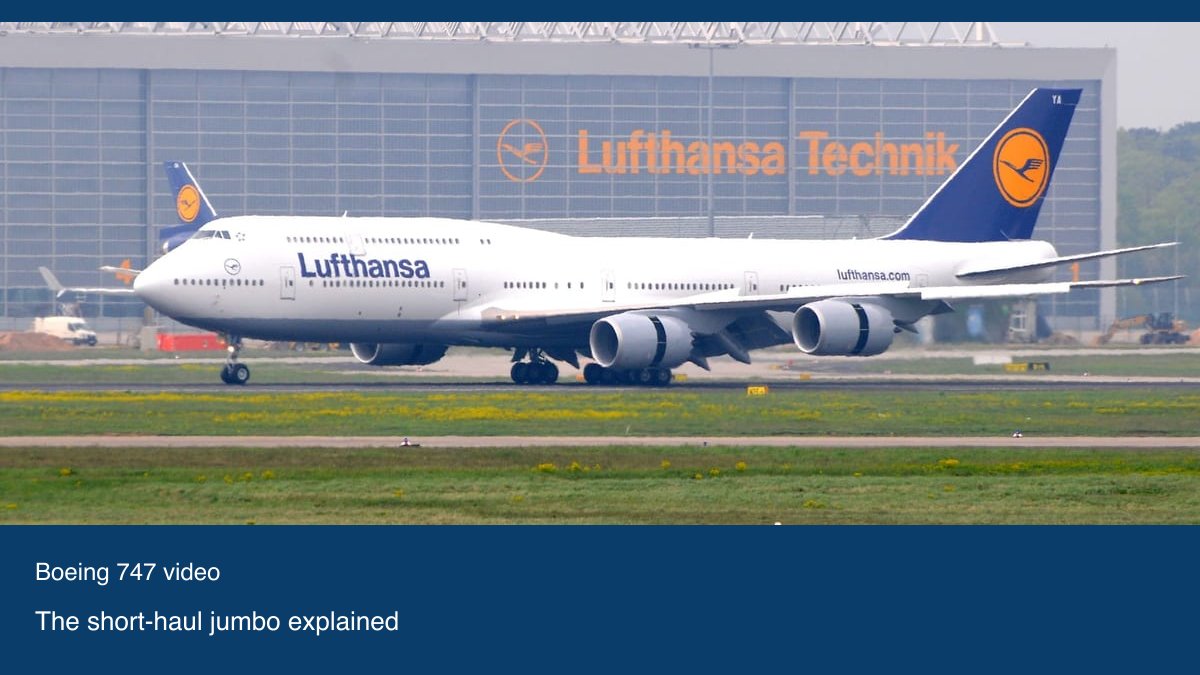
Built for Japanese domestic routes, the 747-100SR traded fuel capacity for seats, carrying up to 550 passengers on short high-frequency sectors.