How to Identify Boeing 747 Variants
Identify a 747 by checking fuselage length first, then upper-deck length, wingtip shape, engine nacelles and cargo doors.

You can usually identify a Boeing 747 generation from one photograph. Start with the fuselage length, then look at the upper deck, wingtips, engine nacelles and cargo doors. Liveries and window counts are useful clues, but modifications mean they should never be the only test.
Quick identification table
| Variant group | Upper deck | Wingtip | Strongest clue |
|---|---|---|---|
| 747-100 / -200 | Short | Plain tip | Original short "hump" |
| 747SP | Short | Plain tip | Dramatically shortened fuselage and tall tail |
| 747-300 | Stretched | Plain tip | Long upper deck but no winglets |
| 747-400 | Stretched | Vertical winglet, except -400D | Long upper deck plus winglets |
| 747-8 | Stretched | Raked tip | Longest fuselage, raked tips and scalloped nacelles |
A five-step field check
- Is the fuselage unusually short? If the aircraft looks almost stubby, with the tail close to the wing, it is a 747SP.
- Is the upper deck short or stretched? A short upper deck suggests a -100, -200, SP or factory freighter. A stretched upper deck suggests a -300, -400 or -8 passenger aircraft.
- Does it have vertical winglets? A stretched-upper-deck aircraft with winglets is normally a 747-400. The Japanese domestic 747-400D is the important exception: it was built without them.
- Are the wingtips smoothly raked? A long swept tip, rather than a vertical winglet, identifies the 747-8.
- Do the engine nacelles have scalloped trailing edges? The chevrons on the GEnx nacelles confirm a 747-8.
747-100 and 747-200: the original profile
The 747-100 and 747-200 share the original short upper deck and plain wingtips. They are difficult to separate reliably in an exterior photograph because airline-specific engines, later conversions and added upper-deck windows blur the early differences.
Very early -100s left the factory with only a few upper-deck windows, but many were modified. Treat window count as a clue, not a verdict. A registration or construction number is the dependable way to distinguish a -100 from a -200 when the airframe has been altered.
747SP: unmistakably short
The 747SP is 184 ft 9 in (56.31 m) long, nearly 47 ft shorter than the standard classic fuselage. Its vertical tail was enlarged, which makes the fin look especially tall above the short body. It retains the short upper deck and has no winglets.
No other production 747 has this combination, making the SP the easiest version to identify at a distance.
747-300: long upper deck, clean wingtips
The 747-300 introduced the stretched upper deck used by later passenger models. Its defining combination is a long upper deck with no winglets.
Be careful around the 747-400D. That high-capacity domestic model also lacks winglets, so a registration check may be required. The -300 retains the classic generation's flight deck and wing, but neither fact is usually visible in an ordinary ramp photograph.
747-400: look for vertical winglets
The 747-400 normally combines the stretched upper deck with a prominent vertical winglet at each tip. Passenger, combi and factory-freighter versions share the revised wing, although factory freighters use the short upper deck.
The 747-400D is the exception. Boeing omitted its wingtip extensions and winglets for short Japanese domestic sectors. When a long-upper-deck aircraft has no winglets, compare its registration against known -300 and -400D fleets.
747-8: raked tips and GEnx chevrons
The 747-8 is the longest 747 at 250 ft 2 in (76.25 m). Instead of vertical winglets, it has long raked wingtips. Its General Electric GEnx-2B engines have serrated, or scalloped, nacelle trailing edges.
Those two features are decisive in most photographs. The passenger 747-8 Intercontinental also has an upper deck longer than the -300/-400 deck. The 747-8 Freighter retains the short upper deck and opening nose.
Passenger, combi or freighter?
- A factory freighter has a short upper deck and a nose that hinges upward. It may also have a main-deck side cargo door.
- A passenger 747 has rows of main-deck windows and no main-deck cargo door.
- A combi has passenger windows forward and a large main-deck side cargo door aft.
- A converted freighter may retain plugged passenger windows. Its nose generally does not open unless it began life as a factory freighter.
The upper-deck test alone cannot identify the generation of a freighter: the 747-200F, 747-400F and 747-8F all use short upper decks. Check the wingtips and engines next.
When a photograph is not enough
Use the registration painted near the tail or rear fuselage. Airline fleet records, museum collection records and civil aircraft registers can resolve ambiguous airframes. Avoid identifying a model solely from its paint scheme: aircraft are sold, leased and repainted throughout their lives.
For exact measurements, compare the 747 specifications table. To browse each production model, start with the Boeing 747 family.
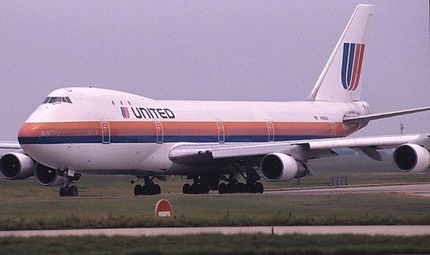
Classic short upper deck of an early 747.Used with permission 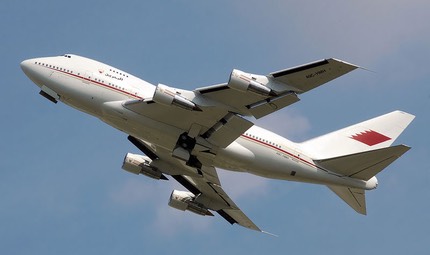
The short fuselage and proportionally tall tail identify the 747SP.Used with permission 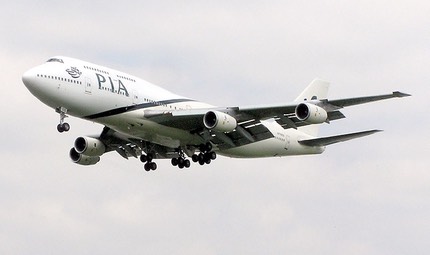
A long upper deck without winglets points to a 747-300.Used with permission 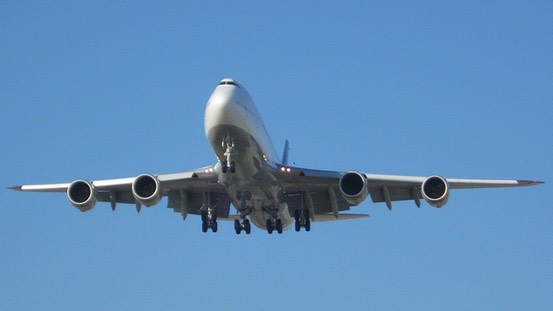
Raked tips and scalloped GEnx nacelles identify the 747-8.Used with permission


Sources
Facts on this page are checked against the primary and institutional references below.
- 747-100, -200, -300 and SP airport-planning manual - Boeing
- 747-400 Airplane Characteristics for Airport Planning - Boeing
- 747-8 Airplane Characteristics for Airport Planning - Boeing
- Boeing 747-121 RA001 collection record - The Museum of Flight
Related topics
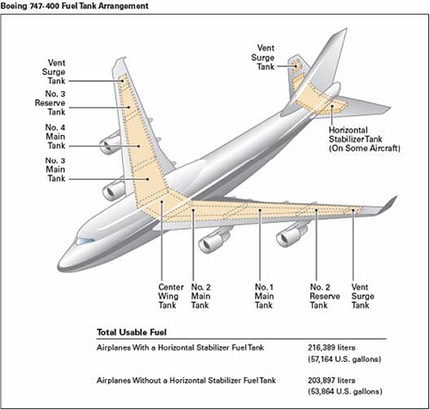
How Much Fuel Does a Boeing 747 Hold?
Boeing 747 fuel capacity varies by model: representative figures span 48,445-63,460 US gallons. Compare variants, tank options and litre equivalents.
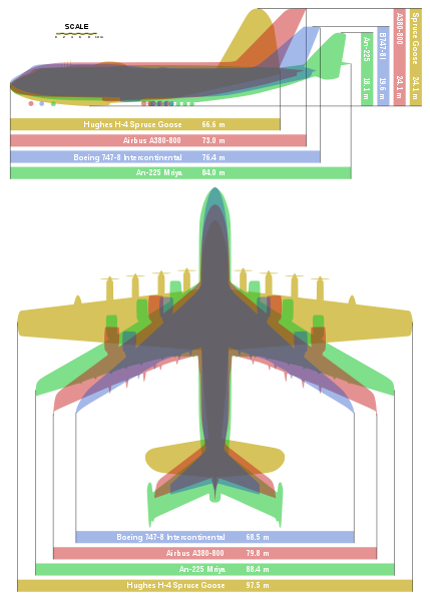
Boeing 747 specifications compared
Compare Boeing 747 dimensions, performance and detailed later-variant weights, fuel and cargo capacities, with Boeing planning configurations identified.
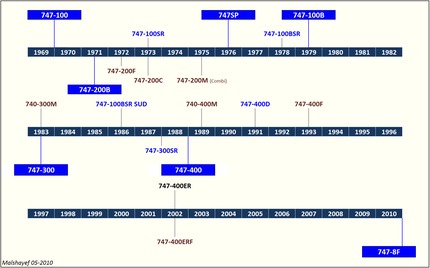
Boeing 747 Family
Every Boeing 747 variant built between 1968 and 2023 - the 747-100, -200, -300, -400 and 747-8, with freighter, combi and short-range models explained.
Boeing 747 Production Data
Download Boeing 747 production totals by generation, with a transparent method and links to Boeing's final programme record and technical documents.
Polar Air Cargo Boeing 747 fleet history
Polar Air Cargo has flown 44 Boeing 747s since 1994 and currently operates two 747-8 freighters for Atlas Air.
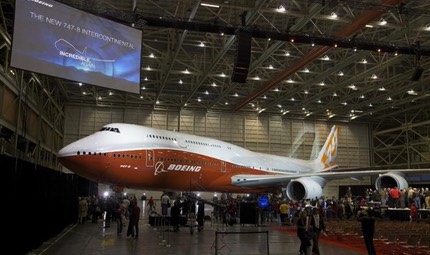
Boeing 747: History, Variants and Legacy
A complete reference to the Boeing 747, built from 1968 to 2023 - every variant from the 747-100 to the 747-8, plus special-mission jumbos and photos.
More in Features
Features
Explore Boeing 747 stories and interactive tools, including a livery designer, cargo game, cockpit displays, engine audio, spotting guides and memories.
Explore the Boeing 747
Design a 747 livery, load a freighter, explore cockpit instruments, find flights and spotting locations, hear engines and share aircraft memories.
The building that had to be built first
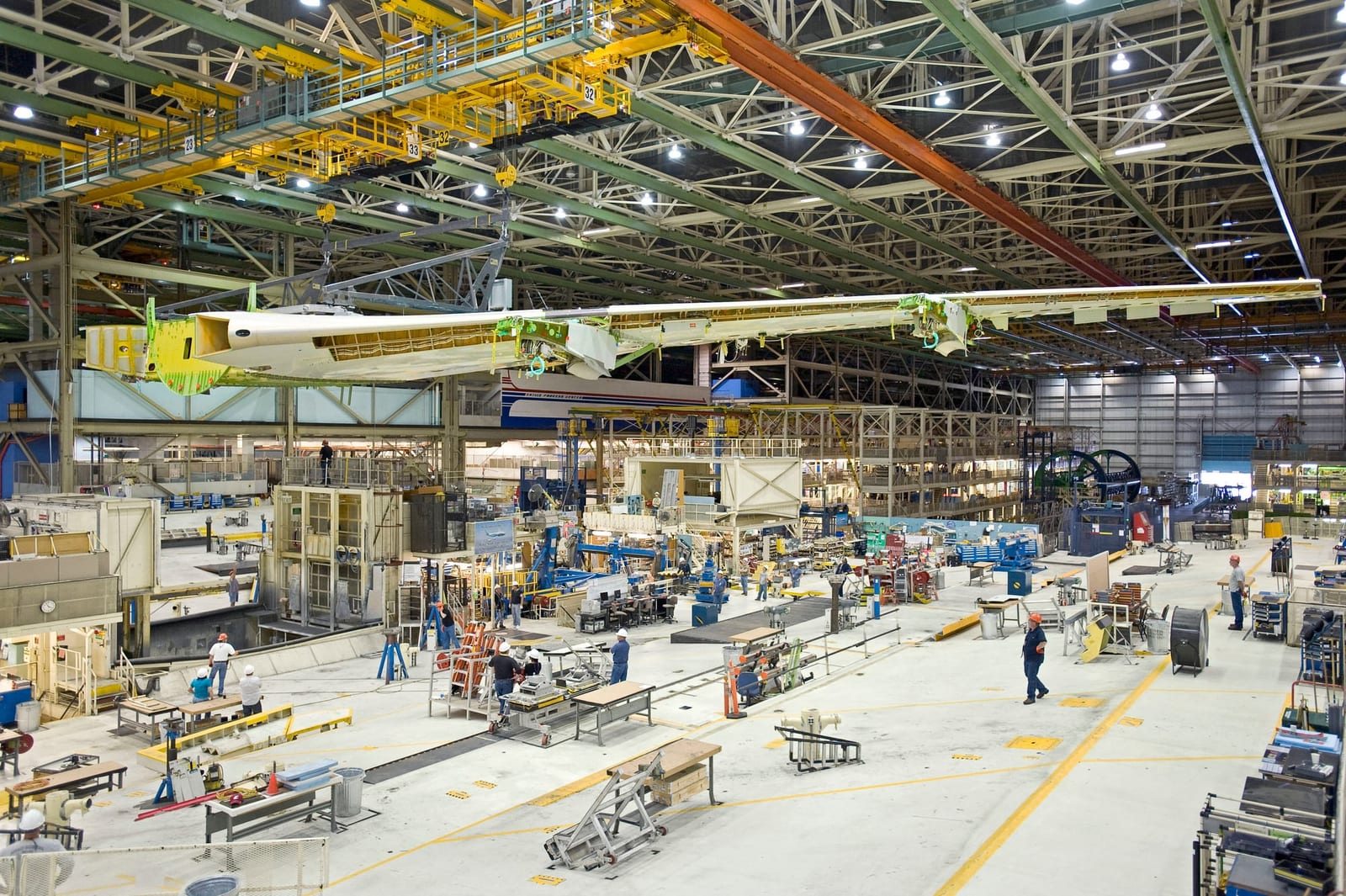
Boeing had no building big enough for the 747, so it built the largest building in the world by volume - and assembled the aeroplane while it was going up.
747 versus A380
The two largest airliners ever built, compared - size, capacity, economics, and why both are now out of production.
Where Can You Still Fly on a Boeing 747?
Find reported passenger Boeing 747 routes, check schedule dates and aircraft changes, and browse airline seat maps before choosing a flight.

Where the 747s went
Most retired 747s were scrapped. Others became freighters, museum pieces, restaurants, a hotel - and one launched satellites into orbit.