747 versus A380
The A380 is bigger and carries more; the 747-8 is faster to turn round and fits existing airports. Both lost to twin-engined aircraft.

For about fifteen years these were the two largest airliners in service, and they were pitched directly against each other. Both are now out of production, and they lost to the same thing.
Side by side
| Boeing 747-8I | Airbus A380-800 | |
|---|---|---|
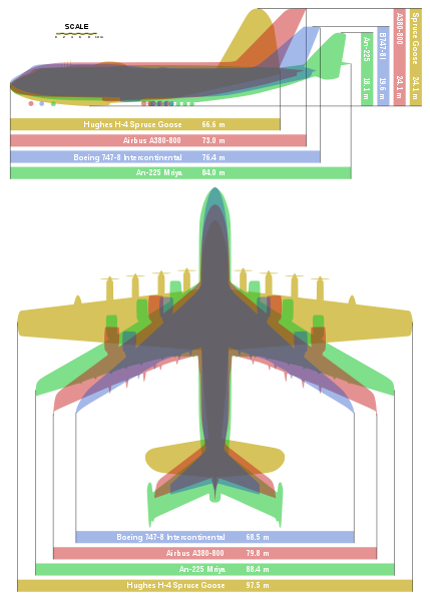
| Length | 250 ft 2 in (76.25 m) | 238 ft 7 in (72.72 m) |
| Wingspan | 224 ft 5 in (68.40 m) | 261 ft 8 in (79.75 m) |
| Height | 63 ft 6 in (19.35 m) | 79 ft (24.09 m) |
| Max takeoff weight | 987,000 lb (447.7 t) | 1,268,000 lb (575 t) |
| Passengers, 3-class | 467 | 525 |
| Maximum passengers | 605 | 853 |
| Range | 7,730 nmi | 8,000 nmi |
| Cruise | Mach 0.855 | Mach 0.85 |
| Engines | 4 × GEnx-2B67 | 4 × Trent 900 or GP7000 |
| Built | 155 | 254 |
The A380 wins on nearly every measure of size. The 747-8 is longer, marginally faster, and — importantly — smaller in the two dimensions airports care about.
The airport argument
This is where the 747-8 had a real case, and it is easy to miss.
The A380 is a full double-deck aircraft at 79.75 m span and 24 m tall. Accepting it meant airports rebuilding stands, widening taxiways, and installing second-level jetways. That is capital expenditure by somebody other than the airline, and it limited where the aircraft could go.
The 747-8 was deliberately designed to the same height as a 747-400 and to fit existing 747 gates. An airline could introduce it without a single airport spending anything.
Boeing pushed the operating comparison hard too: the Intercontinental was claimed to be about 10 percent lighter per seat, with trip costs roughly 20 percent lower and seat-mile costs about 5 percent lower than the A380’s.
Where the A380 won
Sheer capacity, and passenger affection. On slot-constrained routes — Heathrow to Dubai, Sydney, Los Angeles — an airline that cannot get more slots can still carry more people by flying a bigger aeroplane, and 853 seats is a lot of people. Emirates built a large part of its network on exactly that logic and took more A380s than anyone.
Passengers liked it, which is not nothing. The cabin is quiet and the aircraft is smooth.
Why both lost
Neither was beaten by the other. Both were beaten by twin-engined aircraft.
The 777-300ER, then the 787 and A350, could fly the same long-haul routes on two engines instead of four, with better fuel burn and — decisively — without needing 400 to 500 seats filled to make money. Airlines moved from hub-and-spoke to point-to-point: more frequencies, smaller aircraft, direct routes that bypass hubs entirely.
That trend was already running when both aircraft launched. Airbus put it plainly when it ended the A380: if you have a product nobody wants, or that you can only sell below cost, you stop making it.
A380 production ended in 2021 after 254 aircraft. The 747 followed in January 2023 after 1,574.
The asymmetry at the end
One difference matters more than any specification: the 747 had a freighter and the A380 never did.
The 747-8F has a nose door and a main deck designed for cargo, because the 747 was designed as a freighter from the beginning. It outsold the passenger version more than two to one and kept the line running for a decade after airline orders stopped.
The A380’s double-deck layout makes a freighter version very hard — the upper deck floor is heavy, and loading two decks is awkward. A freighter was studied and abandoned.
So although both programmes ended, they ended differently. 107 of the 155 747-8s built were freighters, most of them young, and they will be working into the 2040s.
Related
Frequently asked questions
- Is the A380 bigger than the 747?
- Yes. The A380 has a 79.75 m wingspan against the 747-8's 68.40 m, and a maximum takeoff weight of 575 tonnes against 447.7 tonnes. The 747-8 is longer, at 76.25 m against the A380's 72.72 m.
- Why were the 747 and A380 both discontinued?
- Airlines moved from hub-and-spoke to point-to-point flying, and twin-engined aircraft like the 777, 787 and A350 could fly the same routes on two engines without needing 400-plus seats filled. A380 production ended in 2021 and the 747 followed in 2023.
Sources
Facts on this page are checked against the primary and institutional references below.
- Airbus A380 — Wikipedia
- Boeing 747 — Wikipedia
Related topics
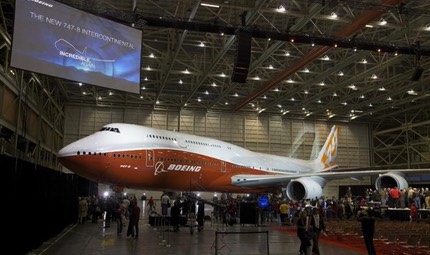
747-8
Announced in 2005, the 747-8 was the final 747 generation, with a new wing, GEnx-2B engines and a 987,000 lb maximum takeoff weight.
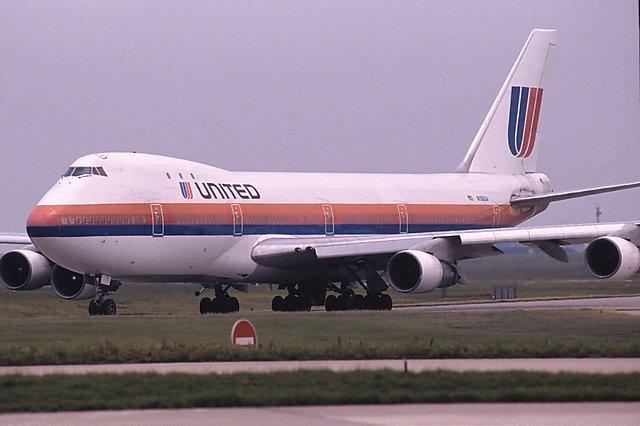
The story of the Boeing 747
How the 747 came to exist — the Pan Am bet, the factory built to make it, the hump that came from a freighter, and why production ended in 2023.
Boeing 747: History, Variants and Legacy
A complete reference to the Boeing 747, built from 1968 to 2023 — every variant from the 747-100 to the 747-8, plus special-mission jumbos and photos.
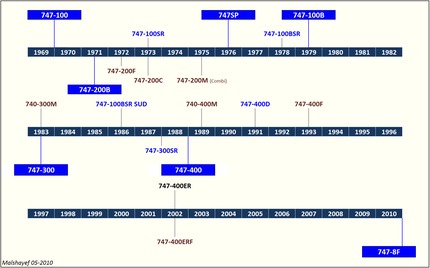
Boeing 747 Family
Every Boeing 747 variant built between 1968 and 2023 — the 747-100, -200, -300, -400 and 747-8, with freighter, combi and short-range models explained.
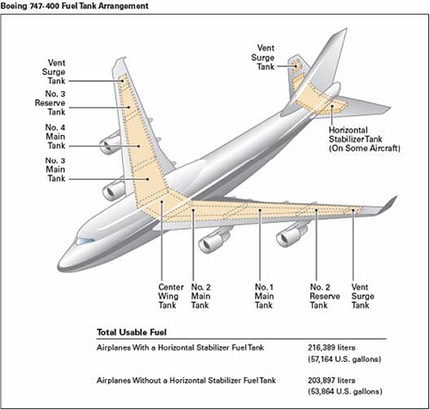
Boeing 747 Fuel System
Detailed Boeing 747 fuel system guide covering tank layout, pumps, transfer, crossfeed, refuelling, jettison, safety and every major 747 variant.
Boeing 747 Production Data
Download Boeing 747 production totals by generation, with a transparent method and links to Boeing's final programme record and technical documents.
More in Features
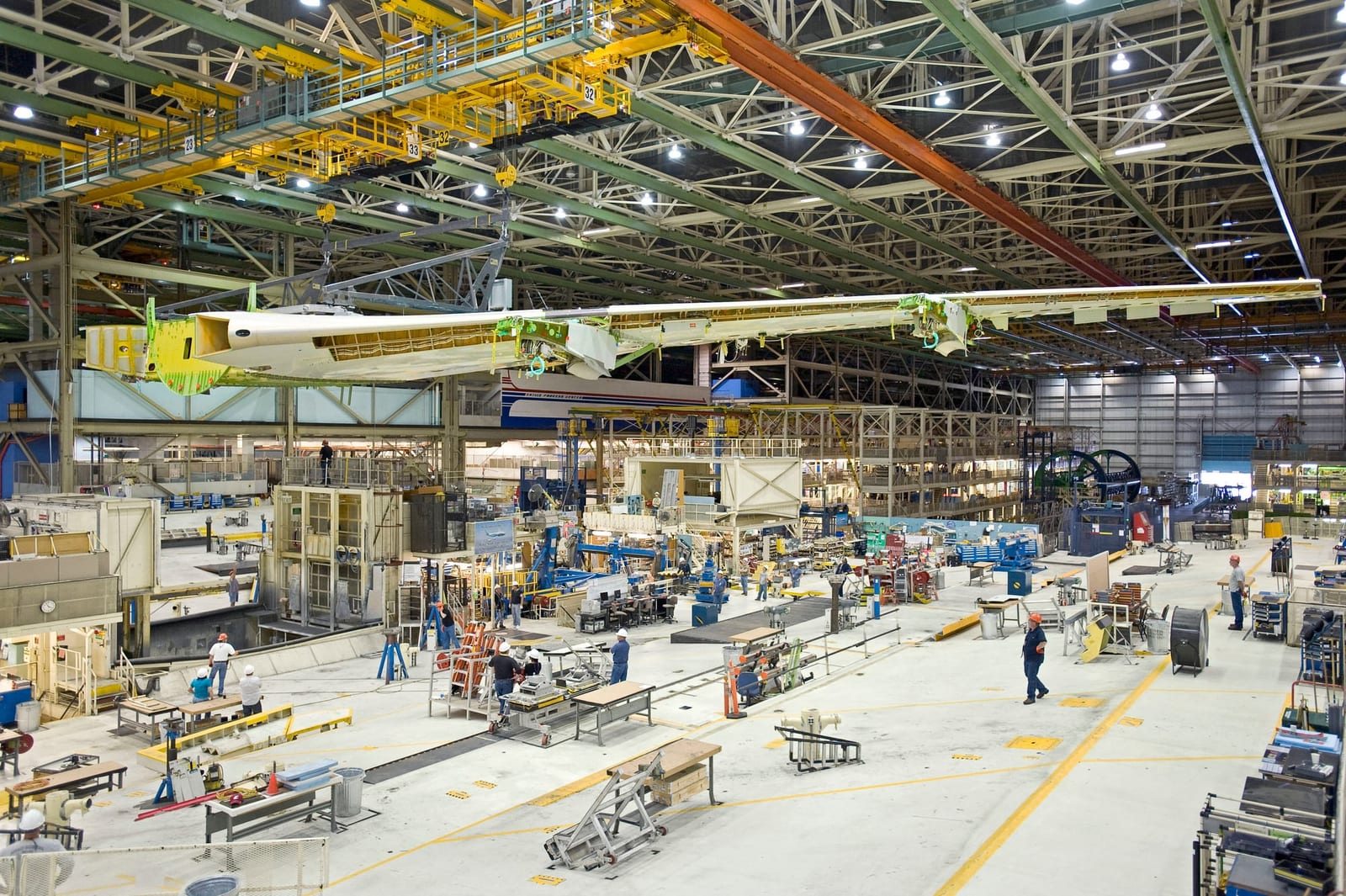
Features
Longer pieces on the Boeing 747 — the factory built to make it, how it compares to the A380, what became of the retired fleet, and what it is like to fly.
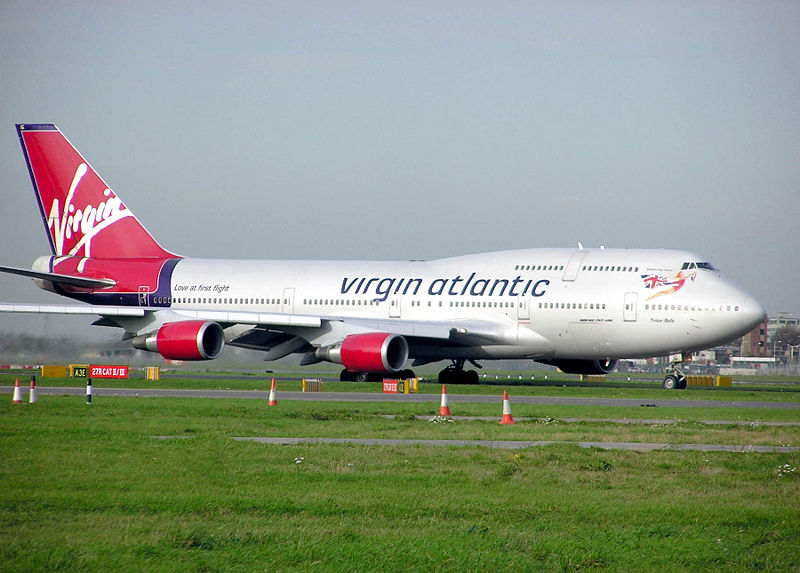
How to Identify Boeing 747 Variants
Identify Boeing 747 variants from photographs using upper-deck length, wingtip shape, fuselage length, engine nacelles and freighter doors.
The building that had to be built first
Boeing had no building big enough for the 747, so it built the largest building in the world by volume — and assembled the aeroplane while it was going up.
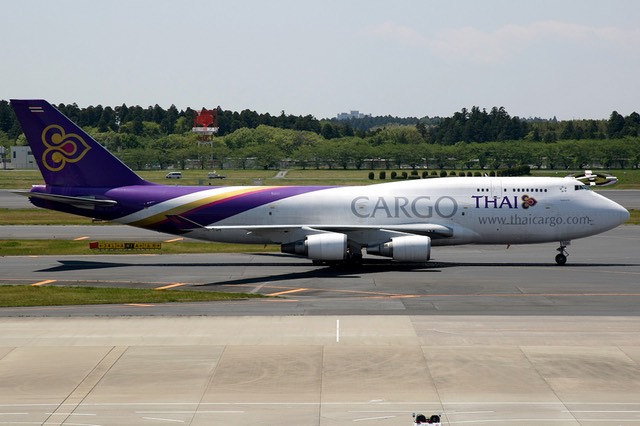
Where the 747s went
Most retired 747s were scrapped. Others became freighters, museum pieces, restaurants, a hotel — and one launched satellites into orbit.
Flying the 747
What the 747 is like to fly — the type rating, the view from 30 feet up, the handling, and why pilots talk about it the way they do.
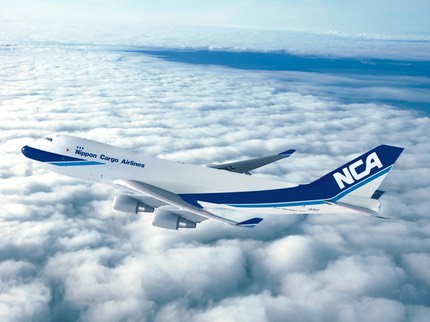
How 747 freight actually works
The nose door, motorised floor rollers, 96 by 125 inch pallets and 30 main-deck positions — how a 747 freighter is loaded and why it beat everything else.
