Pressurisation and air conditioning
Bleed air, air conditioning packs and outflow valves keep the cabin habitable — and every pressurisation cycle is a fatigue cycle on the airframe.

At a 747’s cruising altitude the outside air is around −55 °C and far too thin to breathe. The cabin is kept habitable by taking air from the engines, conditioning it, and letting it out at a controlled rate.
Where cabin air comes from
On every 747 up to and including the 747-8, cabin air is bleed air: air tapped from the compressor stages of the engines, before combustion.
It arrives hot and at high pressure, and passes through air conditioning packs — heat exchangers and air cycle machines that cool it and control its moisture — before being distributed to the cabin.
This is worth contrasting with the 787, which is a more-electric aircraft: it draws cabin air through dedicated electric compressors instead of engine bleed. The 747-8’s GEnx-2B had to be adapted back from the 787’s GEnx specifically to provide bleed air again, because the 747 uses conventional pneumatic systems.
Keeping the pressure
Air is fed in continuously and let out through outflow valves. Cabin pressure is set by how fast air is allowed to leave, not by how fast it goes in.
The cabin is held at an equivalent altitude of roughly 8,000 ft at cruise — comfortable enough for almost everyone, while keeping the pressure difference across the fuselage within what the structure can take. The 747-8 improved on this, as did the 787, by lowering cabin altitude and raising humidity.
The fuselage is a pressure vessel
This is the structural consequence, and it drives more of the aircraft’s design and maintenance than anything else.
A pressurised fuselage is a balloon with people in it. Every flight inflates it and deflates it once, and each of those cycles puts a fatigue load into the structure. Metal fatigue depends on the number of load cycles far more than on hours flown.
That is why the 747’s most unusual variants exist. The 747-100SR, -300SR and 747-400D were built for Japanese domestic routes flying many short sectors a day, and were structurally reinforced specifically to absorb far more pressurisation cycles than a long-haul 747 would ever see. One ANA aircraft retired with more than 33,000 cycles.
It is also why the aft pressure bulkhead is such a critical component — and why a faulty repair to one destroyed Japan Air Lines 123 seven years and 12,318 flights after it was made.
Related
Video
Sources
Facts on this page are checked against the primary and institutional references below.
Related topics
747 versus A380
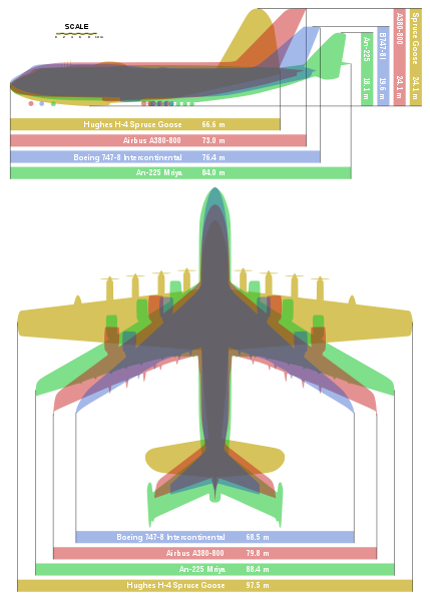
The two largest airliners ever built, compared — size, capacity, economics, and why both are now out of production.
The story of the Boeing 747
How the 747 came to exist — the Pan Am bet, the factory built to make it, the hump that came from a freighter, and why production ended in 2023.
Boeing 747: History, Variants and Legacy
A complete reference to the Boeing 747, built from 1968 to 2023 — every variant from the 747-100 to the 747-8, plus special-mission jumbos and photos.
Boeing 747 Family
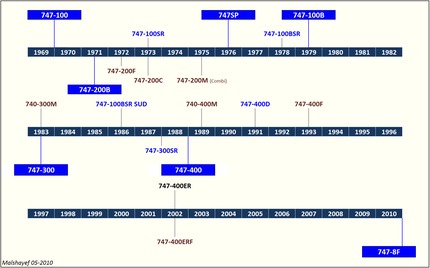
Every Boeing 747 variant built between 1968 and 2023 — the 747-100, -200, -300, -400 and 747-8, with freighter, combi and short-range models explained.
Boeing 747 Production Data
Download Boeing 747 production totals by generation, with a transparent method and links to Boeing's final programme record and technical documents.
Galleys and crew rest
Feeding 400 people and resting the crew that does it — the parts of a 747 cabin passengers never think about.
More in Aircraft Systems
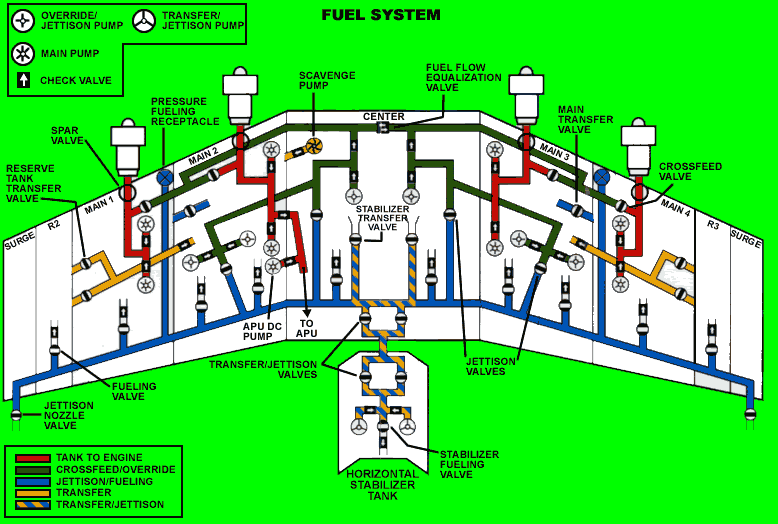
How the 747 works
The systems that make a 747 fly — fuel, hydraulics, landing gear, electrics and pressurisation, explained one at a time.
Boeing 747 specifications compared
Every Boeing 747 variant side by side — length, wingspan, weights, capacity, range, cruise speed and engines, with sources noted.
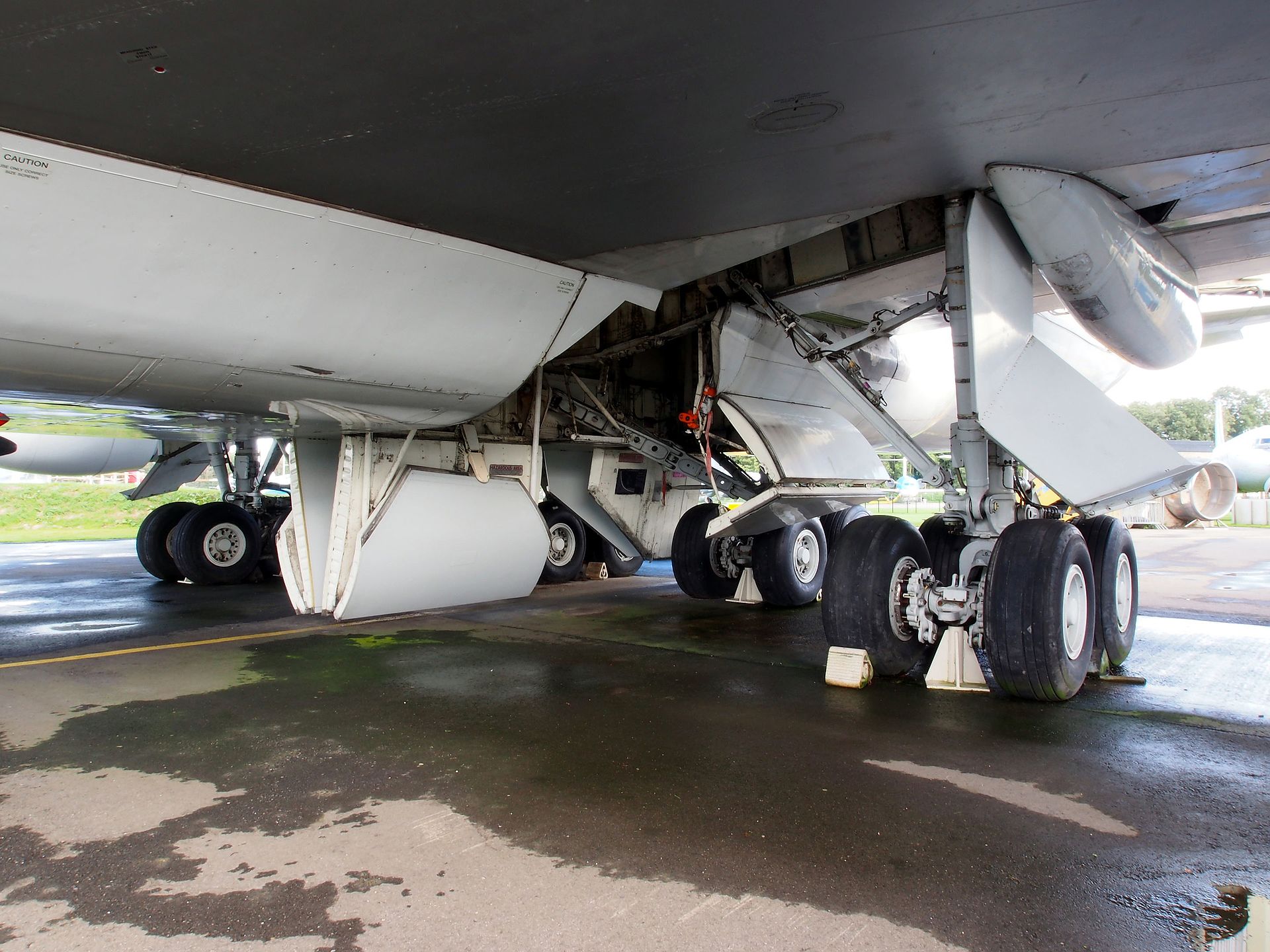
The four hydraulic systems
The 747 has four independent hydraulic systems, one per engine, each with a backup pump — and the reasoning behind splitting them that way.
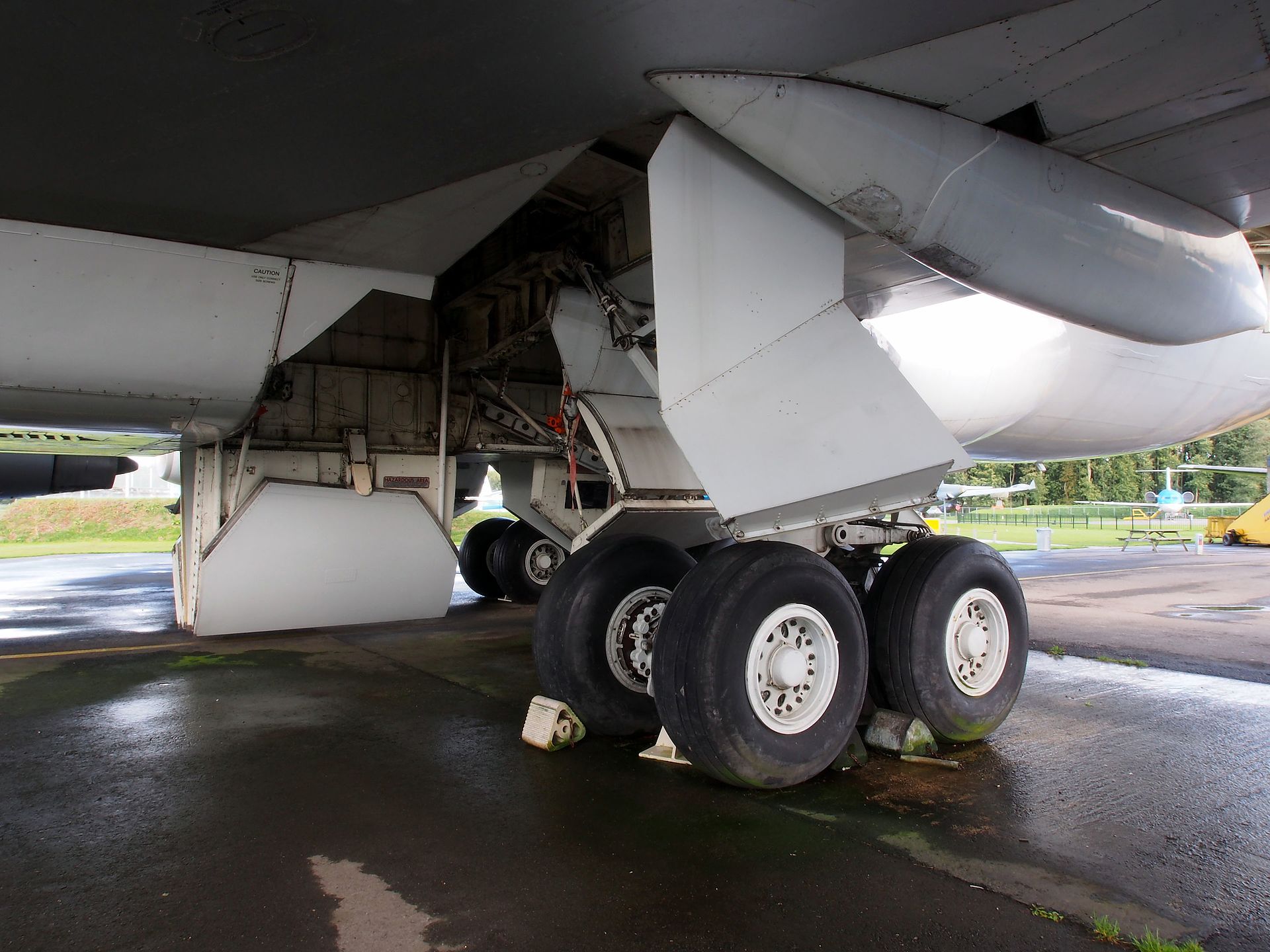
Eighteen wheels
The 747's five landing gear legs and 18 tyres, why the load is spread that way, and the body gear steering that stops it tearing up taxiways.
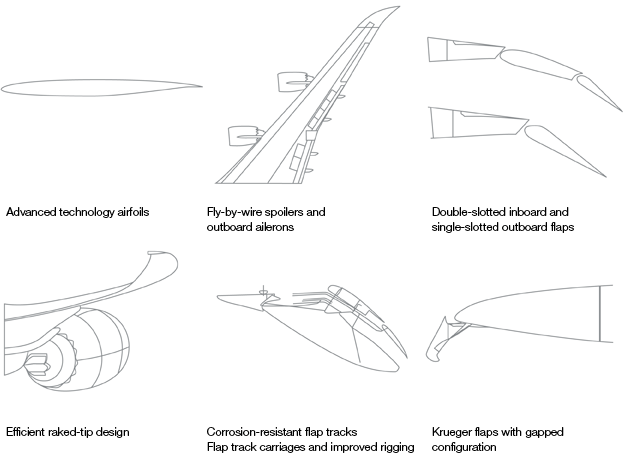
Flight controls and high-lift devices
How a 747 is flown — split ailerons, spoilers, triple-slotted flaps and Krueger leading edge devices, and what the 747-8 changed.
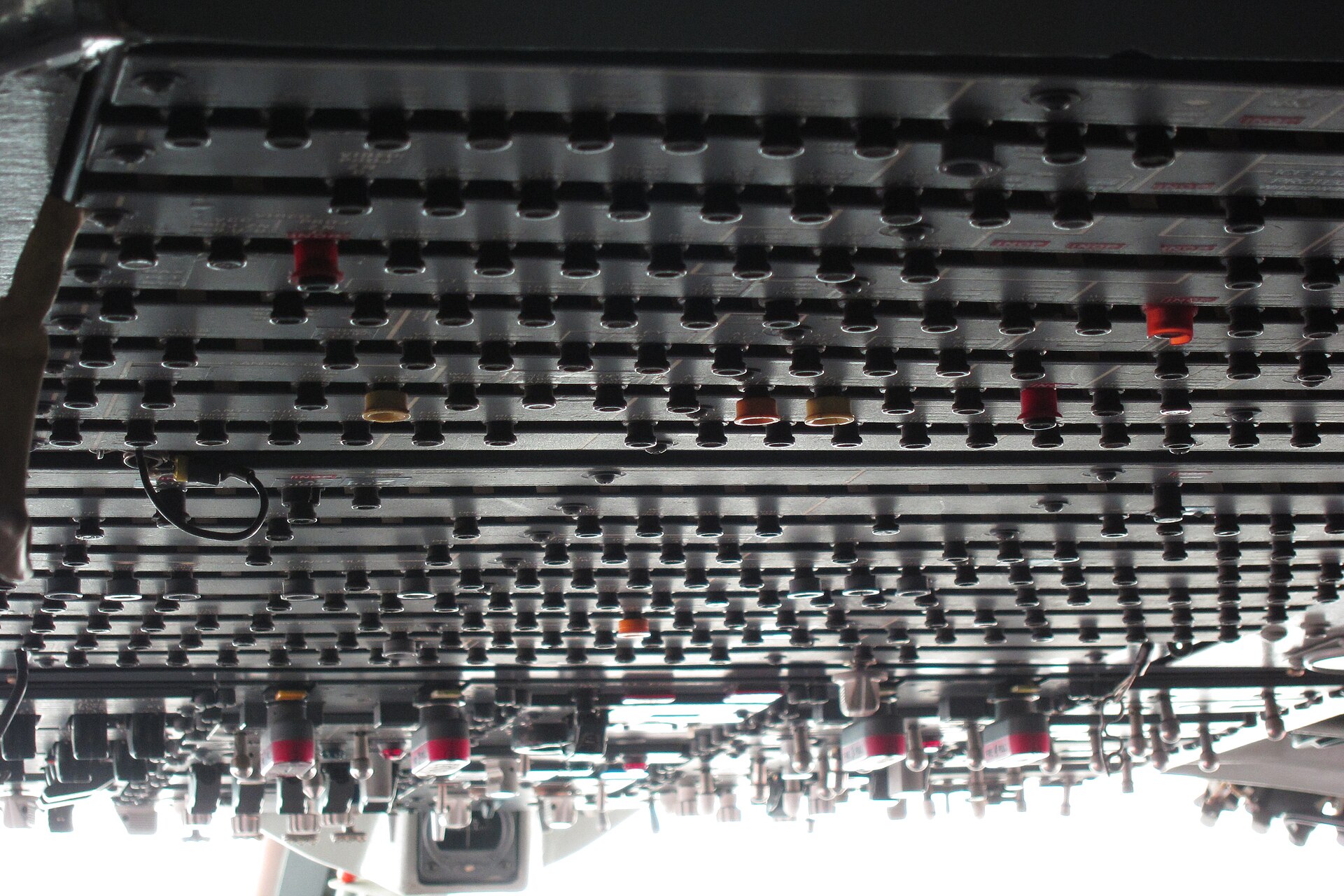
The electrical system
Four 90 kVA generators, one per engine, running in parallel through a tie bus — plus two APU generators for the ground.