A stretched 747-400 with one new engine
The 747-8 is a derivative of the 747-400 sharing its type certificate, but with a single more efficient GEnx-2B engine choice, raked wingtips, a longer fuselage, a more capable APU (two 120 kVA generators) and a second-crew option for an identical pilot type rating.
Treat the 747-8 as a heavily modernised, stretched 747-400 rather than a clean-sheet design: same type certificate, same conventional bleed-air and hydraulic philosophy, but new engines, more electrical capability and subtle systems upgrades everywhere.
| Key facts | |
|---|---|
| Type certificate | Shares A20WE with the 747-400 (derivative, not a new type) |
| Engines | GEnx-2B only - ~13% better fuel burn than the -400's CF6 |
| APU | PW901C with two 120 kVA generators (vs -400's two 90 kVA) |
| Not bleedless | Conventional pneumatic/hydraulic architecture - not a 787-style more-electric aircraft |
Compared with the 747-400, the -8 looks different first: a fuselage about 5.6 m longer, raked wingtips instead of winglets, and GEnx-2B engines whose shared core and 80 percent of line-replaceable units come from the 787's GEnx-1B.
Systems changes include increased electrical generation, an upgraded PW901C auxiliary power unit, a larger main-deck flight-attendant rest (up to ten berths adjacent to door 5 in some cabins) and an optional second flight-deck position that gives -8 crews the same pilot type rating as the -400.
Deliveries total 155 (48 Intercontinental, 107 Freighter) against 694 of the -400 family, ending 54 years of 747 production in January 2023.
Not a new aeroplane, a new powerplant
The single most important thing to understand about the 747-8 is that it is a derivative, not a clean sheet. It flies on the same type certificate as the 747-400, which is why it could be certified so quickly in 2011, and it retains the entire conventional systems architecture - bleed air, hydraulics, a conventional flight deck. The only GEnx-powered 747 is the 747-8, and the GEnx-2B was the sole engine on it.
Where the -8 did change was in what the new engine made possible. The GEnx-2B delivered enough thrust and efficiency that the fuselage could be stretched about 5.6 m and the wing redesigned with raked wingtips, and that in turn is why the aircraft flew to a higher maximum takeoff weight. The 747-8F and 747-8 Intercontinental are, in systems terms, the 747-400 with a more efficient core, a bigger wing, and a longer body.
The one thing it did not do
The 747-8 was sometimes criticised for not being the aircraft the 787 was. That critique is fair at the level of philosophy: the 747-8 kept bleed air, kept a conventional flight deck, and kept most of the -400's system, so its fuel-burn advantage came from the engine and the aerodynamics, not from a more-electric architecture. It was a smart, low-risk evolution of a certified airframe rather than a revolution - which is exactly what Boeing intended when it chose to keep the 747-400 certificate alive.
Production end
The 747-8 line delivered 155 aircraft - 48 Intercontinental and 107 Freighter - against 694 of the -400 family, and ended 54 years of 747 manufacturing in January 2023. For the engine and the differences the GEnx brought, see engine thrust ratings.
Related
Frequently asked questions
- Does the 747-8 share a type certificate with the -400?
- Yes, it is a derivative on the same A20WE certificate.
- Is the 747-8 bleedless?
- No, it keeps conventional bleed-air architecture unlike the 787.
Sources
Facts on this page are checked against the primary and institutional references below.
- Boeing 747-8 special conditions (MTOW to 970,000 lb) - US Federal Register
- Overhead flight attendant rest on the 747-8 - US Federal Register
- GEnx-2B powers the 747-8's first flight - GE Aerospace
- 747-8 Airplane Characteristics for Airport Planning - Boeing
- Boeing 747 article - Wikipedia
Related topics
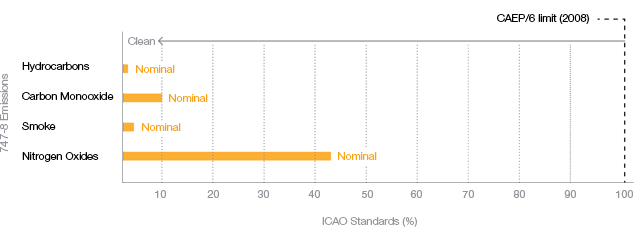
The 747-8 and the environment
The 747-8 meets emissions limits for hydrocarbons, carbon monoxide, smoke and nitrogen oxides, with a noise footprint about 30 percent smaller than the 747-400.
Listen to Boeing 747 engines
Listen to licensed Boeing 747 recordings, compare RB211 and GEnx-2B engines, filter by flight phase and download credited audio clips.
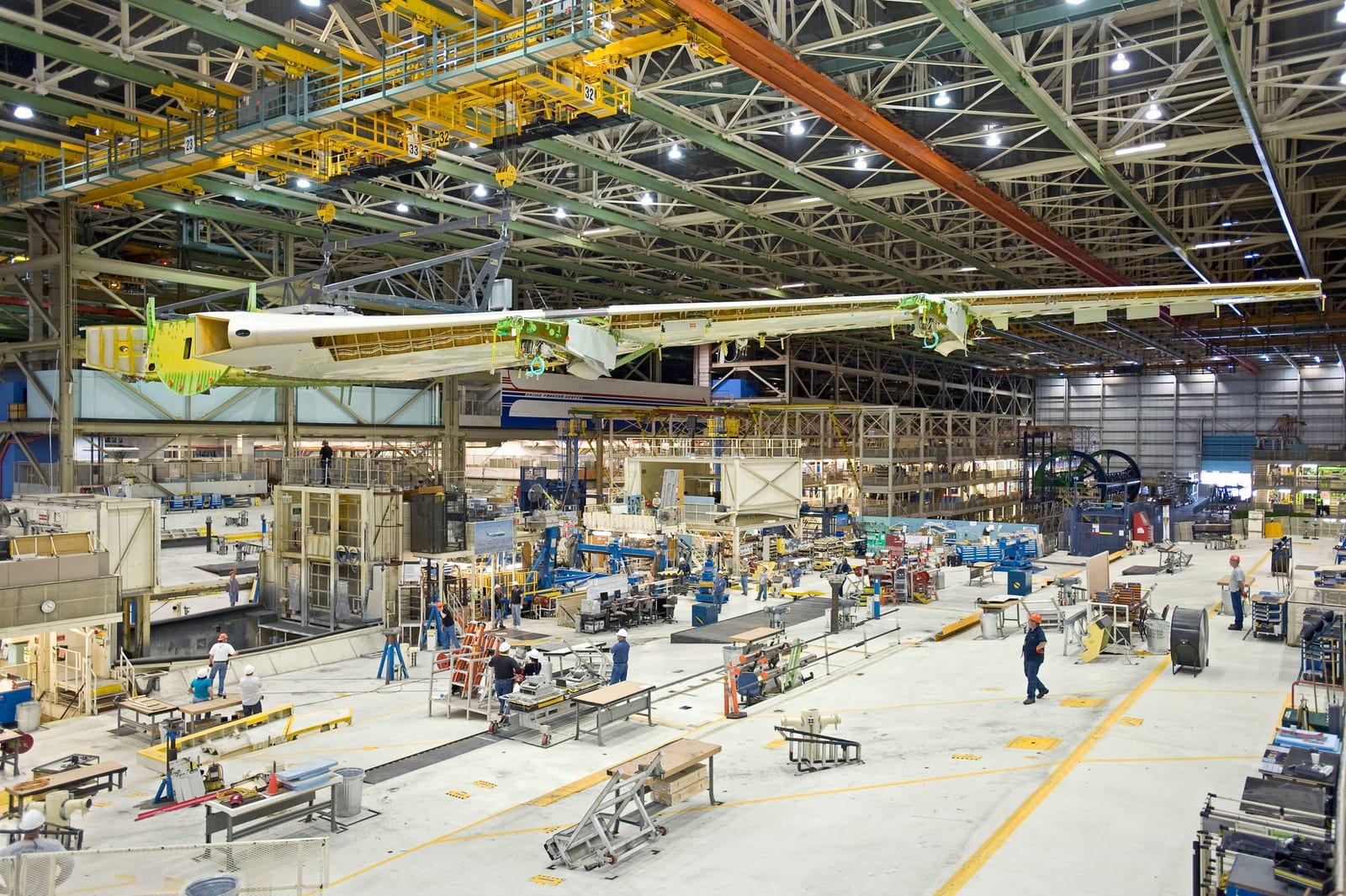
The Boeing 747-8 wing
The 747-8 replaced the 747-400 wing entirely - new airfoils, raked wingtips, fly-by-wire controls and a load-alleviation system that saved 1,400 lb.

747-8 vs 747-400
Externally similar, mechanically different - the 747-8 has a longer fuselage, a new wing, higher-bypass engines and a higher gross weight than the 747-400.
Boeing 747-400 vs 747-8
The 747-8 is bigger, heavier and quieter than the 747-400, with a new wing, GEnx-2B engines and a stretched fuselage - but it sells a fraction as well.
Compare aircraft sizes
Compare Boeing 747 variants, the Airbus A380 and Boeing 777 on one scale. Overlay their dimensions, switch views and see lengths and wingspans.
More in Aircraft Systems
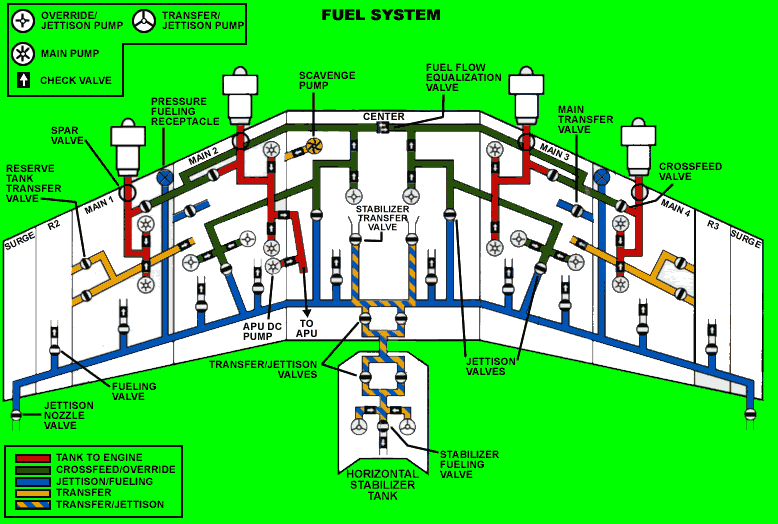
How the 747 works
The systems that make a 747 fly - fuel, hydraulics, landing gear, electrics and pressurisation, explained one at a time.
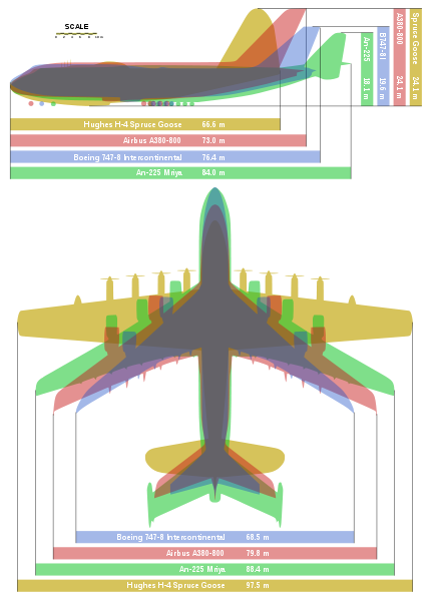
Boeing 747 specifications compared
Compare Boeing 747 dimensions, performance and detailed later-variant weights, fuel and cargo capacities, with Boeing planning configurations identified.
Boeing 747 Freighter Specifications
Compare Boeing 747-400F, 747-400ERF and 747-8F weights, structural payload, fuel and cargo volumes using identified Boeing planning configurations.
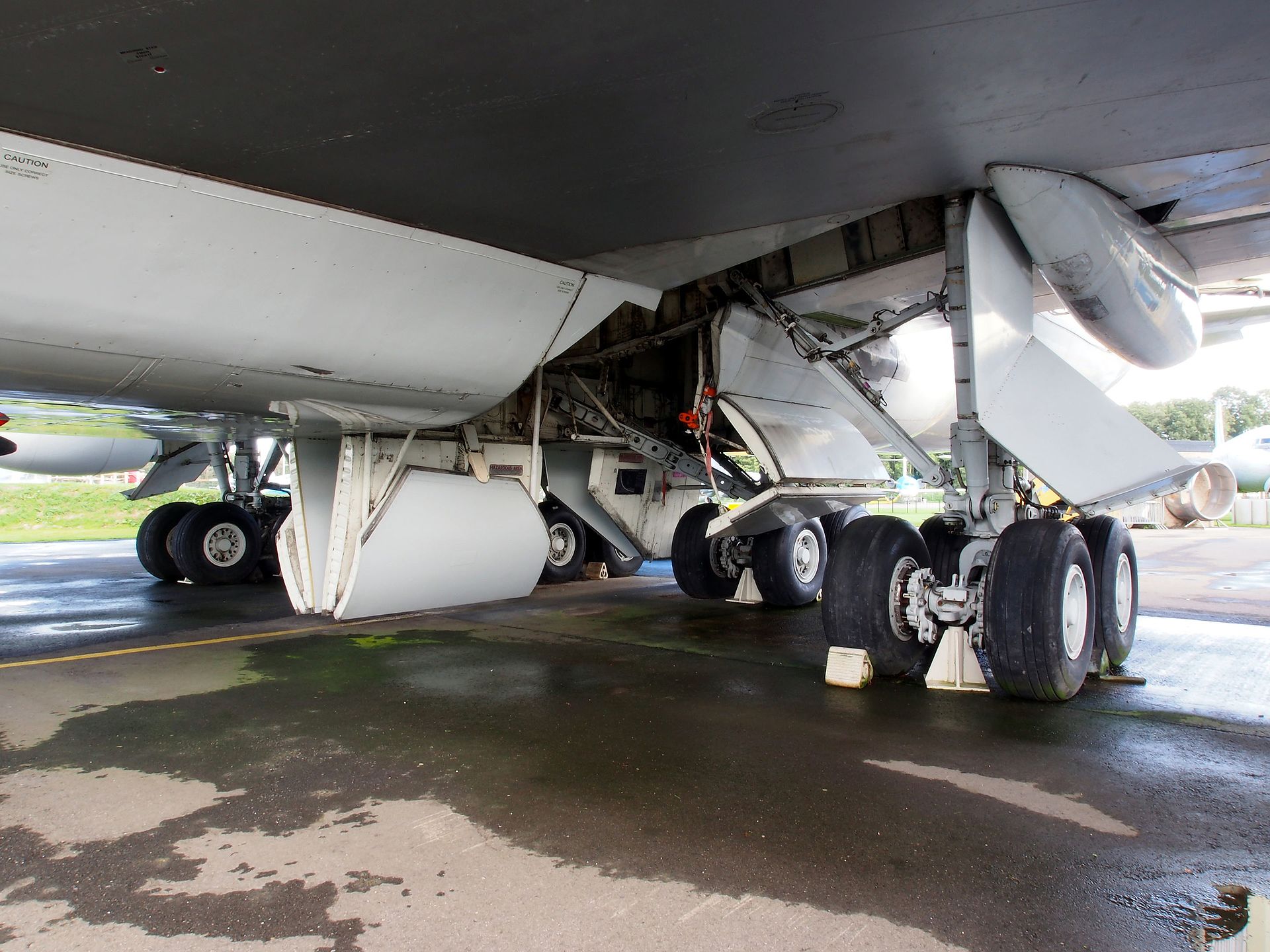
The four hydraulic systems
The 747 has four independent hydraulic systems, one per engine, each with a backup pump - and the reasoning behind splitting them that way.
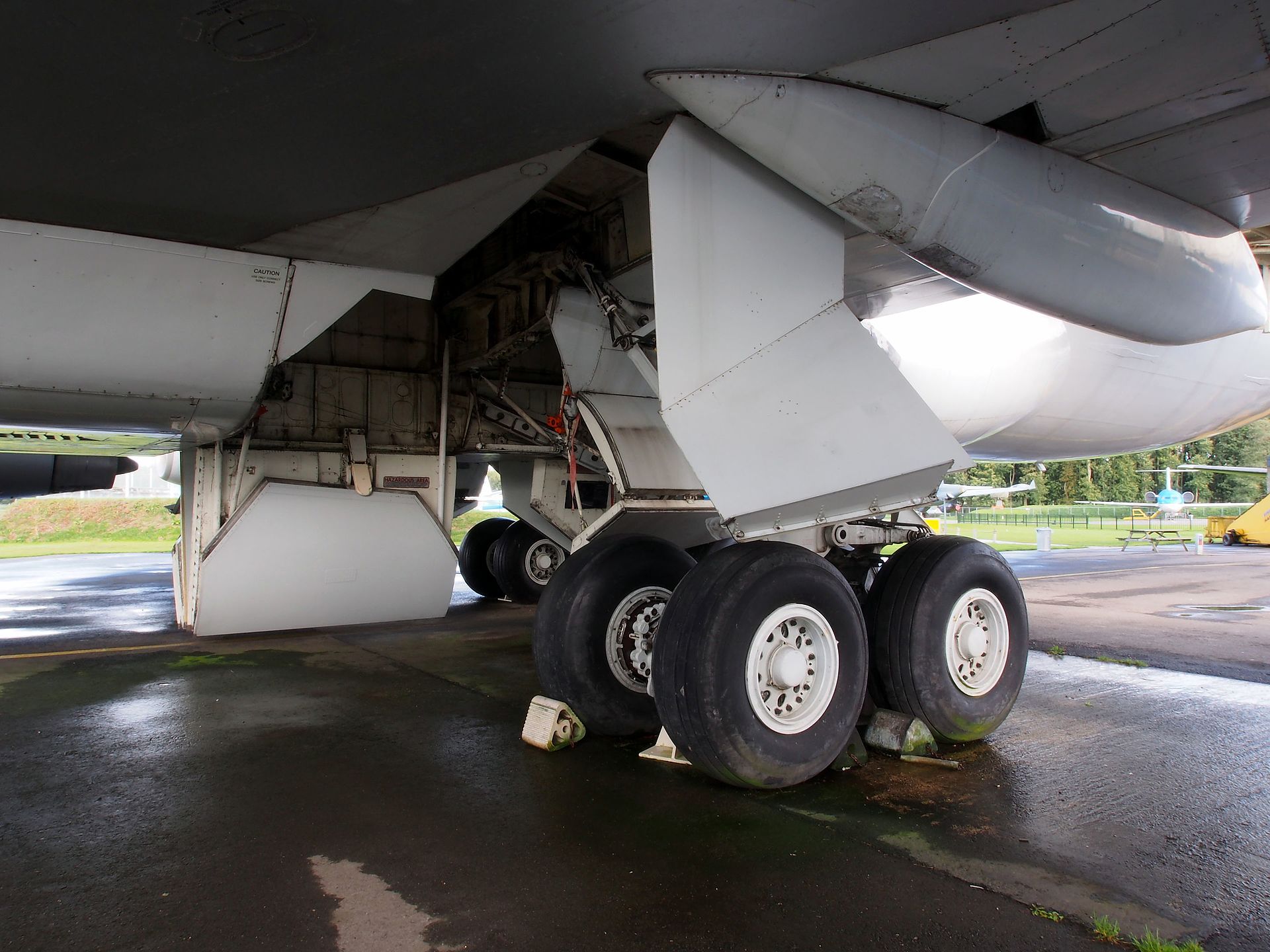
Eighteen wheels
The 747's five landing gear legs and 18 tyres, why the load is spread that way, and the body gear steering that stops it tearing up taxiways.
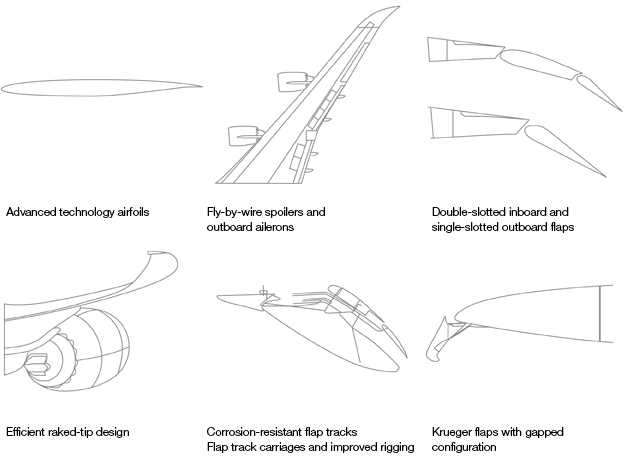
Flight controls and high-lift devices
How a 747 is flown - split ailerons, spoilers, triple-slotted flaps and Krueger leading edge devices, and what the 747-8 changed.