Boeing 747-400 vs 747-8
Vs the 747-400, the 747-8 stretches the fuselage 18 ft 3 in, adds a swept new wing and GEnx-2B engines, and raises maximum takeoff weight to 987,000 lb. It was the heaviest aircraft ever built in the United States.
The 747-8 is what happens when you take everything the 747-400 learned and rebuild the aircraft around a new wing. The two are related — the -8 is squarely a -400 descendant — but Boeing’s engineers changed enough that it flies, weighs and sells completely differently.
The fuselage
The -400 spans three decades of 747s at 231 ft 10 in. The -8 stretches that to 250 ft 2 in — the first fuselage-length change since the 747SP cut one short in 1976. The extra 18 ft 3 in carries 51 more passengers in a three-class layout.
The wing
The -400’s solved wing grew 6 ft tip extensions and 6 ft winglets to span 211 ft 5 in. The -8 threw that wing away. Its new wing spans 224 ft 5 in and ends in raked wingtips instead of winglets — the same trick used on the 777-300ER — which is the single clearest way to identify the aircraft.
The engines
| 747-400 | 747-8 | |
|---|---|---|
| Engines | PW4000, CF6-80C2 or RB211-524G/H | GEnx-2B only |
| Representative thrust | 56,500–63,300 lbf | 66,500 lbf |
| Removal? | Different engines on offer | Exclusivity deal with GE |
The GEnx-2B is derived from the 787’s engine, with a smaller fan to sit under a four-engined wing and bleed air restored for the 747’s systems. Boeing offered no alternative — the reverse of the engine-choice philosophy that had once saved the -200.
Range and payload
The -8 flies a little further (7,730 nmi vs 7,285 nmi) and carries more. But the interesting split is inside the programme itself: the -8F spent its extra weight on zero-fuel weight, buying payload, while the -400ERF had spent its increase on fuel, buying range. Same question, opposite answers.
The production reality
| 747-400 | 747-8 | |
|---|---|---|
| Built | 694 | 155 |
| First delivered | 1989 | 2011-12 |
| Last delivered | 2009 | January 2023 |
The -400 was the best-selling 747 generation and the -8 the smallest since the 747SP. The -8 entered service at the worst possible moment: four-engined types were being retired, not ordered. That it was the last 747 ever built is the whole story in one line.
| Manufacturer | Boeing |
|---|---|
| Variant | 747-400 vs 747-8 |
| First flight | 29 April 1988 (747-400); -8F entered service October 2011 |
| Introduced | 9 February 1989 (747-400) vs 1 June 2012 (747-8I, Lufthansa) |
| Status | -400 mostly retired from passenger service; -8 passenger and freighter versions still in service |
| Engines | PW4000, CF6-80C2 or RB211-524G/H vs General Electric GEnx-2B only |
| Typical capacity | 416 vs 467 (3-class) |
| Range | 7,285 nmi (13,490 km) vs 7,730 nmi (14,310 km) |
| Length | 231 ft 10 in (70.66 m) vs 250 ft 2 in (76.25 m) |
| Wingspan | 211 ft 5 in (64.44 m) vs 224 ft 5 in (68.40 m) |
| Max takeoff weight | 875,000 lb (396.9 t) vs 987,000 lb (447.7 t) |
| Cruise speed | Mach 0.855 vs Mach 0.855 |
| Number built | 694 (all -400 versions) vs 155 (all -8 versions) |
Frequently asked questions
- How is the 747-8 bigger than the 747-400?
- The 747-8 is 18 ft 3 in longer, has a 13 ft larger wingspan from its new raked-tip wing, and carries a 987,000 lb maximum takeoff weight against the -400's 875,000 lb — the heaviest aircraft ever built in the United States.
- Why did the 747-8 sell so much worse than the 747-400?
- It entered service in 2011-12, exactly when four-engined long-haul fleets were being replaced by pairs of quieter, cheaper twins. Only 155 were built against 694 -400s.
Sources
Facts on this page are checked against the primary and institutional references below.
Related topics
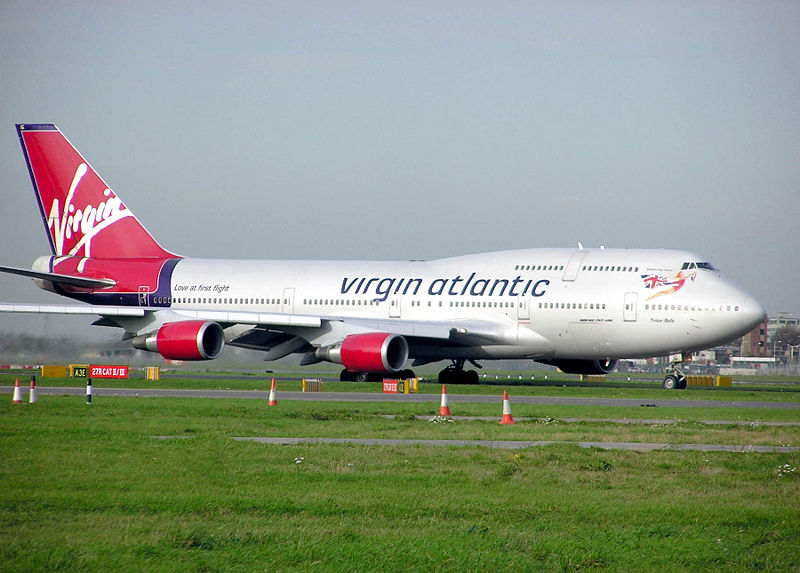
747-400
Announced in 1985, the 747-400 added winglets, a two-crew glass cockpit and a new interior, becoming the best-selling 747 generation.
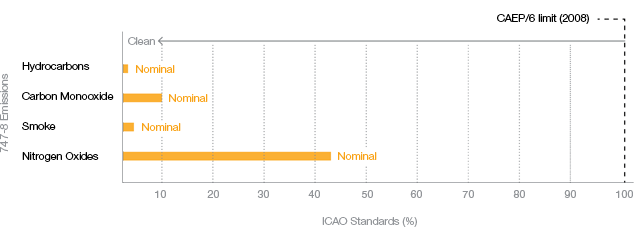
The 747-8 and the environment
The 747-8 meets emissions limits for hydrocarbons, carbon monoxide, smoke and nitrogen oxides, with a noise footprint about 30 percent smaller than the 747-400.
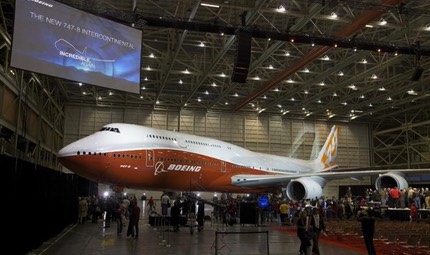
Boeing 747: History, Variants and Legacy
A complete reference to the Boeing 747, built from 1968 to 2023 — every variant from the 747-100 to the 747-8, plus special-mission jumbos and photos.
Boeing 747 auxiliary power unit (APU)
A small gas turbine in the 747’s tail cone supplies bleed air and electricity on the ground and as a backup in flight.
Boeing 747 cargo-loading system
The 747 freighter’s upward-opening nose door and 96×125-inch pallet system grew out of a 1960s US Air Force requirement.
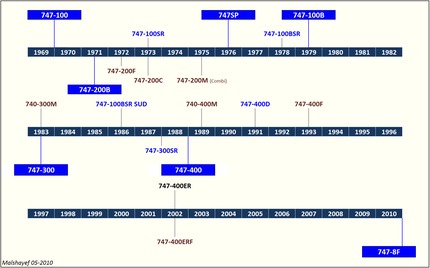
Boeing 747 Family
Every Boeing 747 variant built between 1968 and 2023 — the 747-100, -200, -300, -400 and 747-8, with freighter, combi and short-range models explained.
More in Features
Features
Longer pieces on the Boeing 747 — the factory built to make it, how it compares to the A380, what became of the retired fleet, and what it is like to fly.
How to Identify Boeing 747 Variants
Identify Boeing 747 variants from photographs using upper-deck length, wingtip shape, fuselage length, engine nacelles and freighter doors.
The building that had to be built first
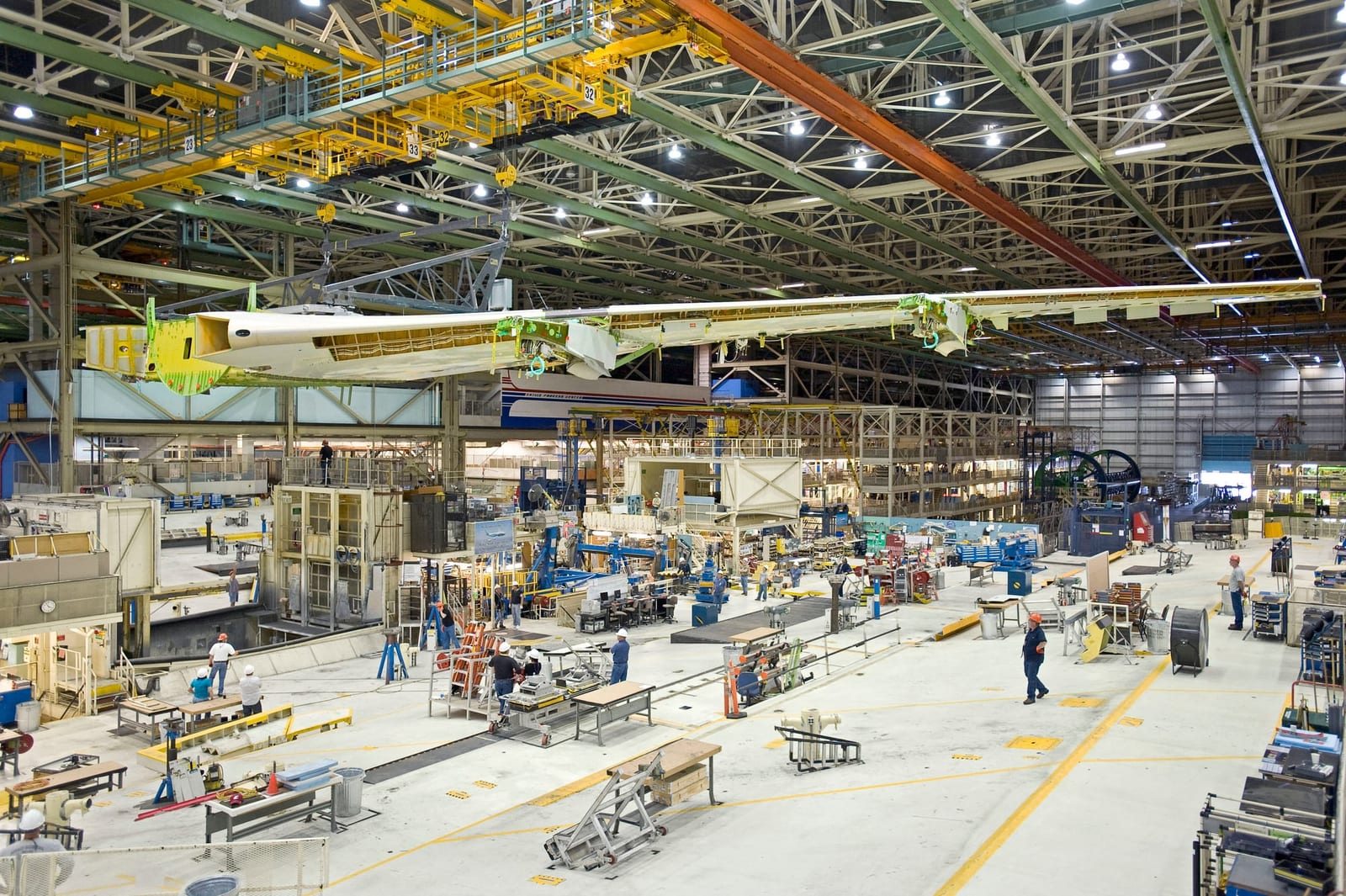
Boeing had no building big enough for the 747, so it built the largest building in the world by volume — and assembled the aeroplane while it was going up.
747 versus A380
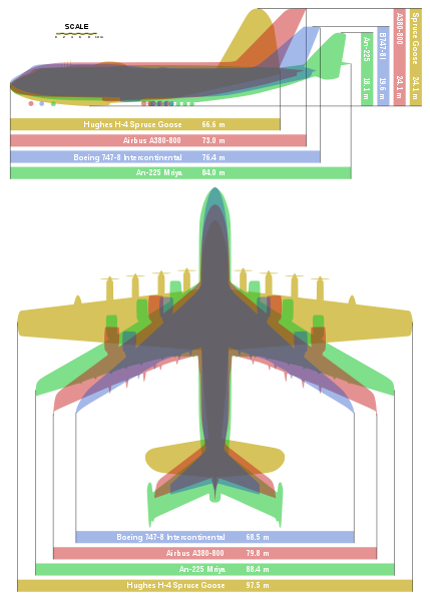
The two largest airliners ever built, compared — size, capacity, economics, and why both are now out of production.
Where the 747s went
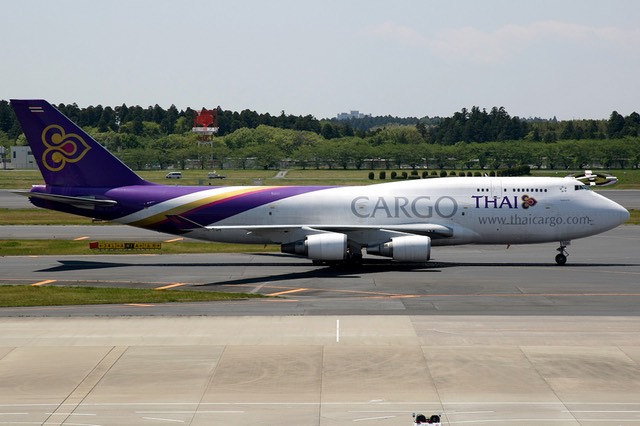
Most retired 747s were scrapped. Others became freighters, museum pieces, restaurants, a hotel — and one launched satellites into orbit.
Flying the 747
What the 747 is like to fly — the type rating, the view from 30 feet up, the handling, and why pilots talk about it the way they do.
