Boeing 747 auxiliary power unit (APU)
The 747’s APU is a gas-turbine generator in the tail cone running while main engines are off. The 747-400 replaced the classic unit with the far more economical Pratt & Whitney Canada PW901A (two 90 kVA generators); the 747-8’s PW901C ups that to two 120 kVA units.
While the 747 sits at the gate with engines shut down, a small gas turbine in the tail cone — the auxiliary power unit — drives bleed air for cabin conditioning and engine starts, and powers generators for the electrical system. It can also supply emergency backup power in flight.
| Key facts | |
|---|---|
| 747-400 APU | Pratt & Whitney Canada PW901A |
| 747-8 APU | PW901C (derived from the PW901A) |
| Electrical output | 747-400: two 90 kVA generators; 747-8: two 120 kVA generators |
| Role | Bleed air for cabin conditioning and engine start; ground and in-flight electrical backup |
The -400’s PW901A was a new APU for the Series 400 with roughly 40 percent lower fuel burn than the unit it replaced. Its load compressor delivers bleed air for cabin air conditioning and main-engine starting, while the gearbox-mounted generators supply electrical power.
The 747-8’s PW901C keeps the same design but doubles the electrical rating to two 120 kVA generators. Compared with its predecessor, the 1970s-era classic 747 APU burned much more fuel for the same output.
Sources
- Boeing 747-400 guide — Aircraft Commerce
- Commercial auxiliary power units — Pratt & Whitney
- PW901A airworthiness directive — US Federal Register
Sources
Facts on this page are checked against the primary and institutional references below.
- Boeing 747-400 guide — Aircraft Commerce
- Commercial auxiliary power units — Pratt & Whitney
- PW901A airworthiness directive — US Federal Register
Related topics
Boeing 747-400 vs 747-8
The 747-8 is bigger, heavier and quieter than the 747-400, with a new wing, GEnx-2B engines and a stretched fuselage — but it sells a fraction as well.
The 747-8 and the environment
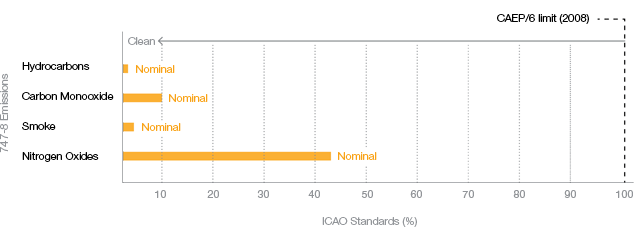
The 747-8 meets emissions limits for hydrocarbons, carbon monoxide, smoke and nitrogen oxides, with a noise footprint about 30 percent smaller than the 747-400.
Boeing 747: History, Variants and Legacy
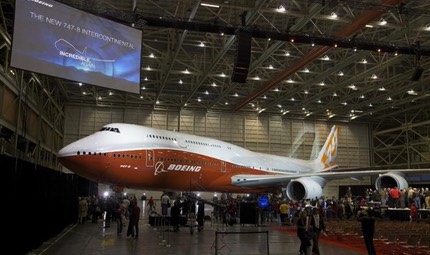
A complete reference to the Boeing 747, built from 1968 to 2023 — every variant from the 747-100 to the 747-8, plus special-mission jumbos and photos.
Boeing 747 Family
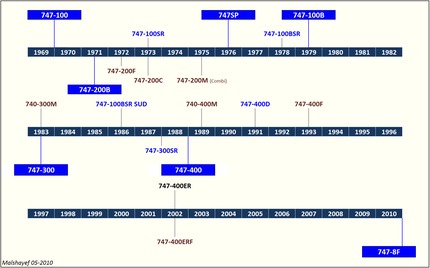
Every Boeing 747 variant built between 1968 and 2023 — the 747-100, -200, -300, -400 and 747-8, with freighter, combi and short-range models explained.
Boeing 747 Production Data
Download Boeing 747 production totals by generation, with a transparent method and links to Boeing's final programme record and technical documents.

Boeing 747-8 Flight Deck
The 747-8 flight deck adds 787-derived displays, electronic checklists and an airport moving map while keeping a common type rating with the 747-400.
More in Aircraft Systems
How the 747 works
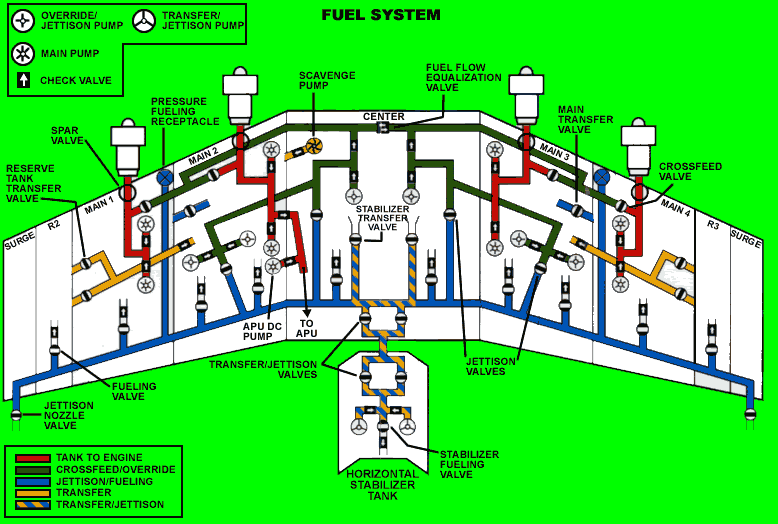
The systems that make a 747 fly — fuel, hydraulics, landing gear, electrics and pressurisation, explained one at a time.
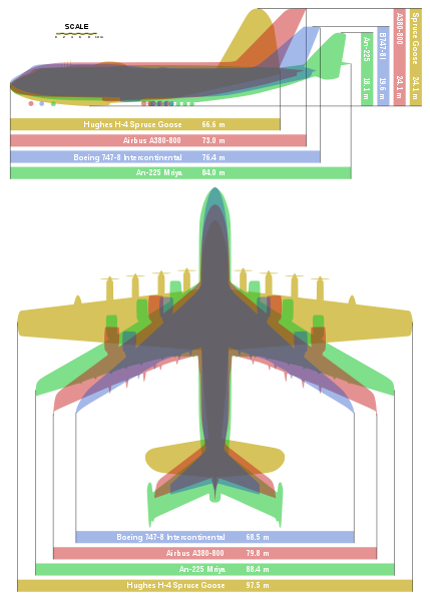
Boeing 747 specifications compared
Every Boeing 747 variant side by side — length, wingspan, weights, capacity, range, cruise speed and engines, with sources noted.
The four hydraulic systems
The 747 has four independent hydraulic systems, one per engine, each with a backup pump — and the reasoning behind splitting them that way.
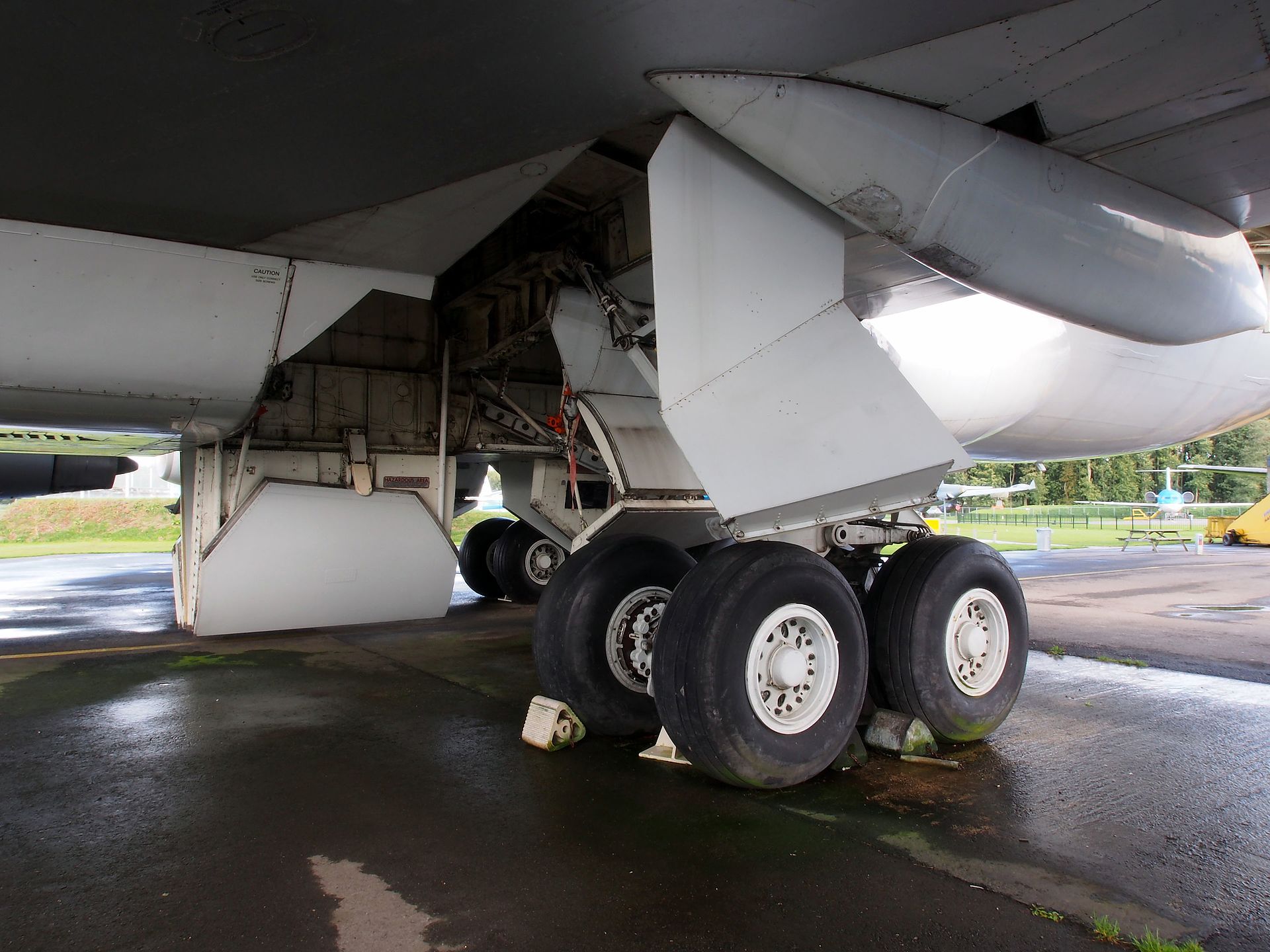
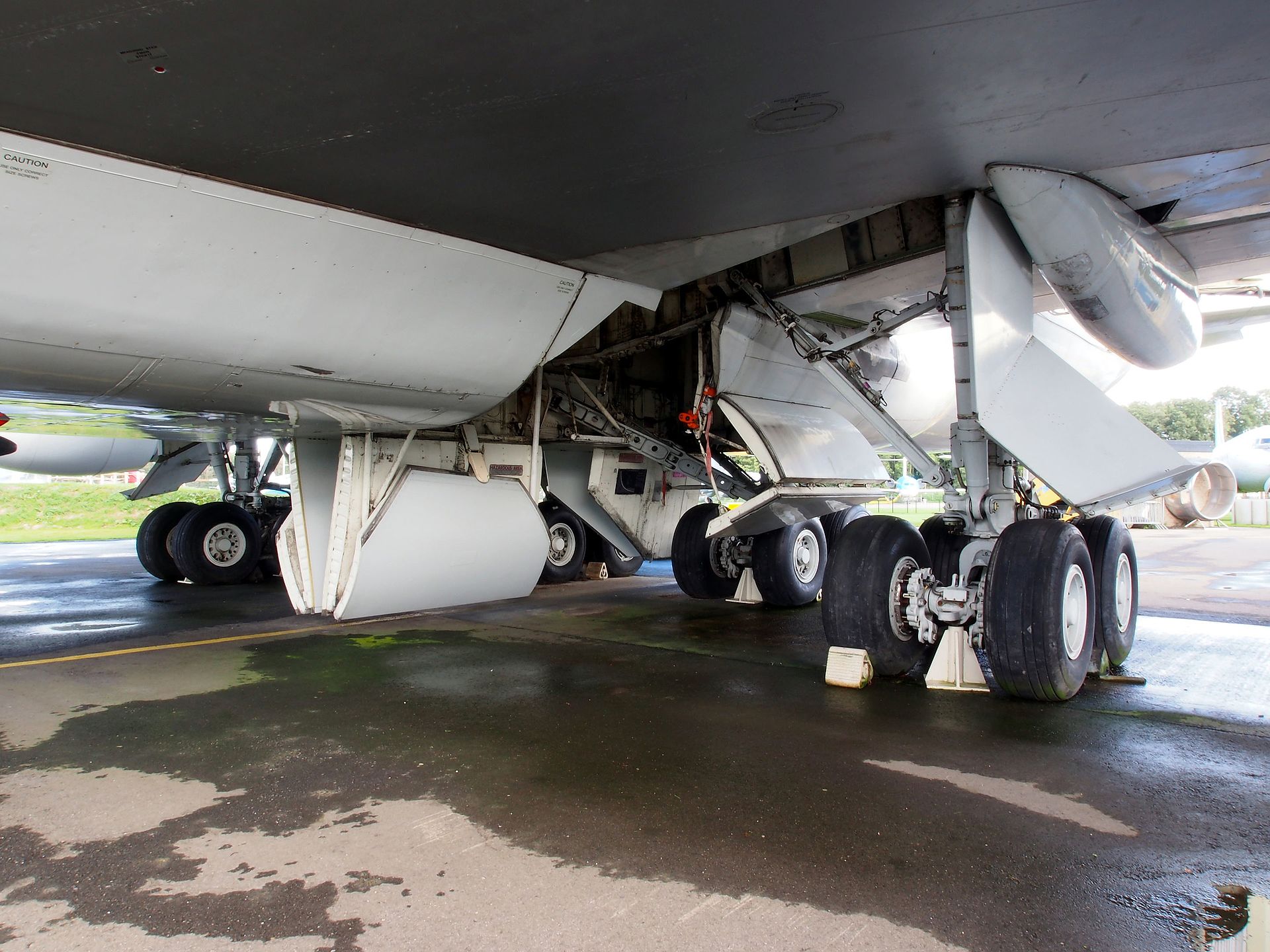
Eighteen wheels
The 747's five landing gear legs and 18 tyres, why the load is spread that way, and the body gear steering that stops it tearing up taxiways.
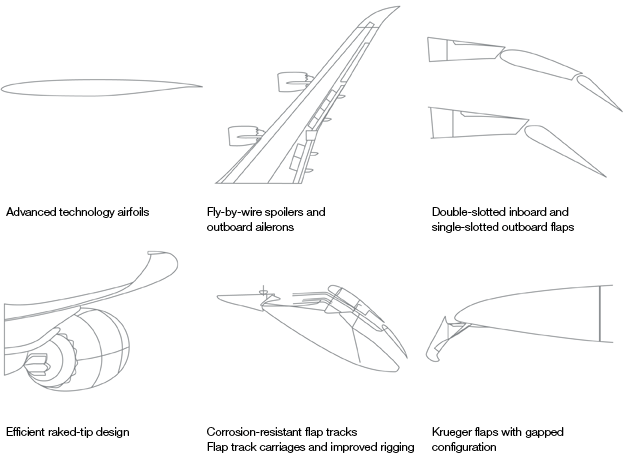
Flight controls and high-lift devices
How a 747 is flown — split ailerons, spoilers, triple-slotted flaps and Krueger leading edge devices, and what the 747-8 changed.
The electrical system
Four 90 kVA generators, one per engine, running in parallel through a tie bus — plus two APU generators for the ground.