Engines through the generations
The 747 made the high-bypass turbofan a commercial reality, and engine choice turned out to matter as much commercially as technically.

The 747 could not have existed without the high-bypass turbofan, and the high-bypass turbofan would not have matured as quickly without the 747. The two arrived together, and the first attempt was difficult.
The generations
| Variant | Engine options |
|---|---|
| 747-100 | Pratt & Whitney JT9D |
| 747-200 / -300 | JT9D, General Electric CF6, Rolls-Royce RB211 |
| 747-400 | PW4000, CF6-80C2, RB211-524G/H — 56,500–63,300 lbf |
| 747-8 | General Electric GEnx-2B only — 66,500 lbf |
Why bypass ratio matters
A turbojet produces thrust by throwing a small mass of air backwards very fast. A high-bypass turbofan throws a much larger mass of air backwards more slowly, most of it bypassing the core entirely.
For a given thrust that is far more efficient, and much quieter, because jet noise rises steeply with exhaust velocity. It is the single reason a 747 can cross an ocean economically, and the reason it is not deafening.
It also explains why thrust reversers on a 747 redirect the cold bypass air rather than the hot core exhaust: that is where most of the thrust is.
The JT9D’s difficult start
The first 747s were nearly grounded by their engines. The JT9D was the first high-bypass turbofan on a commercial airliner and it was rushed to meet the aircraft’s schedule.
Early engines suffered ovalisation — the casing distorting out of round under thermal and mechanical load, causing the blade tips to rub. Pan Am’s first aircraft spent time parked awaiting engines, with concrete blocks hung on the pylons to keep them level.
Later JT9D models resolved it, and the CF6 and RB211 alternatives from the 747-200 gave airlines a way out.
Engine choice as a commercial weapon
This turns out to be one of the clearest patterns in the 747’s sales history.
The 747-100 was a Pratt & Whitney aircraft: 168 built. The 747-200 could be bought with any of three manufacturers’ engines: 393 built.
Airlines maintain engines, not just airframes. Being able to buy a 747 that shared a powerplant with the rest of the fleet removed a barrier that had kept several carriers out entirely.
The 747-8 reversed it. An exclusivity agreement between GE and Boeing meant the GEnx-2B was the only engine available for at least ten years. 155 were built.
The GEnx-2B
Derived from the 787’s GEnx, with two changes for the 747: a smaller fan diameter to fit under a four-engined wing, and the restoration of bleed air, which the 787’s more-electric architecture does not provide.
It burns about 16 percent less fuel per seat than the 747-400’s engines, and its chevron-edged nacelles are a large part of why the 747-8’s noise footprint is around 30 percent smaller.
The fifth pod
Every 747 has a hardpoint on the left wing, between the fuselage and the inboard engine, for ferrying a spare engine to an aircraft stranded without one. The engine is carried inert, usually with the fan removed and the inlet faired over. More on that here.
Related
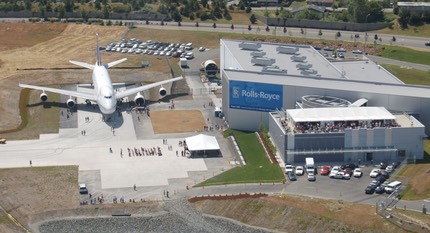
Engine makers use four-engined aircraft as flying testbeds: one position can carry the engine under test while three known engines fly the aeroplane.

Video
Frequently asked questions
- What engines does a Boeing 747 use?
- It depends on the generation. The 747-100 used the Pratt & Whitney JT9D. The -200 onwards added General Electric CF6 and Rolls-Royce RB211 options. The 747-400 offered the PW4000, CF6-80C2 or RB211-524G/H. The 747-8 was offered with only one engine, the General Electric GEnx-2B.
Sources
Facts on this page are checked against the primary and institutional references below.
Related topics
Boeing 747-100 vs 747-200
What the 747-200 added to the original 747-100: more thrust, higher takeoff weights, a ten-window upper deck and freighter, combi and convertible variants.
Boeing 747-200 vs 747-300
The 747-300's stretched upper deck gave it about ten percent more capacity than the 747-200, with quieter engines and no change in length or weight limits.
Boeing 747 engines compared
The three 747 engines — Pratt & Whitney's JT9D, General Electric's CF6 and Rolls-Royce's RB211 — and the multi-engine choice that saved the programme.
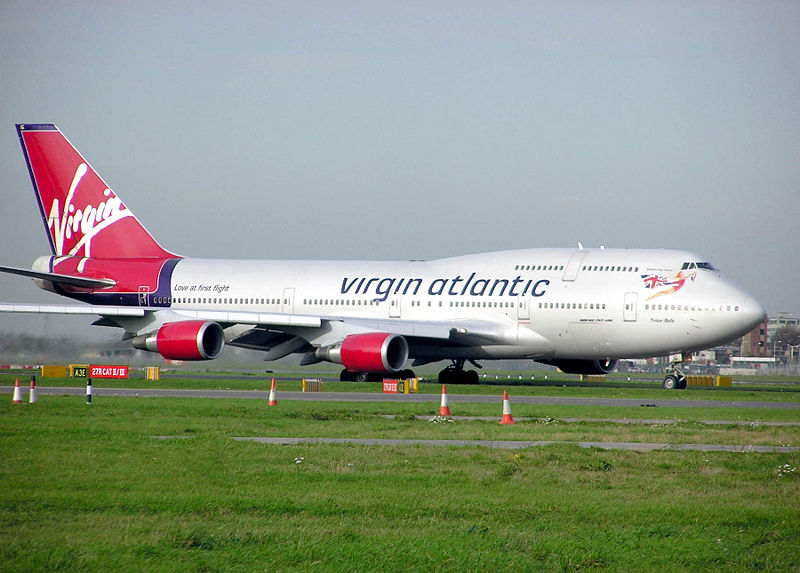
747-400
Announced in 1985, the 747-400 added winglets, a two-crew glass cockpit and a new interior, becoming the best-selling 747 generation.
Boeing 747-400 vs 747-8
The 747-8 is bigger, heavier and quieter than the 747-400, with a new wing, GEnx-2B engines and a stretched fuselage — but it sells a fraction as well.
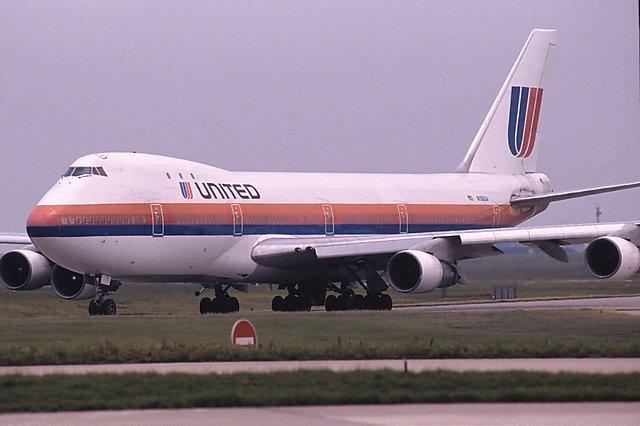
747-100B
The 747-100B added a stronger airframe and undercarriage and a 750,000 lb maximum takeoff weight. Only Iran Air and Saudia took delivery.
More in Aircraft Systems
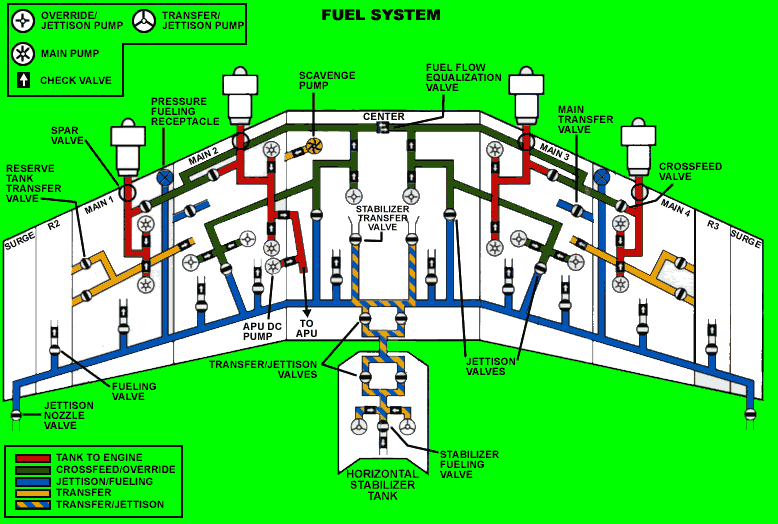
How the 747 works
The systems that make a 747 fly — fuel, hydraulics, landing gear, electrics and pressurisation, explained one at a time.
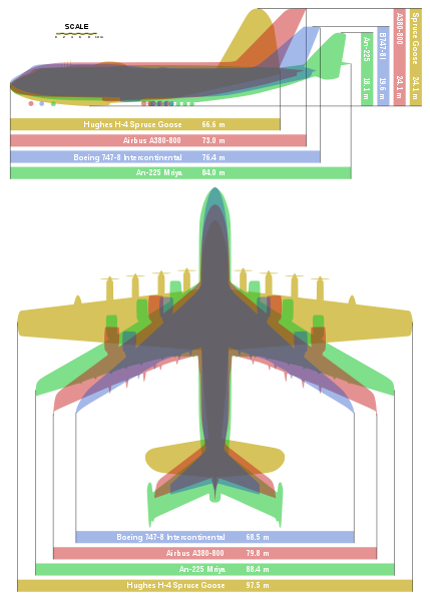
Boeing 747 specifications compared
Every Boeing 747 variant side by side — length, wingspan, weights, capacity, range, cruise speed and engines, with sources noted.
The four hydraulic systems
The 747 has four independent hydraulic systems, one per engine, each with a backup pump — and the reasoning behind splitting them that way.
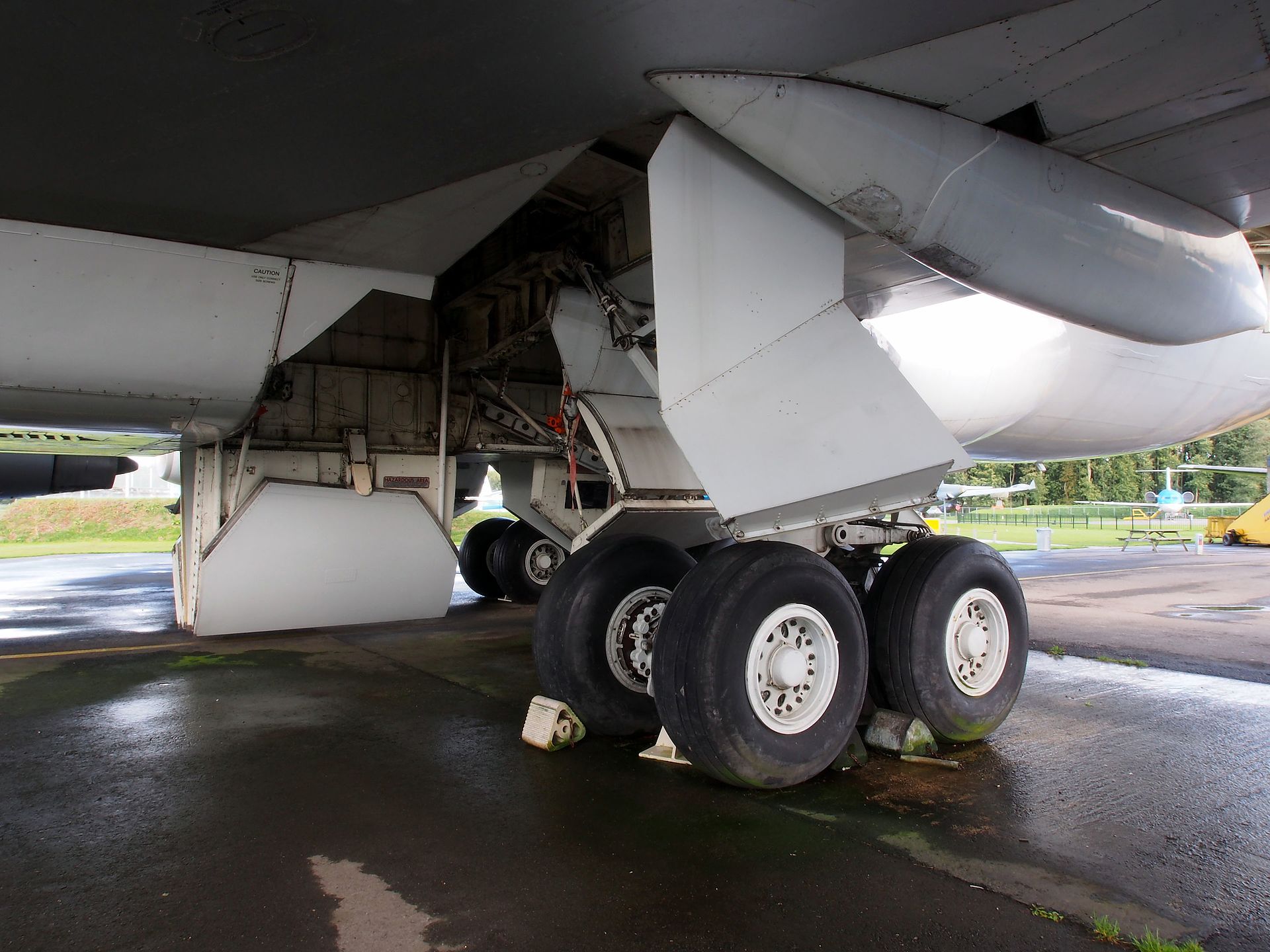
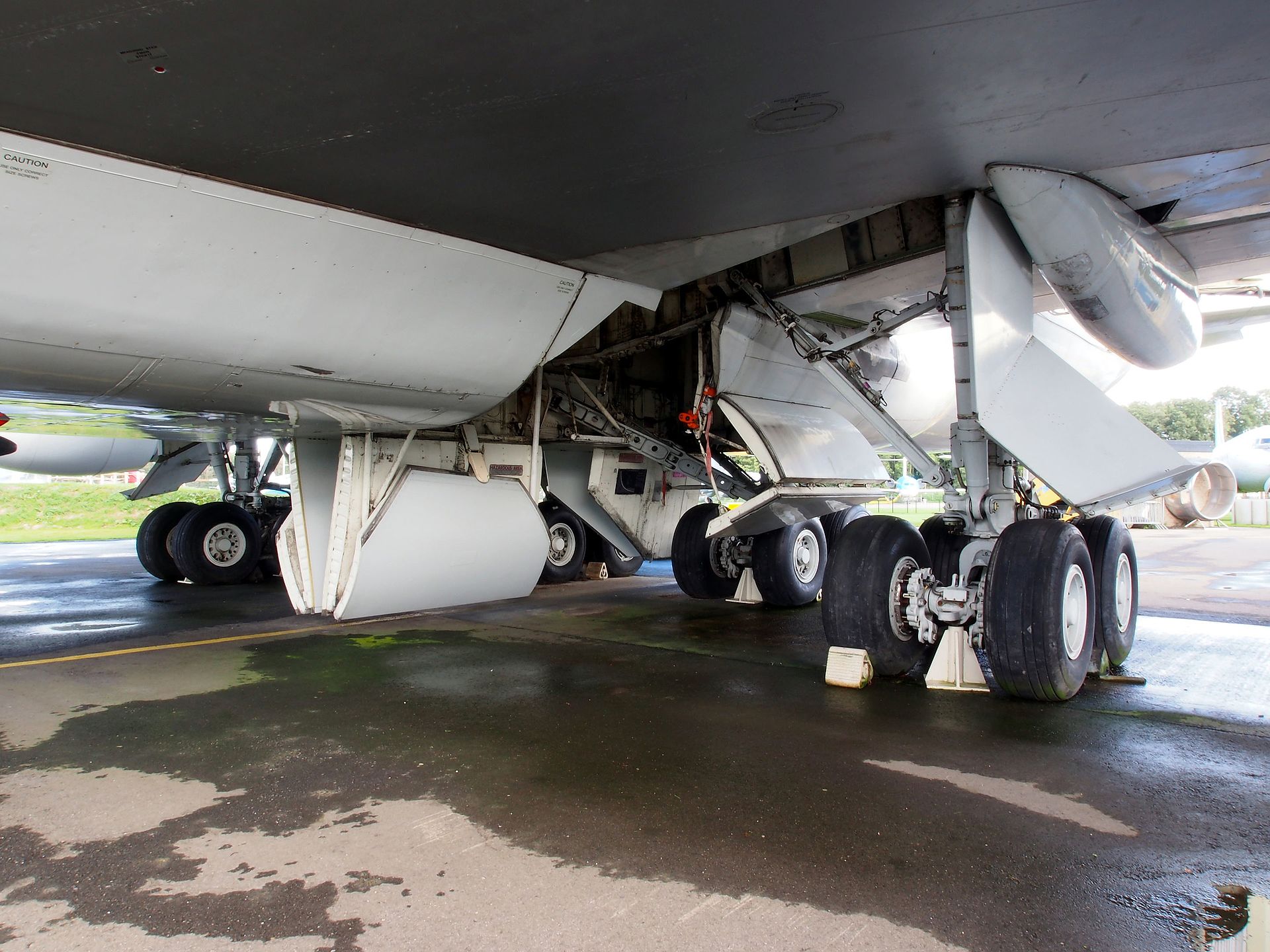
Eighteen wheels
The 747's five landing gear legs and 18 tyres, why the load is spread that way, and the body gear steering that stops it tearing up taxiways.
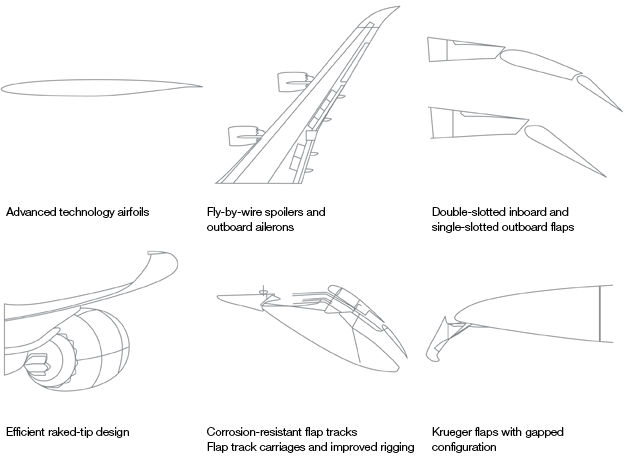
Flight controls and high-lift devices
How a 747 is flown — split ailerons, spoilers, triple-slotted flaps and Krueger leading edge devices, and what the 747-8 changed.
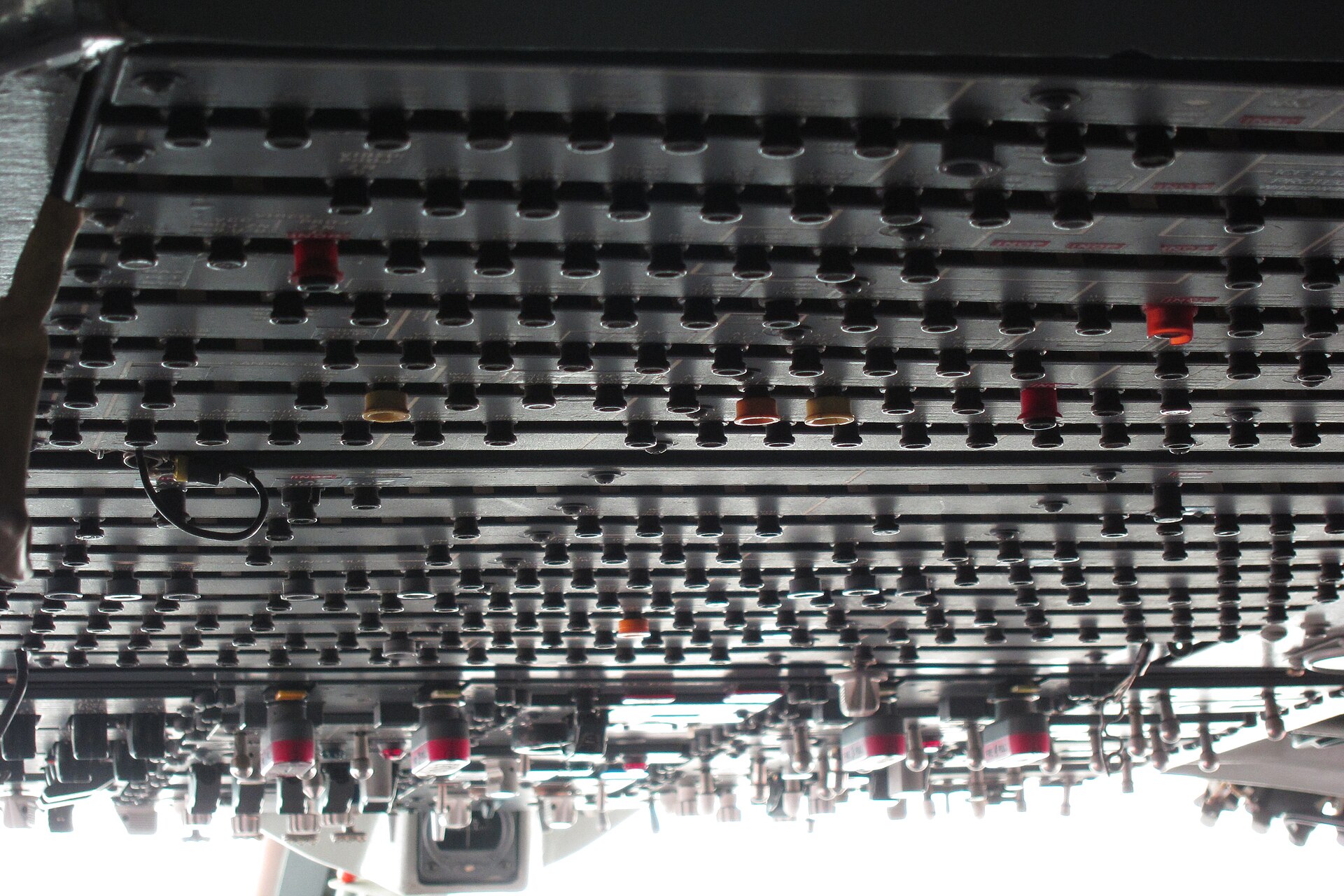
The electrical system
Four 90 kVA generators, one per engine, running in parallel through a tie bus — plus two APU generators for the ground.