Boeing 747-200 vs 747-300
The 747-300 was a 747-200 with the upper deck stretched 23 ft 4 in, adding about ten percent capacity at the same weights and length.
The 747-300 is the quietest of the 747 upgrades: no new wing, no new weights, no record-breaking range. It was built when airlines had a different problem — how to carry more people without growing the airport.
What the stretch did
Fourteen years after the design’s first flight, Boeing stretched the upper deck by 23 ft 4 in, turning it from a ten-window lounge back into the high-density cabin the “wide-body” concept had promised. The main deck never changed: the entire increase in the aircraft’s 10 percent capacity gain is upstairs.
| 747-200 | 747-300 | |
|---|---|---|
| Upper deck length | 10 windows (original) | + 23 ft 4 in; standard from here on |
| Passengers, 3-class | 366 | 400 |
| Length | 231 ft 10 in | 231 ft 10 in |
| Max takeoff weight | up to 833,000 lb | up to 833,000 lb |
The deck was long enough that Boeing moved the upper-deck escape slide from the front to the rear of the upper cabin — the only external sign of the change visible from outside the aircraft.
Why so few were built
The -300’s problem was timing. It entered service in 1983, and within two years Boeing had announced the 747-400, which took every improvement of the -300 — including its stretch — and added the winglets, glass cockpit, tail fuel and new engines that made the earlier aircraft look old.
Only 81 -300s were built, but the stretch itself survived: it is the upper deck every later 747 carried, and the reason a 747-400 looks so different from a 747-100 despite sharing the same fuselage length.
The one thing Boeing never built
Boeing produced no factory 747-300 freighter. The passenger -300’s main-deck windows made conversion more work for less structural value, and by 2000 the market was converting it anyway. Every 747-300F in the record is a conversion, not a production freighter — the gap between what Boeing delivered and what the market needed.
| Manufacturer | Boeing |
|---|---|
| Variant | 747-200 vs 747-300 |
| First flight | 5 October 1982 (747-300); -200 in service February 1971 |
| Introduced | 1971 vs 1983 |
| Status | Both retired from mainline passenger service |
| Engines | JT9D, CF6 or RB211 vs JT9D-7R4, CF6-80A or RB211-524D4 |
| Typical capacity | 366 vs 400 (3-class) |
| Range | ~6,560 nmi vs ~6,700 nmi |
| Length | 231 ft 10 in (70.66 m) |
| Wingspan | 195 ft 8 in (59.64 m) |
| Max takeoff weight | up to 833,000 lb (378 t) |
| Number built | 393 (all -200 versions) vs 81 (all -300 versions) |
Frequently asked questions
- What does the stretched upper deck on a 747-300 add?
- The upper deck grew from a ten-window lounge to a 23 ft 4 in longer cabin, taking the aircraft from about 366 to 400 seats in three classes — roughly ten percent more capacity at the same fuselage length and weights.
- Did Boeing build a new 747-300 freighter?
- No. Boeing never delivered a factory-built 747-300 freighter; the -300F examples flying from 2000 were passenger aircraft converted for all-cargo use.
Sources
Facts on this page are checked against the primary and institutional references below.
Related topics
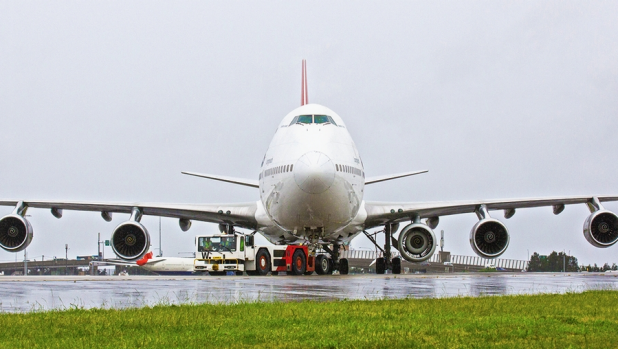
Engines through the generations
Every engine the 747 was offered with, from the troubled JT9D to the GEnx-2B — and why engine choice decided how well each variant sold.
General Electric CF6 on the Boeing 747
The General Electric CF6 powered 747s from the -200 through the -400ER, beginning with the first CF6 747 ordered by KLM in 1975.
Rolls-Royce RB211-524 on the Boeing 747
Rolls-Royce RB211-524 engines powered British Airways, Qantas and other 747s from 1977 to the 747-400 and -400ER.
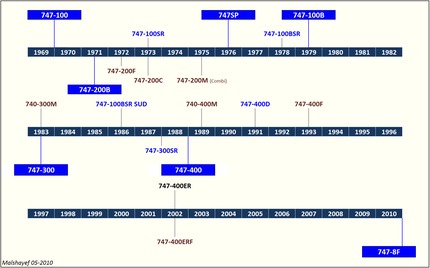
Boeing 747 Family
Every Boeing 747 variant built between 1968 and 2023 — the 747-100, -200, -300, -400 and 747-8, with freighter, combi and short-range models explained.
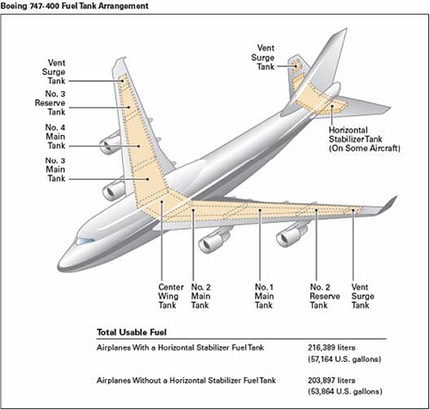
Boeing 747 Fuel System
Detailed Boeing 747 fuel system guide covering tank layout, pumps, transfer, crossfeed, refuelling, jettison, safety and every major 747 variant.
Boeing 747 Production Data
Download Boeing 747 production totals by generation, with a transparent method and links to Boeing's final programme record and technical documents.
More in Features
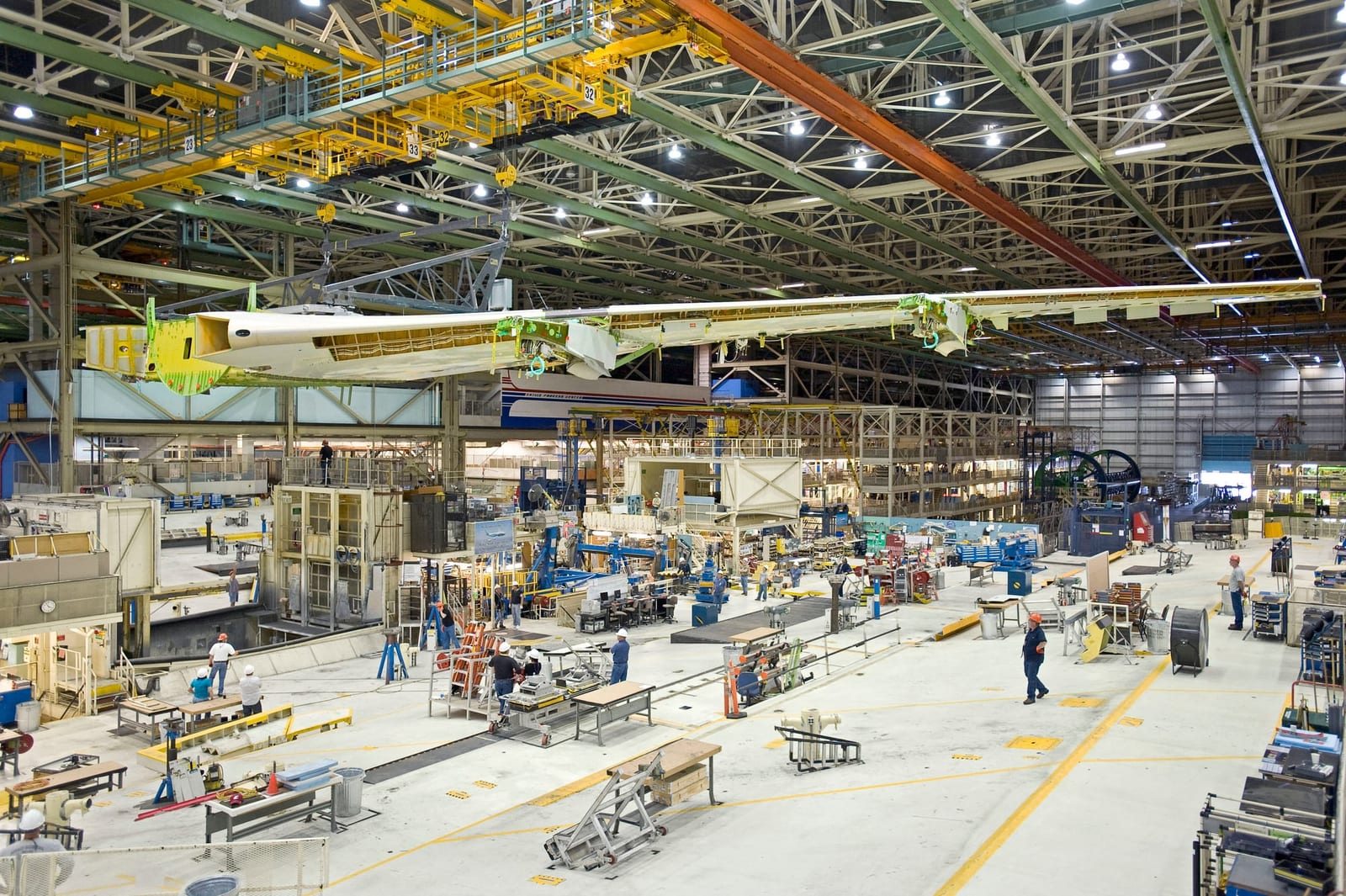
Features
Longer pieces on the Boeing 747 — the factory built to make it, how it compares to the A380, what became of the retired fleet, and what it is like to fly.
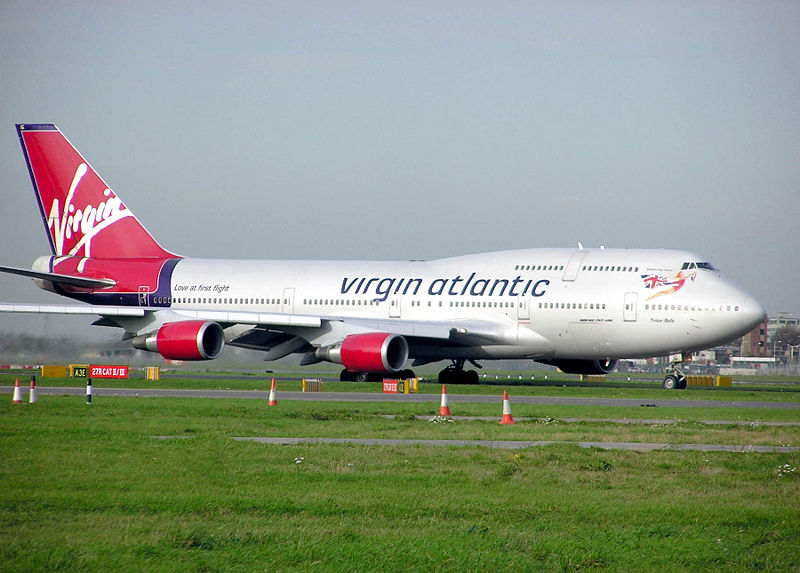
How to Identify Boeing 747 Variants
Identify Boeing 747 variants from photographs using upper-deck length, wingtip shape, fuselage length, engine nacelles and freighter doors.
The building that had to be built first
Boeing had no building big enough for the 747, so it built the largest building in the world by volume — and assembled the aeroplane while it was going up.
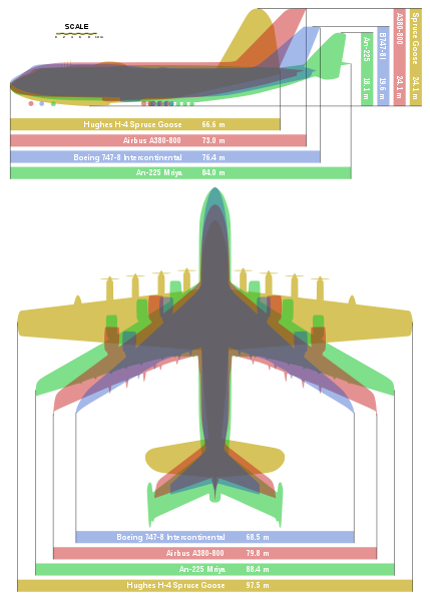
747 versus A380
The two largest airliners ever built, compared — size, capacity, economics, and why both are now out of production.

Where the 747s went
Most retired 747s were scrapped. Others became freighters, museum pieces, restaurants, a hotel — and one launched satellites into orbit.
Flying the 747
What the 747 is like to fly — the type rating, the view from 30 feet up, the handling, and why pilots talk about it the way they do.
