Air India Boeing 747 Seat Maps

Air India's 747-400 carried 12 First, 26 Business and 385 economy seats over almost its whole career, with the upstairs cabin entirely business class, while its two 747-300M Combis put 32 business seats on the upper deck.

Air India introduced the 747-200B in 1971 and flew a 747 line for a full half-century, retiring its 747-400s in 2021. Its 747s opened daily India–Europe and India–US services, and the cabin was unusual in one respect that lasted almost to the end: the entire upper deck was business class.

The 747-400: 423 seats for thirty years

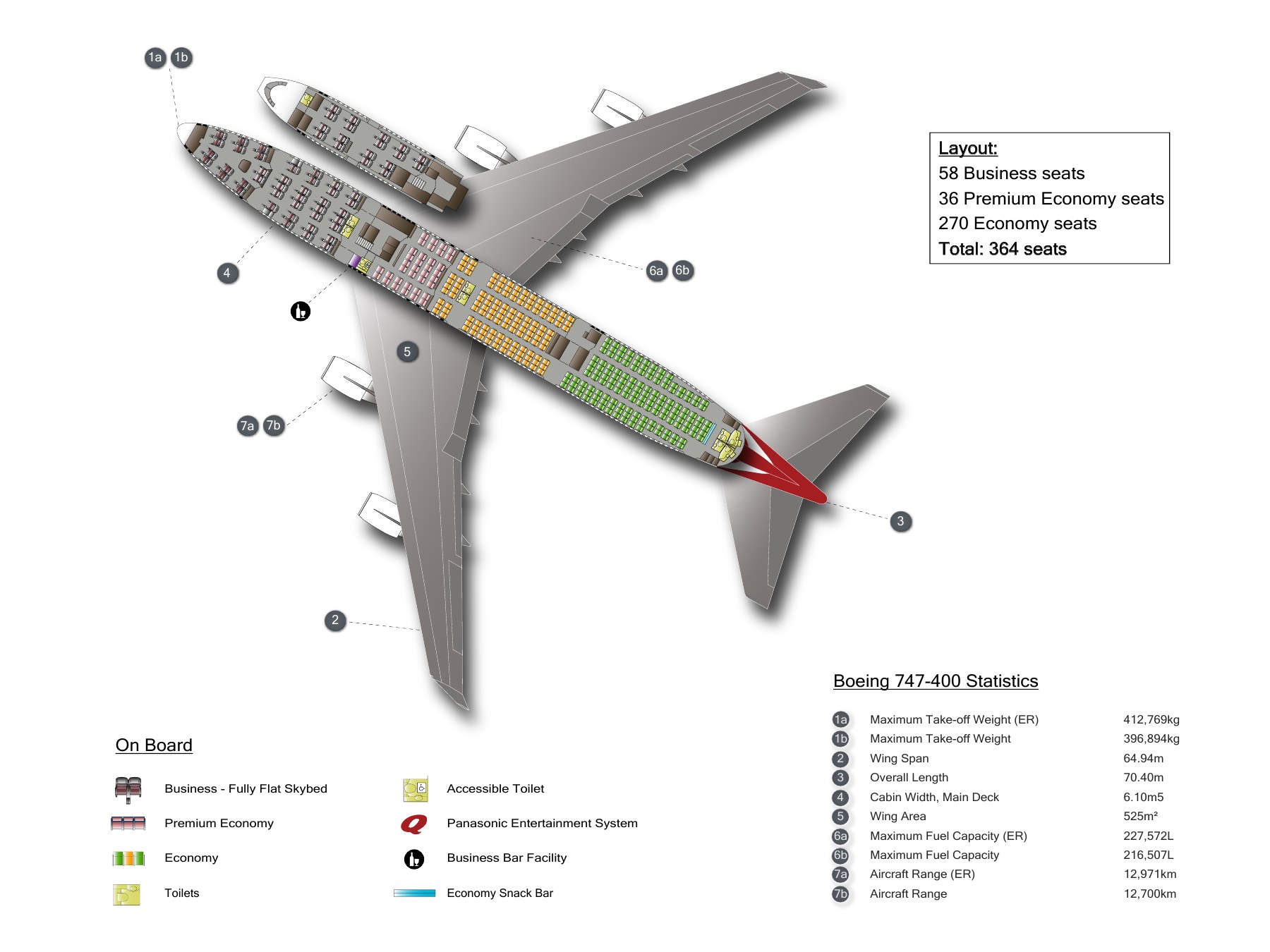
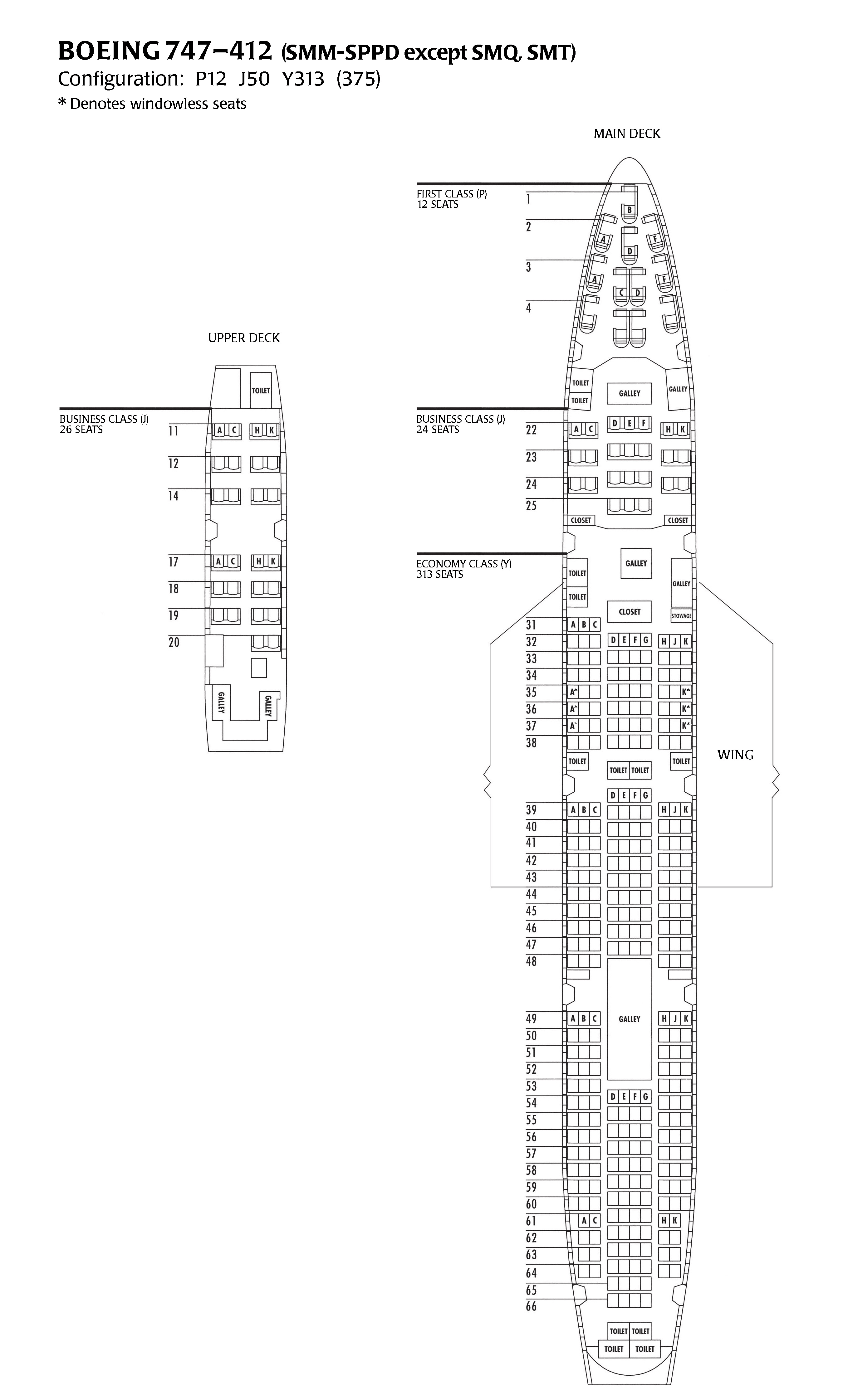
The 747-400 arrived in 1993 and settled into a 423-seat layout that changed very little over the next three decades: 12 First Class seats in the nose in a 2-2 arrangement, 26 business seats across the whole upper deck, also 2-2, and 385 economy seats at 3-4-3 on the main deck. First offered 82-inch lie-flat seats; the upper-deck business seats were the slumberette type. Because the whole bubble was business class, Air India’s 747-400 had no economy seats upstairs at all — the opposite of the Japanese domestic layout.

The 747-300M Combi

Air India also flew just two Combi 747-300Ms, which paired the same idea with a main-deck cargo hold aft of the passenger cabin. The upper deck again carried 32 business seats over a single-class economy main deck. No total seat count for these two aircraft is reliably documented, so it is not given here.

The classic Maharaja cabin

The airline’s earlier 747-200Bs, from 1971, carried First Class in the nose and used the small upper deck as the Maharaja Lounge — the standard early-747 configuration, before airlines converted the bubble to revenue seating. Air India lost three 747-200Bs in accidents, including the 1978 crash of Emperor Ashoka and the 1985 bombing of Emperor Kanishka.

Cabin archive

Visual seat maps

Cabin zones run from the nose on the left to the tail on the right. Seat symbols show the typical abreast pattern, not every individual row.

Archived configuration1993–2021

Air India 747-400 layout

Air India's 747-400: 12 First Class seats in the nose, 26 business seats across the whole upper deck and 385 economy seats on the main deck.

423passenger seats
Upper deckEntire upper deck is business class
Business Class26 seats · 2-2 typical
Main deckNose at left
First Class12 seats · 2-2 typicalNose cabin, 82-inch lie-flat seats
Economy385 seats · 3-4-3 typical

Map note: The First cabin sat 2-2 in the nose with 82-inch lie-flat seats, the upstairs business cabin 2-2 in slumberette seats, and economy 3-4-3. The layout was stable for nearly thirty years; the airline's first 747-400 arrived in August 1993 and the last examples left in 2024.

Configuration source: SeatGuru, archived by the Wayback Machine (2008)
Historical reconstruction1988–2008

Air India 747-300M Combi layout

One of Air India's two 747-300M Combis: 32 business seats on the entire upper deck over an all-economy main deck, with main-deck cargo aft.

Upper deckBusiness class
Business Class32 seats · 2-2 typical
Main deckNose at left, cargo hold aft
Economy3-4-3 typicalSingle-class cabin
Main-deck cargoFreight behind a bulkhead, separate side cargo door

Map note: Air India flew only two Combi 747s, and no reliable total seat count survives. What is documented is the split: the whole upper deck as 32 business seats in a 2-2 layout, a single-class economy main deck, and a main-deck cargo hold reached through a side door.

Configuration source: Airliners.net — Boeing 747-337M cabin photo

Sources

Facts on this page are checked against the primary and institutional references below.

  1. Air India 747-400 seat map — SeatGuru, archived by the Wayback Machine
  2. Air India 747-337M cabin photograph — Airliners.net
  3. Air India fleet — Wikipedia