Vintage Boeing 747 Seat Maps

Six period cabin maps show how early 747s evolved from lounge-equipped flagships into high-capacity long-haul aircraft.

The first 747 seat maps looked less like today’s booking screens and more like plans for a flying hotel. The six original period maps below show the individual seats, cabin divisions and upper-deck spaces airlines actually published.

What the period maps show

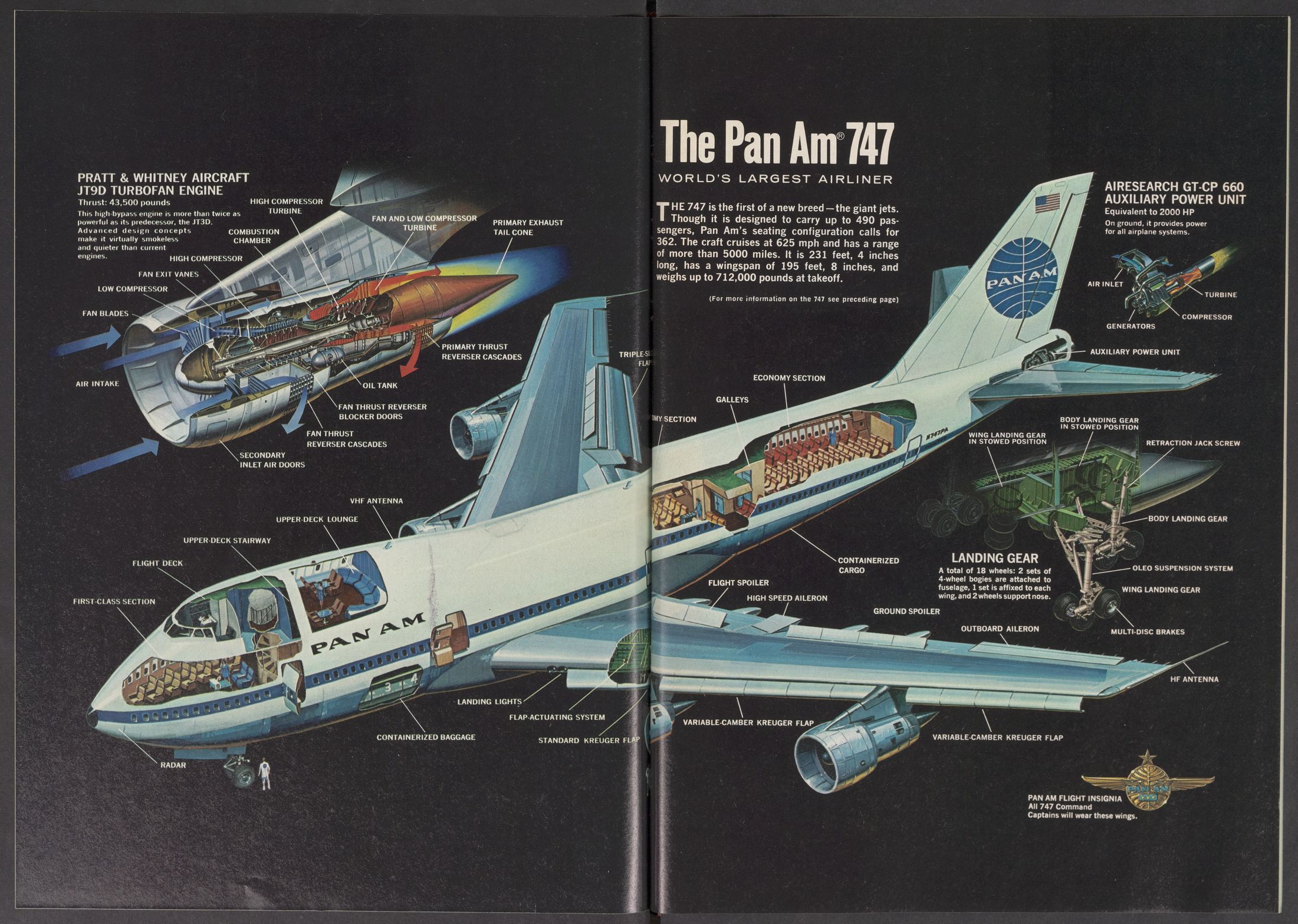
The Pan Am and United cutaways come from 1970 launch-era publications. The four Qantas maps come from its August 1986 Passenger Product brochure and preserve the exact low- and high-density layouts for the 747-238B and 747SP.

These are historical documents rather than seat-selection advice. Cabins changed during maintenance visits and sometimes varied within the same fleet, so the airline, aircraft subtype and date all matter.

The biggest change: the upper deck

The earliest 747-100 upper deck was sold as a destination in its own right. Pan Am described a club-like area reached by the famous spiral staircase; United called its version the Red Carpet Room. Later layouts converted that valuable floor area into First or Business Class seating.

Capacity could vary enormously

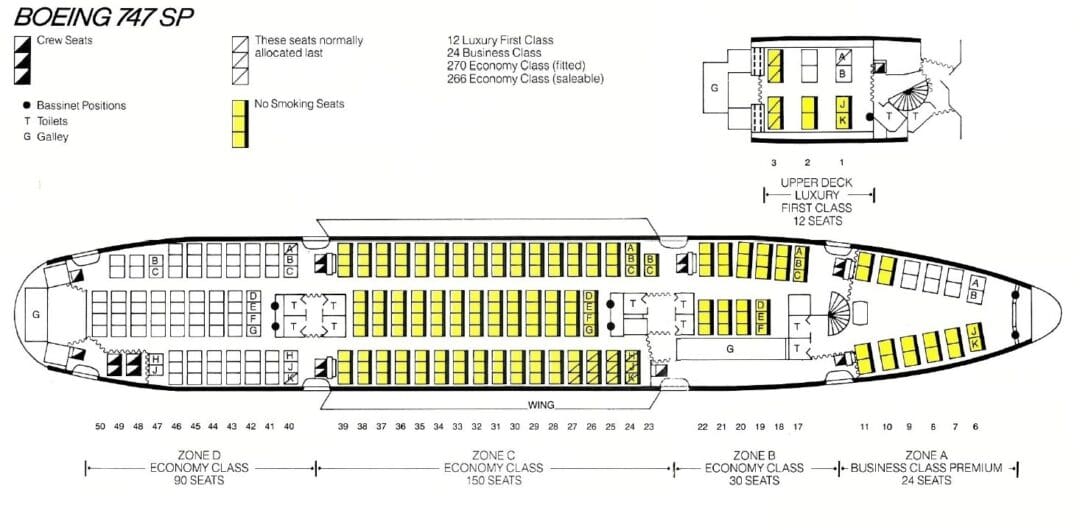
Qantas’s August 1986 material is a useful snapshot because it shows multiple configurations at once. Its two 747-238B layouts held 408 and 439 passengers, while its two shorter 747SPs held 222 and 306. A model name is therefore only the start of identifying a historical cabin.

For later Australian layouts, compare the Qantas 747-400 and 747-400ER seat maps.

Cabin archive

Visual seat maps

Cabin zones run from the nose on the left to the tail on the right. Seat symbols show the typical abreast pattern, not every individual row.

Historical reconstructionJanuary 1970

Pan Am 747-100 inaugural layout

Pan Am's launch-era aircraft paired 58 First Class seats with 304 Economy seats and treated the short upper deck as a social space.

362passenger seats
Upper deckLounge behind the flight deck, reached by the spiral staircase
First Class loungeClub-style social space rather than rows of assigned seats
Main deckAssigned seating; nose is at left
First Class58 seats · 2-2-2 typicalWide forward cabin and lounge access
Economy304 seats · 3-4-3 typicalThree large cabin sections aft of the staircase

Map note: The 362-seat total counts assigned passenger seats on the main deck. The upper lounge is shown separately because it was not a conventional ticketed cabin.

Configuration source: Pan Am Historical Foundation — Birth of the Superjet
Historical reconstructionJuly 1970

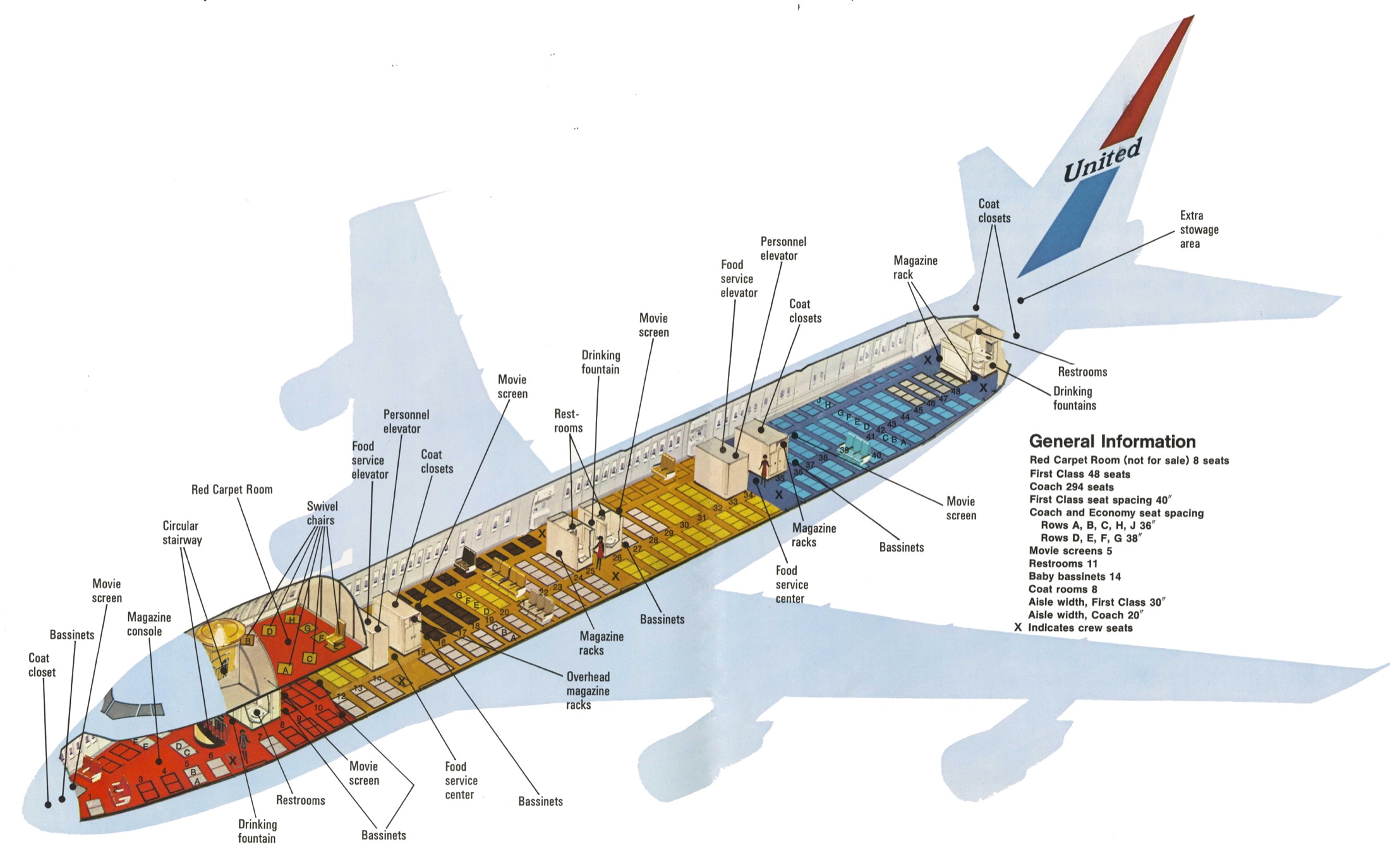
United Airlines 747 launch cabin

United's published cutaway emphasized amenities as much as seats, with a Red Carpet Room upstairs and unusually open public spaces downstairs.

Upper deckThe Red Carpet Room
Red Carpet RoomSwivel chairs and a club-like lounge behind the cockpit
Main deckPeriod materials highlighted lounges, screens and bassinets
First Class2-2-2 typicalForward cabin with generous open space
Coach3-4-3 typicalLarge multi-section cabin with two aisles

Map note: This schematic preserves the documented cabin zones without inferring an exact seat total or row-by-row arrangement from the period illustration.

Configuration source: CBS News archive — United Shield Magazine schematic

Historical reconstructionAugust 1986

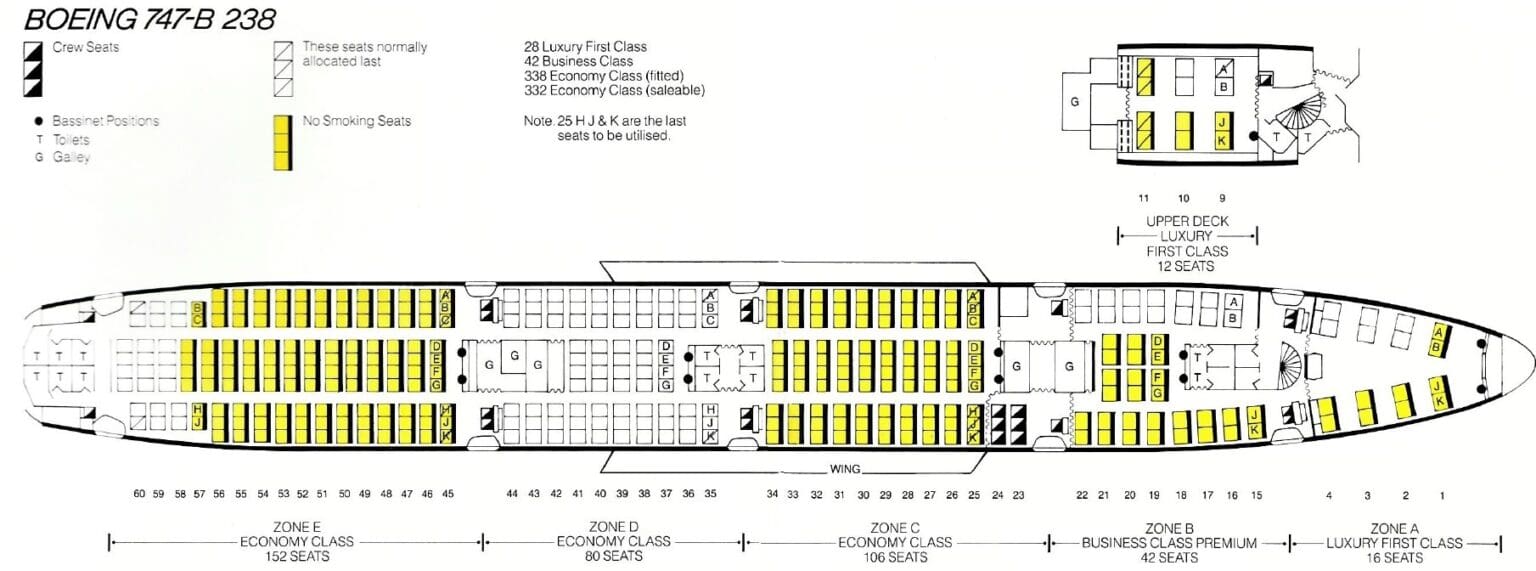
Qantas 747-238B low-density layout

The lower-density version of Qantas's classic 747-238B balanced three service classes across the main deck and upper deck.

408passenger seats
Upper deckPremium cabin space in the original short upper deck
Premium cabin2-2 typicalPeriod business-class style seating
Main deck
First ClassForward cabin
Business Class2-2-2 typical
Economy3-4-3 typicalLargest share of the 408-seat configuration

Map note: The period brochure marked smoking and non-smoking seats within each cabin, a distinction intentionally summarized here instead of recreated seat by seat.

Configuration source: TravelUpdate scan of Qantas Passenger Product, August 1986

Historical reconstructionAugust 1986

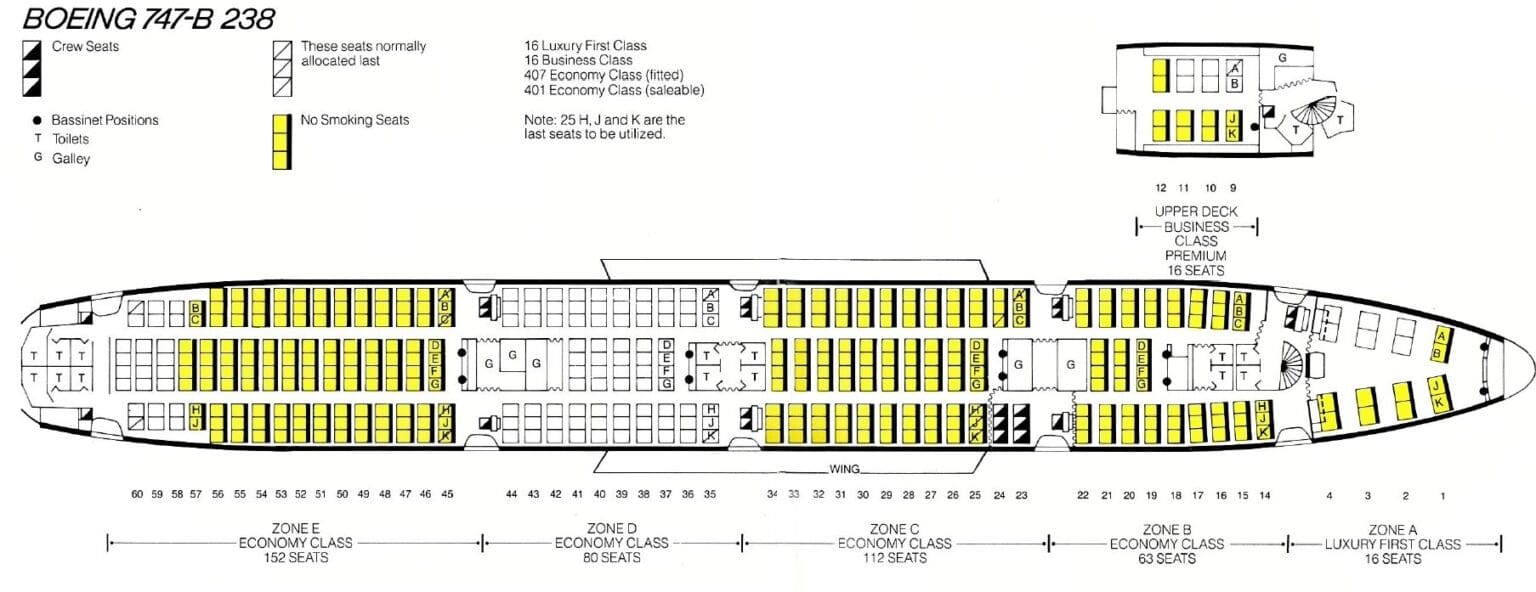
Qantas 747-238B high-density layout

Qantas also documented a 439-seat 747-238B, trading some cabin space for 31 additional passengers compared with the 408-seat version.

439passenger seats
Upper deckCompact premium cabin
Premium cabin2-2 typical
Main deck
First ClassForward cabin
Business Class2-2-2 typical
Economy3-4-3 typicalExpanded for the high-density configuration

Map note: This is a zone-level reconstruction. The source brochure remains the best reference for individual historical rows and smoking-seat markings.

Configuration source: TravelUpdate scan of Qantas Passenger Product, August 1986

Historical reconstructionAugust 1986

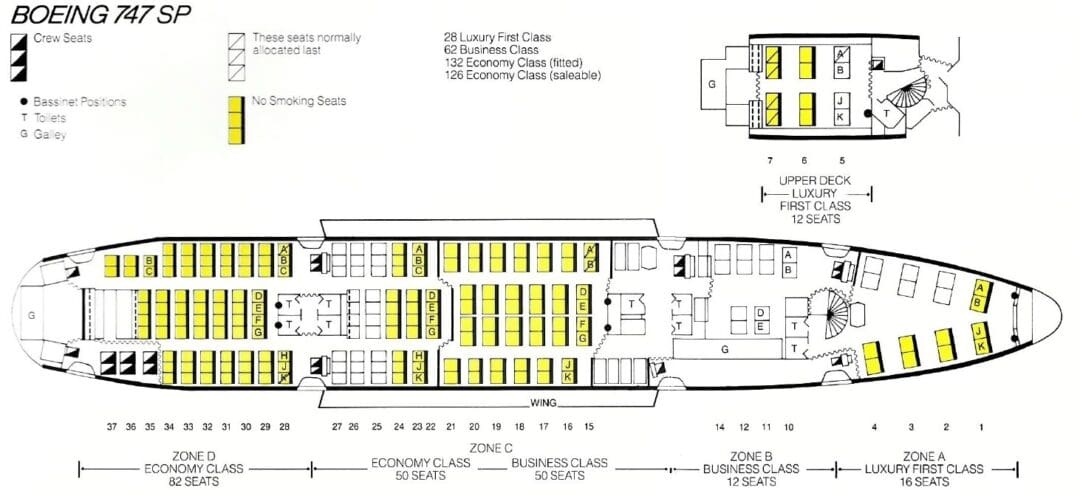
Qantas 747SP 222-seat layout

One of Qantas's two 747SPs carried only 222 passengers, an unusually spacious arrangement for the shortened, ultra-long-range member of the family.

222passenger seats
Upper deckShort upper deck behind the flight deck
Premium cabin2-2 typical
Main deck
First ClassLow-density forward cabin
Business Class2-2-2 typical
Economy3-4-3 typicalSmaller cabin than on the full-length 747-200

Map note: Qantas operated two differently configured 747SP aircraft. This diagram is a proportional cabin overview, not a boarding-day seat-selection chart.

Configuration source: TravelUpdate scan of Qantas Passenger Product, August 1986

Historical reconstructionAugust 1986

Qantas 747SP 306-seat layout

The second Qantas 747SP used a much denser 306-seat arrangement, 84 seats more than its sister aircraft in the same period brochure.

306passenger seats
Upper deckShort upper deck behind the flight deck
Premium cabin2-2 typical
Main deck
First ClassForward cabin
Business Class2-2-2 typical
Economy3-4-3 typicalExpanded to produce the 306-seat total

Map note: The large difference between the two SPs is exactly what makes archived seat maps useful: aircraft subtype alone does not identify a cabin configuration.

Configuration source: TravelUpdate scan of Qantas Passenger Product, August 1986

Frequently asked questions

Did early Boeing 747s really have lounges?
Yes. Pan Am and United used the short upper deck as a first-class lounge in the 747's early service years, before airlines increasingly installed rows of revenue seats there.
Are these maps exact enough for choosing a seat?
No. They are genuine historical publications, but they describe cabins from 1970 and 1986 rather than aircraft available for booking today.
Why did the same 747 model have different seat counts?
Airlines could change class mix, seat pitch, lounges, galleys and cabin partitions. Individual aircraft could also be reconfigured during service.

Sources

Facts on this page are checked against the primary and institutional references below.

  1. Pan Am 747 cutaway, Clipper magazine, October 1970 — University of Miami Libraries
  2. United Boeing 747 — A Transportation Library Exhibit — Northwestern University Transportation Library
  3. Pan Am Historical Foundation — Coming Into Focus — Pan Am Historical Foundation
  4. Boeing's 747, the Queen of the Skies — CBS News
  5. Full set of vintage Qantas seat maps from 1986 — TravelUpdate