Boeing 747SP vs 747-100
The 747SP cut the -100's fuselage by nearly 48 ft to fly 5,830 nautical miles on a full load — further than any 747 of its generation, at the cost of 40 or more seats.
The 747SP answered a question everyone else had given up on: what if the 747 were built to fly further instead of to carry more? Boeing’s answer cut the fuselage by nearly 48 ft, and the result — for four seats per row fewer than a 747-100 — became the longest-range 747 of its generation.
Why shorten an airliner
The 747-100 could carry 366 people about 4,620–5,300 nautical miles. The routes Pan Am wanted — Tehran to New York, and the long Pacific sectors — needed more range than a full 747-100 could deliver.
Removing a fuselage plug does two things at once: it cuts weight for the same wing and engines, and it cuts drag. The SP’s 5,830-nautical-mile range came from exactly that — not from more fuel, but from less aircraft to carry.
| 747-100 | 747SP | |
|---|---|---|
| Fuselage length | 231 ft 10 in | 184 ft 9 in |
| Wingspan | 195 ft 8 in | 195 ft 8 in (unchanged) |
| Passengers, 3-class | 366 | 276 |
| Max takeoff weight | 735,000 lb | 700,000 lb |
| Range | ~4,620–5,300 nmi | 5,830 nmi (10,800 km) |
| Cruise | Mach 0.84 | Mach 0.86 |
The trade that nobody repeated
The SP’s trick was never repeated, for a reason: it was a niche answer to a niche question. It carried over forty fewer people at a higher cost per seat than a -100, and once the later, heavier classics such as the -200B could match its range while lifting a full main deck, the SP’s reason to exist evaporated.
It was ordered for one job and done: 45 built, against 168 -100s. Its survivors include government and VIP examples, which valued exactly what the design gives — a long-range 747 with the shortest fuselage Boeing could hang on the standard wing. In the identification guide it is the instant answer: if the tail looks too big for the body, it is the SP.
| Manufacturer | Boeing |
|---|---|
| Variant | 747SP vs 747-100 |
| First flight | 4 July 1975 vs 9 February 1969 |
| Introduced | 1976 vs 1970 |
| Status | Both retired from scheduled passenger service |
| Engines | JT9D vs JT9D |
| Typical capacity | 276 (3-class) vs 366 (3-class) |
| Range | 5,830 nmi (10,800 km) vs ~4,620–5,300 nmi |
| Length | 184 ft 9 in (56.31 m) vs 231 ft 10 in (70.66 m) |
| Wingspan | 195 ft 8 in (59.64 m) vs 195 ft 8 in (59.64 m) |
| Max takeoff weight | 700,000 lb (318 t) vs 735,000 lb (333 t) |
| Cruise speed | Mach 0.86 vs Mach 0.84 |
| Number built | 45 vs 168 |
Frequently asked questions
- Why did Boeing build the 747SP shorter than the 747-100?
- Pan Am needed an aircraft that could fly the longest routes with a full load. Shortening the fuselage cut weight and drag enough that the SP could fly about 5,830 nautical miles, further than any other 747 of its generation.
- How can you identify a 747SP?
- Its proportions: a full-size 747 wing and an oversized tail on a fuselage nearly 48 ft shorter than a 747-100, giving it an unmistakably stubby silhouette.
Sources
Facts on this page are checked against the primary and institutional references below.
Related topics
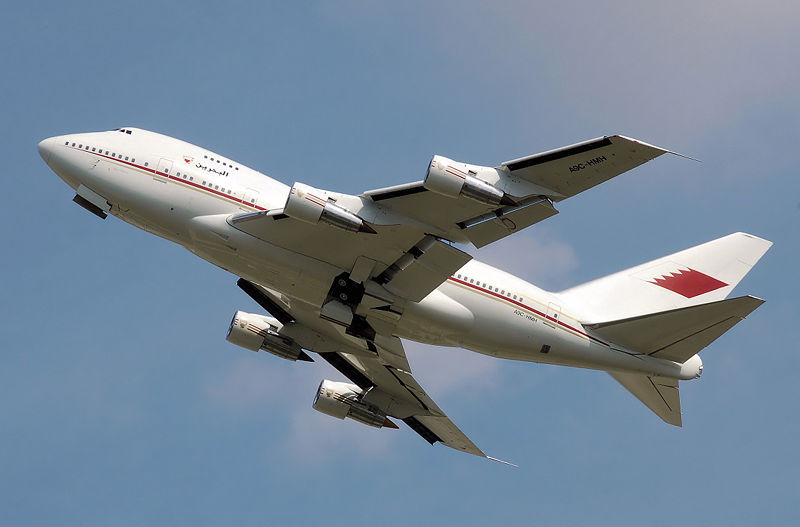
747-100SP
The shortened 747SP was built for Pan Am and Iran Air to fly ultra-long routes such as Tehran-New York, then the longest nonstop service.
Pan American World Airways
The airline that ordered the 747 into existence, flew the first service in 1970, took 65 aircraft, and was gone by 1991.
Pratt & Whitney JT9D on the Boeing 747
The Pratt & Whitney JT9D powered the first 747 in 1969 and all 747-100s, plus most -200s and the 747SP, before alternatives arrived.
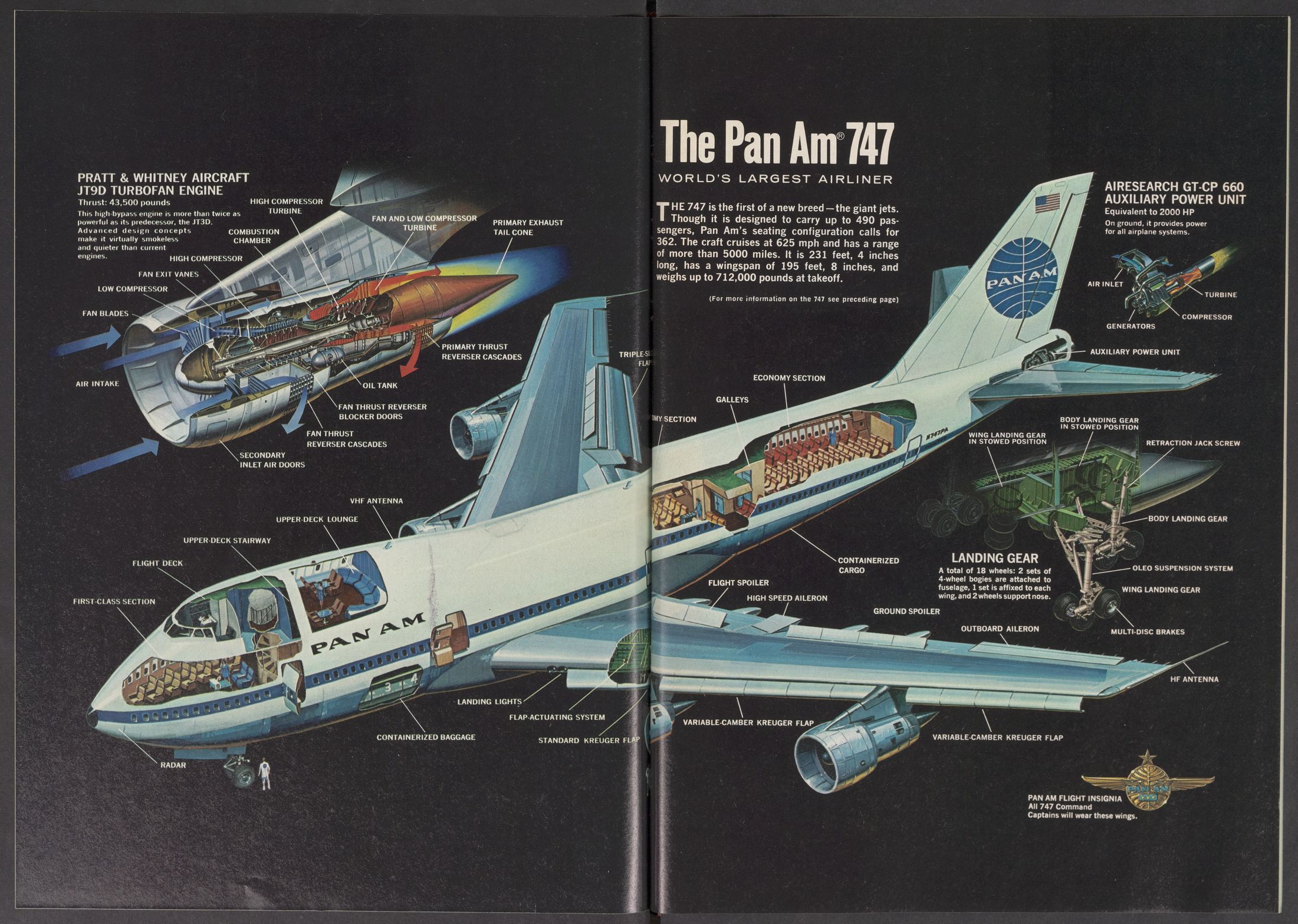
Vintage Boeing 747 Seat Maps
View original Pan Am, United and Qantas Boeing 747 cabin maps from 1970 to 1986, including upper-deck lounges and high-density seating.
Boeing 747 Airframe Registry
A searchable registry of notable Boeing 747 airframes with registrations, variants, current status and museum locations, with CSV and JSON downloads.
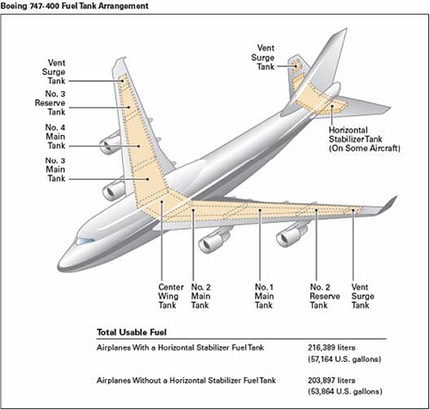
Boeing 747 Fuel System
Detailed Boeing 747 fuel system guide covering tank layout, pumps, transfer, crossfeed, refuelling, jettison, safety and every major 747 variant.
More in Features

Features
Longer pieces on the Boeing 747 — the factory built to make it, how it compares to the A380, what became of the retired fleet, and what it is like to fly.
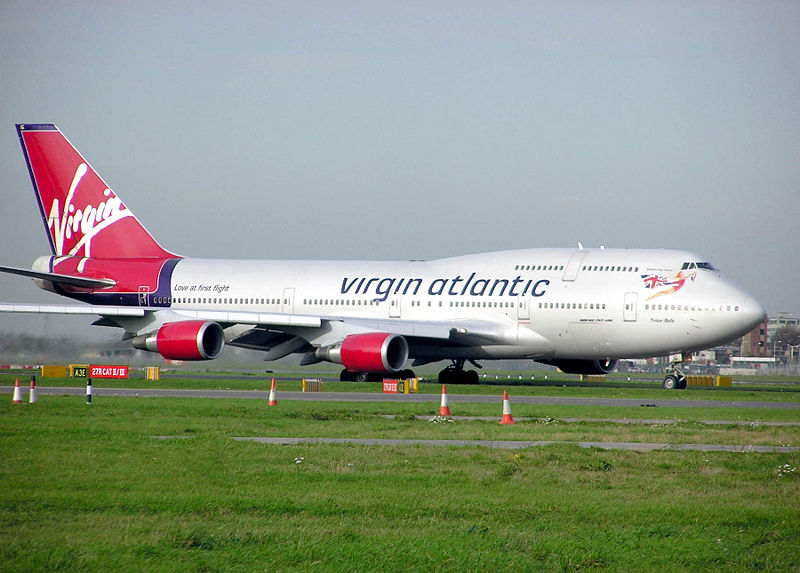
How to Identify Boeing 747 Variants
Identify Boeing 747 variants from photographs using upper-deck length, wingtip shape, fuselage length, engine nacelles and freighter doors.
The building that had to be built first
Boeing had no building big enough for the 747, so it built the largest building in the world by volume — and assembled the aeroplane while it was going up.
747 versus A380
The two largest airliners ever built, compared — size, capacity, economics, and why both are now out of production.

Where the 747s went
Most retired 747s were scrapped. Others became freighters, museum pieces, restaurants, a hotel — and one launched satellites into orbit.
Flying the 747
What the 747 is like to fly — the type rating, the view from 30 feet up, the handling, and why pilots talk about it the way they do.
