The four hydraulic systems
Four independent hydraulic systems, each driven by a different engine and each with a demand pump, powering flight controls, gear and brakes.

A 747 is far too large to be flown by muscle. Every primary flight control, the landing gear, the brakes, the nosewheel steering and the leading and trailing edge devices are moved hydraulically, and the aircraft is built around four independent hydraulic systems.
The layout
Systems 1 to 4 correspond to engines 1 to 4. Each has:
- an engine-driven pump, running whenever that engine is running, providing the primary supply in flight; and
- a demand pump in parallel — air-driven or electrically powered depending on the system — which cuts in automatically when demand rises or the engine-driven pump is unavailable.
That pairing is the point. Losing an engine does not lose a hydraulic system, because the demand pump keeps the system pressurised independently of the engine that normally drives it.
Why four, and why split this way
The 747 was certified in 1969 to standards that assumed things break, and the answer nearly everywhere was redundancy through separation rather than duplication in one box.
The flight controls are divided so that no single hydraulic failure removes an entire axis of control: control surfaces are split into sections powered by different systems, so a failed system costs you some authority in pitch, roll or yaw but never all of it. The aircraft is flyable and landable on a subset of its systems.
The same reasoning drives the electrical system, where generation is also per engine.
Where it ran out
Two accidents show the limit of the idea, and both are worth understanding because the failure was not in the redundancy but in the routing.
On Japan Air Lines 123 an aft pressure bulkhead failed, destroying much of the tail — and with it all four hydraulic systems at once, because all four ran through that part of the aircraft. The crew flew for 32 minutes on engine thrust alone.
On National Airlines 102 unrestrained cargo broke loose and destroyed the hydraulics and the stabiliser jackscrew together.
Redundancy protects against independent failures. Neither of these was independent: one event took every path. Designers call this common-mode failure, and separating systems physically — not just logically — is the only defence.
What changed on the 747-8
The 747-8 added fly-by-wire spoilers and outboard ailerons, part of the new wing. That is what makes its manoeuvre load-alleviation system possible: the aircraft can redistribute lift across the wing during unusual flight conditions, which let Boeing build a lighter structure and save about 1,400 lb.
Related
Video
Frequently asked questions
- How many hydraulic systems does a Boeing 747 have?
- Four, numbered 1 to 4 and each driven by the engine of the same number. Each also has a second, demand pump — air-driven or electric — so a system survives the loss of its engine.
Sources
Facts on this page are checked against the primary and institutional references below.
Related topics
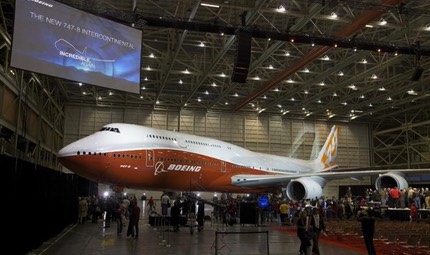
Boeing 747: History, Variants and Legacy
A complete reference to the Boeing 747, built from 1968 to 2023 — every variant from the 747-100 to the 747-8, plus special-mission jumbos and photos.
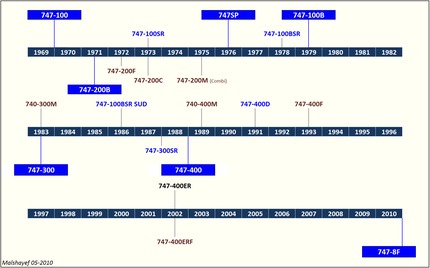
Boeing 747 Family
Every Boeing 747 variant built between 1968 and 2023 — the 747-100, -200, -300, -400 and 747-8, with freighter, combi and short-range models explained.
Boeing 747 Production Data
Download Boeing 747 production totals by generation, with a transparent method and links to Boeing's final programme record and technical documents.
The 747 Combi and the fire rule that caught up with it
The 747 Combi carried passengers and freight on one deck under 1940s-era fire rules. After South African Airways Flight 295, those rules were rewritten.
Maintaining a 747
Line checks, A checks, C checks and the D check — how a 747 is kept airworthy, and why maintenance decides when an aircraft is retired.
The Boeing 747 History Quiz
A 10-question Boeing 747 history quiz covering the launch airlines, the engineers who built the jumbo, and the bestsellers of the family.
More in Aircraft Systems
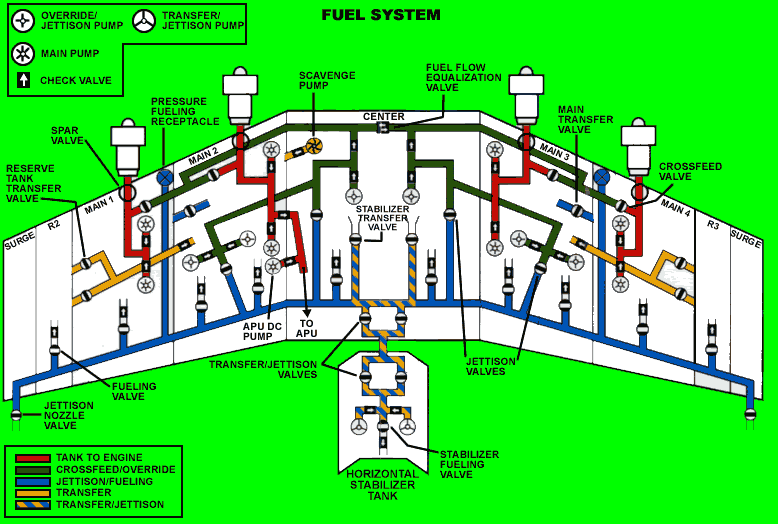
How the 747 works
The systems that make a 747 fly — fuel, hydraulics, landing gear, electrics and pressurisation, explained one at a time.
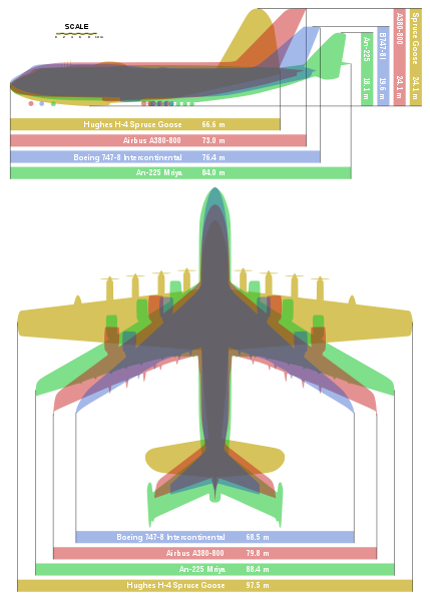
Boeing 747 specifications compared
Every Boeing 747 variant side by side — length, wingspan, weights, capacity, range, cruise speed and engines, with sources noted.
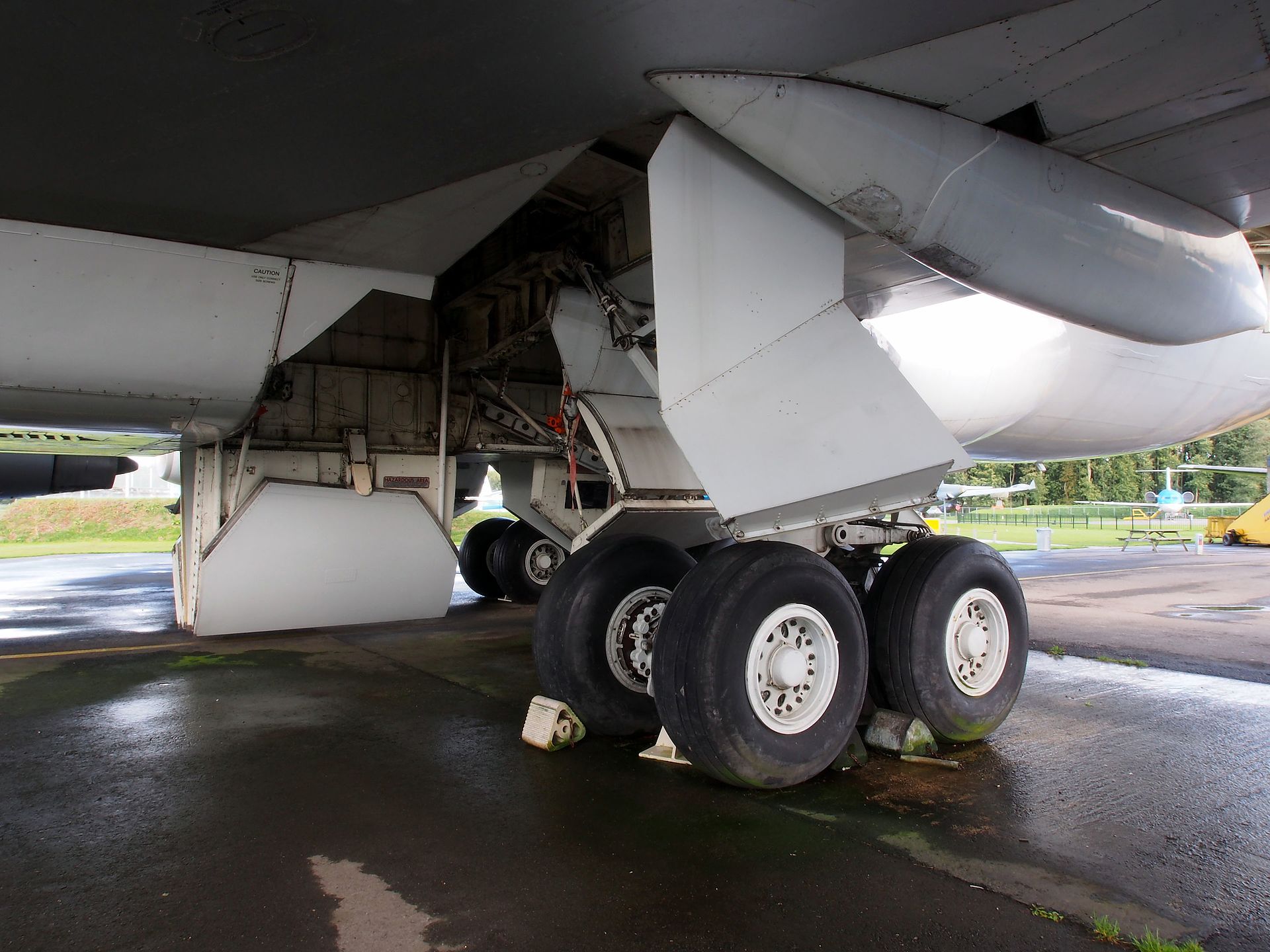
Eighteen wheels
The 747's five landing gear legs and 18 tyres, why the load is spread that way, and the body gear steering that stops it tearing up taxiways.
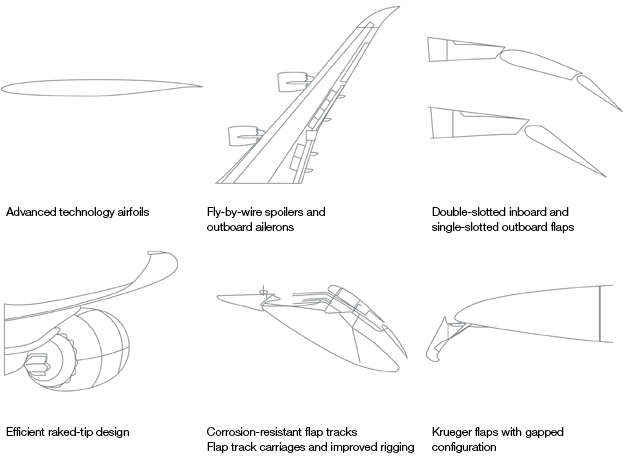
Flight controls and high-lift devices
How a 747 is flown — split ailerons, spoilers, triple-slotted flaps and Krueger leading edge devices, and what the 747-8 changed.
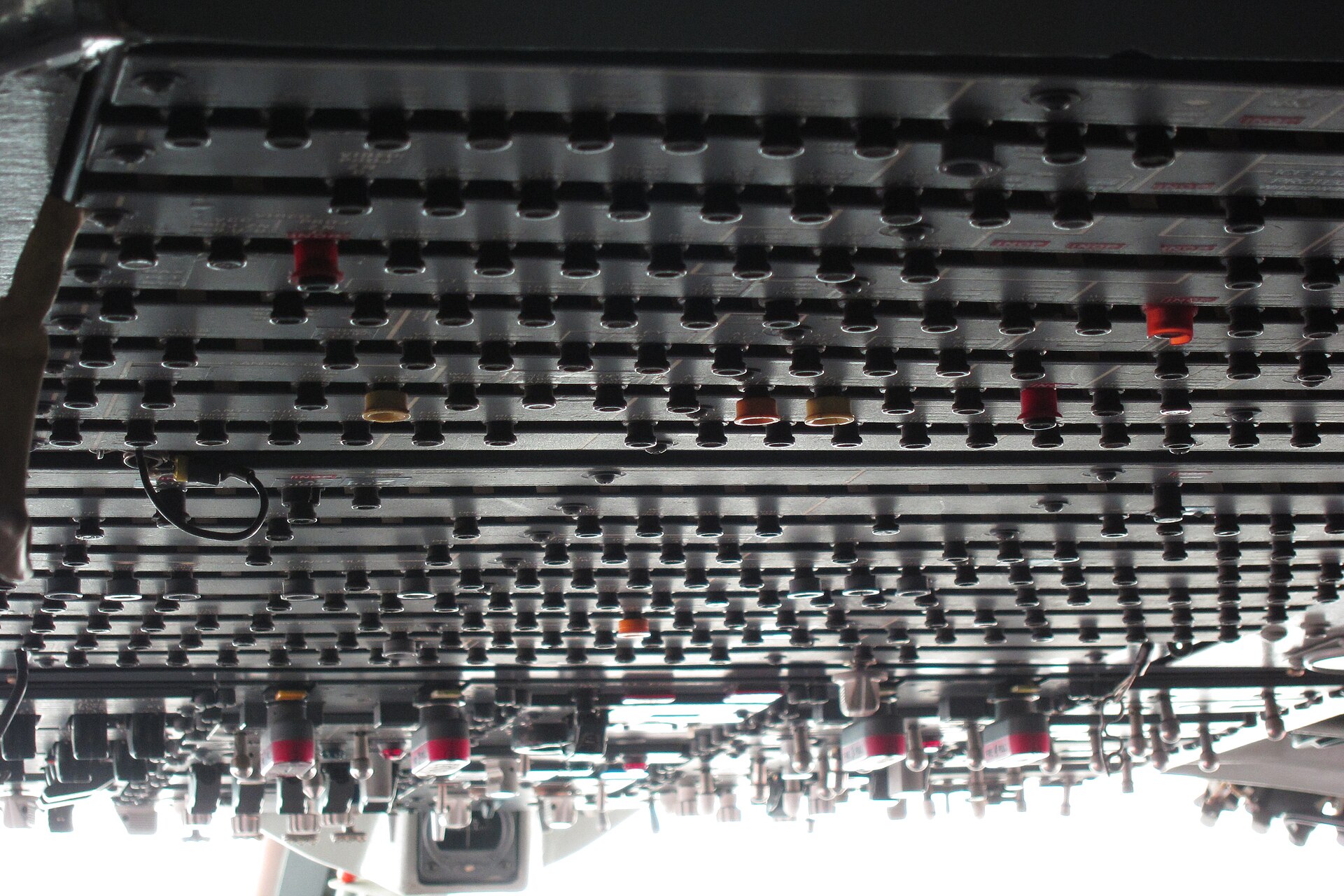
The electrical system
Four 90 kVA generators, one per engine, running in parallel through a tie bus — plus two APU generators for the ground.
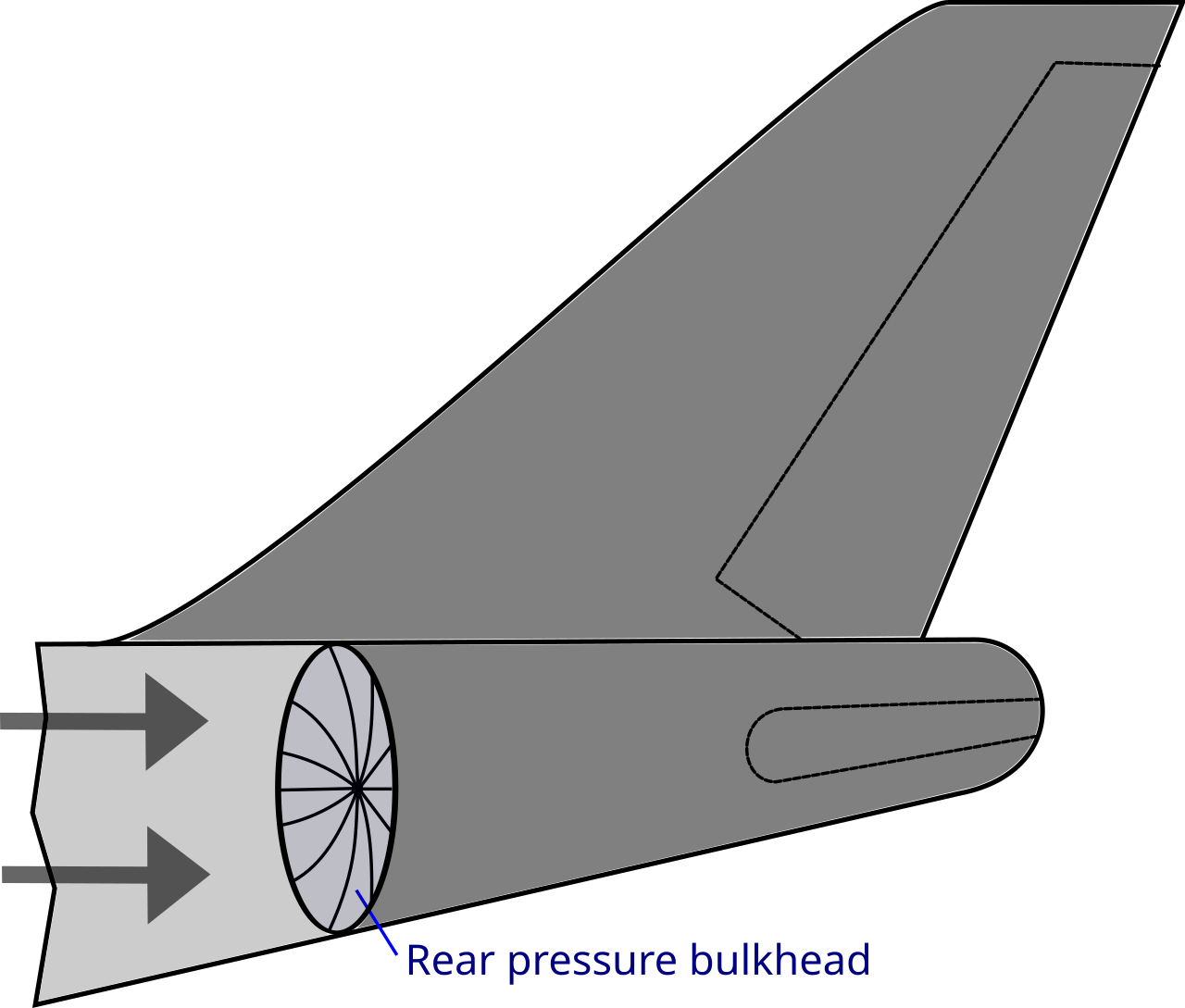
Pressurisation and air conditioning
How a 747 keeps a breathable cabin at 35,000 ft, why the fuselage is a pressure vessel, and why cycles matter more than hours.