Flight controls and high-lift devices
Split inboard and outboard ailerons, spoilers, triple-slotted trailing edge flaps and Krueger leading edge devices — and the 747-8's fly-by-wire changes.
The 747 wing has to do two contradictory things: cruise efficiently at Mach 0.85, and get a 400-tonne aircraft airborne and back down at speeds a runway can accommodate. Almost every complication in its flight controls comes from that conflict.
Roll: two sets of ailerons
The 747 carries inboard and outboard ailerons on each wing, and they are not both used all the time.
At low speed both operate. At high speed the outboard ailerons are locked out and roll is handled by the inboard ailerons and spoilers alone.
The reason is structural. An aileron at the wingtip has a long lever arm — excellent for roll authority at low speed, but at high speed the force it generates can twist the wing in the opposite direction to the roll being commanded, a phenomenon called aileron reversal. Locking out the outboard surfaces once the wing is loaded avoids it.
Spoilers
Panels on the upper surface that spoil lift when raised. They serve three distinct jobs:
- Roll assistance — rising on the descending wing to help the ailerons.
- Speedbrakes — raised symmetrically in flight to increase drag and slow down or descend.
- Ground spoilers — deployed fully on touchdown to dump lift, putting the aircraft’s weight onto the wheels so the brakes can work. Without them the wing keeps flying and the brakes have very little to grip with.
Trailing edge: triple-slotted flaps
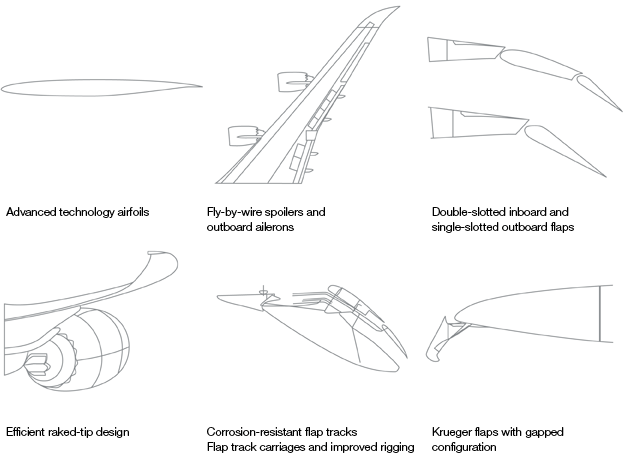
The classic 747 wing uses triple-slotted Fowler flaps — a flap made of three separate segments that both extend rearward, increasing wing area, and deflect downward, increasing camber. The slots between segments let high-pressure air from beneath the wing energise the flow over the top, delaying the stall.
They are mechanically elaborate and heavy, and the housings for their mechanisms are the “canoes” visible under the wing.
The 747SP dispensed with them entirely: being far lighter, it managed with single-slotted flaps and no under-wing canoes at all.
The 747-8 went to double-slotted inboard and single-slotted outboard flaps, with redesigned flap tracks and fairings — simpler, lighter and quieter than the classic arrangement while achieving the same job on a better wing.
Leading edge: Krueger flaps
Along the leading edge sit Krueger flaps, which hinge down and forward from the underside to increase camber for takeoff and landing.
The 747 uses two types: rigid Krueger flaps inboard, and variable camber Kruegers outboard, which curve as they deploy.
There is a deliberate aerodynamic reason for treating the inboard section differently: it is arranged so the inboard wing stalls first. That keeps the outboard wing — where the ailerons are — flying, so the aircraft retains roll control as it approaches the stall instead of dropping a wing.
What the 747-8 changed
The 747-8’s new wing introduced fly-by-wire spoilers and outboard ailerons, replacing mechanical signalling with electrical.
Beyond saving weight, that made manoeuvre load alleviation possible — a system pioneered on the 787 which redistributes lift across the wing during unusual flight conditions, reducing the load carried by the outboard section. Because the wing never sees the peak outboard loads it otherwise would, Boeing built it lighter, saving about 1,400 lb.
The 747-8 also uses aileron droop: when the flaps extend, the ailerons deflect down and act as additional high-lift devices, improving low-speed performance and cutting noise.
Related
Video
Sources
Facts on this page are checked against the primary and institutional references below.
Related topics
Boeing 747: History, Variants and Legacy
A complete reference to the Boeing 747, built from 1968 to 2023 — every variant from the 747-100 to the 747-8, plus special-mission jumbos and photos.
Boeing 747 Family
Every Boeing 747 variant built between 1968 and 2023 — the 747-100, -200, -300, -400 and 747-8, with freighter, combi and short-range models explained.
Boeing 747 Production Data
Download Boeing 747 production totals by generation, with a transparent method and links to Boeing's final programme record and technical documents.
747 versus A380
The two largest airliners ever built, compared — size, capacity, economics, and why both are now out of production.
Boeing 747-400 vs 747-8
The 747-8 is bigger, heavier and quieter than the 747-400, with a new wing, GEnx-2B engines and a stretched fuselage — but it sells a fraction as well.
The 747-8 and the environment
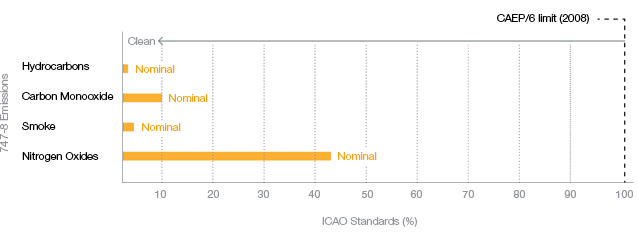
The 747-8 meets emissions limits for hydrocarbons, carbon monoxide, smoke and nitrogen oxides, with a noise footprint about 30 percent smaller than the 747-400.
More in Aircraft Systems
How the 747 works
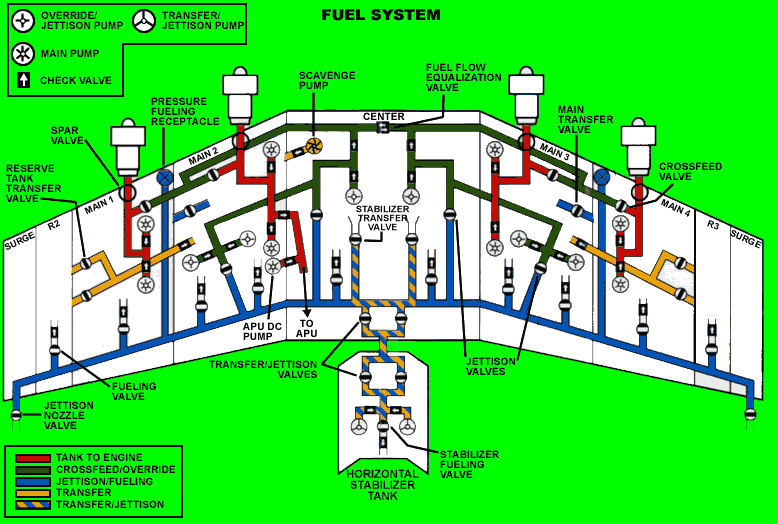
The systems that make a 747 fly — fuel, hydraulics, landing gear, electrics and pressurisation, explained one at a time.
Boeing 747 specifications compared
Every Boeing 747 variant side by side — length, wingspan, weights, capacity, range, cruise speed and engines, with sources noted.
The four hydraulic systems
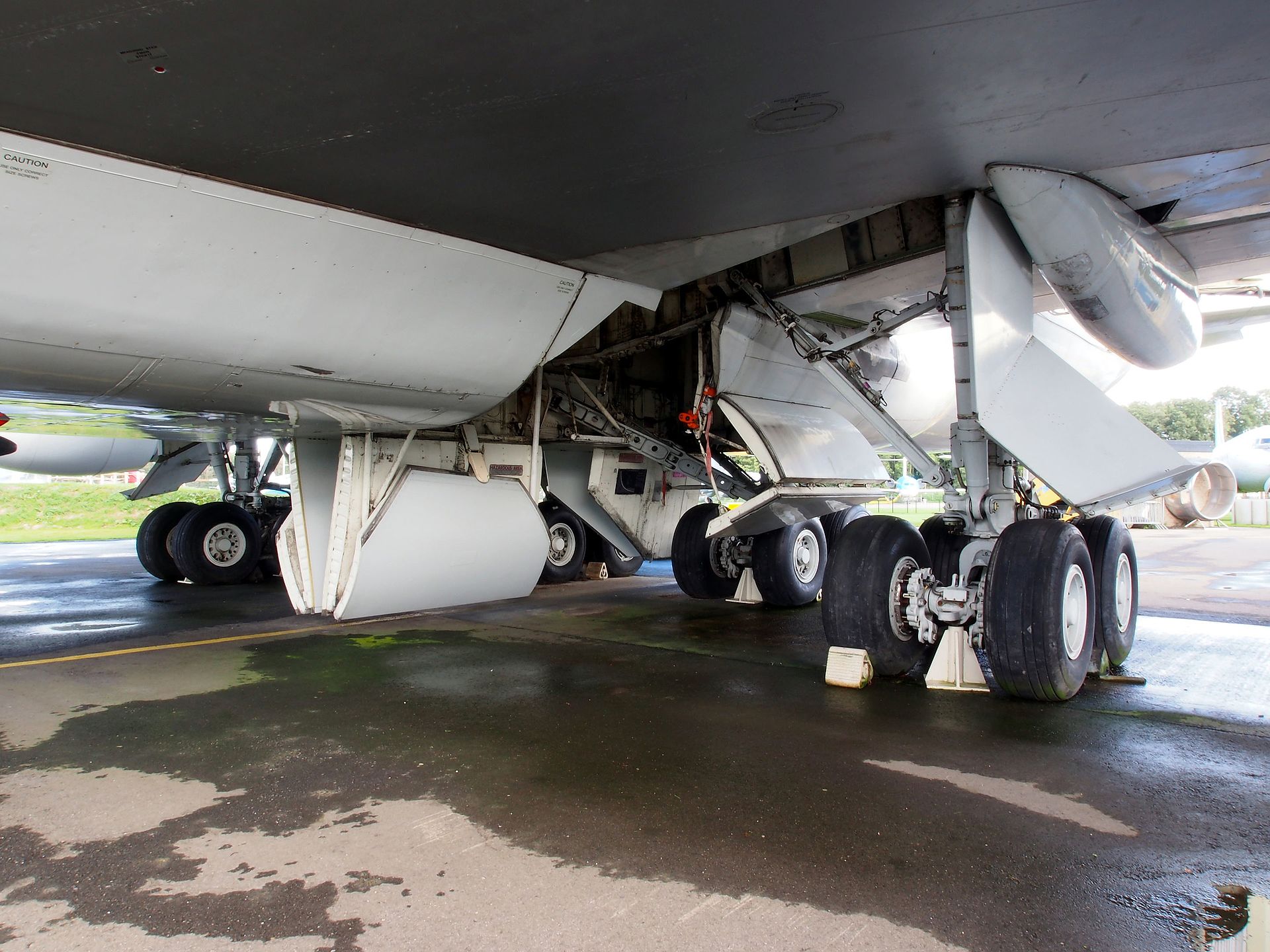
The 747 has four independent hydraulic systems, one per engine, each with a backup pump — and the reasoning behind splitting them that way.
Eighteen wheels
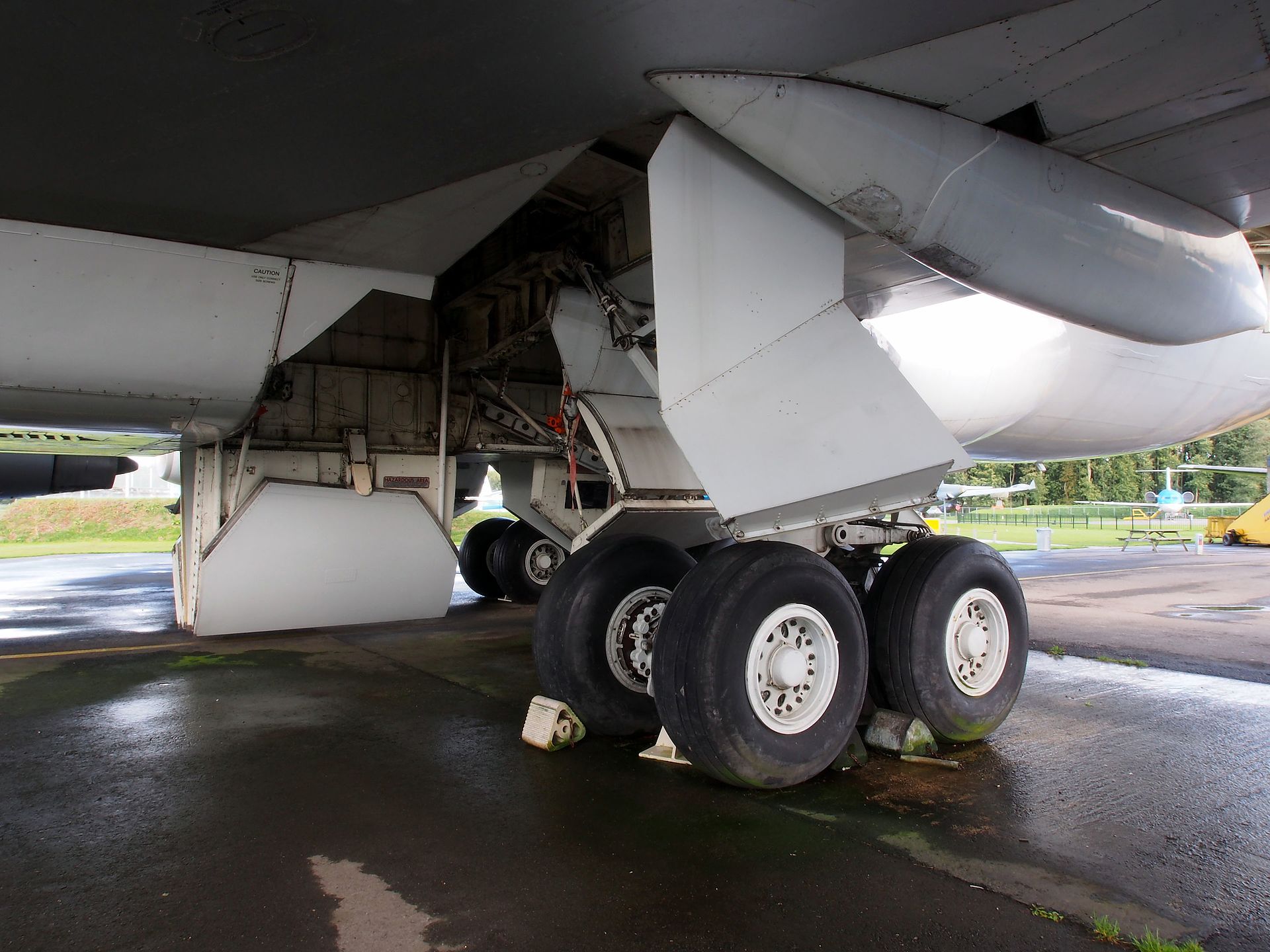
The 747's five landing gear legs and 18 tyres, why the load is spread that way, and the body gear steering that stops it tearing up taxiways.
The electrical system
Four 90 kVA generators, one per engine, running in parallel through a tie bus — plus two APU generators for the ground.
Pressurisation and air conditioning
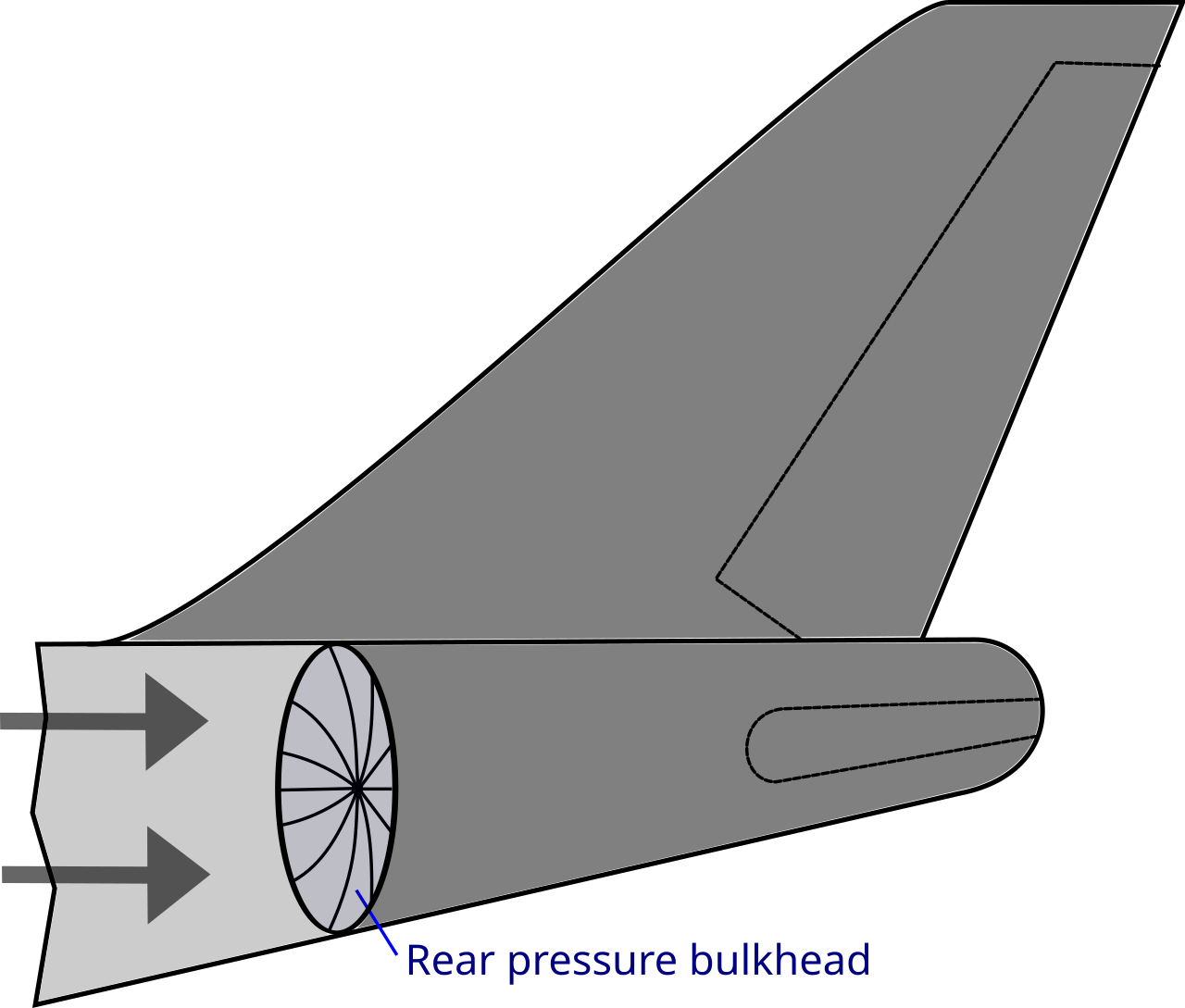
How a 747 keeps a breathable cabin at 35,000 ft, why the fuselage is a pressure vessel, and why cycles matter more than hours.