The Boeing 747-8 wing
The 747-8 wing is an entirely new design with advanced airfoils, raked wingtips and a 787-derived load-alleviation system that let Boeing save 1,400 lb of structure.

The 747-8’s wing is not a modified 747-400 wing. It is a new design, developed using computational fluid dynamics and validated in wind tunnel testing, and it is the single biggest engineering change between the two aircraft.
What the new wing does
Boeing lists the changes as:
- Advanced technology airfoils for improved overall performance and greater fuel capacity.
- Fly-by-wire spoilers and outboard ailerons to save weight.
- Double-slotted inboard and single-slotted outboard flaps to improve low-speed performance and noise.
- Advanced-technology raked tip to reduce cruise drag.
- Aileron droop to reduce noise and provide improved low-speed performance.
- Redesigned flap tracks with optimised flap-track fairings to improve low-speed performance and noise.
- Redesigned Krueger flaps with gapped configuration to improve low-speed performance.
Together these give improved aerodynamics and larger fuel capacity, while allowing the aircraft to cruise as fast as or faster than any other passenger aircraft.
Raked wingtips instead of winglets
The most visible change is at the tip. The 747-400’s upright winglets are gone, replaced by raked wingtips — an extension swept sharply back rather than turned upwards — which increase lift and reduce drag at cruising speed.
Manoeuvre load alleviation
The wing’s fly-by-wire spoilers and ailerons make possible a flight control feature called a manoeuvre load-alleviation system. Pioneered on the 787 Dreamliner, it changes the distribution of lift across the wing during non-normal flight conditions, reducing the load carried by the outboard section.
The payoff is structural. Because the wing never has to absorb the peak outboard loads it otherwise would, Boeing was able to make the structure smaller — saving about 1,400 pounds without compromising structural integrity.
Flaps, ailerons and noise
Several elements of the design target noise as much as performance. When the flaps are extended, the ailerons automatically deflect and act as additional high-lift devices, improving takeoff and landing performance while reducing noise. The redesigned flap tracks and their fairings, and the gapped Krueger flaps on the leading edge, work to the same end.
The result, by Boeing’s figures, is a noise footprint about 30 percent smaller than the 747-400’s. That has an operational consequence: Boeing said the 747-8 would be able to use London Heathrow around the clock, where most aircraft face a night curfew on noise grounds.
What it adds up to
Boeing’s case for the 747-8 rested heavily on this wing and the GEnx-2B engines hung beneath it. The company positioned the aircraft as the only passenger type in the 400–500 seat market, with engines burning about 16 percent less fuel per seat than the 747-400’s and around 11 percent less than the Airbus A380’s.
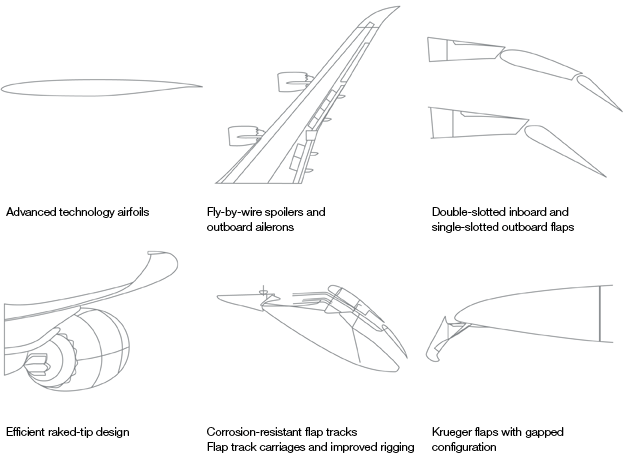
Boeing's own diagram of the features that distinguish the 747-8 wing.Boeing 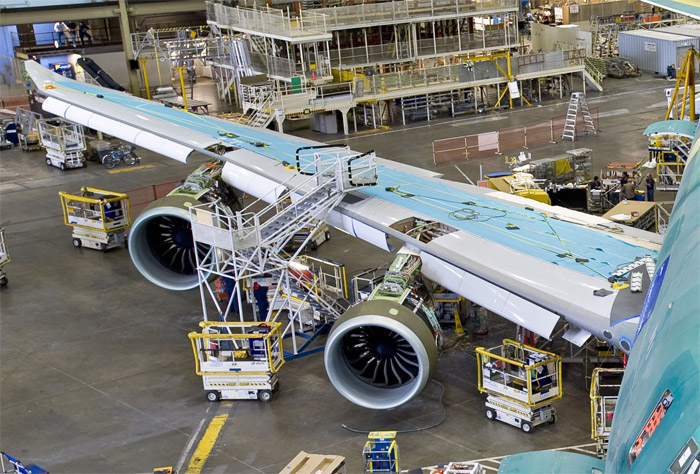
The wing with its GEnx-2B engines hung. The engines burn about 16 percent less fuel per seat than those on the 747-400.Boeing

Video
Frequently asked questions
- What is different about the Boeing 747-8 wing?
- It is an entirely new wing rather than a modified 747-400 one. It uses advanced airfoils, replaces the 747-400's vertical winglets with raked wingtips, adds fly-by-wire spoilers and outboard ailerons, and carries more fuel.
- Why does the 747-8 have raked wingtips instead of winglets?
- Raked wingtips increase lift and reduce drag at cruising speed. The 747-400 used upright winglets to achieve a similar effect; the 747-8's new wing was designed around raked tips instead.
- What is manoeuvre load alleviation?
- A flight control feature, pioneered on the 787, that changes how lift is distributed across the wing during unusual flight conditions, reducing the load on the outboard section. It let Boeing build a lighter wing structure, saving about 1,400 pounds without compromising strength.
Sources
Facts on this page are checked against the primary and institutional references below.
- Boeing 747-8 — Boeing
- 747-8 Airplane Characteristics for Airport Planning — Boeing
Related topics
747-8
Announced in 2005, the 747-8 was the final 747 generation, with a new wing, GEnx-2B engines and a 987,000 lb maximum takeoff weight.
Boeing 747-8 systems differences from the 747-400
The 747-8 is a re-engined, stretched 747-400 derivative with GEnx engines, a bigger APU and more electrical power.
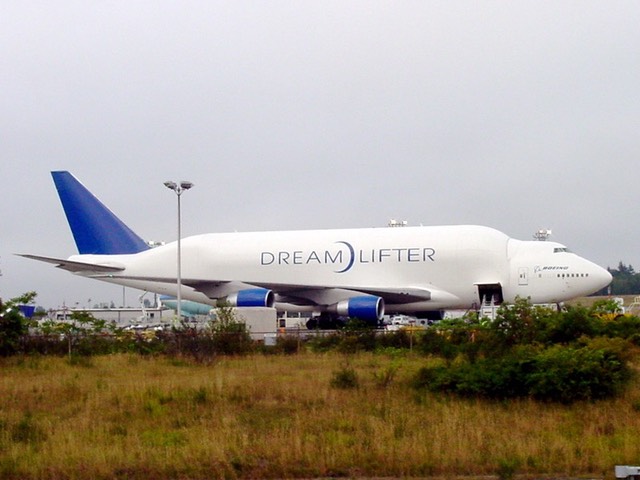
The Boeing Dreamlifter
Four 747-400s rebuilt with a swollen fuselage and a swing tail to carry Boeing 787 wings and fuselage barrels between factories.
747 versus A380
The two largest airliners ever built, compared — size, capacity, economics, and why both are now out of production.
Boeing 747-400 vs 747-8
The 747-8 is bigger, heavier and quieter than the 747-400, with a new wing, GEnx-2B engines and a stretched fuselage — but it sells a fraction as well.

Seating and stowage
The 747-8 cabin seating configuration and its 787-derived overhead bins, which changed how the ceiling reads.
More in Everything About the 747-8
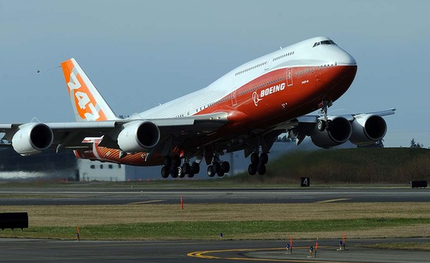
The Boeing 747-8
A guide to the final 747 — the stretched fuselage, new wing, GEnx-2B engines, 787-derived flight deck and the freighter that closed the production line.
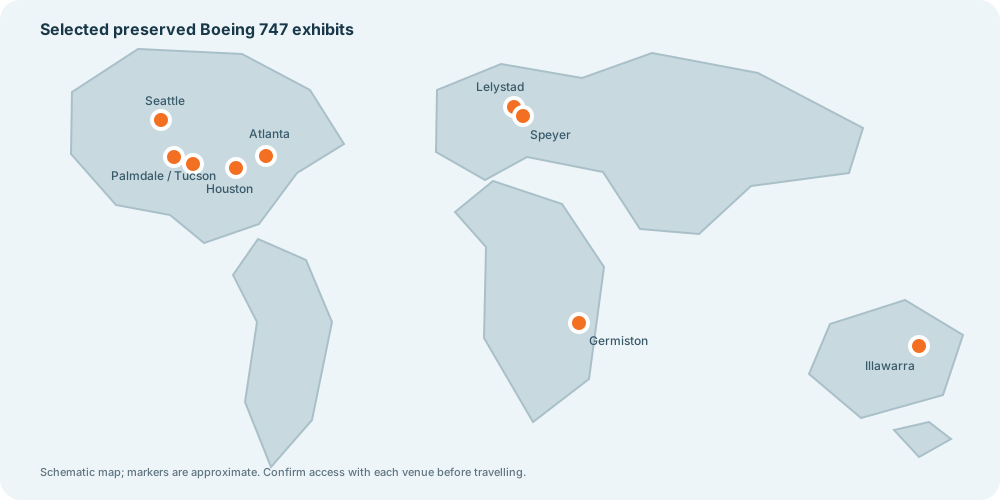
Preserved Boeing 747s You Can Visit
A source-backed directory and map of preserved Boeing 747s at museums and public exhibits worldwide, with registrations and official visitor links.
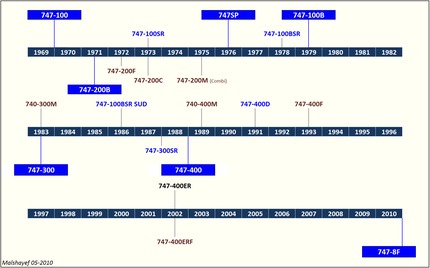
747 Timeline
A Boeing 747 chronology from the 1963 design study to the final delivery in January 2023, with rollout, first flight and delivery dates.
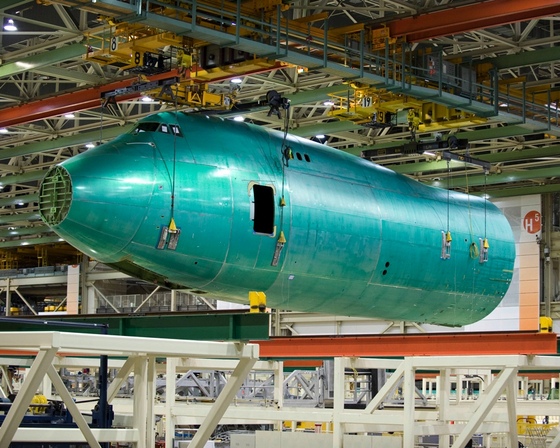
Fun Facts from Boeing
Boeing 747 facts and figures — six million parts, the largest building on Earth, 1,088 people on one flight, and 1,574 aircraft built over 54 years.
The 747-8 and the environment
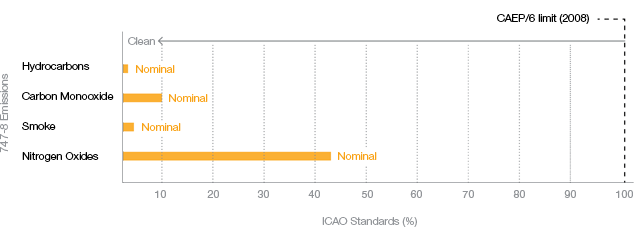
The 747-8 meets emissions limits for hydrocarbons, carbon monoxide, smoke and nitrogen oxides, with a noise footprint about 30 percent smaller than the 747-400.
The 747-8 cabin experience
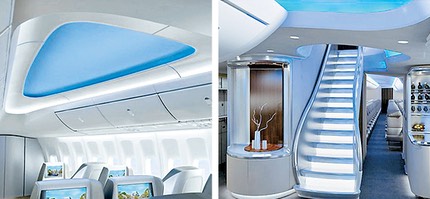
Larger windows, a sculpted 787-style ceiling, LED mood lighting and a quieter cabin than any previous 747.