Boeing 747-8 Flight Deck
The 747-8 flight deck uses 787-derived LCD displays and adds an airport moving map, yet shares a type rating with the 747-400 - about three days of differences training.

The 747-8 flight deck was redesigned around technology developed for the 787, while deliberately staying close enough to the 747-400 that the two share a type rating. That combination - newer equipment, same licence - is the point of it.
What changed from the 747-400
Liquid-crystal displays replace the cathode-ray-tube screens used throughout the 747-400 flight deck. Behind them sit a new flight management computer, integrated approach navigation, a global navigation satellite system landing capability with autoland, navigation performance scales and a vertical situation display.
Boeing describes five features in particular as setting the 747-8 flight deck apart.
Electronic flight bag
The Boeing Class 3 electronic flight bag, an option on the 747-8, brings digital information management to the flight deck. It substantially reduces the need for paper and improves communication between flight crews, dispatchers and air traffic management.
Vertical situation display
The vertical situation display gives pilots a clear view of the aircraft's current and projected flight path. It warns the crew early if the trajectory conflicts with terrain, or deviates from the intended approach path - including a missed glideslope intercept, which a purely lateral display makes hard to spot.
Flight management computer
The flight management computer can hold the entire worldwide navigation database, and was specified with enough headroom for the growth in navigation data expected over the following two decades.
Electronic checklist
Electronic checklists replace paper ones. They are quicker to work through, easier to revise and distribute, and airlines can customise them to their own procedures.
Airport moving map
The airport moving map combines high-fidelity taxi charts with an electronic map of taxiways, runways and gates, and shows the aircraft's own position on it. Integrated into the forward display, it lets both pilots see where they are on the ground without looking away.
It's an extra tool to let you know where you are on the runway surface.
- Jim Proulx, Boeing Commercial Airplanes Communications
That matters most in poor visibility, where runway and taxiway confusion has historically been a real hazard.
Commonality with the 747-400
For all the new equipment, the 747-8 has the same type rating as the 747-400. An airline can therefore fly both types from a single pilot pool, which helps schedule flexibility and pilot productivity. Boeing put the differences training for a 747-400 pilot at around three days.
This is the same logic Boeing applied across its range: make the newer aeroplane feel familiar enough that the conversion cost stays small, and airlines will find it easier to justify.

Boeing's own annotated view, marking the five features that distinguish the 747-8 flight deck from the 747-400.Boeing

Video
Frequently asked questions
- Do 747-400 pilots need a new type rating to fly the 747-8?
- No. The 747-8 shares a type rating with the 747-400. Boeing put the differences training at about three days, which lets an airline run one pilot pool across both types.
- What is the airport moving map on the 747-8?
- A display showing the aircraft's own position on a detailed map of the airport's taxiways, runways and gates. It is intended to help crews know exactly where they are on the ground, particularly in poor visibility.
- What did the 747-8 take from the 787 Dreamliner?
- Display technology and flight-deck features rather than structure. The 747-8 uses LCD screens in place of the older cathode-ray-tube displays, and adopts 787-derived systems including the electronic checklist and the vertical situation display.
Sources
Facts on this page are checked against the primary and institutional references below.
- Boeing 747-8 - Boeing
- 747-8 Airplane Characteristics for Airport Planning - Boeing
Related topics
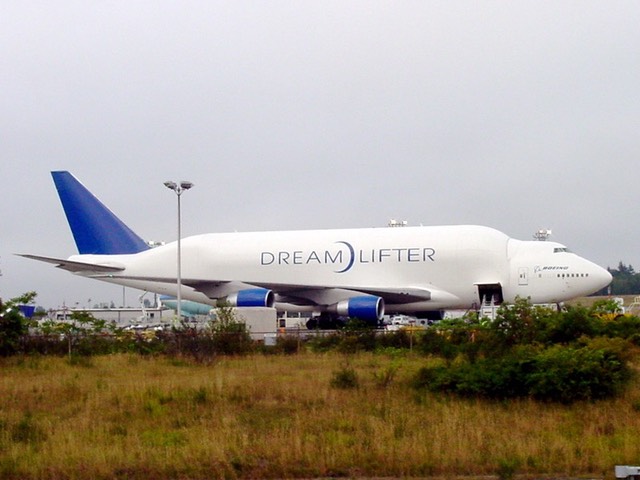
The Boeing Dreamlifter
Four 747-400s rebuilt with a swollen fuselage and a swing tail to carry Boeing 787 wings and fuselage barrels between factories.
Boeing 747-400 vs 747-8
The 747-8 is bigger, heavier and quieter than the 747-400, with a new wing, GEnx-2B engines and a stretched fuselage - but it sells a fraction as well.

Seating and stowage
The 747-8 cabin seating configuration and its 787-derived overhead bins, which changed how the ceiling reads.

The upper deck
The 747-8 upper deck, with the curved ceiling and indirect lighting the programme took from the 787 Dreamliner.
Compare aircraft sizes
Compare Boeing 747 variants, the Airbus A380 and Boeing 777 on one scale. Overlay their dimensions, switch views and see lengths and wingspans.
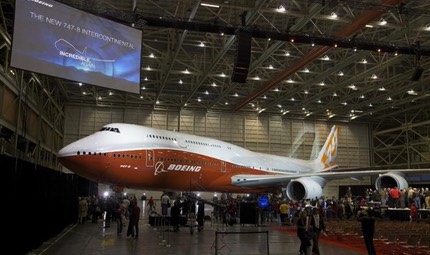
Boeing 747: History, Variants and Legacy
A complete reference to the Boeing 747, built from 1968 to 2023 - every variant from the 747-100 to the 747-8, plus special-mission jumbos and photos.
More in Everything About the 747-8
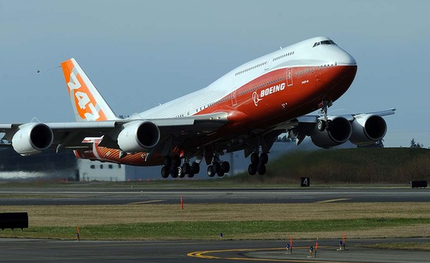
The Boeing 747-8
A guide to the final 747 - the stretched fuselage, new wing, GEnx-2B engines, 787-derived flight deck and the freighter that closed the production line.
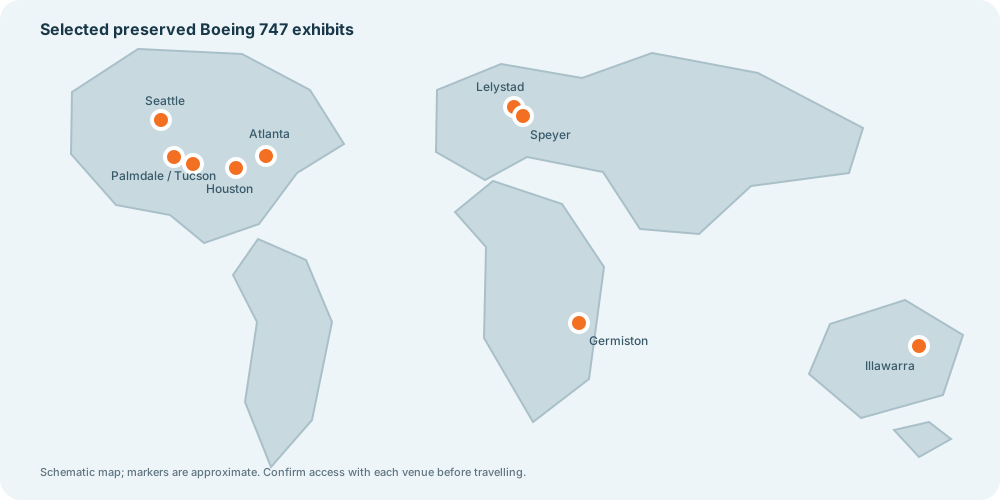
Preserved Boeing 747s You Can Visit
A source-backed directory and map of preserved Boeing 747s at museums and public exhibits worldwide, with registrations and official visitor links.
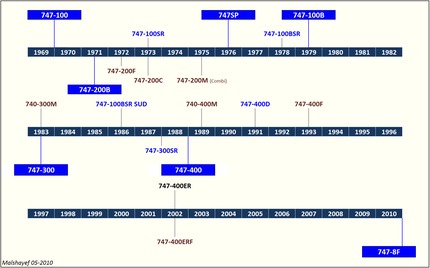
747 Timeline
A Boeing 747 chronology from the 1963 design study to the final delivery in January 2023, with rollout, first flight and delivery dates.
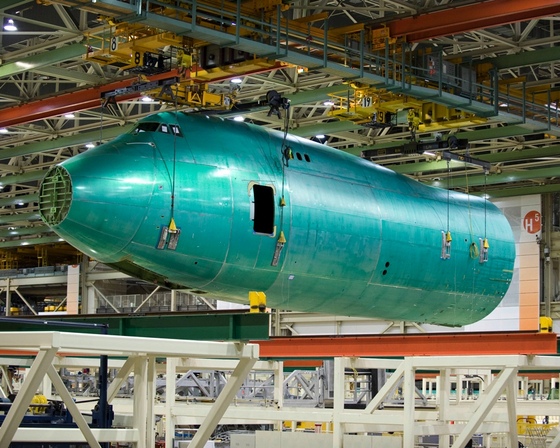
Fun Facts from Boeing
Boeing 747 facts and figures - six million parts, the largest building on Earth, 1,088 people on one flight, and 1,574 aircraft built over 54 years.
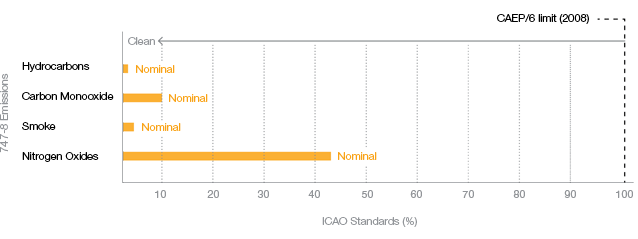
The 747-8 and the environment
The 747-8 meets emissions limits for hydrocarbons, carbon monoxide, smoke and nitrogen oxides, with a noise footprint about 30 percent smaller than the 747-400.
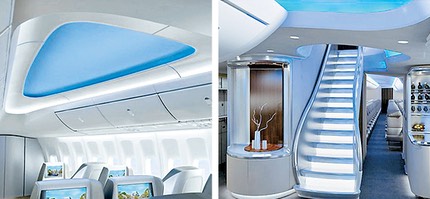
The 747-8 cabin experience
Larger windows, a sculpted 787-style ceiling, LED mood lighting and a quieter cabin than any previous 747.