The rejected take-off test
Boeing aborted a take-off in a maximum-weight 747-8 Freighter on deliberately worn brakes, then left it standing to prove it would not catch fire.

The rejected take-off test is one of the most demanding things done to an airliner during certification, and it is deliberately staged at the worst possible moment.
What was done
In April, Boeing’s Test & Evaluation team took a 747-8 Freighter to a long runway in California. The aircraft was loaded to its maximum take-off weight, and its brakes were deliberately worn down to the limit at which an airline would still be permitted to dispatch it.
The crew then accelerated to the aircraft’s decision speed and aborted, bringing it to a stop using the brakes alone — no thrust reversers, because certification cannot assume they will work.
Why it is so severe
An abort at maximum weight and maximum speed converts an enormous quantity of kinetic energy into heat, almost all of it in the brakes. They glow, the tyres reach temperatures where their fuse plugs are designed to melt and deflate them deliberately, and the wheels can catch fire.
That is the second half of the test. After stopping, the aircraft must be left standing for a set period without fire crews intervening, to prove the fire will not spread. In service, this is the margin that gives an evacuation time to happen.
What it proves
Passing means the aircraft can survive the worst case an airline can legally present it with: heaviest, fastest, on the most worn brakes permitted. Not the aircraft as delivered — the aircraft on the last day before a brake change.
The 747-8 Freighter completed the test as part of a programme that also included extreme structural and systems testing before the type was certified.
Frequently asked questions
- What is a rejected take-off test?
- A certification test in which a fully loaded aircraft accelerates to its decision speed and then aborts, stopping on brakes alone. It proves the brakes can absorb the energy of a maximum-weight abort at the worst possible moment.
- Why are worn brakes used for the test?
- Because certification has to cover the worst legal case, not the best one. The brakes are worn to their permitted service limit, so the aircraft is proven at the point where an airline would still be allowed to dispatch it.
Sources
Facts on this page are checked against the primary and institutional references below.
- Boeing 747-8 — Boeing
- Boeing 747-8 — Wikipedia
Related topics

747-8F
The 747-8 Freighter entered service with Cargolux in 2011 and was the last 747 in production — the final aircraft went to Atlas Air in January 2023.
Boeing 747-8 Intercontinental vs 747-8F
The 747-8I and 747-8F share an engine, a wing and a weight, but split on the upper deck, the nose door and what they are built to haul.
Atlas Air
The largest 747 fleet in the world, and the airline that took delivery of the very last 747 ever built.
Boeing 747-8 Being Put through some tough tests
Boeing's 747-8 rejected takeoff test — accelerating to takeoff speed at maximum weight, then stopping on worn brakes with no reverse thrust.
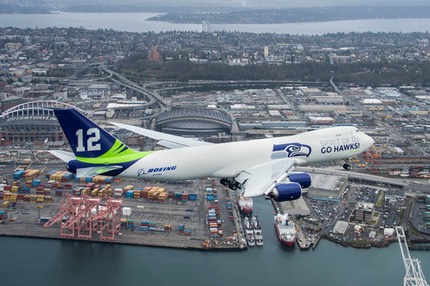
Boeing 747-8 Freighter Painted in Seattle Seahawks Livery
Boeing painted a 747-8 Freighter in Seattle Seahawks colours to mark the team's NFC championship win in 2014.
Boeing 747-8F Vomit Comet
A Boeing 747-8F flew parabolic manoeuvres during flight testing — pushing to near-zero g to prove the fuel and engine systems in negative-g flight.

More in Everything About the 747-8
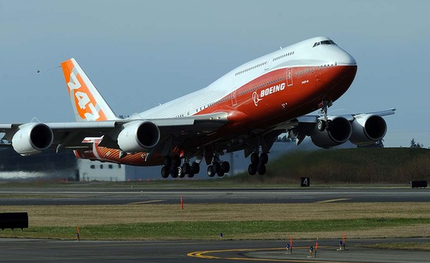
The Boeing 747-8
A guide to the final 747 — the stretched fuselage, new wing, GEnx-2B engines, 787-derived flight deck and the freighter that closed the production line.
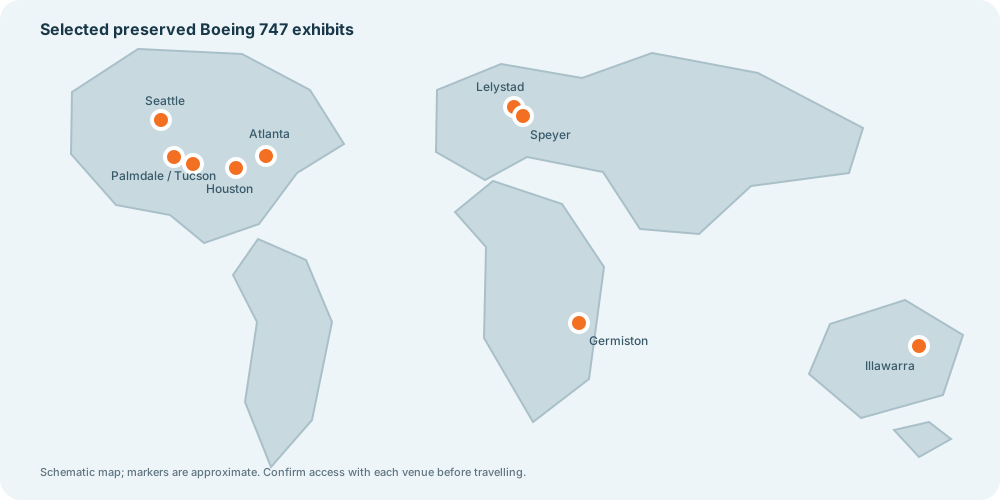
Preserved Boeing 747s You Can Visit
A source-backed directory and map of preserved Boeing 747s at museums and public exhibits worldwide, with registrations and official visitor links.
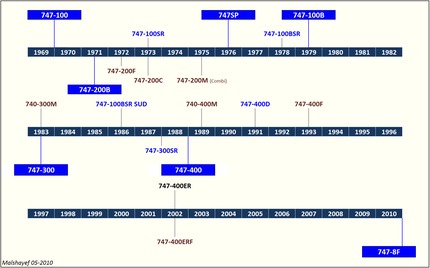
747 Timeline
A Boeing 747 chronology from the 1963 design study to the final delivery in January 2023, with rollout, first flight and delivery dates.
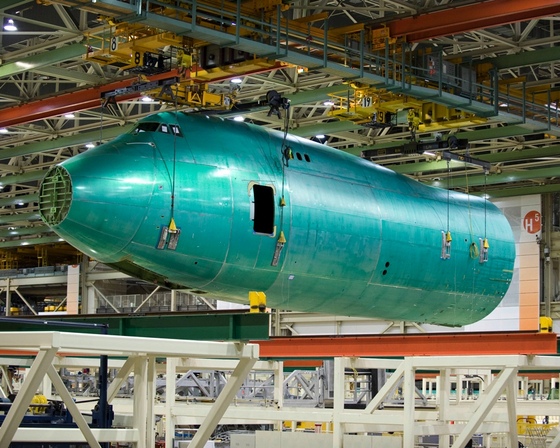
Fun Facts from Boeing
Boeing 747 facts and figures — six million parts, the largest building on Earth, 1,088 people on one flight, and 1,574 aircraft built over 54 years.
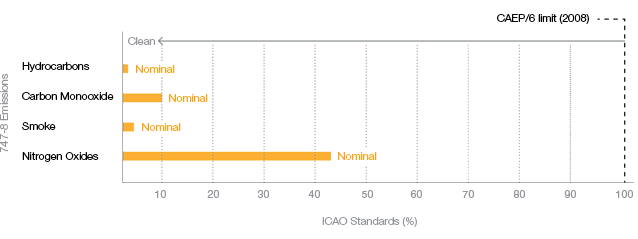
The 747-8 and the environment
The 747-8 meets emissions limits for hydrocarbons, carbon monoxide, smoke and nitrogen oxides, with a noise footprint about 30 percent smaller than the 747-400.
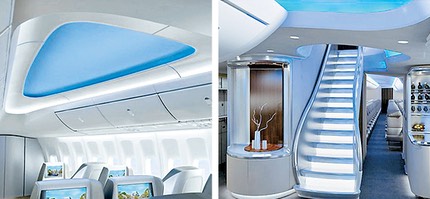
The 747-8 cabin experience
Larger windows, a sculpted 787-style ceiling, LED mood lighting and a quieter cabin than any previous 747.