The Boeing E-4B "Nightwatch"
The E-4B is a hardened 747-200B airborne command post, built to keep national command authority functioning when ground facilities are unavailable.
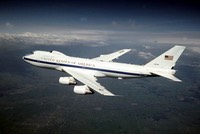
The Boeing E-4, project name Nightwatch, is an aircraft built for a single grim purpose: to make sure that if the places from which the United States commands its forces are destroyed, the command itself survives.
Four were built, all on 747-200B airframes, and all four remain in service.
What it is for
Fixed command centres have a fundamental weakness — their coordinates are known. An airborne command post does not, because it can be anywhere within a very large volume of sky and can stay there for a long time.
The E-4B is designed to carry the National Command Authority and its staff, receive intelligence, and issue orders to forces worldwide, entirely independently of ground infrastructure. It is officially the National Airborne Operations Center (NAOC), and in peacetime it also serves as a flying operations centre for the Secretary of Defense on overseas travel.
What is on board
The interior bears no resemblance to an airliner. It is arranged as a working command centre across three decks, with a briefing room, a conference area, work areas for a battle staff of dozens, and a communications section.
The communications fit is the point of the aircraft. It can reach forces across the spectrum from satellite links down to very low frequency radio — the band used to reach submerged submarines — using, among other things, a trailing wire aerial several miles long deployed in flight.
Hardened
The E-4B is built to keep working in conditions that would disable an ordinary aircraft. Its systems are shielded against the electromagnetic pulse produced by a nuclear detonation, which would otherwise destroy unprotected electronics at considerable distance.
It can also be refuelled in flight, so its endurance is limited by crew fatigue and consumables rather than fuel.
Recognising one
From outside, the giveaway is the large dorsal fairing immediately behind the upper deck, which houses satellite communications equipment. Otherwise it looks much like any early 747 — which is, presumably, not a disadvantage.
Still flying
The E-4B fleet is now decades old and based at Offutt Air Force Base in Nebraska. Replacing it has been repeatedly studied, most recently under the Survivable Airborne Operations Center programme, but the four aircraft remain in service — among the oldest 747s still doing serious work anywhere in the world.
| Manufacturer | Boeing |
|---|---|
| Variant | Boeing E-4B |
| Status | In service |
| Number built | 4 |

Four were built, all on 747-200B airframes, and all remain in service decades later.US Air Force
Frequently asked questions
- What is the Boeing E-4B used for?
- It is a survivable airborne command post, able to carry the US national command authority and direct forces if ground command centres are destroyed or unavailable. It also serves as an airborne operations centre for the Secretary of Defense when travelling.
- Why is the E-4B called the doomsday plane?
- Because of its wartime role. It is designed to keep functioning during and after a nuclear exchange, when fixed command centres might not survive — a mission that earned it the nickname in popular reporting.
- How is the E-4B different from Air Force One?
- Air Force One is a transport, designed to carry the President comfortably and securely. The E-4B is a flying command centre — its interior is filled with workstations, communications equipment and briefing space rather than staterooms.
More in Special Boeing 747s
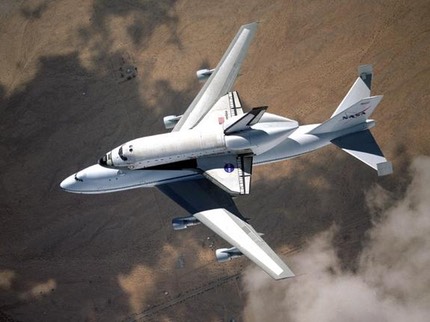
Special Boeing 747s
The 747s built for jobs no airliner does — Air Force One, the Dreamlifter, the Shuttle Carrier, a flying observatory, a firefighting tanker and an airborne laser.
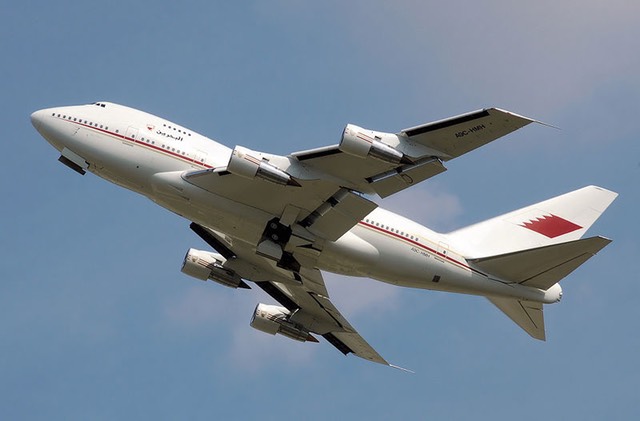
The 747 ASB
Boeing's 1986 answer to the Airbus A340 and MD-11 — a shortened 747 with 747-400 technology. It was never built.
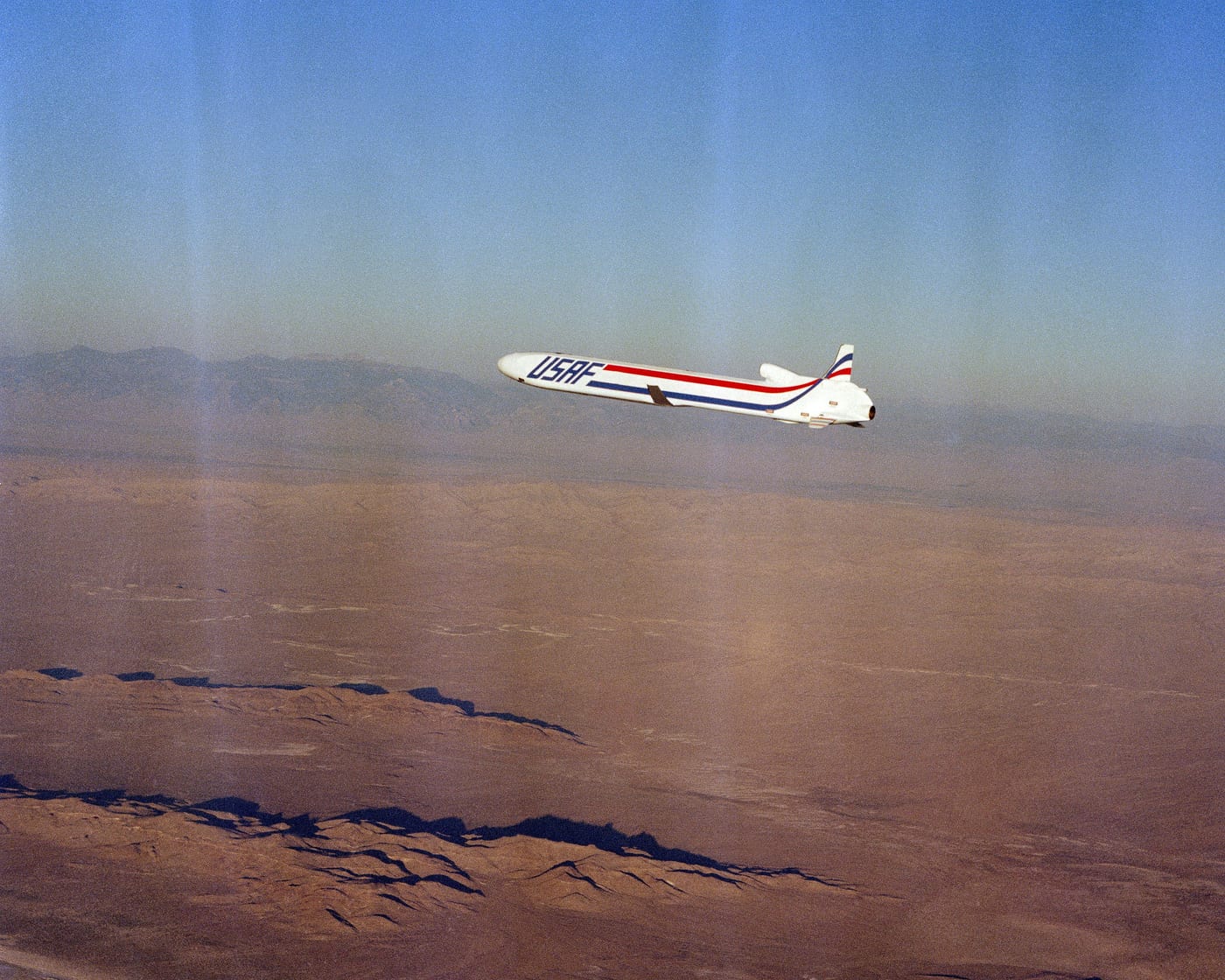
The 747 CMCA
A proposed USAF Boeing 747 armed with up to 72 cruise missiles on rotary launchers, studied during B-1 development. It was never built.

The Boeing Dreamlifter
Four 747-400s rebuilt with a swollen fuselage and a swing tail to carry Boeing 787 wings and fuselage barrels between factories.
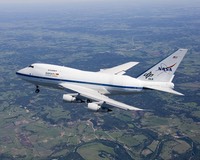
SOFIA — the flying observatory
A former airline 747SP carrying a 2.5 m infrared telescope, flying above the water vapour that blocks infrared light from the ground. Retired 2022.
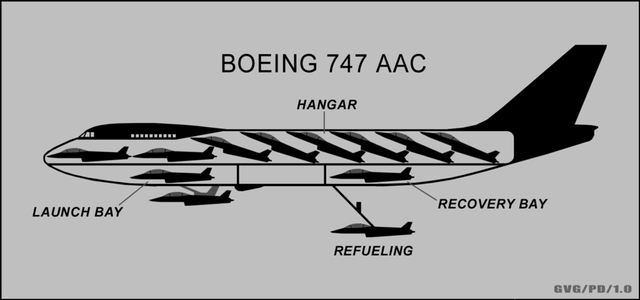
The Boeing 747 AAC
A 1970s study for a 747 flying aircraft carrier, launching and recovering up to ten parasite microfighters in flight. It was never built.