Inside the 747-8 Freighter
The 747-8F carries 16 percent more revenue cargo volume than the 747-400F and keeps the upward-hinging nose door that lets it swallow full-length loads.

The freighter was the reason the 747-8 programme survived as long as it did. It was the version that flew first, sold best, and built the last 747 to leave Everett.
The nose door
The defining feature is inherited from the very first 747. Because the flight deck sits above the main deck rather than in the nose, the entire front of the aircraft can hinge upwards, opening the main deck end-on.
That matters for anything long. A side door limits you to what can be swung through an opening amidships; a nose door lets a load be driven straight in along the length of the aircraft. Industrial machinery, aircraft engines, helicopter fuselages and satellite components are the sort of cargo that keeps the capability commercially relevant.
The 747-8F retains it, and also has a side cargo door on the main deck.
What the stretch adds
At 18.4 ft (5.6 m) longer than the 747-400F, the 747-8F carries around 16 percent more revenue cargo volume. In practical terms that is four additional main-deck pallet positions, plus extra containers and pallets in the lower holds.
For a freight operator, volume often binds before weight - much air cargo is bulky rather than dense - so extra usable space converts directly into revenue.
Why it outlived the passenger version
There was no like-for-like replacement. Twin-engined freighters such as the 777F carry a great deal, but none of them offers a nose door or the 747's main-deck cross-section. That kept the 747-8F in demand with Cargolux, Atlas Air, UPS, Kalitta and others long after airlines had stopped buying the passenger version - and it is why the final 747 of all was a freighter.
| Manufacturer | Boeing |
|---|---|
| Variant | 747-8F |
| Introduced | October 2011 (Cargolux) |
| Length | 18.4 ft (5.6 m) longer than the 747-400F |
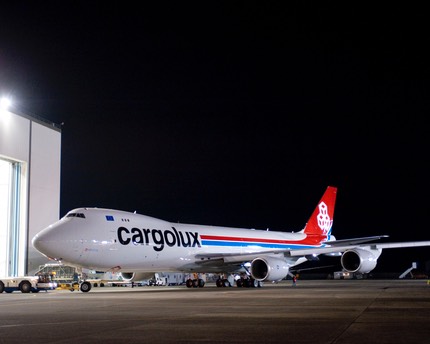
Launch customer Cargolux took the first 747-8F in October 2011.Boeing 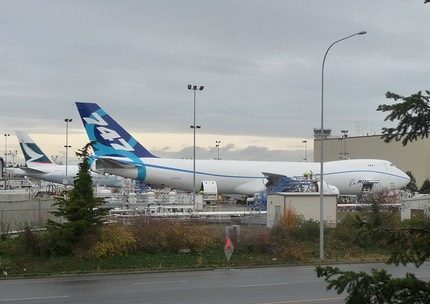
A 747-8F at Everett during the flight test programme.Boeing


Video
Frequently asked questions
- Why does the Boeing 747 freighter have a nose door?
- Because the flight deck sits on an upper deck, the entire nose can hinge upwards, leaving the main deck open at the front. That allows straight-in loading of long items that will not fit through a side door.
- How much more can a 747-8F carry than a 747-400F?
- About 16 percent more revenue cargo volume, from a fuselage 18.4 ft longer. That adds four main-deck pallet positions.
Sources
Facts on this page are checked against the primary and institutional references below.
- Boeing 747-8 - Boeing
- 747-8 Airplane Characteristics for Airport Planning - Boeing
Related topics
Factory freighters vs converted 747 freighters
A factory 747 freighter is built for cargo from the start - nose door, no windows, a short upper deck. A conversion re-engineers a retired passenger 747 instead.
How 747 freight actually works
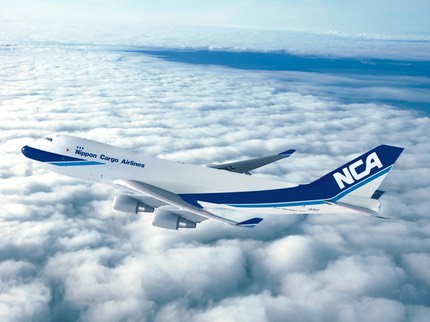
The nose door, motorised floor rollers, 96 by 125 inch pallets and 30 main-deck positions - how a 747 freighter is loaded and why it beat everything else.
747-400F
The all-freight 747-400F used the 747-200F fuselage. It first flew in May 1993 and entered service with Cargolux that November.
Atlas Air
The largest 747 fleet in the world, and the airline that took delivery of the very last 747 ever built.

747-8F
The 747-8 Freighter entered service with Cargolux in 2011 and was the last 747 in production - the final aircraft went to Atlas Air in January 2023.
Active Boeing 747 Fleet Tracker
Track confirmed passenger and cargo Boeing 747 operators with dated fleet counts, primary sources, methodology and downloadable records.
More in Everything About the 747-8
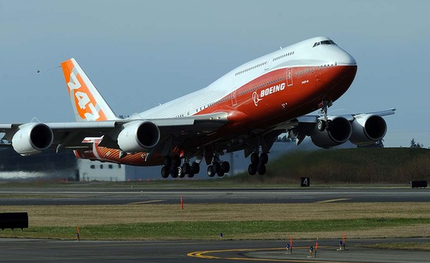
The Boeing 747-8
A guide to the final 747 - the stretched fuselage, new wing, GEnx-2B engines, 787-derived flight deck and the freighter that closed the production line.
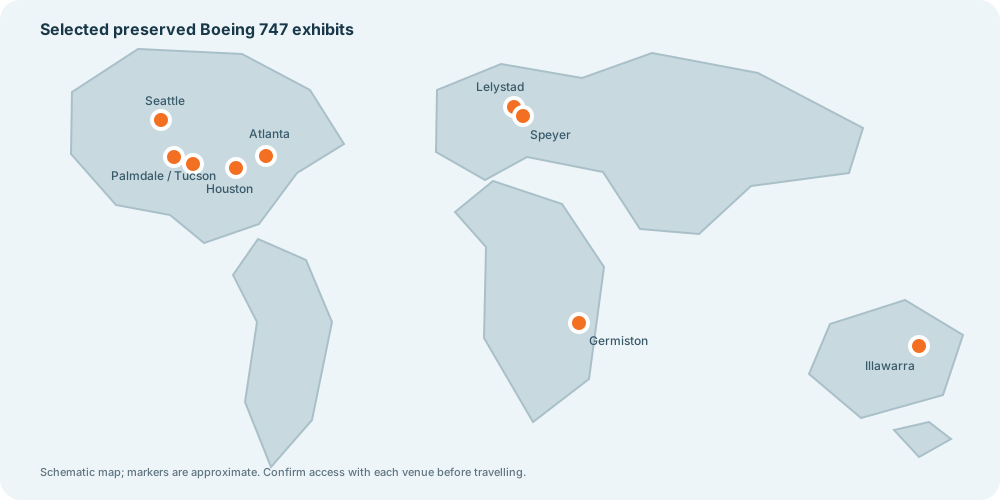
Preserved Boeing 747s You Can Visit
A source-backed directory and map of preserved Boeing 747s at museums and public exhibits worldwide, with registrations and official visitor links.
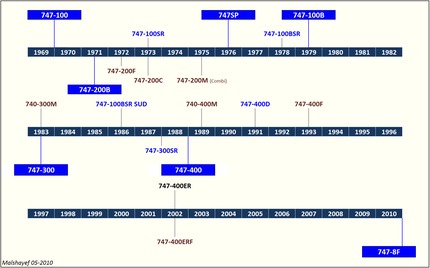
747 Timeline
A Boeing 747 chronology from the 1963 design study to the final delivery in January 2023, with rollout, first flight and delivery dates.
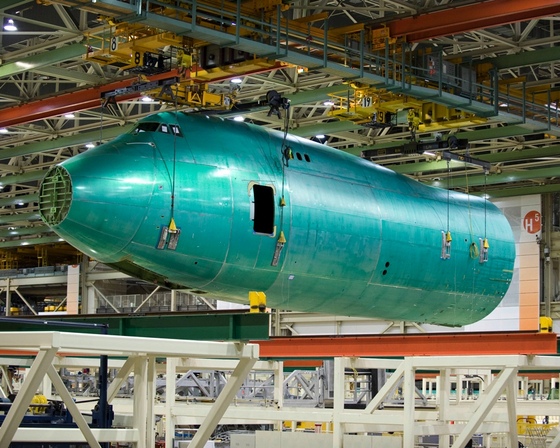
Fun Facts from Boeing
Boeing 747 facts and figures - six million parts, the largest building on Earth, 1,088 people on one flight, and 1,574 aircraft built over 54 years.
The 747-8 and the environment
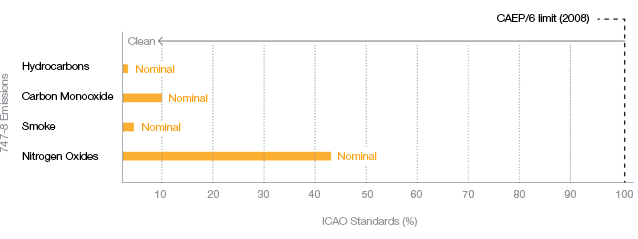
The 747-8 meets emissions limits for hydrocarbons, carbon monoxide, smoke and nitrogen oxides, with a noise footprint about 30 percent smaller than the 747-400.
The 747-8 cabin experience
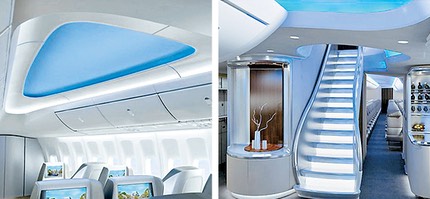
Larger windows, a sculpted 787-style ceiling, LED mood lighting and a quieter cabin than any previous 747.