Boeing 747-100 vs 747-200
The 747-200 was the original 747 with the edges taken off: more powerful engines, higher weights and longer range, and the freighter and combi derivatives the -100 could not offer.
The 747-200 is not a new aircraft, and Boeing never pretended otherwise. It is the 747-100 with the original limitations removed: more thrust, more weight, more range and a proper upper deck. It is also the point where the 747 stopped being one aircraft and became a family.
The object of the exercise
The 747-100 was certified at 735,000 lb and could manage only about 5,000 nautical miles with a full load — marginal for the oceans it was built to cross. The 747-200’s mission was to fix exactly that.
Three things did the work:
- More powerful engines. The -200 could carry the General Electric CF6 or Rolls-Royce RB211 as well as the JT9D, and later JT9Ds were far more reliable than the first units.
- A stronger structure and gear, raising takeoff weight from 735,000 lb to as much as 833,000 lb on the -200B.
- More fuel, which is what the weight increase was mostly spent on.
The result: about 6,560 nautical miles on a -200B against roughly 4,620–5,300 on a -100 — the difference between flying the Atlantic with restrictions and flying it with comfort to spare.
Spotting one
The upper deck is the giveaway. The earliest 747-100s had three windows per side; later -100s six; the -200 normally ten, a “full-length” upper deck Boeing made standard from 1971.
The variants the -100 could not be
The -200 is where the family tree branches:
| 747-200B | 747-200F | 747-200C | 747-200M | |
|---|---|---|---|---|
| Passenger | Passenger | Cargo | Convertible | Combi |
| Full-length upper deck | Yes | Windowless | Yes | Yes |
| Built into same production run | Yes | Yes | Yes | Yes |
The freighter is the important one. The 747-100F captures the design intent — a nose door and a full-length cargo floor built into the original layout — but it was the -200F that established the 747 as the world’s cargo hauler, a role its freighter and converted-freighter successors still play decades later.
The honest summary
The -100 proved the concept; the -200 made it a product. It sold 393 airframes against the -100’s 168, and its lineage — the weights, the engine options, the cargo door — is what every later generation inherited.
| Manufacturer | Boeing |
|---|---|
| Variant | 747-100 vs 747-200 |
| First flight | 9 February 1969 vs 11 October 1970 |
| Introduced | 1970 vs 1971 |
| Status | Both retired from passenger service; -200 freighters kept flying for decades |
| Engines | JT9D vs JT9D, CF6 or RB211 |
| Typical capacity | 366 vs 366 (3-class) |
| Range | ~4,620–5,300 nmi vs ~6,560 nmi (200B) |
| Length | 231 ft 10 in (70.66 m) — both |
| Wingspan | 195 ft 8 in (59.64 m) — both |
| Max takeoff weight | 735,000 lb (333 t) vs up to 833,000 lb (378 t) |
| Cruise speed | Mach 0.84 vs Mach 0.84 |
| Number built | 168 vs 393 (all -200 versions) |
Frequently asked questions
- How do you tell a 747-100 from a 747-200?
- The quickest way is the upper deck: the earliest 747-100s had three windows a side, later -100s had six, and the -200 normally had ten. The -200 is also the first 747 you will find with freighter, combi and convertible variants.
- What was the 747-100B?
- The 747-100B was the final passenger -100 standard, with the strengthened airframe and gear of the -200 but the -100's wing and length, raising maximum takeoff weight to 750,000 lb. Only nine were built.
Sources
Facts on this page are checked against the primary and institutional references below.
Related topics
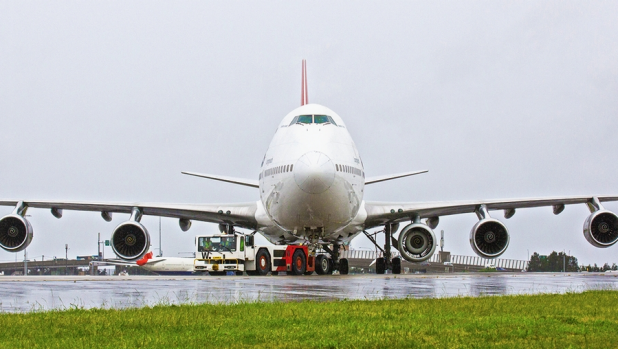
Engines through the generations
Every engine the 747 was offered with, from the troubled JT9D to the GEnx-2B — and why engine choice decided how well each variant sold.
Pratt & Whitney JT9D on the Boeing 747
The Pratt & Whitney JT9D powered the first 747 in 1969 and all 747-100s, plus most -200s and the 747SP, before alternatives arrived.
Air France Boeing 747 fleet history
Air France flew 747s from 1970 to the final passenger flights of January 2016, also operating one of the largest 747 freighter fleets.
All Nippon Airways Boeing 747 fleet history
ANA created the world-first 500+ seat all-economy 747SR in 1979 and flew 45 new-build 747s until the last 747-400D retired.
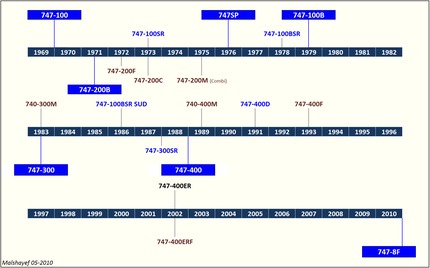
Boeing 747 Family
Every Boeing 747 variant built between 1968 and 2023 — the 747-100, -200, -300, -400 and 747-8, with freighter, combi and short-range models explained.
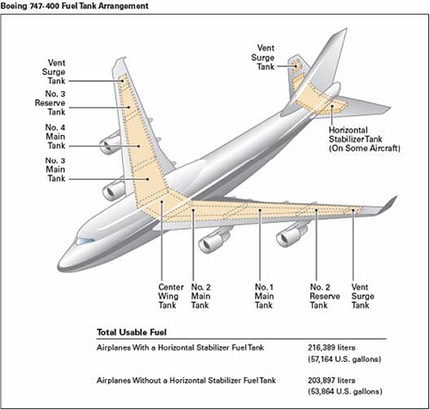
Boeing 747 Fuel System
Detailed Boeing 747 fuel system guide covering tank layout, pumps, transfer, crossfeed, refuelling, jettison, safety and every major 747 variant.
More in Features
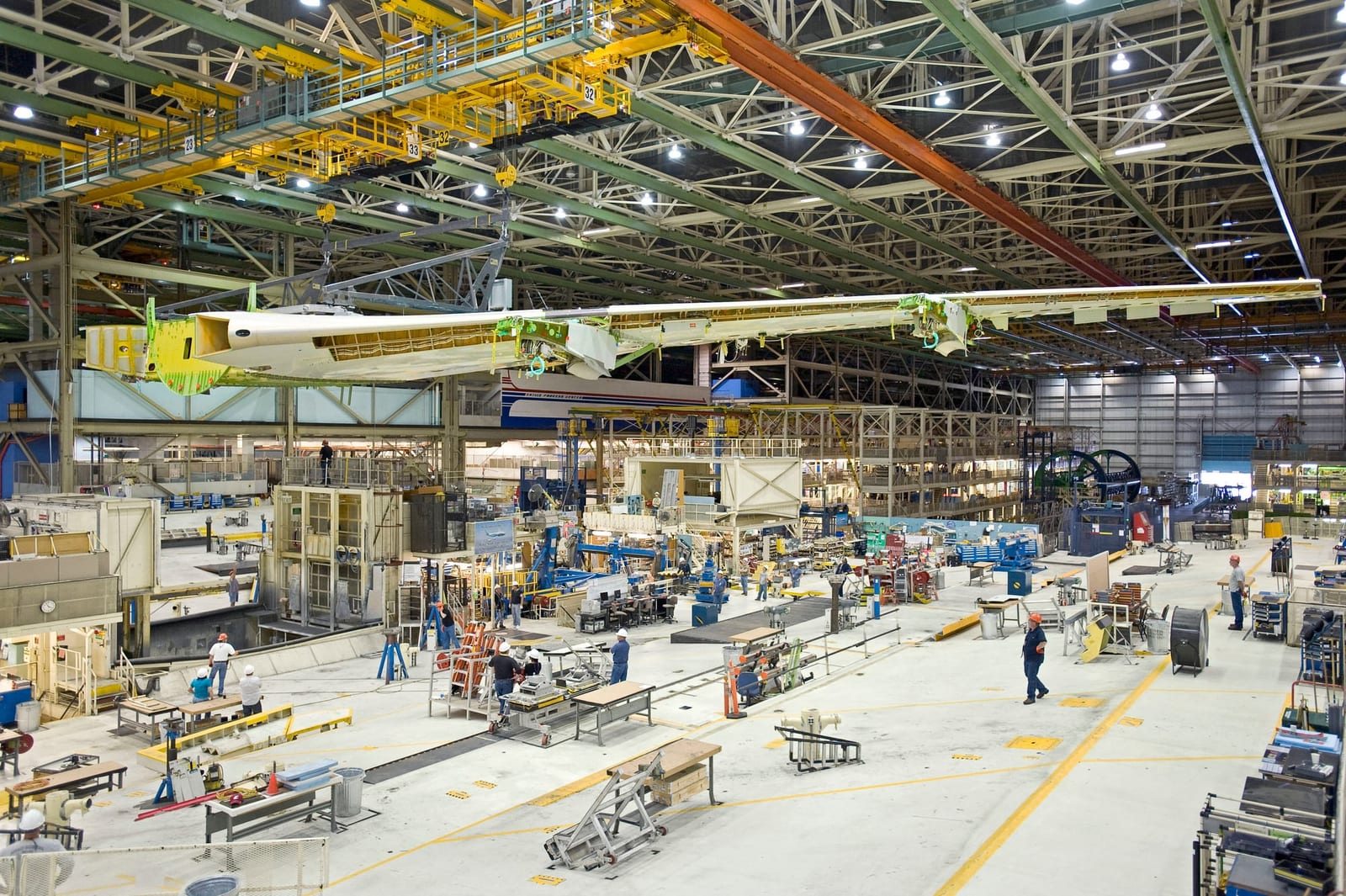
Features
Longer pieces on the Boeing 747 — the factory built to make it, how it compares to the A380, what became of the retired fleet, and what it is like to fly.
How to Identify Boeing 747 Variants
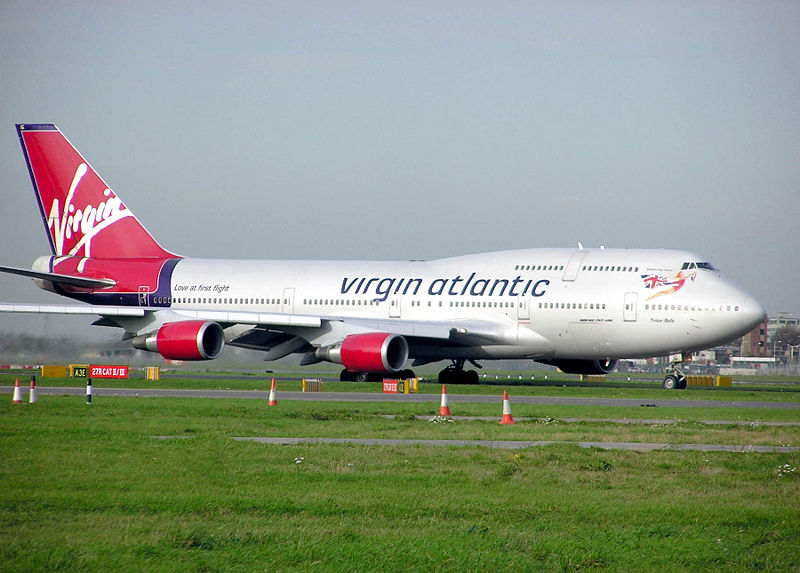
Identify Boeing 747 variants from photographs using upper-deck length, wingtip shape, fuselage length, engine nacelles and freighter doors.
The building that had to be built first
Boeing had no building big enough for the 747, so it built the largest building in the world by volume — and assembled the aeroplane while it was going up.
747 versus A380
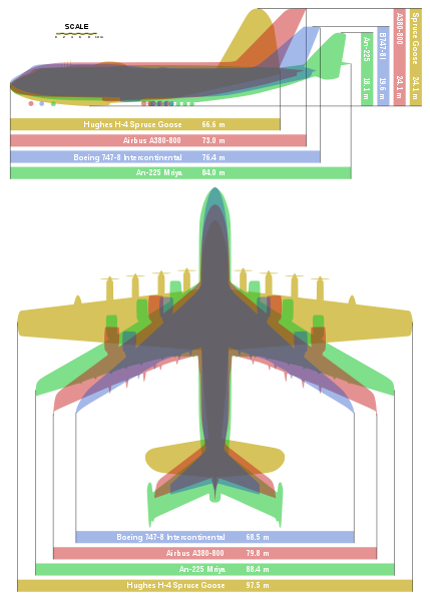
The two largest airliners ever built, compared — size, capacity, economics, and why both are now out of production.
Where the 747s went
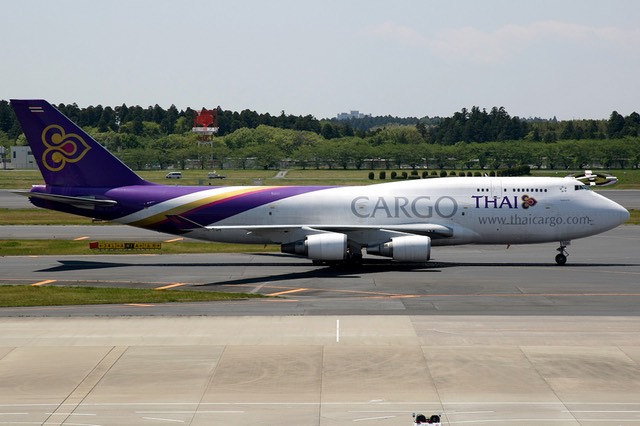
Most retired 747s were scrapped. Others became freighters, museum pieces, restaurants, a hotel — and one launched satellites into orbit.
Flying the 747
What the 747 is like to fly — the type rating, the view from 30 feet up, the handling, and why pilots talk about it the way they do.
