The number that is not fixed
The same 747-400 type was approved with several thrust ratings per engine family, and changing between them was a scheduled ground action with real consequences for performance and engine life.
A 747's thrust rating is the number most often quoted about it and the one most often wrong. It is not a fixed property of the aeroplane. On the -400 and the types before it, the same certified type could be operated at different thrust ratings, and which one it carried was a decision an operator made and could change.
The ratings, by variant
Boeing's own airport-planning documentation lists the certified rated takeoff thrust options:
| 747-400 | Rated takeoff thrust | 747-400ER | Rated takeoff thrust |
|---|---|---|---|
| CF6-80C2B1F | 57,900 lb | CF6-80C2B5F | 62,100 lb |
| PW4056 | 56,750 lb | PW4062 | 63,300 lb |
| RB211-524G2 | 58,000 lb | RB211-524H8-T | 65,500 lb |
Two things jump out. The three engine makers certified to broadly similar thrusts for the -400, within about 1,250 lb of each other - engine choice on the -400 was genuinely competitive, as the engine pages set out. And the -400ER ratings are all substantially higher, because the -400ER exists to carry more weight and more fuel, and that requires more thrust to fly the same speeds.
The 747-8 then removed the choice almost entirely: it has a single engine option, the GEnx-2B. Flexible thrust rating is a phenomenon of the -400 and earlier types, not of the modern one.
Why a higher rating costs engine life
Within a single engine family, the higher-rated versions are not different engines. They are the same gas path asked for more.
A higher rating is obtained with a higher throttle setting, more fuel and higher rotational speeds. The immediate consequence is temperature. Engines are limited by exhaust gas temperature, and the margin between the actual EGT and the redline is what absorbs a hot day, an ageing engine and a slightly worn compressor. Spend that margin in advance and there is less left to give.
This shows up in the certification data as a flat-rated temperature - the outside air temperature below which the engine can hold its rated thrust constant. The Pratt & Whitney PW4000-94 family demonstrates the pattern clearly: the higher-rated versions have lower flat-rated temperatures. The lower ratings hold constant thrust to 33 °C; the highest 62,000 lb rating holds it only to 30 °C. For an aircraft whose whole purpose is long over-water sectors, where the diversion and alternate planning is sensitive to performance in warm conditions, that is not a trivial difference.
The same arithmetic then continues into the shop. An engine spending its life closer to its temperature limit accumulates damage faster, and a 747-400's ultra-long sectors - where engines routinely recorded double-digit engine flight hours per cycle - left very little room for waste. A new engine of a given rating has more margin than the same engine after a shop visit.
Changing the rating
A thrust rating change is a ground maintenance action, and for the 747's PW4000 it is accomplished through the electronic engine control programming plug. This is not an informal adjustment: FAA airworthiness directive guidance treats a rating change made this way as an event with its own conditions, requiring the applicable cyclic limits to be applied for the period in which the change was made, and distinguishing engines that were new or overhaul-complete at the time from those that were not.
That regulatory attention is itself informative. An AD does not bother tracking a number unless changing it has consequences for the hardware - which is exactly the point. A rating change is closer to re-certifying the engine's operating envelope than to adjusting a preference.
What it means to the operator
The decision is a genuine trade-off between three things:
- Hot-and-high performance. Routes through the tropics, or from hot airports, depend on being able to hold thrust and to meet takeoff and climb requirements at weight. A lower-rated engine may simply not make the published figure.
- Takeoff field length. The airport-planning documentation organises its takeoff field length tables by aircraft weight and by thrust setting, which is the clearest evidence that thrust is a variable the operator actively manages on each departure rather than a fixed constant. Reducing takeoff thrust where the runway allows it lowers wear and fuel burn.
- Engine economics. Time on wing, shop visit cost and the interval between removals are the largest single maintenance line on a 747, and the rating chosen has a direct effect on all three.
Because the change is a ground action through the engine control, it also interacts with fleet planning: engines could be moved between aircraft, and an operator could effectively standardise a rating across part of a fleet for maintenance simplicity or differentiate it for operational reasons.
The weight context
Thrust rating only means something relative to weight, and the same planning documentation that lists the ratings also defines the weight envelope the 747 works within: maximum design taxi, landing and takeoff weights; operating empty weight; and maximum design zero fuel weight, from which maximum payload is derived. Those definitions are set out on the weight and balance and loading page, and they are the frame of reference for every performance number the type has ever advertised.
Related
- Engines - the five engines and the aeroplanes they sold
- Pratt & Whitney PW4000 - the -400 mainstay
- General Electric CF6
- Rolls-Royce RB211-524
Frequently asked questions
- How much thrust does a Boeing 747-400 have?
- It depends on the engine and the variant. The 747-400 was certified with ratings from 56,750 to 58,000 lb, while the 747-400ER was certified with higher ratings from 62,100 to 65,500 lb. The 747-8 has a single engine option, the GEnx-2B, so the choice disappeared on that type.
- Can a 747's thrust rating be changed?
- Yes, on the ground. For the Pratt & Whitney PW4000 on the 747, a thrust rating change is accomplished through the electronic engine control programming plug, and FAA airworthiness directive guidance treats that change as a maintenance event with its own cyclic limits.
- Why does a higher thrust rating reduce engine life?
- Because the same gas path has to work harder. A higher rating is achieved with a higher throttle setting, more fuel and higher rotational speeds, which pushes the exhaust gas temperature closer to its limit and leaves less margin for a hot day or an ageing engine. The higher-rated versions also have lower flat-rated temperatures, meaning they lose constant thrust in warm conditions sooner.
Sources
Facts on this page are checked against the primary and institutional references below.
Related topics
Boeing 747-400 vs 747-8
The 747-8 is bigger, heavier and quieter than the 747-400, with a new wing, GEnx-2B engines and a stretched fuselage - but it sells a fraction as well.
The 747-8 and the environment
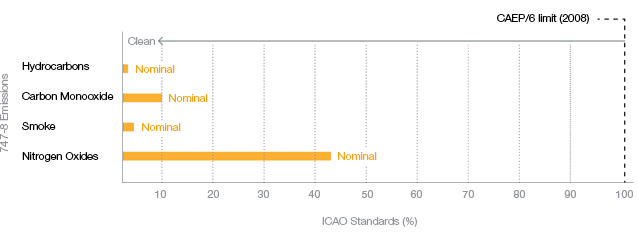
The 747-8 meets emissions limits for hydrocarbons, carbon monoxide, smoke and nitrogen oxides, with a noise footprint about 30 percent smaller than the 747-400.

Boeing 747: History, Variants and Legacy
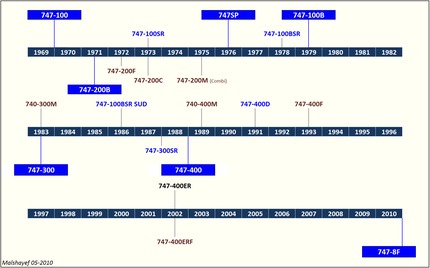
A complete reference to the Boeing 747, built from 1968 to 2023 - every variant from the 747-100 to the 747-8, plus special-mission jumbos and photos.
Boeing 747 Family
Every Boeing 747 variant built between 1968 and 2023 - the 747-100, -200, -300, -400 and 747-8, with freighter, combi and short-range models explained.
Boeing 747 Production Data
Download Boeing 747 production totals by generation, with a transparent method and links to Boeing's final programme record and technical documents.

Boeing 747-8 Flight Deck
The 747-8 flight deck adds 787-derived displays, electronic checklists and an airport moving map while keeping a common type rating with the 747-400.
More in Aircraft Systems
How the 747 works
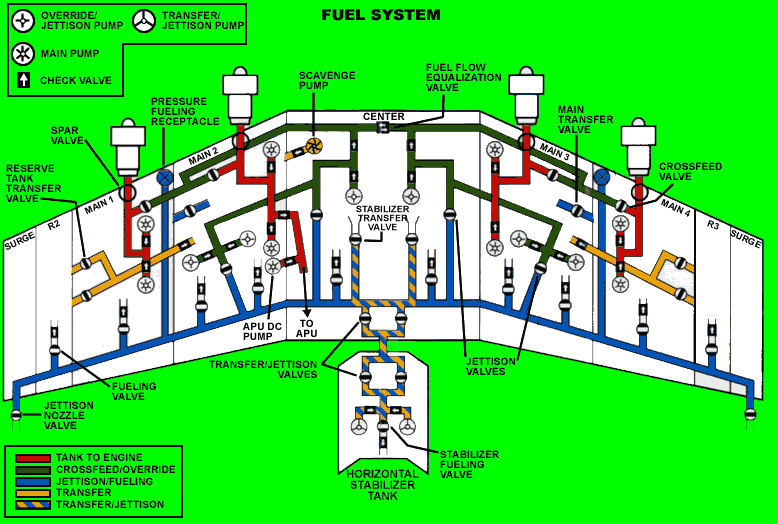
The systems that make a 747 fly - fuel, hydraulics, landing gear, electrics and pressurisation, explained one at a time.
Boeing 747 specifications compared
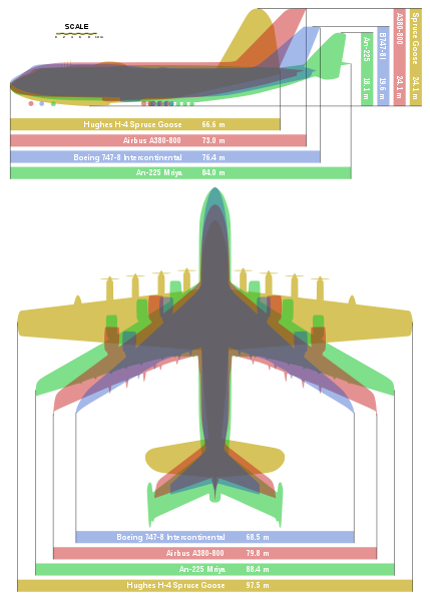
Compare Boeing 747 dimensions, performance and detailed later-variant weights, fuel and cargo capacities, with Boeing planning configurations identified.
Boeing 747 Freighter Specifications
Compare Boeing 747-400F, 747-400ERF and 747-8F weights, structural payload, fuel and cargo volumes using identified Boeing planning configurations.
The four hydraulic systems
The 747 has four independent hydraulic systems, one per engine, each with a backup pump - and the reasoning behind splitting them that way.
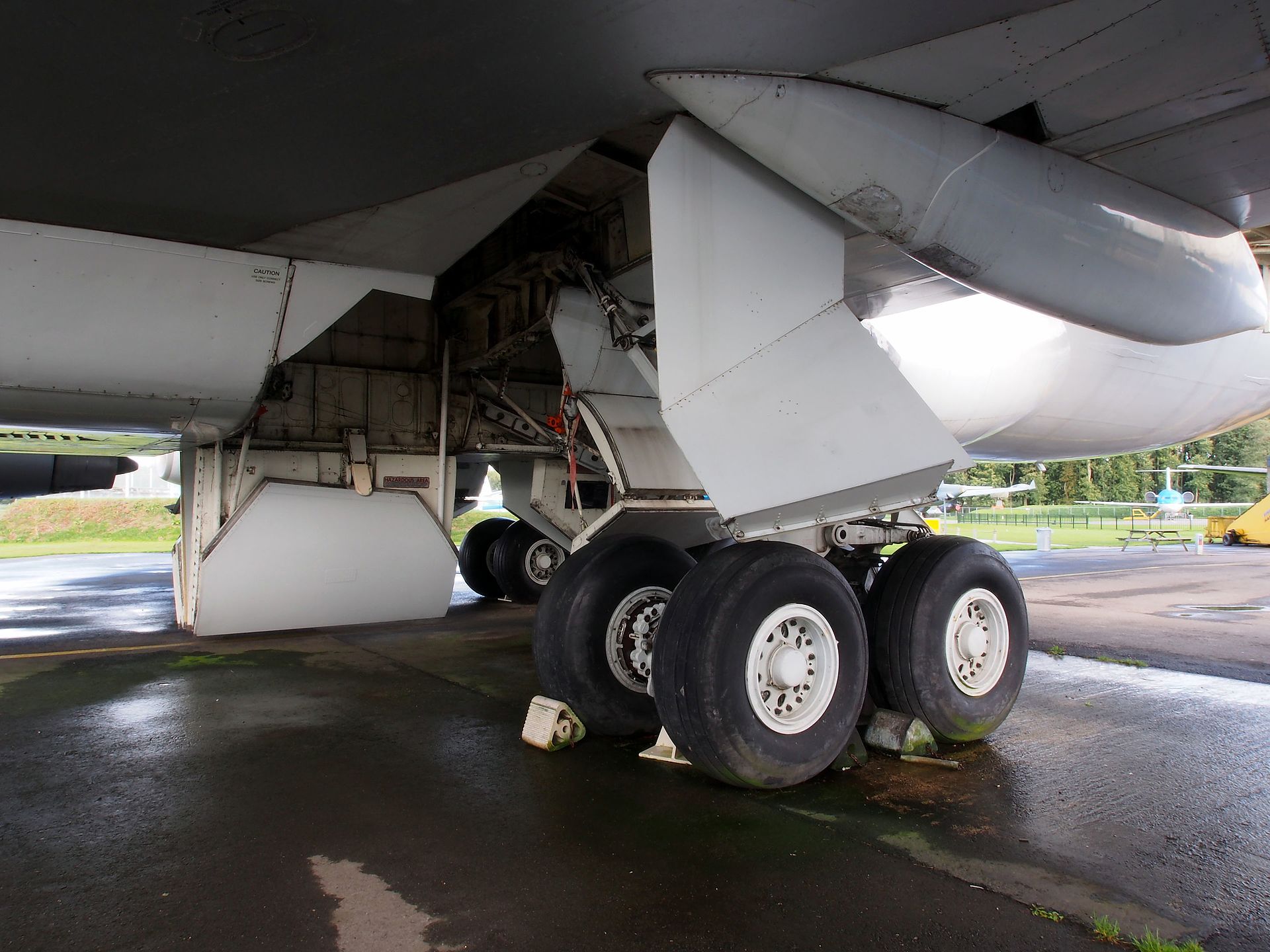
Eighteen wheels
The 747's five landing gear legs and 18 tyres, why the load is spread that way, and the body gear steering that stops it tearing up taxiways.
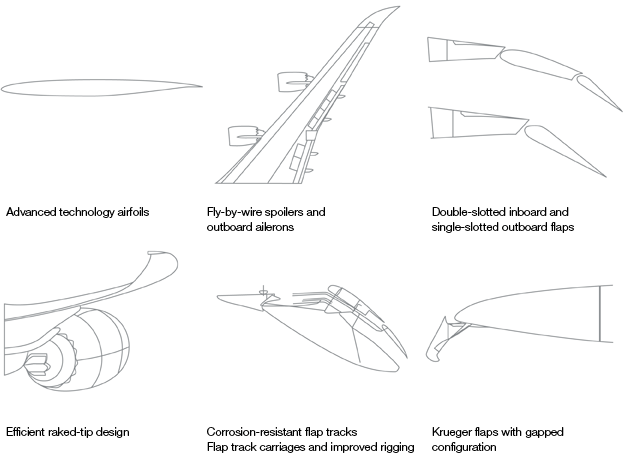
Flight controls and high-lift devices
How a 747 is flown - split ailerons, spoilers, triple-slotted flaps and Krueger leading edge devices, and what the 747-8 changed.