The engine that launched the 747-400
Pratt & Whitney's PW4000-94 launched the 747-400 with Northwest in 1989. The PW4056 (56,750 lbf) powered standard -400s; the higher-thrust PW4062A (to 63,300 lbf) served the 747-400ER. The 747-400 was the first airliner certified with three engine choices in one programme.
The Pratt & Whitney PW4000-94, named for its 94-inch fan, was one of three engine families offered on the 747-400 - and the one that launched the type.
| Key facts | |
|---|---|
| Applications | 747-400 (PW4056) and 747-400ER (PW4062A) - only 747 variants |
| Thrust classes | PW4056 56,750 lbf; PW4062A 62,000 - 63,300 lbf (rating standard dependent) |
| Bypass / fan | 4.8 - 5.0:1; 94 in fan ("PW4000-94" family) |
| Launch customer | Northwest Airlines - ordered December 1985; first aircraft January 1989; first revenue flight 9 February 1989 |
The PW4000 programme was launched in December 1982 and the engine was FAA-certified in July 1986, first flying on the Airbus A310. Northwest became the launch customer for the PW4000-powered 747-400, and its first aircraft N663US entered revenue service on 9 February 1989, launching the 747-400 programme itself.
The 747-400 was the first type certified with three different engine families in a single flight-test programme - PW4000, CF6-80C2 and RB211-524G/H - receiving FAA certification on 10 January 1989. The 747-400 prototype N401PW (later N661US) served as the PW4056 testbed.
The PW4062A, a higher-thrust derivative with a higher overall pressure ratio, was created for the 747-400ER's 412,000 lb-weight, longer-range mission. Beyond Northwest, PW4000 customers on the 747-400 included United, Singapore Airlines, Korean Air, and many Asian carriers.
The engine that launched the -400
The PW4000-94 - named for its 94-inch fan - is the engine most associated with the 747-400 because it launched the type. Northwest Airlines ordered the PW4000-powered 747-400 in December 1985, the first aircraft entered service on 9 February 1989, and it flew the type's revenue launch flight. The 747-400 prototype itself, N401PW, served as the PW4056 testbed.
Three engines, one programme
The PW4000's place in 747 history is as much about competition as thrust. The 747-400 was the first airliner type certified with three different engine families - PW4000, CF6-80C2 and RB211-524 - in a single flight-test programme, receiving FAA certification on 10 January 1989. That competition gave airlines a genuine choice on the -400, in contrast to the 747-100's single-engine lock, and it is the era covered on the engines overview page.
The -400ER's engine
The higher-thrust PW4062A, with a higher overall pressure ratio, was developed for the 747-400ER's long-range, heavy mission, and it powered most -400ER freighters. The distinction between the PW4056 and the PW4062A is a good illustration of the thrust-rating trade-offs that ran through the whole 747 family: the higher rating bought range and payload at the cost of engine life and hot-and-high margin. Beyond Northwest, PW4000 747-400 customers included United, Singapore Airlines and Korean Air.
Related
Frequently asked questions
- Which 747 did the PW4000 launch?
- The 747-400, with Northwest as launch customer in 1989.
- What is the difference between PW4056 and PW4062A?
- The PW4062A is the higher-thrust version made for the 747-400ER.
Sources
Facts on this page are checked against the primary and institutional references below.
- 747-400 Airplane Characteristics for Airport Planning - Boeing
- PW4000-94 engines EASA type certificate - EASA
- PW4000-94 fact sheet - Pratt & Whitney
- The 747-400 launch: FAA certification - UPI
- Northwest Airlines Boeing 747-400 - Northwest Airlines History
Related topics
747-400
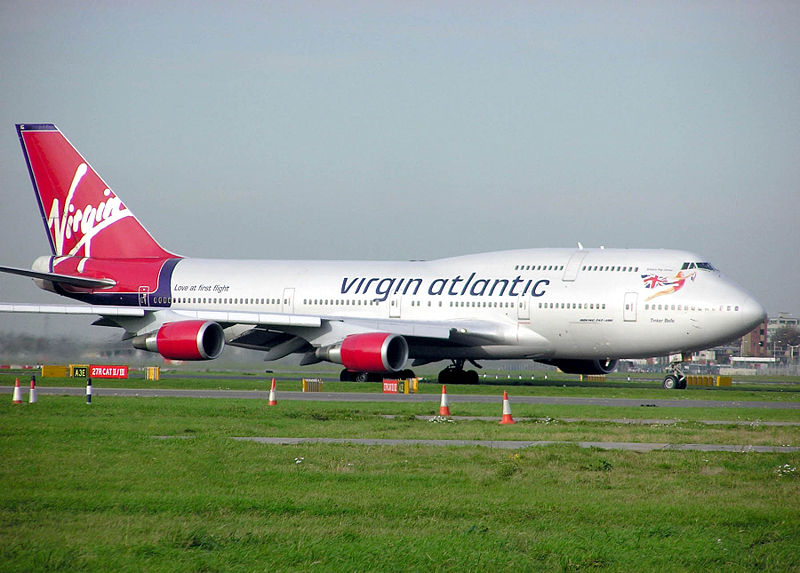
Announced in 1985, the 747-400 added winglets, a two-crew glass cockpit and a new interior, becoming the best-selling 747 generation.
Northwest Airlines Boeing 747 fleet history
Northwest Airlines launched the 747-400 with Pratt & Whitney PW4000 engines in 1989 and flew 53 747s before the Delta merger.
Boeing 747-400 vs 747-8
The 747-8 is bigger, heavier and quieter than the 747-400, with a new wing, GEnx-2B engines and a stretched fuselage - but it sells a fraction as well.
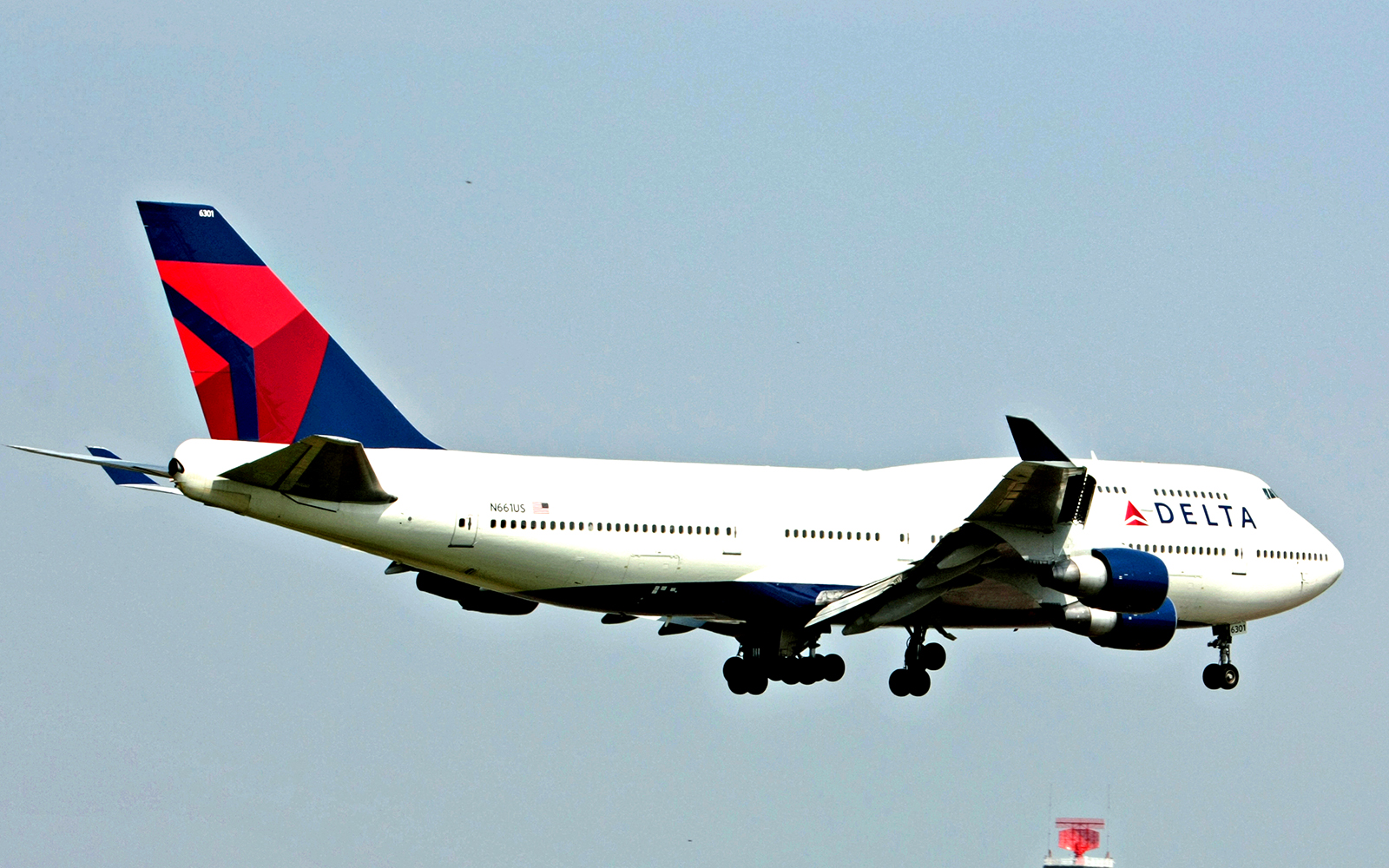
N661US: The First 747-400
The life of N661US: first 747-400 flight testing as N401PW, Northwest and Delta service, retirement in 2015 and the Atlanta 747 Experience.
Northwest 747 Seat Maps
Northwest's Boeing 747 cabins - the 400-seat Regal Imperial layout of the 1980s and the 403-seat World Business Class configuration of its 747-400s.
The Boeing 747 History Quiz
A 10-question Boeing 747 history quiz covering the launch airlines, the engineers who built the jumbo, and the bestsellers of the family.
More in Aircraft Systems
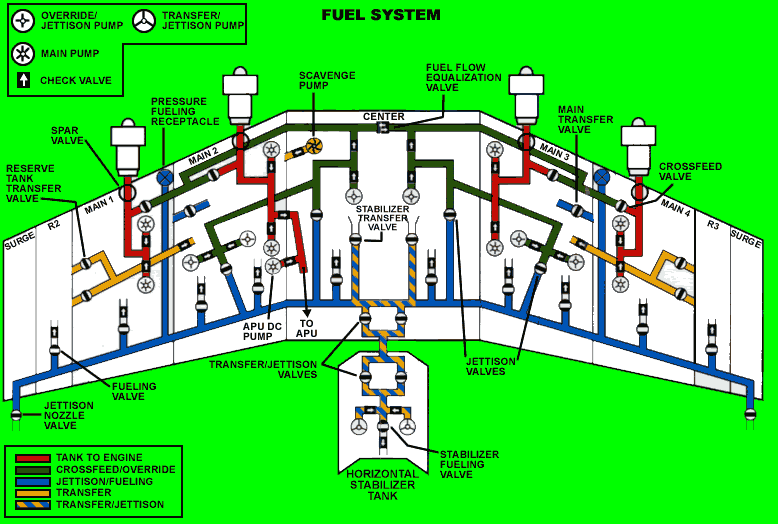
How the 747 works
The systems that make a 747 fly - fuel, hydraulics, landing gear, electrics and pressurisation, explained one at a time.
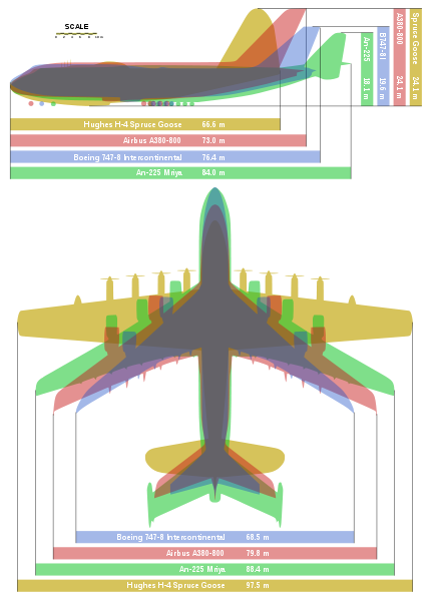
Boeing 747 specifications compared
Compare Boeing 747 dimensions, performance and detailed later-variant weights, fuel and cargo capacities, with Boeing planning configurations identified.
Boeing 747 Freighter Specifications
Compare Boeing 747-400F, 747-400ERF and 747-8F weights, structural payload, fuel and cargo volumes using identified Boeing planning configurations.
The four hydraulic systems
The 747 has four independent hydraulic systems, one per engine, each with a backup pump - and the reasoning behind splitting them that way.
Eighteen wheels
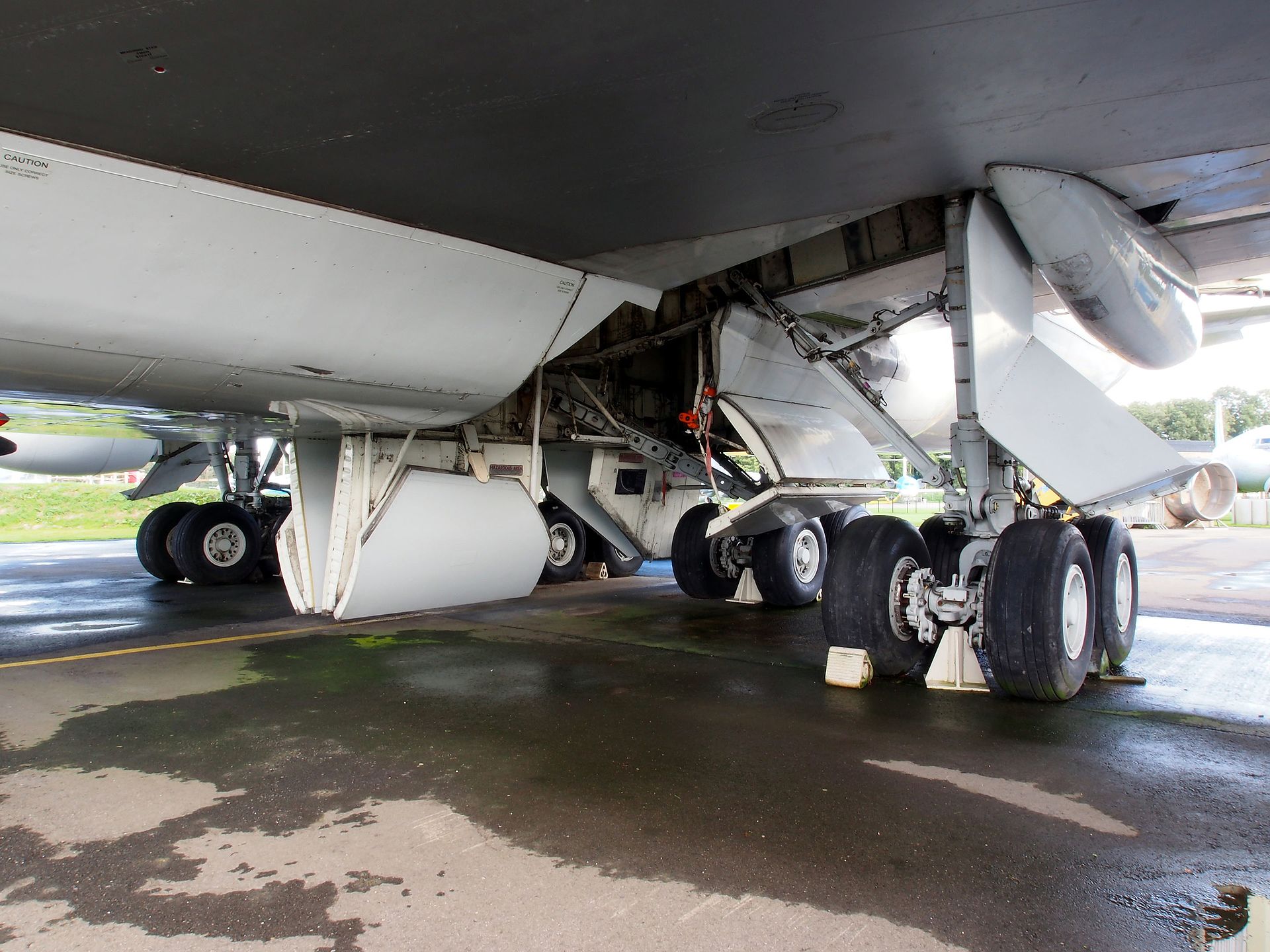
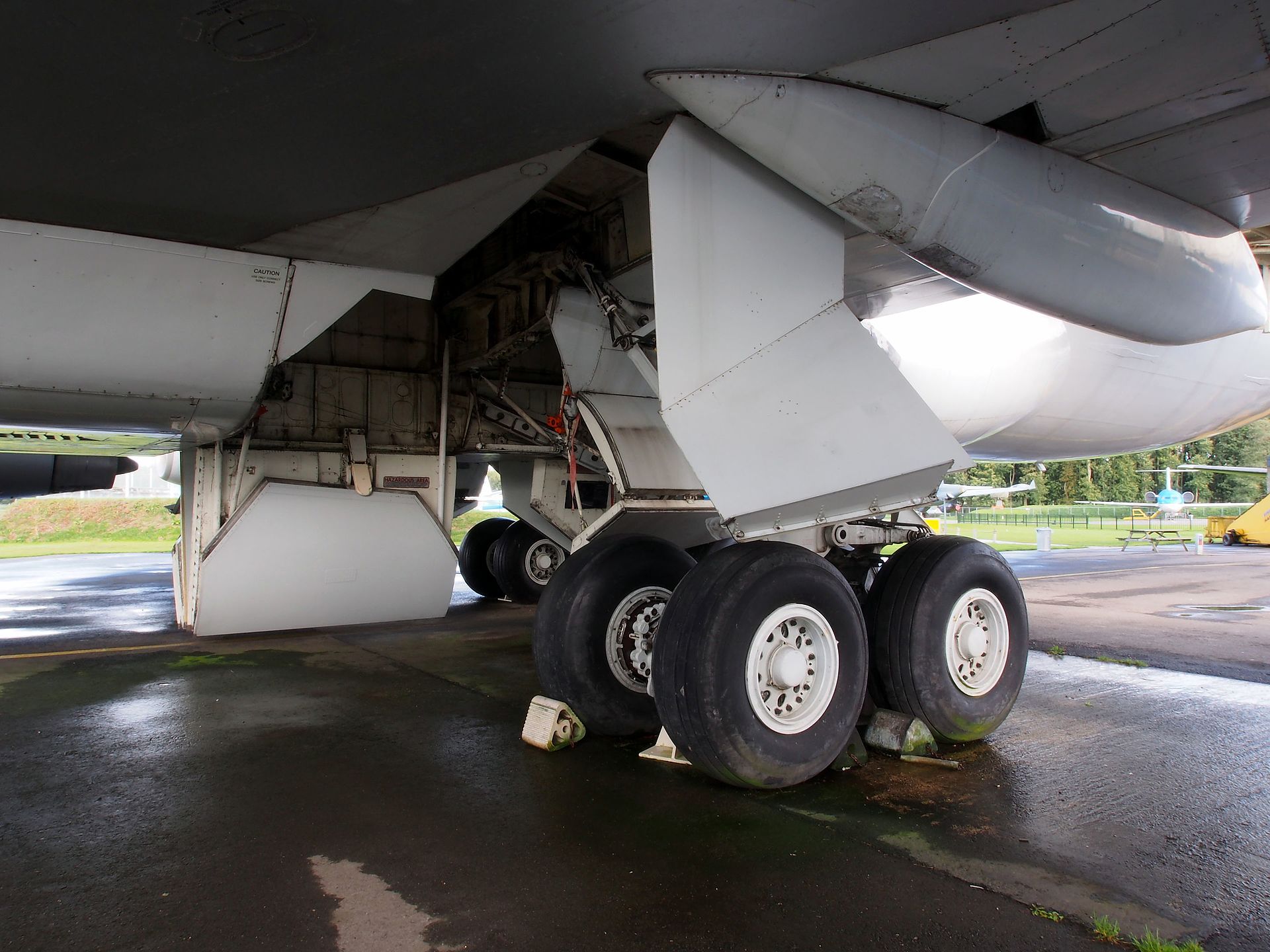
The 747's five landing gear legs and 18 tyres, why the load is spread that way, and the body gear steering that stops it tearing up taxiways.
Flight controls and high-lift devices
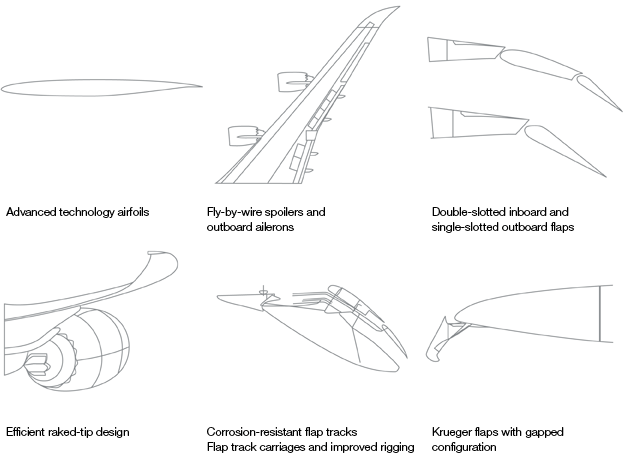
How a 747 is flown - split ailerons, spoilers, triple-slotted flaps and Krueger leading edge devices, and what the 747-8 changed.