Three tiers of oxygen, sized around failure
Boeing 747 oxygen comes in three tiers: flight-crew quick-donning masks worn above FL250, cabin-crew protective breathing equipment, and passenger masks with chemical oxygen generators. Sizing assumes a pressurisation failure with a rapid descent to 10,000 ft.
Airliner oxygen on the 747 is delivered in layers: high-pressure demand masks for the two pilots, protective breathing equipment for the cabin crew, and chemical-generator masks that deploy from the ceiling for passengers.
| Key facts | |
|---|---|
| Flight crew | Quick-donning demand masks, mandatory above FL250 |
| Cabin crew | Protective breathing equipment (PBE) with its own generator |
| Passengers | Drop-down masks fed by chemical oxygen generators |
| Sizing case | Rapid descent to 10,000 ft plus continued supply to land |
Regulations require each flight-crew member on duty above FL250 to have a mask that can be donned quickly from its ready position and that supplies oxygen on demand; the pilot flying must wear oxygen at all times above FL250 unless quick-donning masks are fitted.
Passenger oxygen covers at least 10 percent of the seats with about a 30-minute supply, engineered to support a 10-minute descent to 10,000 ft followed by continued supply. Both crew and passenger systems are sized around survivable pressurisation failures.
Three tiers, three purposes
The 747 carries oxygen for three distinct populations, and the systems are sized differently for each.
Flight crew use a pressurised, demand-flow system delivered through quick-donning masks. The masks sit at the crew stations ready to be donned in seconds, and each crew member has their own independent supply. Because the flight deck is pressurised separately from the cabin, a flight-deck depressurisation is handled without reference to the passenger supply.
Cabin crew carry portable protective breathing equipment - a hood or facepiece with its own chemical oxygen generator, sized to protect one person for several minutes. It exists for the specific case where the cabin is smoke-filled or the crew must enter a hostile atmosphere to complete an evacuation, and it is deliberately independent of the aircraft's fixed systems.
Passengers are served by drop-down masks fed by chemical oxygen generators mounted in the overhead panels. Pulling a mask pulls a generator pin, starting an exothermic reaction that makes oxygen without needing any aircraft power or plumbing. That autonomy is the point: the system has to keep working after the exact failure it exists for.
Sizing around the worst credible case
Passenger oxygen is not sized for comfort; it is sized for a failure. The regulations and the type's certification basis assume a rapid descent from cruise altitude to 10,000 ft after a decompression, followed by enough continued supply to reach an airport. The generator count reflects that, which is why the mask rows are spread through the cabin rather than concentrated near the exits.
This is a different philosophy from crew oxygen, which is sized for immediate, indefinite supply because the flight deck has to keep flying.
Related
Frequently asked questions
- When must flight crew wear oxygen on a 747?
- Above FL250 unless quick-donning masks are fitted; the pilot flying must wear oxygen at all times above FL250 in that case.
- How much passenger oxygen is carried?
- Enough for at least 10 percent of seats for about 30 minutes, sized to descend from cruise and land after a pressurisation failure.
Sources
Facts on this page are checked against the primary and institutional references below.
- 14 CFR 121.333 supplemental oxygen - ECFR
- Chemical oxygen generator requirements - US Government Publishing Office
Related topics
Air Canada
Air Canada flew 15 Boeing 747s for 33 years, from 1971 -100s and -200 Combis to a -400 era that ended in October 2004.
Air France 747 Seat Maps
Air France's Boeing 747 cabins - the 1970 three-class flagship and the 436- and 432-seat two-class 747-400 layouts that closed the airline's jumbo era.
Air France Boeing 747 fleet history
Air France flew 747s from 1970 to the final passenger flights of January 2016, also operating one of the largest 747 freighter fleets.
All Nippon Airways Boeing 747 fleet history
ANA created the world-first 500+ seat all-economy 747SR in 1979 and flew 45 new-build 747s until the last 747-400D retired.
ANA 747 seat maps
ANA's Boeing 747 cabins - the 528-seat domestic 747SR, the 569-seat 747-400D and the 287-seat long-haul 747-400.
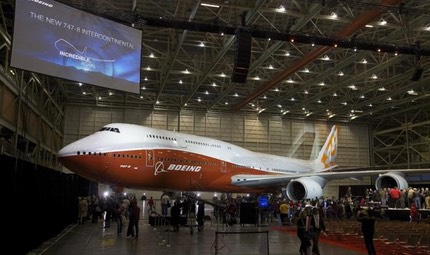
Boeing 747: History, Variants and Legacy
A complete reference to the Boeing 747, built from 1968 to 2023 - every variant from the 747-100 to the 747-8, plus special-mission jumbos and photos.
More in Aircraft Systems
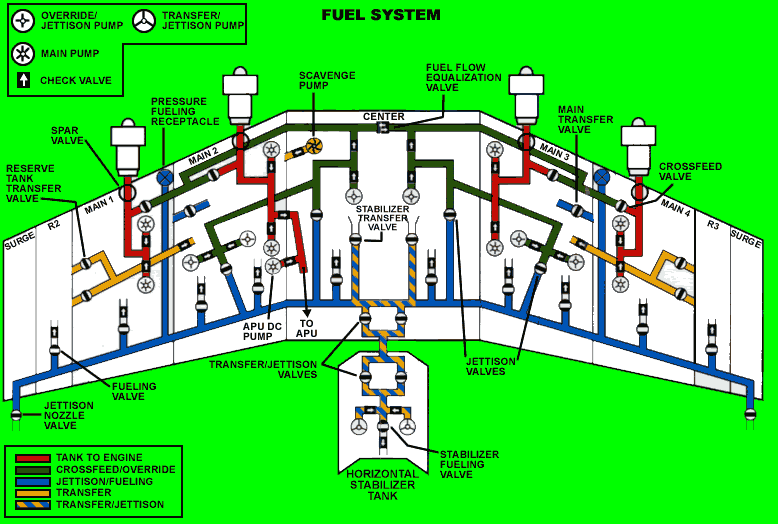
How the 747 works
The systems that make a 747 fly - fuel, hydraulics, landing gear, electrics and pressurisation, explained one at a time.
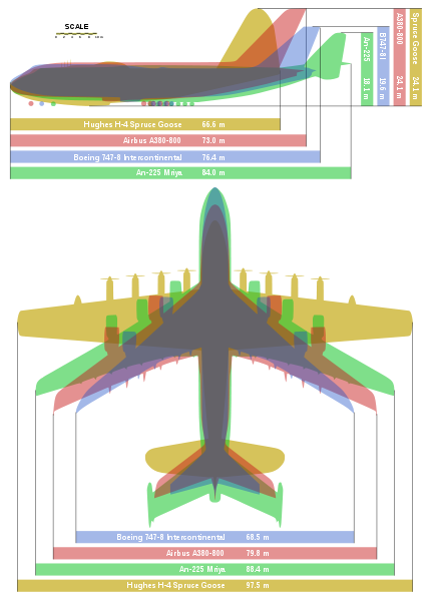
Boeing 747 specifications compared
Compare Boeing 747 dimensions, performance and detailed later-variant weights, fuel and cargo capacities, with Boeing planning configurations identified.
Boeing 747 Freighter Specifications
Compare Boeing 747-400F, 747-400ERF and 747-8F weights, structural payload, fuel and cargo volumes using identified Boeing planning configurations.
The four hydraulic systems
The 747 has four independent hydraulic systems, one per engine, each with a backup pump - and the reasoning behind splitting them that way.
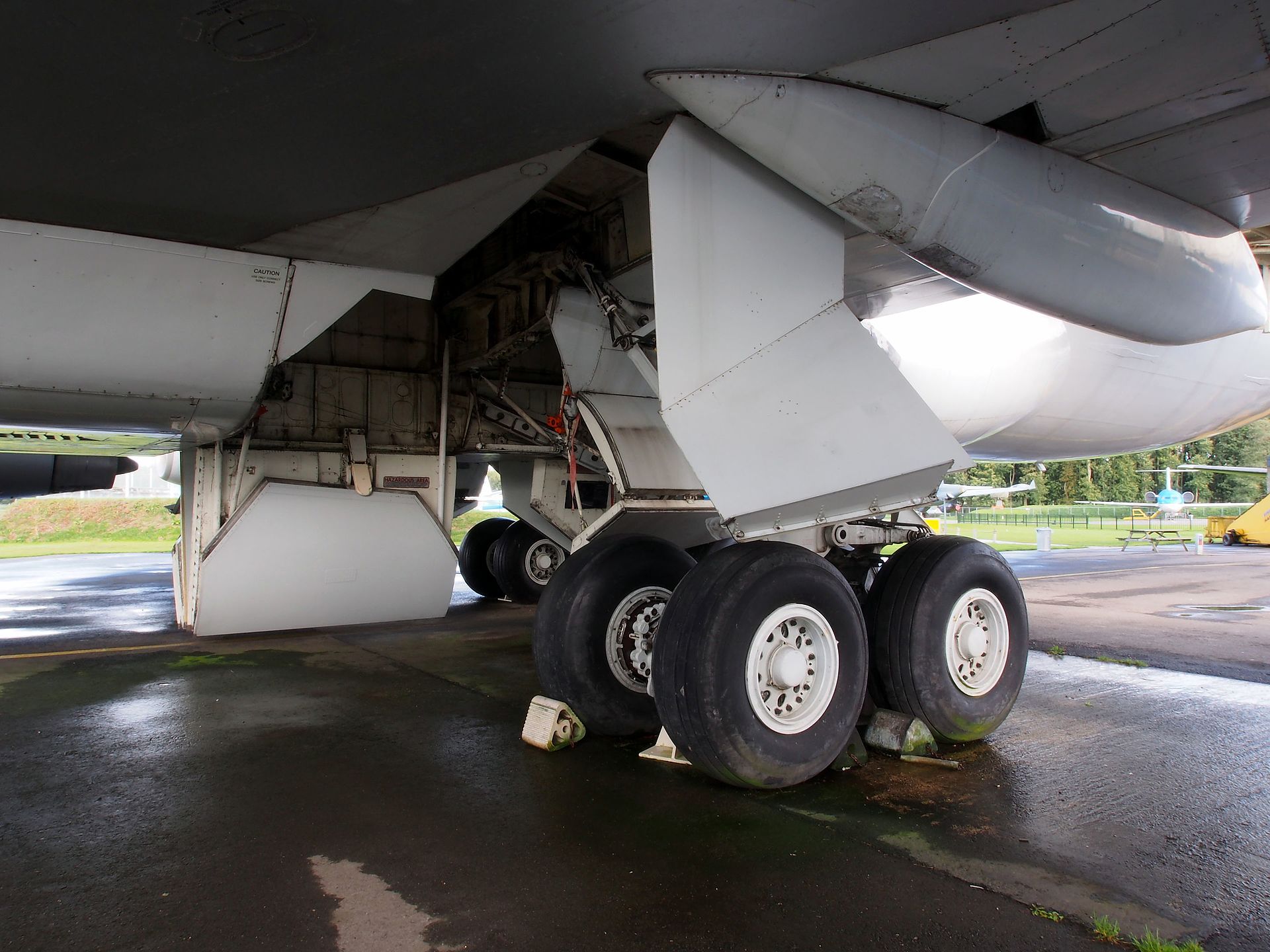
Eighteen wheels
The 747's five landing gear legs and 18 tyres, why the load is spread that way, and the body gear steering that stops it tearing up taxiways.
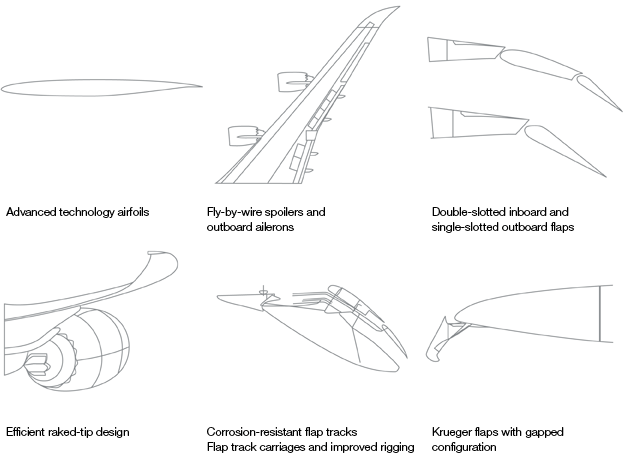
Flight controls and high-lift devices
How a 747 is flown - split ailerons, spoilers, triple-slotted flaps and Krueger leading edge devices, and what the 747-8 changed.