What Boeing supplied, and what the airline chose
The airframe provided structure, power and pathways; entertainment, connectivity and seat power were buyer-furnished, fitted under STC and often swapped several times over an aircraft's life.
The most surprising thing about the inside of a 747-400 is how little of it Boeing built. Air conditioning, pressurisation, water and waste, the oxygen the passengers breathed, the doors and the structure itself were all type-certificated content. The entertainment, the connectivity, the seat power and most of the seating were not. They were chosen, bought and fitted by individual airlines, usually several times over the life of the aircraft.
The proof is in the paperwork. The supplemental type certificate records for the 747-400 run to dozens of cabin-related approvals, and they are a far better guide to what a 747 cabin actually contained than any brochure.
What Boeing did supply
The airframe and its services, described in the airport-planning documentation:
- Two-crew cockpit with digital avionics - the -400 was where the engineer finally went away, and the flight deck was rebuilt around EICAS.
- An upper-deck cabin on the stretched fuselage, and an optional crew rest compartment in the aft cabin - a long-haul feature rather than a luxury one, on an aircraft whose sector times were routinely ten hours and more.
- Vacuum lavatories with single-point servicing, covered on their own page, and a cabin designed around the single aisle of the original type.
- Electrical power and pathways for cabin equipment, drawn from the same distribution described in the electrical system page, plus the recirculation and air distribution that the pressurisation page covers.
- Ground servicing connections - conditioned air, electrical power and water - which the airport planning documentation treats as a fixed interface. On a freighter or Combi that also means loading equipment, covered under the cargo-loading system.
That is the boundary. Boeing delivered an aircraft with a functioning, certified cabin. Everything the passenger actually touched beyond the seat cushion and the window shade was somebody else's decision.
Entertainment and seat power
Entertainment and seat power were, in practice, a single package. Approved 747-400 modifications repeatedly pair them: a Panasonic System 3000i in-flight entertainment system installed together with an Astronics in-seat power supply, for instance, on a 747-400 operated by a cargo conversion specialist. The same pattern shows up across the approved modification record, because a seatback screen and a socket at the same seat are the same installation decision.
The consequences of that arrangement are worth spelling out, because they explain the economics of the type:
- Airlines could differentiate. Two airlines operating identical 747-400s could have materially different cabins, which was a genuine competitive lever on long-haul routes.
- Upgrades were cheap to defer. Entertainment technology moved fast; deferring a refit for a few years cost passengers very little and saved the operator a great deal.
- The aircraft changed repeatedly. A single airframe could carry three or four different entertainment systems, four different seat sets and two different connectivity solutions across thirty years of service. Every one of those transitions is a line in the type certificate record.
The cost is complexity, and it shows up in the weight and balance manual rather than in the cabin. Cabin equipment, seating and crew provisions are all part of the operator's weight and balance data, and a change of seat specification or a different entertainment installation moves the aeroplane's empty weight and its centre of gravity. See also the site's seating layouts and interiors sections.
Connectivity came late, and by certificate
Satellite service on the 747-400 arrived entirely through approved modification, and the records show a clear progression:
| Stage | What it provided |
|---|---|
| High-gain SATCOM voice | The cabin public telephone, fitted on 747-400s by individual operators |
| AIRSAT II provisions | Wiring and antenna provisions installed in advance of a later installation |
| Rockwell Collins AERO H+ SATCOM | A dedicated satellite system for the cabin |
| Iridium and Iridium-based systems | Lightweight satellite voice and messaging |
| Connexion by Boeing | Satellite television, and then the data service that became in-flight internet |
| Cabin wireless LAN | Passenger and crew devices connecting to aircraft systems |
The high-gain cabin telephone is a good illustration of how narrow the line between the flight deck and the cabin can be. An approval held by a major US airline for the 747-400 reads simply: "Installation of High-Gain Satellite Communication (SATCOM) voice system for cabin public telephone." The same antenna architecture that serves the flight deck's data requirements was extended to the cabin, and the public could telephone home from seat 34K.
The heat problem
One consequence of all this is thermal. Seatback electronics, seat power supplies, video distribution and cabin network racks all produce heat, and a pressurised cabin on a type whose basic layout was settled in the 1960s has a fixed cooling capacity. The system therefore has to reject a considerable amount of waste heat without compromising the passengers, and a cabin equipment change is not purely a commercial decision - it interacts with the air distribution, the pressurisation and the electrical system at the same time.
A deliberately mixed cabin
The minimum equipment list treats most of this as dispensable. Passenger convenience items may be inoperative or missing, and the lavatory ashtray entry that appears in the approved 747-400 supplement is a small illustration of the philosophy: a cabin feature can be allowed to fail without grounding the aeroplane, provided the associated safety systems remain operative.
The safety-critical cabin equipment is of course not treated that way. The cabin is where the oxygen, the fire detection and the evacuation systems live, and those are certified content on every 747 built.
Related
- Pressurisation - the air the cabin actually breathes
- Oxygen system - crew and passenger masks
- Doors and emergency exits - the evacuation system
- Weight and balance and loading - where every cabin change is recorded
Frequently asked questions
- Who chose the in-flight entertainment on a 747-400?
- The airline, not Boeing. The type was certified with the structure, power and installation pathways for such equipment, but the entertainment system itself was buyer-furnished and installed under a supplemental type certificate. A single 747-400 could go through several different entertainment systems over its service life.
- Did 747-400 passengers have internet and phone service?
- Yes, by approved modification rather than standard fit. Supplemental type certificate records for the type show high-gain satellite systems fitted for the cabin public telephone, Iridium installations, and the Connexion by Boeing satellite television and data system - which was widely used for in-flight internet on the type.
- Where did seat power electricity come from?
- From the aircraft's own electrical distribution, through a seat power supply unit fitted to each seat row. Approved 747-400 modifications pair these directly with seatback entertainment systems, since the two are almost always installed as one package.
Sources
Facts on this page are checked against the primary and institutional references below.
- Boeing 747-400 Series Supplemental Type Certificates - FAA Supplemental Type Certificate records
- 747-400 Airplane Characteristics for Airport Planning - Boeing
- Supplement to Boeing/FAA Approved MMEL for Boeing 747-400 - UK Civil Aviation Authority
Related topics
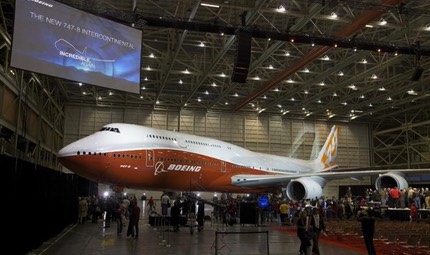
Boeing 747: History, Variants and Legacy
A complete reference to the Boeing 747, built from 1968 to 2023 - every variant from the 747-100 to the 747-8, plus special-mission jumbos and photos.
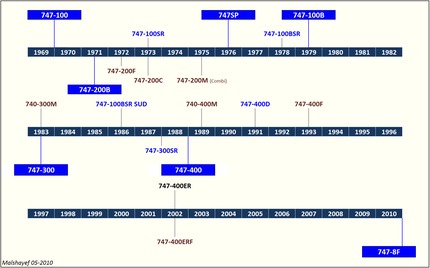
Boeing 747 Family
Every Boeing 747 variant built between 1968 and 2023 - the 747-100, -200, -300, -400 and 747-8, with freighter, combi and short-range models explained.
Boeing 747 Production Data
Download Boeing 747 production totals by generation, with a transparent method and links to Boeing's final programme record and technical documents.
The 747 Combi and the fire rule that caught up with it
The 747 Combi carried passengers and freight on one deck under 1940s-era fire rules. After South African Airways Flight 295, those rules were rewritten.
Maintaining a 747
Line checks, A checks, C checks and the D check - how a 747 is kept airworthy, and why maintenance decides when an aircraft is retired.
The Boeing 747 History Quiz
A 10-question Boeing 747 history quiz covering the launch airlines, the engineers who built the jumbo, and the bestsellers of the family.
More in Aircraft Systems
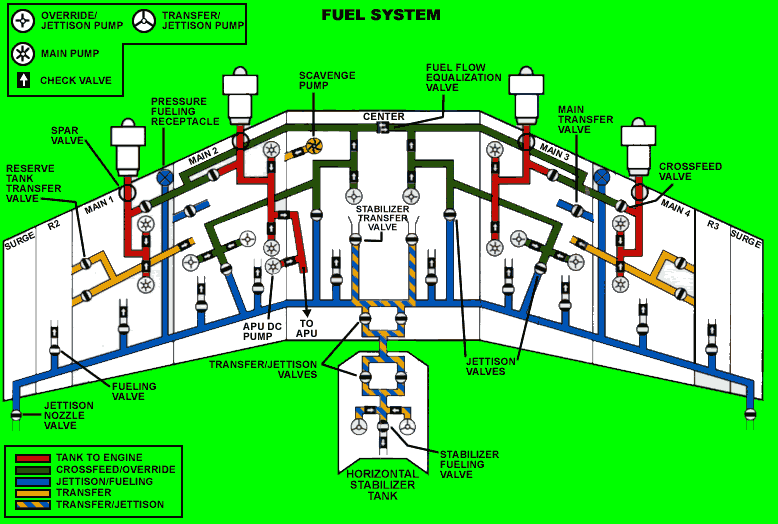
How the 747 works
The systems that make a 747 fly - fuel, hydraulics, landing gear, electrics and pressurisation, explained one at a time.
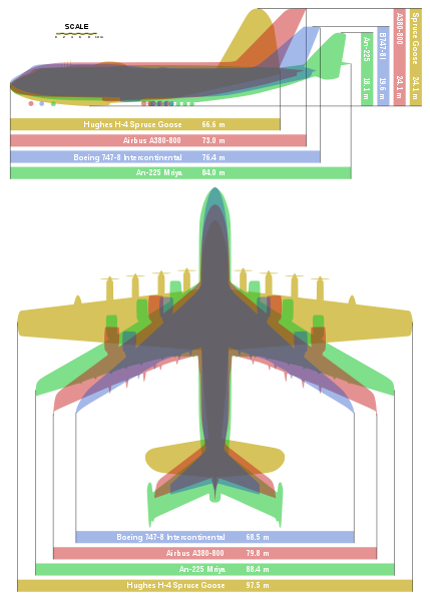
Boeing 747 specifications compared
Compare Boeing 747 dimensions, performance and detailed later-variant weights, fuel and cargo capacities, with Boeing planning configurations identified.
Boeing 747 Freighter Specifications
Compare Boeing 747-400F, 747-400ERF and 747-8F weights, structural payload, fuel and cargo volumes using identified Boeing planning configurations.
The four hydraulic systems
The 747 has four independent hydraulic systems, one per engine, each with a backup pump - and the reasoning behind splitting them that way.
Eighteen wheels
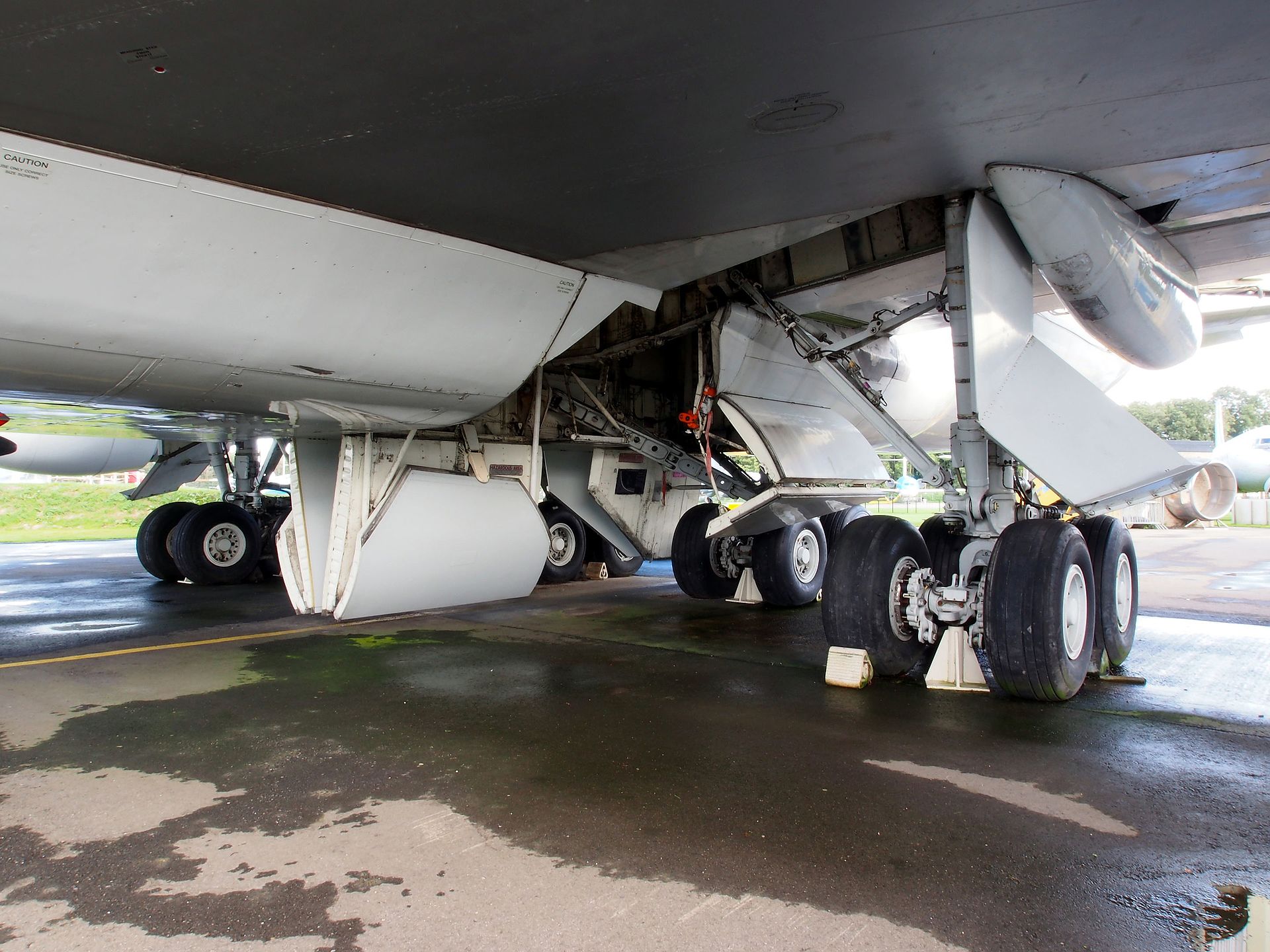
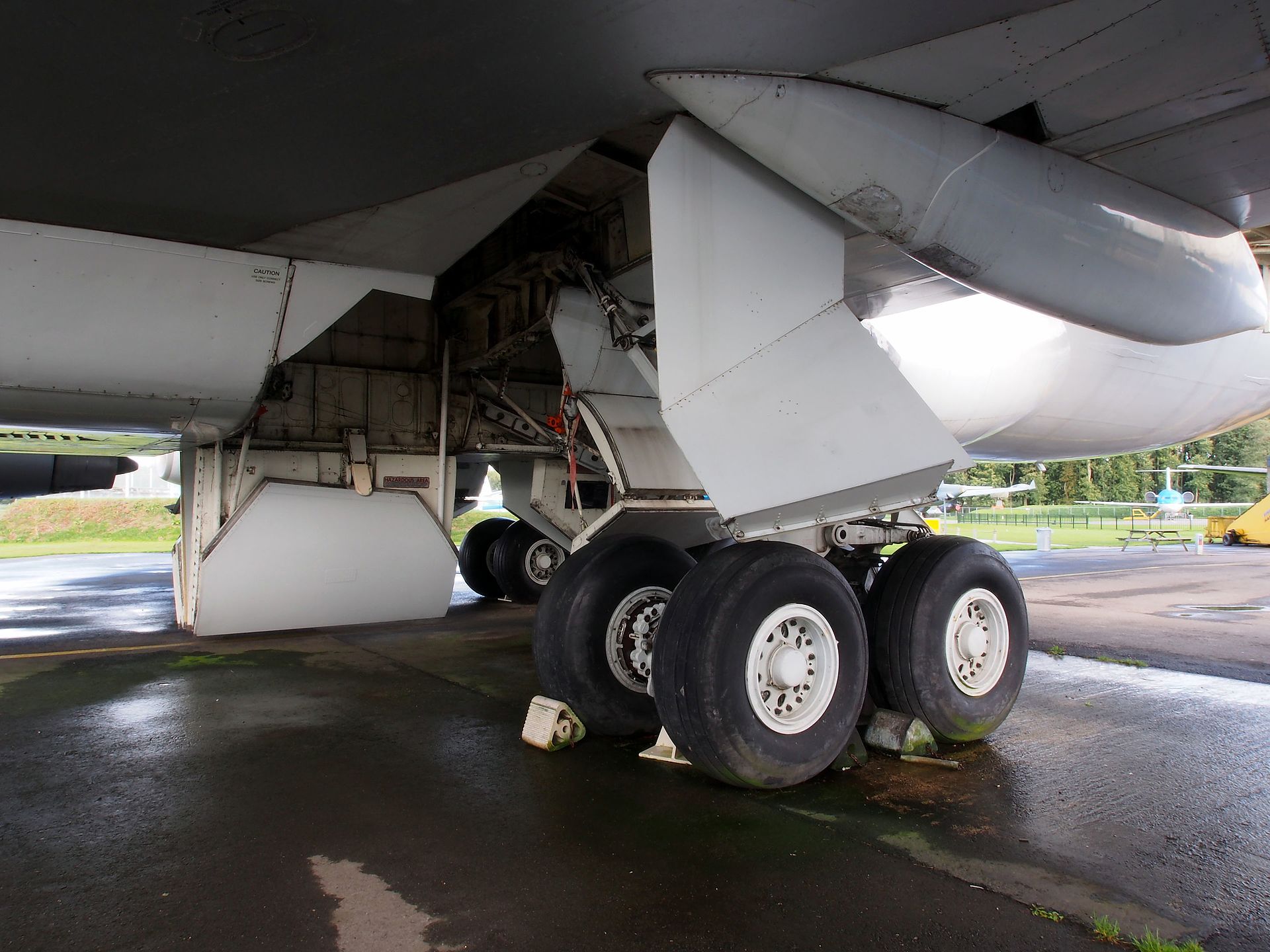
The 747's five landing gear legs and 18 tyres, why the load is spread that way, and the body gear steering that stops it tearing up taxiways.
Flight controls and high-lift devices
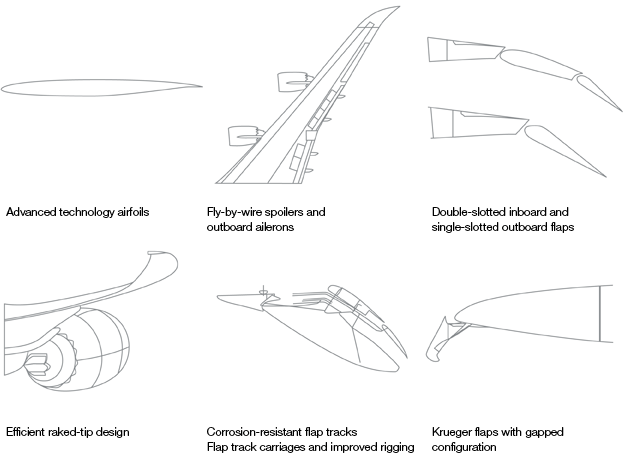
How a 747 is flown - split ailerons, spoilers, triple-slotted flaps and Krueger leading edge devices, and what the 747-8 changed.