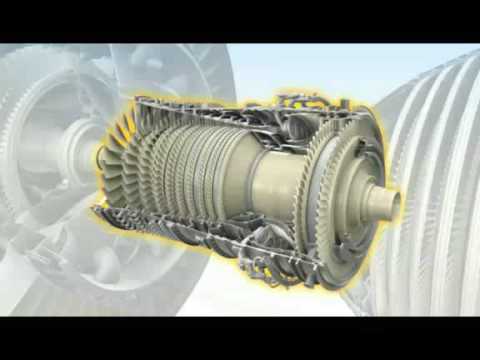
Boeing 747-400 Engine view in heavy rain
An in-flight view of a 747-400 engine in heavy rain.
A Virgin Atlantic Boeing 747-400, G-VROM, takes off in heavy rain — spray streaming off the wing and the engines running at takeoff thrust through a downpour.
Rain does not bother a jet engine
That is the counter-intuitive part. A high-bypass turbofan the size of a 747’s ingests an enormous mass of air every second, and the water in even torrential rain is a tiny fraction of it by weight. Most of what enters is flung outward by the fan and passes down the bypass duct rather than into the core.
Engines are certified for it deliberately. Manufacturers run water ingestion tests, firing measured quantities of water into a running engine to prove it will keep operating — part of the same certification campaign that includes the extreme testing regime the airframe goes through.
Hail and volcanic ash are a different matter entirely. Water is not.
What rain does affect
The runway. This is the real operational concern, and it is about stopping, not about the engines. Standing water reduces braking friction and raises the risk of aquaplaning, which is why performance calculations use different figures for wet and contaminated runways, and why crews may need a longer runway or a lower takeoff weight in rain.
It is also why a rejected takeoff on a wet runway is one of the most demanding things a crew can be asked to do.
Visibility. Rain heavy enough to be seen like this generally comes with reduced visibility, and often with the convective weather that produces windshear.
What you can see on the wing
The 747-400’s wing carries six-foot wingtip extensions and six-foot winglets, the feature that most quickly separates a -400 from the classic 747s. In rain the airflow over the wing becomes briefly visible — water streaming aft along the surface traces the flow the aerofoil is generating.
Related
Video
Related topics
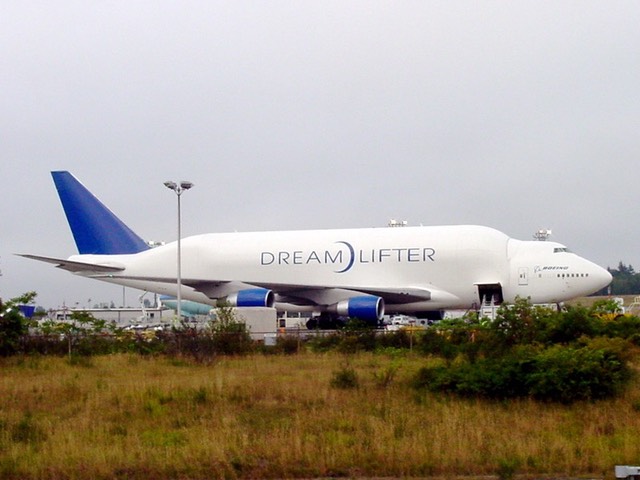
The Boeing Dreamlifter
Four 747-400s rebuilt with a swollen fuselage and a swing tail to carry Boeing 787 wings and fuselage barrels between factories.
747 versus 777
The aircraft that replaced the 747 was built by the same company — how a twin came to do the four-engined aeroplane's job, and why.
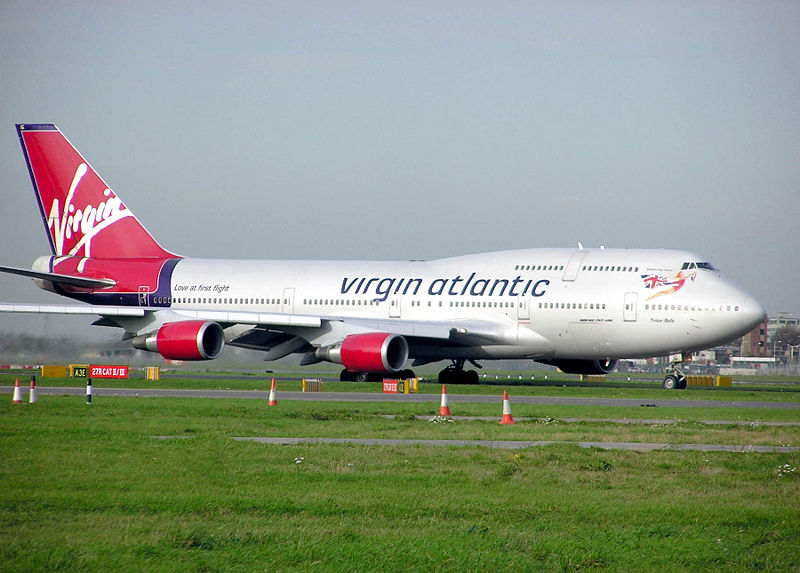
747-400
Announced in 1985, the 747-400 added winglets, a two-crew glass cockpit and a new interior, becoming the best-selling 747 generation.
Boeing 747-400 vs 747-8
The 747-8 is bigger, heavier and quieter than the 747-400, with a new wing, GEnx-2B engines and a stretched fuselage — but it sells a fraction as well.
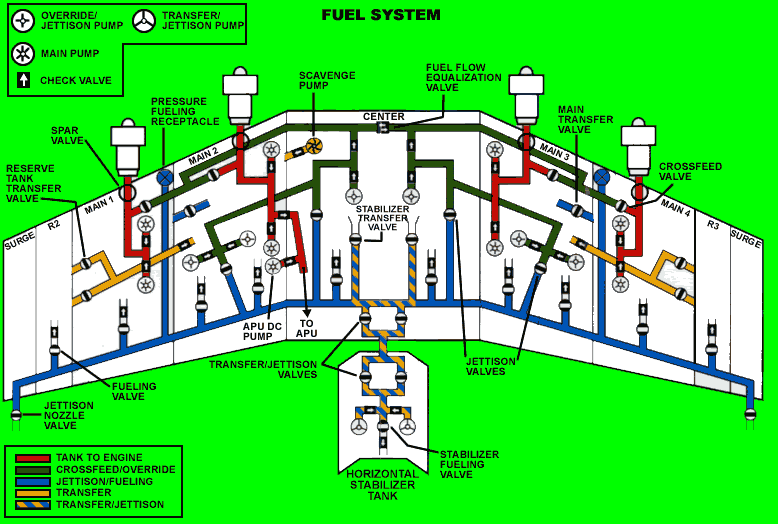
747-400ER
A complete Boeing 747-400ER guide: specifications, range, fuel tanks, engineering changes, Qantas's six-aircraft fleet, service history and FAQs.
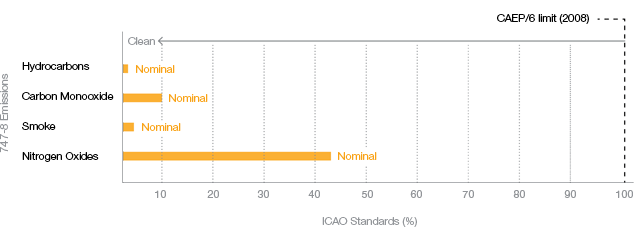
The 747-8 and the environment
The 747-8 meets emissions limits for hydrocarbons, carbon monoxide, smoke and nitrogen oxides, with a noise footprint about 30 percent smaller than the 747-400.
More in Videos
Videos
Boeing 747 videos — flight testing, engine overviews, factory documentaries and memorable moments caught on camera.
Awesome demonstration of reverse thrust on landing
An EVA Air Boeing 747 lands at Singapore after heavy showers, showing pronounced wing flex and full reverse thrust.
Boeing 747-8 Being Put through some tough tests
Boeing's 747-8 rejected takeoff test — accelerating to takeoff speed at maximum weight, then stopping on worn brakes with no reverse thrust.
Boeing 747-8 Engine Overview from GE Aviation
GE Aviation explains the GEnx-2B engine that powers the Boeing 747-8, covering its fan, core and noise-reducing chevrons.
Boeing 747-8 Extreme Testing!
A short film covering the extreme testing the Boeing 747-8 undergoes, from wing loading to water ingestion and brake trials.
Boeing 747-8 Intercontinental moving to final assembly area
The first Boeing 747-8 Intercontinental comes together at Everett, from wing and fuselage join to roll-out of the last passenger 747 line.