Scandinavian Airlines
Scandinavian Airlines operated six Boeing 747-200s — three of them Combis — between 1971 and 1988, flying the 'Vikings' to New York, Tokyo and Bangkok and pioneering Combi freight on the North Atlantic.
Scandinavian Airlines was a 747 operator for just seventeen years, but it used the aircraft in two ways that suited the airline’s geography: on long-haul passenger routes, and as a Combi hauling freight alongside passengers.
The Vikings
SAS took its first two 747-200Bs in February 1971, naming them in its tradition of Norse figures — Huge Viking and Ivar Viking. They flew Copenhagen–New York and a Copenhagen–Tokyo service marketed as the Trans-Siberian Express, using the trans-Siberian route across the Soviet Union. A third followed in 1981; Dan Viking was the 500th 747 built.
The cabins were configured for comfort rather than density, with around 353 seats at generous pitch and a first-class lounge on the upper deck.
The Combis
From 1977 SAS added three 747-283B/SCD Combis, which carried cargo behind a bulkhead on the main deck. One flew a freight-centred Copenhagen–Gothenburg– Bergen–New York routing, used to export Norwegian farmed salmon to the United States — a small but pointed example of what the Combi could do that a pure freighter or a pure airliner could not. Passenger 747 services ended in 1985, with the remaining aircraft running as freighters until the last left in 1987–88.
One hull loss
An SAS Combi, Magnus Viking, was lost in 1983 while on lease to Avianca, in the crash near Madrid known as Avianca Flight 011. It was the only SAS 747 hull loss.
Related
Sources
Facts on this page are checked against the primary and institutional references below.
- List of aircraft operated by Scandinavian Airlines — Wikipedia
- What happened to SAS's Boeing 747s? — Simple Flying
- SAS Boeing 747 fleet — Hilmerby
Related topics
SAS 747 Seat Maps
SAS's 'Viking' 747-200Bs seated 353, with a first-class lounge on the upper deck; its Combis carried 209–281 with main-deck freight.
Boeing 747-100 vs 747-200
What the 747-200 added to the original 747-100: more thrust, higher takeoff weights, a ten-window upper deck and freighter, combi and convertible variants.
747-200
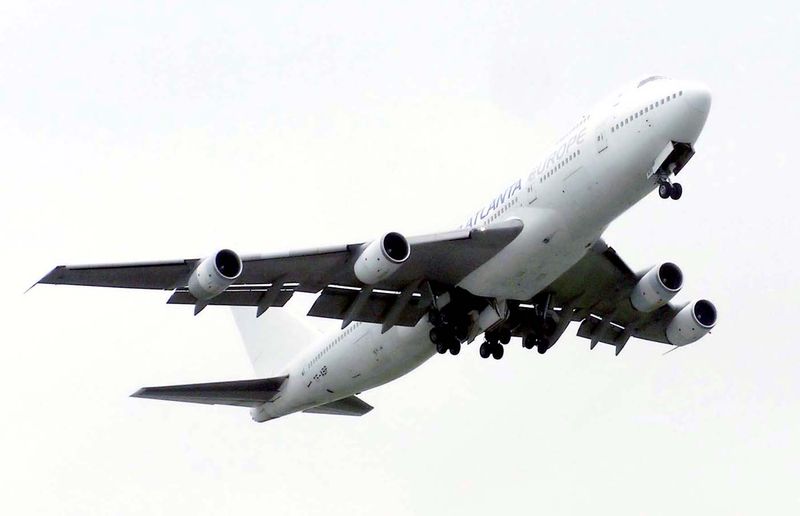
The 747-200 brought more powerful engines, higher takeoff weights and greater range than the -100, and spawned freighter, combi and convertible models.
Boeing 747-200 vs 747-300
The 747-300's stretched upper deck gave it about ten percent more capacity than the 747-200, with quieter engines and no change in length or weight limits.
Air India Boeing 747 Seat Maps
Air India's Boeing 747-400 kept a 423-seat layout for nearly three decades, with the entire upper deck given over to business class.
Air India 182, 23 June 1985
A bomb destroyed a 747 off Ireland, killing 329. It was the deadliest act of aviation terrorism before 11 September 2001.
More in Airlines
Airlines that flew the 747
Every major Boeing 747 operator — the launch customer, the biggest fleets ever flown, who still flies the 747 in 2026, and when the rest said goodbye.
Active Boeing 747 Fleet Tracker
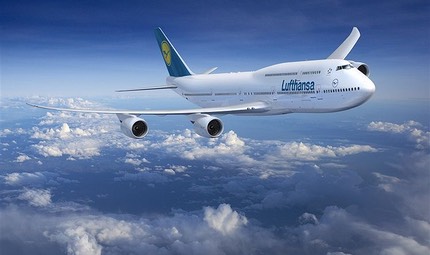
A dated, source-backed tracker of airlines still operating passenger and cargo Boeing 747s, using the latest official fleet disclosures available.
Pan American World Airways
The airline that ordered the 747 into existence, flew the first service in 1970, took 65 aircraft, and was gone by 1991.
Japan Airlines
The largest 747 operator in history at 108 aircraft, and the airline Boeing built three special high-density variants for.
British Airways
94 Boeing 747s, the largest 747-400 fleet in the world, and a retirement brought forward four years by COVID-19.
Singapore Airlines
93 Boeing 747s, the Megatop 747-400s, and a retirement in 2012 in favour of the 777 and A380.