Designing a 747 to wear out: the high-cycle problem
The 747SR family was designed for roughly twice the flight cycles of a standard 747, with reinforced structure and reduced fuel. The fatigue failure behind JAL Flight 123 in 1985 showed what happens when a high-cycle airframe is repaired incorrectly.
An airframe ages on two different clocks. One counts flight hours — time spent cruising, which is gentle. The other counts cycles — every take-off, landing and pressurisation, each of which flexes the structure through a full range of load. A long-haul 747 spends most of its life on the first clock. Japan’s domestic 747s spent their lives on the second.
A different design target
A standard 747-100 was designed for roughly 24,600 flights over 20 years. The 747SR, built for Japanese trunk routes, was designed for about 52,000 flights over the same 20 years — more than double the cycles.
Boeing reached that figure by changing the aircraft in ways that would have looked perverse on a long-haul jet:
- Reinforced structures. The wings, fuselage frames and landing gear were strengthened to absorb many more pressurisation cycles.
- Higher design landing weight. The domestic aircraft landed heavy, again and again, so the structure was sized for it.
- Fuel capacity cut by about 20 percent. Range was not the problem; carrying fuel it would never burn was just weight.
- High-density single-class cabins, with economy on the upper deck — the only 747s routinely configured that way.
One idea, three generations
Boeing built the concept three times over four decades. The 747-100SR arrived in 1973; the 747-300SR applied the same thinking to the stretched-upper-deck airframe from 1987; and the 747-400D closed the line from 1991, deleting the winglets that never repaid their weight on a one-hour sector. Only Japan Airlines and All Nippon Airways bought them.
The repair that broke a high-cycle airframe
On 12 August 1985, Japan Air Lines Flight 123, a 747SR, lost its aft pressure bulkhead in flight. The escaping cabin air blew off the vertical stabiliser and severed all four hydraulic systems, which on the 747 run through the tail. Of 524 people on board, 520 died — still the deadliest single-aircraft accident in history.
The cause ran back seven years. In 1978 the same aircraft, JA8119, suffered a tailstrike at Osaka; the aft pressure bulkhead was damaged and repaired. The manual called for a single continuous splice plate joining the upper and lower halves of the bulkhead. The repair instead used two separate plates, leaving a single row of rivets to carry the entire load — about 70 percent of the intended fatigue strength. Cracks started at those rivet holes and grew over the 12,319 pressurisation cycles the aircraft then flew.
Two high-cycle factors made it worse. The aircraft was inspected on the basis of the short-range cabin pressure setting, but JAL operated it at the higher long-range differential pressure, which costs fatigue life. And on a domestic 747 the cycles simply accumulated faster: a crack that might take decades to matter on a long-haul aircraft advanced in years.
What changed
Investigators in Japan found the immediate cause; the NTSB issued recommendations to the FAA that reshaped rules for every transport aircraft, not just the 747: redesign of the tail so a bulkhead failure could not destroy flight controls, changes so that no single event could disable all hydraulic systems, and a re-examination of how fail-safe criteria were applied to dome-shaped aft pressure bulkheads and to repair procedures on them.
The outcome is that a repair is no longer treated as a local fix. On a high-cycle airframe it is part of the structure’s life, and it is documented as such.
Related
Frequently asked questions
- Why did Japan need special high-cycle 747s?
- Japan's trunk routes were short but extraordinarily busy, so airframes accumulated take-off and landing cycles far faster than flight hours. The 747SR was designed for about 52,000 flights over 20 years, roughly double the 24,600 of a standard 747-100.
- What made JAL Flight 123 fail?
- A 1978 tailstrike damaged the aft pressure bulkhead, and the repair used two splice plates where the manual called for one continuous plate. A single row of rivets then carried the whole load, fatigue cracked over 12,319 cycles, and the bulkhead failed in flight in August 1985.
Sources
Facts on this page are checked against the primary and institutional references below.
- Lessons Learned — JAL Flight 123, Boeing 747SR-46 — Federal Aviation Administration
- Safety Recommendations A-85-133 to A-85-137 — National Transportation Safety Board
- Safety Recommendations A-85-138 to A-85-140 — National Transportation Safety Board
- Boeing 747SR — Wikipedia
- The world's shortest-range widebody — Simple Flying
Related topics
747-100SR
Built for Japanese domestic routes, the 747-100SR traded fuel capacity for seats, carrying up to 550 passengers on short high-frequency sectors.
ANA to retire its last two Boeing 747s
All Nippon Airways retired its last two passenger Boeing 747s in 2014, ending decades of jumbo operations in Japan.
Seating layouts
Boeing 747 seat maps from Pan Am, TWA, Northwest, Qantas, British Airways, Lufthansa, Virgin Atlantic, El Al, Saudia and more, with vintage upper-deck lounges.
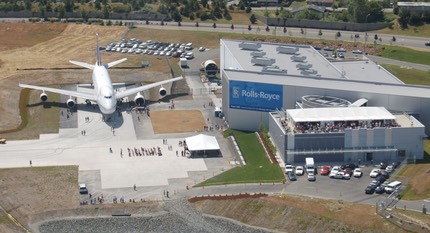
The 747 as a flying testbed
General Electric, Rolls-Royce and Pratt & Whitney all fly engines on 747s — because a four-engined aircraft can carry a strange engine safely.
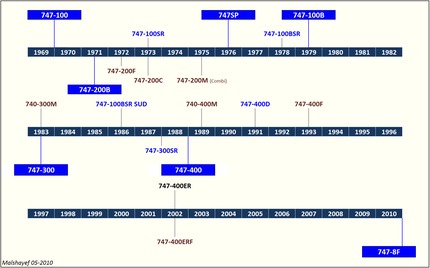
747 Timeline
A Boeing 747 chronology from the 1963 design study to the final delivery in January 2023, with rollout, first flight and delivery dates.
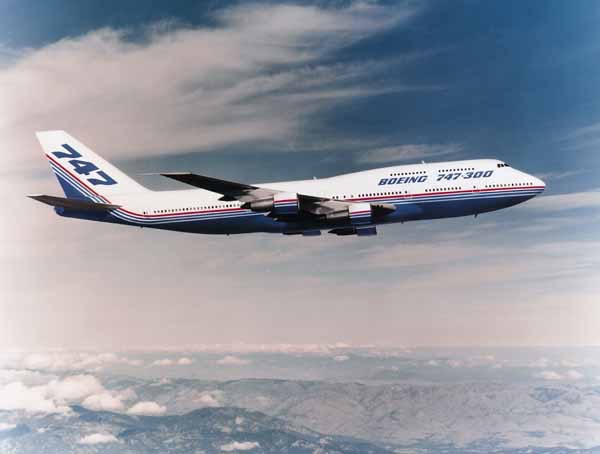
747-300SR
A high-capacity domestic 747-300; Japan Airlines flew the type with more than 600 seats on routes such as Okinawa to Tokyo.

More in Features
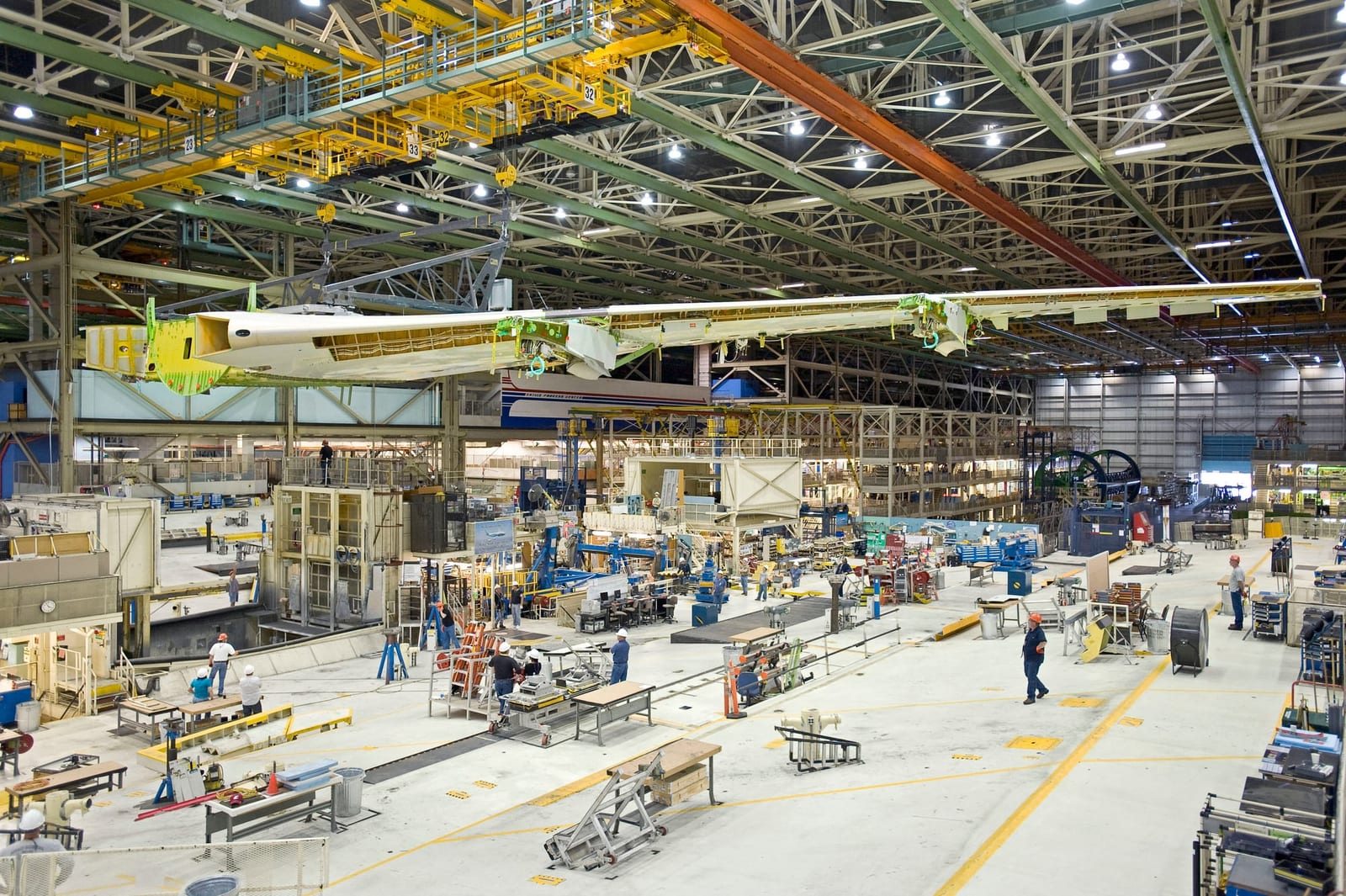
Features
Longer pieces on the Boeing 747 — the factory built to make it, how it compares to the A380, what became of the retired fleet, and what it is like to fly.
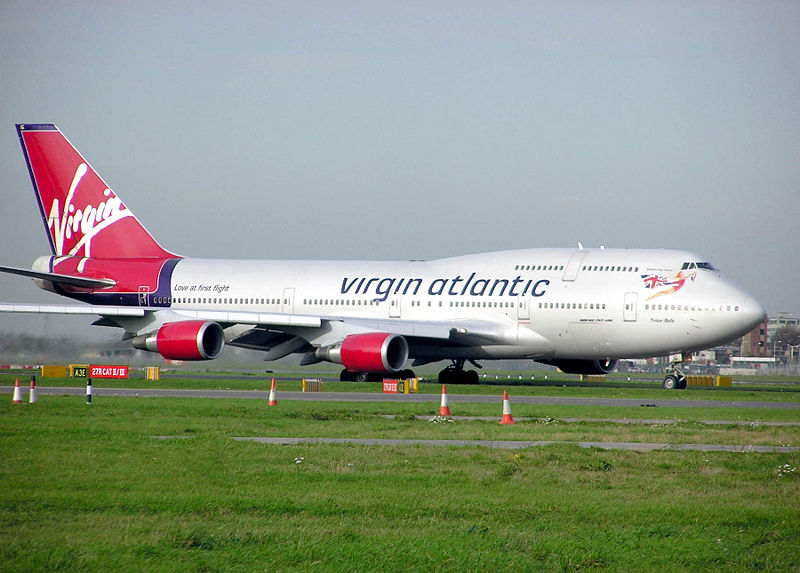
How to Identify Boeing 747 Variants
Identify Boeing 747 variants from photographs using upper-deck length, wingtip shape, fuselage length, engine nacelles and freighter doors.
The building that had to be built first
Boeing had no building big enough for the 747, so it built the largest building in the world by volume — and assembled the aeroplane while it was going up.
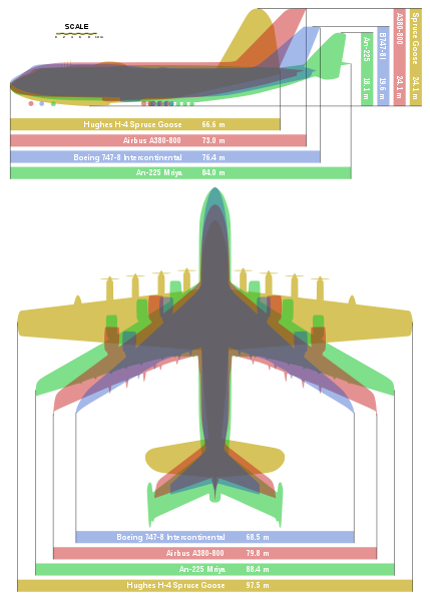
747 versus A380
The two largest airliners ever built, compared — size, capacity, economics, and why both are now out of production.
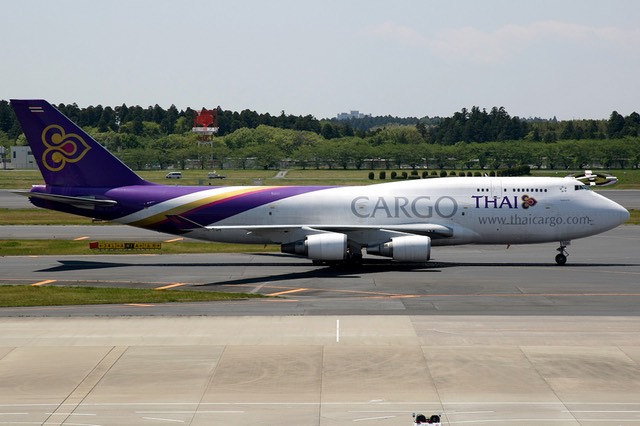
Where the 747s went
Most retired 747s were scrapped. Others became freighters, museum pieces, restaurants, a hotel — and one launched satellites into orbit.
Flying the 747
What the 747 is like to fly — the type rating, the view from 30 feet up, the handling, and why pilots talk about it the way they do.
