What Boeing 747 accidents taught aviation
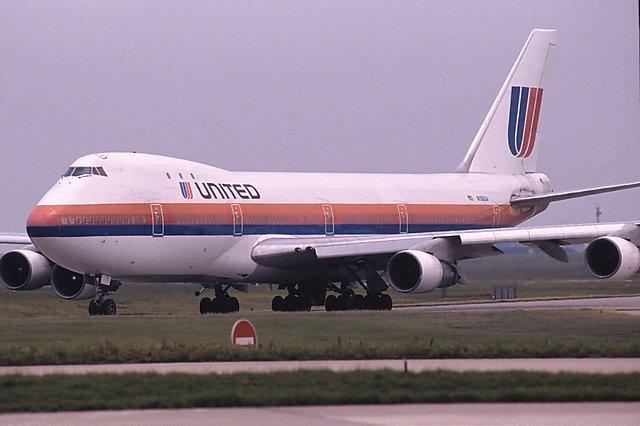
Three lessons recur across 747 accidents: fuel-tank safety after TWA 800, crew resource management after Tenerife and Korean Air, and structural failure from improper repairs after JAL 123 and China Airlines 611.
The 747’s accident record is not the reason it is remembered — but its accidents changed aviation rules more than its successes did. Looked at together, they resolve into a handful of recurring lessons. Each is a chapter in the same argument: a 747 accident is rarely one person’s mistake; it is a chain that a better rule could have broken.
One: fuel tanks can explode — TWA Flight 800
TWA 800 exploded in 1996 minutes after takeoff from New York, killing all 230 aboard. The National Transportation Safety Board’s conclusion was that the centre wing fuel tank exploded: with fuel heating in the tank above its flammability temperature and a source of ignition, the tank’s own vapours detonated.
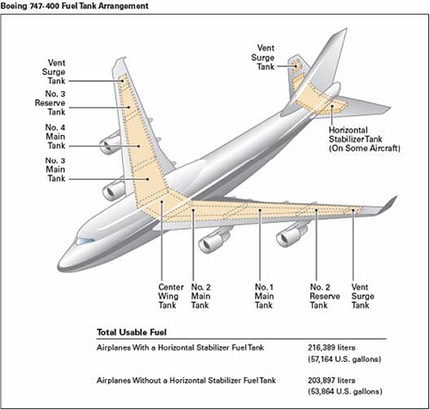
The lesson became a rule. New widebody airliners were required to inert their fuel tanks, and operators were required to manage tank temperatures — the centre tank of a 747-400 sits close to air-conditioning packs that can heat its contents dangerously. The fuel system page describes the tank layout in detail; that layout, not the aerodynamics, is what the inerting rules targeted.
Two: the cockpit can kill a good crew — Tenerife, Korean Air
Tenerife is still the worst accident in aviation history: 583 dead when a KLM 747 began its takeoff while a Pan Am 747 was still on the same runway. It was not a mechanical failure. It was a captain who took off on a clear horizon-to-horizon fog — and a crew that could not or would not stop him.
The same pattern recurs. Korean Air Flight 801 flew into high ground on approach to Guam with a trained crew because the environment made them wrong in a consistent way. Korean Air Cargo 8509 rolled into the ground at Stansted when a captain disregarded his instruments and ordered a climb the data did not support.
Out of these, and others, came crew resource management (CRM): explicit training that the most junior crew member may challenge the senior, that questions must be answered, and that information must move. It is not a feel-good exercise; it is the procedural answer to the exact chain that killed people at Tenerife and Stansted.
Three: repairs must be done the design way — JAL 123 and China Airlines 611
JAL 123 remains the deadliest single-aircraft accident in history: 520 dead when an improperly repaired aft pressure bulkhead failed, took the tail, and the 747SR — effectively a 747-100 with more passengers — was flown hydraulically dead until it hit a mountain.
China Airlines 611 is the same lesson 21 years later. A 1980 tailstrike was repaired at the surface and left structurally unrepaired underneath; the 747 broke up in the climb when the 747-200’s skin cracked at the un-peened repair. Both accidents were delayed structural failures — damage that looks fixed, then fails years later under fatigue.
The rule that grew from them is about how repairs are charged, documented and re-inspected: a repair is a permanent part of the aircraft’s design, not a patch that disappears after it leaves the shop.
The connective thread
Each lesson reads like three different failures — an explosion, a miscommunication, a crack. Structurally they are the same: a designed-in margin was silently lost — in the tank’s flammability, in the authority of the captain, in the skin of the fuselage.
That is why this site documents the systems and the accidents together: the systems define the margin, and the accidents define when it disappears.
Frequently asked questions
- What safety changes followed TWA Flight 800?
- The 1996 explosion led airlines to require fuel tank inerting systems on new widebodies and to warm or cool center tanks to keep fuel vapors below flammable concentrations.
- Why do accident investigators talk about crew resource management?
- Many fatal 747 accidents were not mechanical failures but crew failures — a captain who could not be challenged, or information that never reached the right person. CRM training teaches crews to communicate and cross-check for exactly those failures.
Sources
Facts on this page are checked against the primary and institutional references below.
- Boeing 747-400 Airplane Characteristics for Airport Planning — Boeing
- Aircraft Accident Report AAR-00/03 — TWA Flight 800 — National Transportation Safety Board
Related topics
Boeing 747 accidents
The major Boeing 747 accidents, what caused them, and the changes to aviation that followed — from Tenerife to the end of production.
Boeing 747 Fuel System
Detailed Boeing 747 fuel system guide covering tank layout, pumps, transfer, crossfeed, refuelling, jettison, safety and every major 747 variant.
TWA 800, 17 July 1996
The centre fuel tank of a 747 exploded shortly after takeoff from New York, killing 230. It led to fuel tank inerting being mandated worldwide.
The 747 as a flying testbed
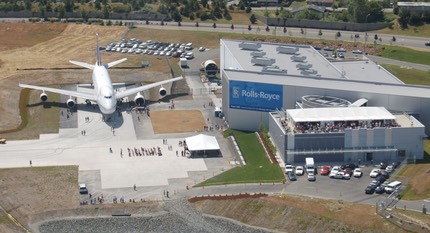
General Electric, Rolls-Royce and Pratt & Whitney all fly engines on 747s — because a four-engined aircraft can carry a strange engine safely.
747 Timeline
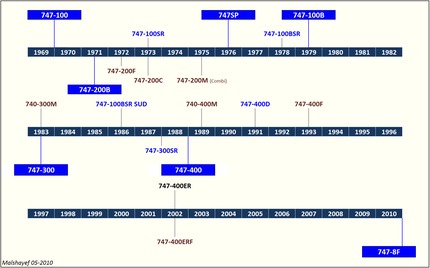
A Boeing 747 chronology from the 1963 design study to the final delivery in January 2023, with rollout, first flight and delivery dates.
About Alykhan Virani
Meet Alykhan Virani, the Boeing 747 enthusiast who researches, writes and reviews the independent reference pages on Boeing-747.com.
More in Features
Features
Longer pieces on the Boeing 747 — the factory built to make it, how it compares to the A380, what became of the retired fleet, and what it is like to fly.
How to Identify Boeing 747 Variants
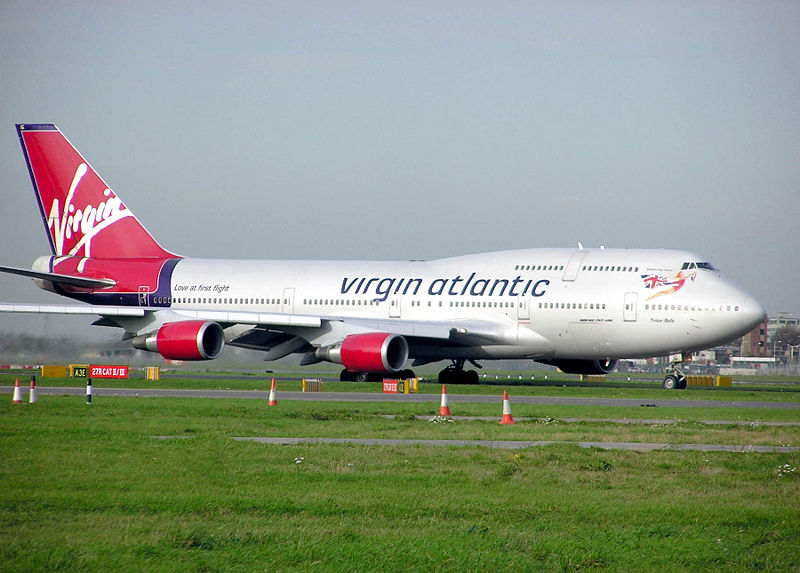
Identify Boeing 747 variants from photographs using upper-deck length, wingtip shape, fuselage length, engine nacelles and freighter doors.
The building that had to be built first
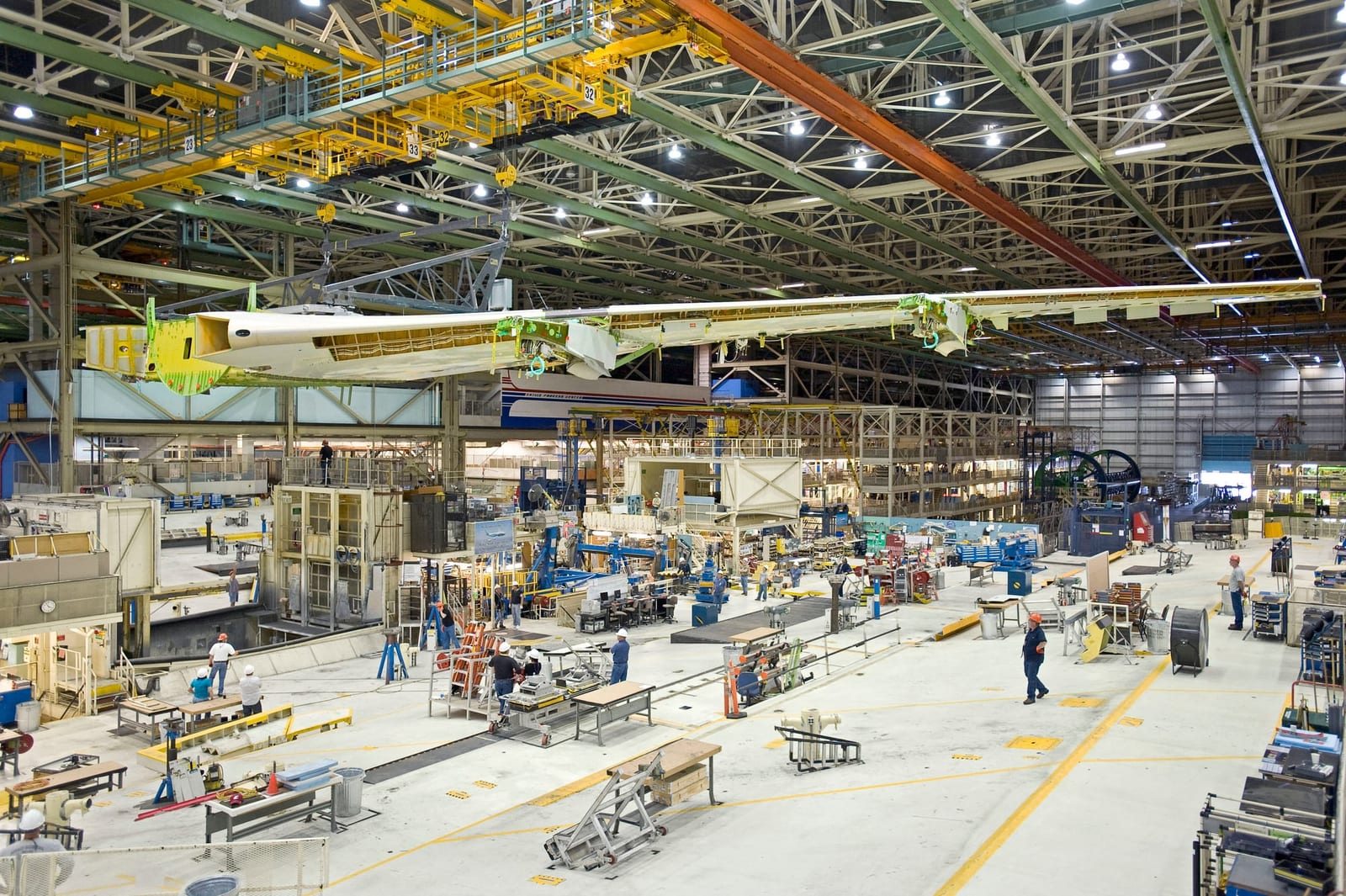
Boeing had no building big enough for the 747, so it built the largest building in the world by volume — and assembled the aeroplane while it was going up.
747 versus A380
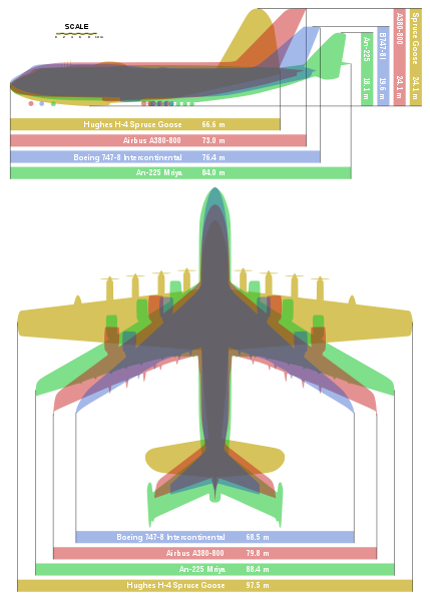
The two largest airliners ever built, compared — size, capacity, economics, and why both are now out of production.
Where the 747s went
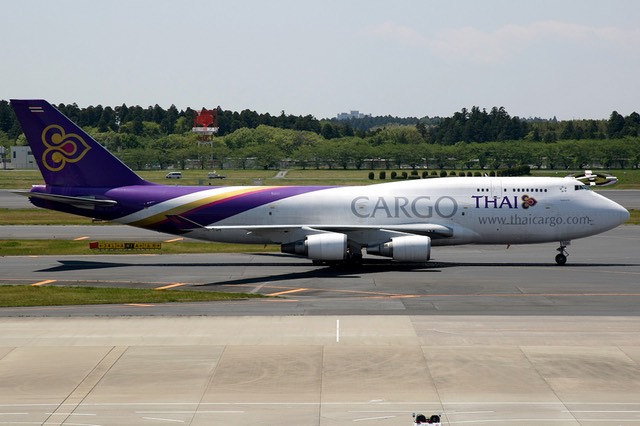
Most retired 747s were scrapped. Others became freighters, museum pieces, restaurants, a hotel — and one launched satellites into orbit.
Flying the 747
What the 747 is like to fly — the type rating, the view from 30 feet up, the handling, and why pilots talk about it the way they do.
