Tenerife, 27 March 1977
583 died when a KLM 747 began its takeoff while a Pan Am 747 was still on the runway. It produced standard phraseology and crew resource management.
On 27 March 1977, two Boeing 747s collided on the runway at Los Rodeos airport, Tenerife. 583 people died. It remains the deadliest accident in aviation history.
How both aircraft came to be there
Neither was supposed to be at Tenerife. Both were bound for Las Palmas, and both were diverted after a bomb exploded in the terminal there. Los Rodeos is a small airport that suddenly had to absorb several diverted widebodies, which left aircraft parked on the taxiway — so departing aircraft had to taxi along the runway itself and turn back at the end.
Then the fog came in.
What happened
| KLM 4805 | Boeing 747-206B, 248 aboard |
| Pan Am 1736 | Boeing 747-121, 396 aboard |
The KLM aircraft, having back-taxied and turned, began its takeoff run while the Pan Am aircraft was still taxiing on the same runway in fog. The two collided.
All 248 aboard the KLM aircraft died. Of the 396 on the Pan Am aircraft, 335 died and 61 survived, mostly from the forward section.
Why it happened
No single failure explains it. The investigation identified a chain:
- The KLM captain began the takeoff without clearance, believing he had it.
- Ambiguous phraseology. The exchange used words like “OK” and “at take-off”, which could be read as either a statement of position or a clearance.
- Simultaneous radio transmissions produced a squeal that blocked the crucial message.
- Fog meant neither crew nor the tower could see the runway.
- Time pressure. The KLM captain was concerned about running out of legally permitted duty hours.
What changed
Two of the most important reforms in aviation history came directly from this accident.
Standard phraseology became mandatory. Ambiguous words were removed from clearances. The word “takeoff” is now reserved exclusively for the actual takeoff clearance — at every other point crews and controllers say “departure”. Read-backs of clearances became compulsory.
Crew resource management. The KLM flight engineer had questioned whether the Pan Am aircraft was clear, and did not press it against a senior captain. CRM training was developed to make challenging a superior a normal, expected part of the job rather than an act of insubordination. It is now standard worldwide, and has since spread to medicine and other fields.
Almost every airline pilot flying today has been trained in habits that exist because of what happened at Tenerife.
Related
Sources
Facts on this page are checked against the primary and institutional references below.
- Tenerife collision safety lessons and investigation findings — Federal Aviation Administration
- Spanish accident report — KLM 4805 and Pan Am 1736 — Spanish civil aviation authority, hosted by the FAA
More in Accidents
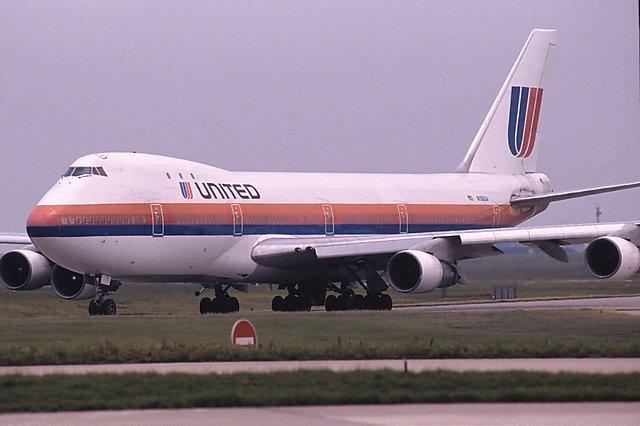
Boeing 747 accidents
The major Boeing 747 accidents, what caused them, and the changes to aviation that followed — from Tenerife to the end of production.
Japan Air Lines 123, 12 August 1985
A faulty repair failed seven years later, destroying the tail and all four hydraulic systems. 520 died; four survived. The deadliest single-aircraft crash.
Pan Am 103, Lockerbie, 21 December 1988
A bomb in the forward hold destroyed a 747 over Lockerbie, killing 259 on board and 11 on the ground, and reshaped aviation security.
TWA 800, 17 July 1996
The centre fuel tank of a 747 exploded shortly after takeoff from New York, killing 230. It led to fuel tank inerting being mandated worldwide.
El Al 1862, Amsterdam, 4 October 1992
Two engines tore from the wing of a 747 freighter, which crashed into an Amsterdam apartment block. Fatigued pylon fuse pins were the cause.
Air India 855, 1 January 1978
A failed attitude indicator disorientated the captain of a 747 over dark sea off Bombay. All 213 aboard died 101 seconds after takeoff.