Pan Am 73, Karachi, 5 September 1986
Four hijackers seized Pan Am 73 on the ground at Karachi on 5 September 1986. Twenty people died, including purser Neerja Bhanot.


On 5 September 1986, four members of the Abu Nidal Organization seized Pan Am Flight 73 while it stood at Jinnah International Airport, Karachi. Twenty people died - passengers from India, the United Kingdom, Italy, Pakistan and Mexico.
The aircraft was a Boeing 747-121 named Clipper Empress of the Seas.
What happened
The hijackers boarded dressed as airport security guards, armed with assault rifles, pistols, grenades and explosive belts.
The flight crew escaped through an overhead emergency hatch in the cockpit roof. This was not abandonment: without pilots the aircraft could not be flown anywhere, and immobilising it on the ground was the recognised counter-hijack response of the period. It confined the situation to Karachi.
The standoff lasted around sixteen hours. When the aircraft's auxiliary power finally failed and the cabin went dark, the hijackers opened fire on the passengers and threw grenades.
Neerja Bhanot
The senior purser, Neerja Bhanot, was 22 years old.
It was Bhanot who relayed the hijack code to the flight crew, which is what allowed them to leave and immobilise the aircraft. Through the hours that followed she is credited with hiding passengers' passports so that Americans could not be identified and singled out, and when the shooting began she opened an emergency exit and helped passengers out.
She was shot dead shielding children from gunfire.
She was posthumously awarded India's Ashok Chakra, its highest peacetime gallantry decoration, a United States Special Courage award, and Pakistan's Tamgha-e-Pakistan and Nishan-e-Pakistan - an unusual set of honours from three countries that agree on very little.
Why it belongs here
Most of the 747 accidents on this site turn on engineering: a repair, a fuse pin, a fuel tank, an instrument. This one does not. The aircraft was undamaged in any way that mattered and never left the ground.
It is included because it happened to a 747, because 20 people died aboard one, and because what the cabin crew did that night is part of the type's history as much as any structural test.
Related
Sources
Facts on this page are checked against the primary and institutional references below.
- Pan Am Flight 73: chronology and casualty figures - U.S. Department of Justice
Related topics
Boeing 747SP vs 747-100
The 747SP traded forty-plus seats for nearly 48 ft of fuselage and a 5,830-nautical-mile range - the first 747 built to fly further, not carry more.
Pan American World Airways
The airline that ordered the 747 into existence, flew the first service in 1970, took 65 aircraft, and was gone by 1991.
Pan Am 747 Seat Maps
How Pan Am configured its Boeing 747s - the 362-seat 1970 launch cabin with its upper-deck lounge, the later eras, and the 233-seat 747SP.
When the hump was a bar
Piano bars, swivel chairs and spiral staircases - what airlines put in the 747's upper deck before seat counts took it back.

Vintage Boeing 747 Seat Maps
View original Pan Am, United and Qantas Boeing 747 cabin maps from 1970 to 1986, including upper-deck lounges and high-density seating.
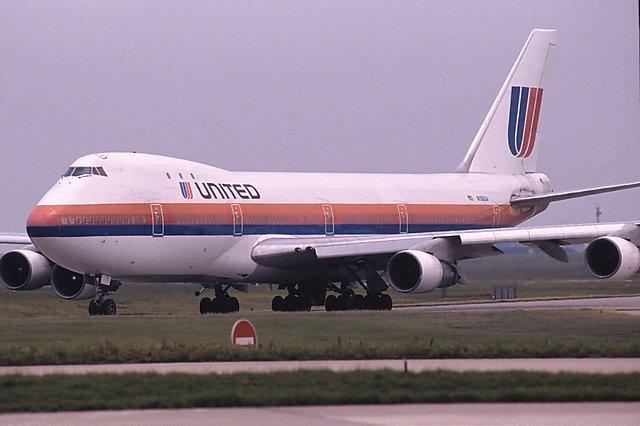
747-100
The original Boeing 747-100 entered service in 1970 with six upper-deck windows and a lounge; later aircraft offered a ten-window upper deck.
More in Accidents
Boeing 747 accidents and incidents
Explore 22 Boeing 747 accidents and incidents in date order, with individual accounts, historical images, investigation findings and sources.
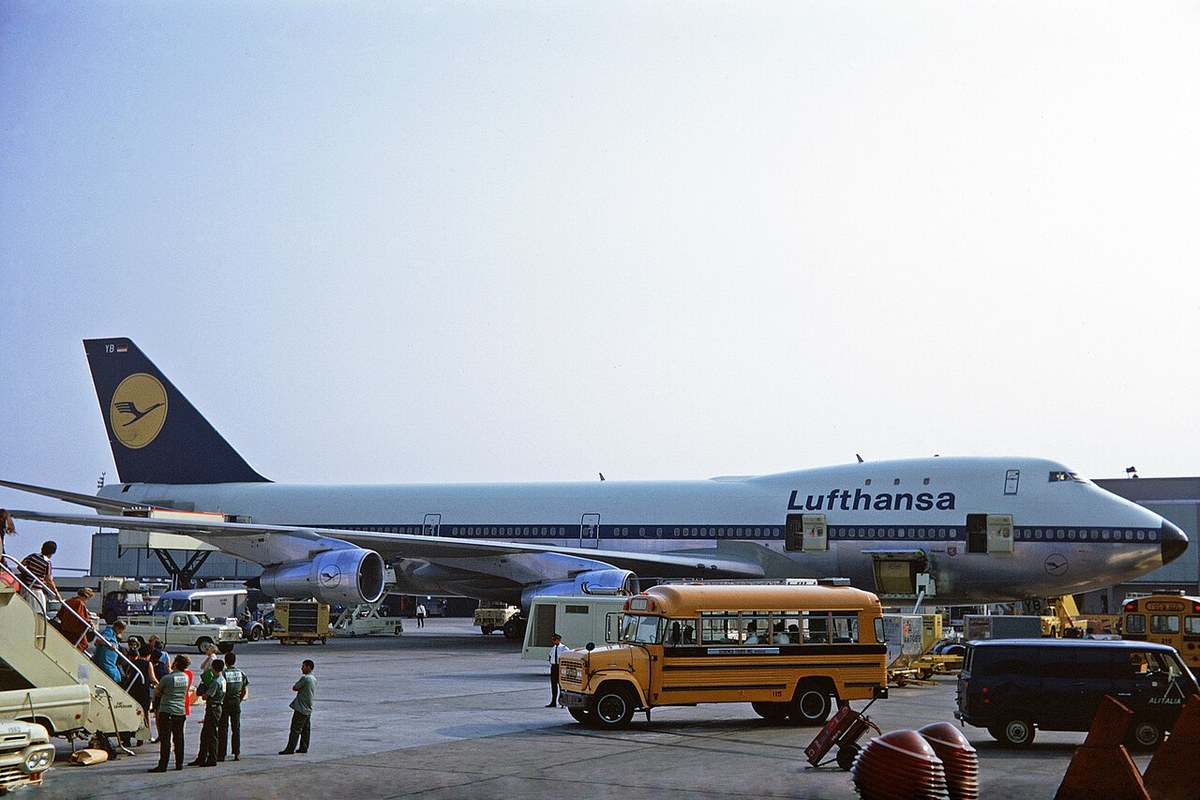
Lufthansa Flight 540
Lufthansa Flight 540 crashed after takeoff at Nairobi in 1974. Read the aircraft details, leading-edge configuration findings and survival figures.
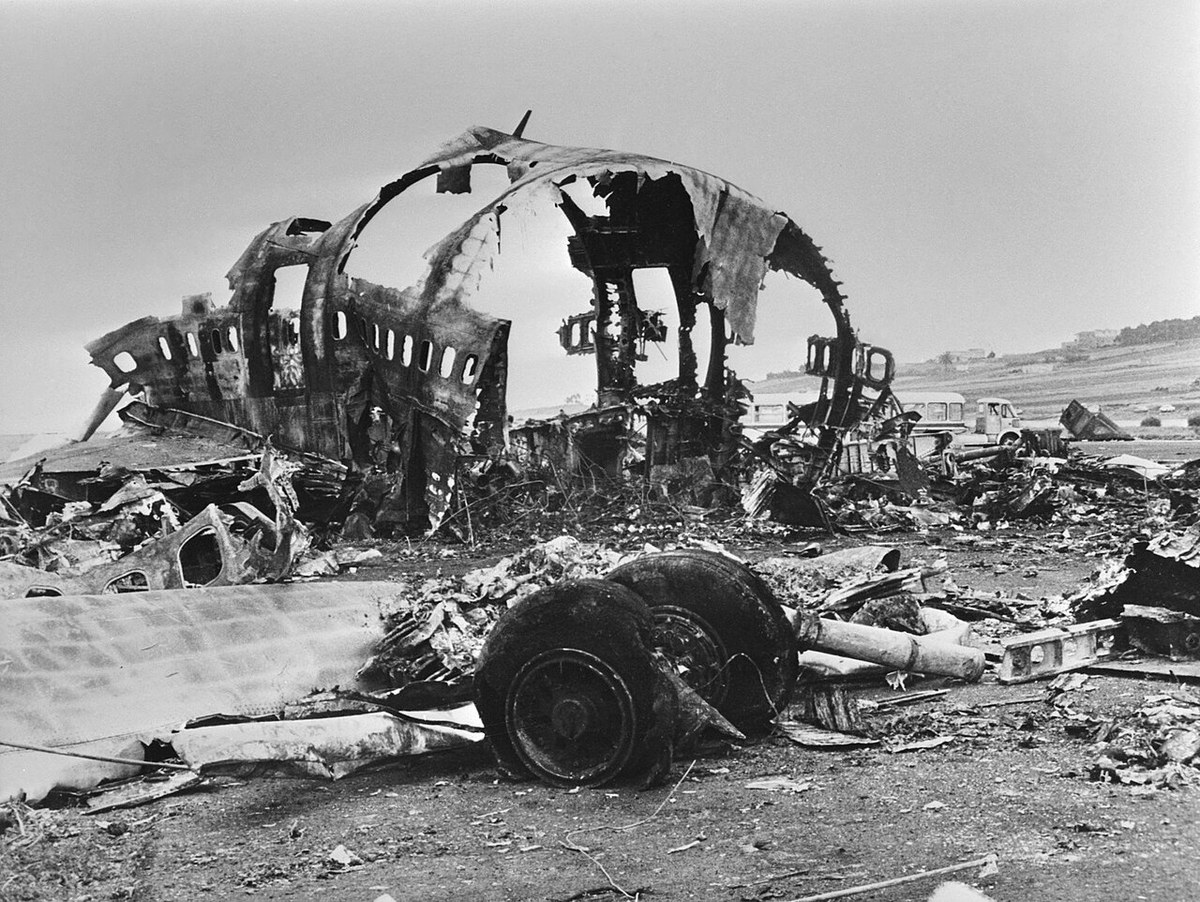
Tenerife, 27 March 1977
Two Boeing 747s collided in fog at Tenerife, killing 583 people. It remains the deadliest accident in aviation history, and it changed how crews talk.
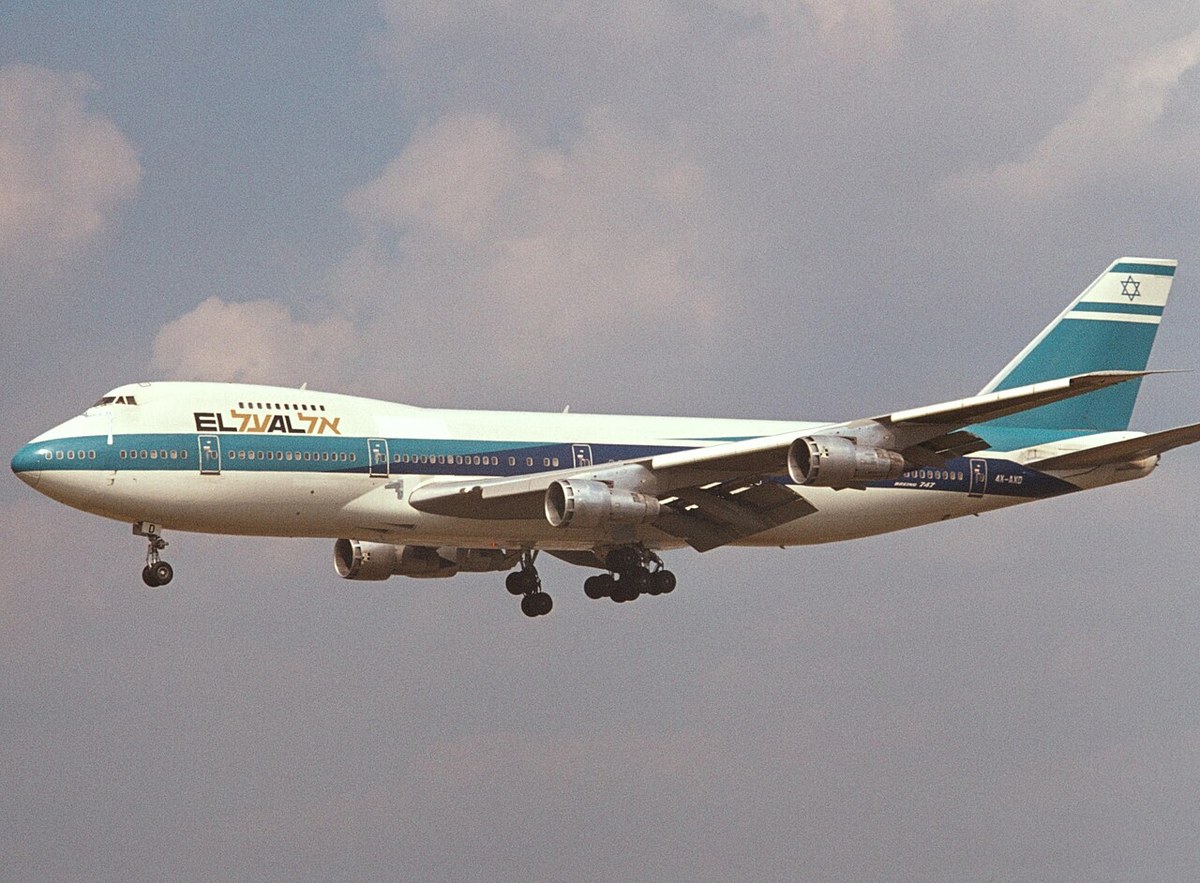
El Al 747 decompression, 1977
An El Al 747 lost cabin pressure over Belgrade in November 1977. Read the documented facts, source limitations and historical context.
Air India 855, 1 January 1978
A failed attitude indicator disorientated the captain of a 747 over dark sea off Bombay. All 213 aboard died 101 seconds after takeoff.
Korean Air Lines Flight 015
Korean Air Lines Flight 015 landed short at Seoul in 1980. Explore the landing and fire, aircraft details and conflicting historical fatality counts.