Air India 855, 1 January 1978
A malfunctioning attitude indicator led to spatial disorientation and loss of control off Bombay. All 213 people aboard were killed.
On 1 January 1978, Air India Flight 855 crashed into the Arabian Sea about three kilometres from Santacruz Airport, Bombay, 101 seconds after takeoff. All 213 people aboard died — 190 passengers and 23 crew.
The aircraft was VT-EBD, a Boeing 747-237B named Emperor Ashoka.
This accident and a separate 1977 El Al decompression were run together as a single garbled entry on this site for years, with their details transposed. Both are set out correctly here and on the index.
What happened
The captain’s attitude direction indicator failed, showing a bank that the aircraft was not in.
The departure was at night over dark water, with no horizon and no lights to give an external reference. With the instrument disagreeing with reality and nothing visible outside to resolve which was right, the captain flew the instrument — making control inputs that progressively worsened the aircraft’s actual attitude.
The 747 rolled to a 108-degree bank and struck the sea nose-down.
Why it is instructive
Spatial disorientation is not a failure of skill. The human balance system cannot reliably sense a slow roll, so in the absence of an outside reference a pilot genuinely cannot feel what the aircraft is doing — the instruments are the only truth available. When one of them lies, and there is nothing outside to check it against, the trap closes quickly.
The accident reinforced training in cross-checking instruments — comparing the captain’s, first officer’s and standby indicators against each other rather than trusting one — and in recognising and recovering from unusual attitudes.
The “black hole” departure over unlit water at night remains a recognised high-risk phase of flight for exactly this reason.
Related
Sources
Facts on this page are checked against the primary and institutional references below.
- Air India Flight 855 — Wikipedia
Related topics
Air India Boeing 747 fleet history
Air India flew its Boeing 747-200B from 1971 through 747-400s until March 2021 — about 50 years of service.
Air India Boeing 747 Seat Maps
Air India's Boeing 747-400 kept a 423-seat layout for nearly three decades, with the entire upper deck given over to business class.
Boeing 747-100 vs 747-200
What the 747-200 added to the original 747-100: more thrust, higher takeoff weights, a ten-window upper deck and freighter, combi and convertible variants.
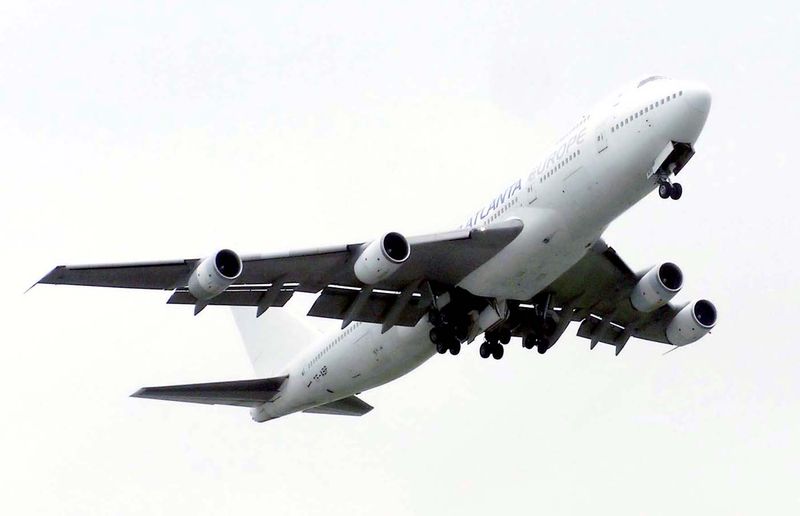
747-200
The 747-200 brought more powerful engines, higher takeoff weights and greater range than the -100, and spawned freighter, combi and convertible models.
Boeing 747-200 vs 747-300
The 747-300's stretched upper deck gave it about ten percent more capacity than the 747-200, with quieter engines and no change in length or weight limits.
Air Canada
Air Canada flew 15 Boeing 747s for 33 years, from 1971 -100s and -200 Combis to a -400 era that ended in October 2004.
More in Accidents
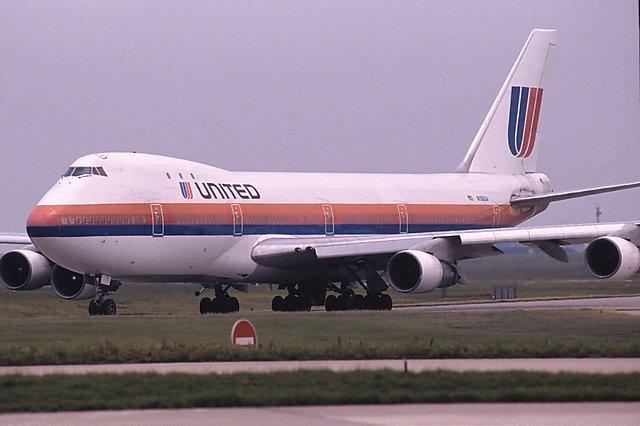
Boeing 747 accidents
The major Boeing 747 accidents, what caused them, and the changes to aviation that followed — from Tenerife to the end of production.
Tenerife, 27 March 1977
Two Boeing 747s collided in fog at Tenerife, killing 583 people. It remains the deadliest accident in aviation history, and it changed how crews talk.
Japan Air Lines 123, 12 August 1985
A faulty repair failed seven years later, destroying the tail and all four hydraulic systems. 520 died; four survived. The deadliest single-aircraft crash.
Pan Am 103, Lockerbie, 21 December 1988
A bomb in the forward hold destroyed a 747 over Lockerbie, killing 259 on board and 11 on the ground, and reshaped aviation security.
TWA 800, 17 July 1996
The centre fuel tank of a 747 exploded shortly after takeoff from New York, killing 230. It led to fuel tank inerting being mandated worldwide.
El Al 1862, Amsterdam, 4 October 1992
Two engines tore from the wing of a 747 freighter, which crashed into an Amsterdam apartment block. Fatigued pylon fuse pins were the cause.