TWA 800, 17 July 1996
An explosion in the centre wing fuel tank destroyed TWA 800 in 1996, killing all 230 aboard and leading to mandatory fuel tank inerting.
On 17 July 1996, TWA Flight 800 — a Boeing 747-131 — broke apart off Long Island shortly after departing New York. All 230 people aboard died.
The cause
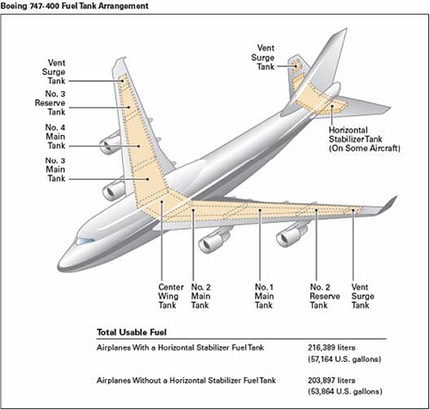
The NTSB determined the probable cause to be an explosion of the centre wing fuel tank, from ignition of a flammable fuel and air mixture inside it.
The ignition source was never established with certainty. The most likely candidate the investigation identified was a short circuit outside the tank that allowed excessive voltage to reach it through the wiring of the fuel quantity indication system.
The underlying condition mattered more than the spark. The centre tank was nearly empty, and had been warmed by the air conditioning packs beneath it while the aircraft sat on the ground in summer heat. A nearly empty warm tank contains a large volume of fuel vapour in air — which, unlike liquid fuel, is explosive.
What changed
This is the clearest case of a 747 accident producing a design change applied across the whole industry.
Regulators concluded that the answer was not only to chase every possible ignition source but to remove the flammable mixture. In 2008 the US Department of Transportation issued a final rule requiring fuel tank inerting — pumping nitrogen-enriched air into the tank so the vapour above the fuel cannot burn.
The rule applied to centre wing tanks on new passenger and cargo aircraft, and to passenger aircraft built through most of the 1990s. Inerting systems are now standard.
Wiring inspection standards for ageing aircraft were also substantially tightened as a result.
Related
- All 747 accidents
- The 747 fuel system — including the centre wing tank
- The 747-100
Sources
Facts on this page are checked against the primary and institutional references below.
- TWA Flight 800 aircraft accident report AAR-00-03 — National Transportation Safety Board
- TWA Flight 800 investigation summary — National Transportation Safety Board
Related topics
What Boeing 747 accidents taught aviation
Three patterns run through 747 accidents — fuel-tank safety, crew resource management and improper repairs. Each one changed rules that still govern aviation.
Boeing 747 fire detection and extinguishing
The 747 monitors engines, APU and cargo holds for fire and discharges halon extinguishers from the flight deck.
Boeing 747 Fuel System
Detailed Boeing 747 fuel system guide covering tank layout, pumps, transfer, crossfeed, refuelling, jettison, safety and every major 747 variant.
TWA 747 Seat Maps
TWA's Boeing 747 cabins over three decades — the 346-seat 1970 layout with its Penthouse lounge, the 432-seat Ambassador Class era and the 747SP.
TWA Boeing 747 fleet history
TWA ordered 15 Boeing 747s, took its first in December 1969 and began 747 service in February 1970.
747-100
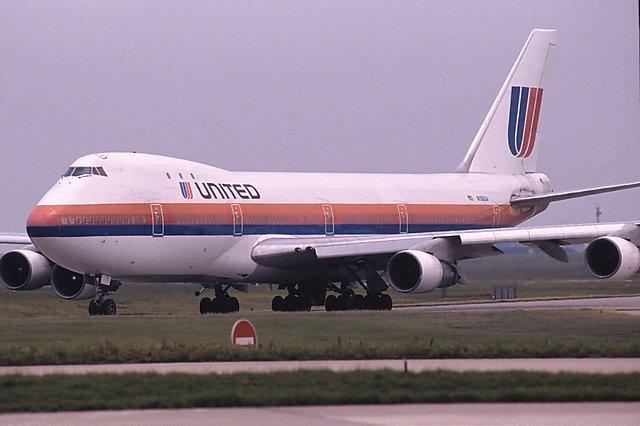
The original Boeing 747-100 entered service in 1970 with six upper-deck windows and a lounge; later aircraft offered a ten-window upper deck.
More in Accidents
Boeing 747 accidents
The major Boeing 747 accidents, what caused them, and the changes to aviation that followed — from Tenerife to the end of production.
Tenerife, 27 March 1977
Two Boeing 747s collided in fog at Tenerife, killing 583 people. It remains the deadliest accident in aviation history, and it changed how crews talk.
Japan Air Lines 123, 12 August 1985
A faulty repair failed seven years later, destroying the tail and all four hydraulic systems. 520 died; four survived. The deadliest single-aircraft crash.
Pan Am 103, Lockerbie, 21 December 1988
A bomb in the forward hold destroyed a 747 over Lockerbie, killing 259 on board and 11 on the ground, and reshaped aviation security.
El Al 1862, Amsterdam, 4 October 1992
Two engines tore from the wing of a 747 freighter, which crashed into an Amsterdam apartment block. Fatigued pylon fuse pins were the cause.
Air India 855, 1 January 1978
A failed attitude indicator disorientated the captain of a 747 over dark sea off Bombay. All 213 aboard died 101 seconds after takeoff.