The 747 Combi and the fire rule that caught up with it
The 747 Combi's main-deck cargo hold was a Class B compartment — smoke detection and a fire extinguisher, but no built-in suppression. SAA Flight 295 in 1987 exposed the gap, and FAA rulemaking through 1993 made Combis far harder to justify.
A Combi splits the main deck between people and freight. On a 747 Combi the passenger cabin sits forward and the cargo hold aft, separated by a bulkhead with a door the crew can pass through, and loaded through a large side cargo door on the aft fuselage. Boeing built the idea across the family — the 747-200M, 747-300M and 747-400M — and for years it was attractive on thin long-haul routes that could not fill a whole passenger cabin.
The weak point was never the idea. It was the fire rule the idea was certified under.
Class B, and why it was a problem
Air transport cargo compartments were, and are, graded by how a fire in them is fought. The 747 Combi’s main-deck hold was a Class B compartment, which required:
- a smoke and fire detection system to warn the crew,
- a fire-resistant lining, and
- access in flight for a crew member to reach any part of the compartment with a hand extinguisher.
What it did not require was a built-in fire suppression system. The plan for a fire was for someone to go in and put it out by hand. Class B rules dated from the 1940s, when cargo compartments were small and hand-loaded. By the 1980s a 747 Combi’s hold could hold pallets up to 10 feet by 10 feet by 20 feet, and over-water diversion times could run to hours. The rule had not grown up with the aircraft.
By contrast, the lower-lobe baggage holds on an ordinary passenger 747 were Class C — detection plus a built-in suppression system, with no crew access required. The part of these aircraft that carried people was safer than the part that carried their luggage.
South African Airways Flight 295
On 28 November 1987 a 747-200B Combi, ZS-SAS, was en route from Taipei to Mauritius when a fire took hold in its main-deck cargo compartment. The crew could not reach or control it. All 159 people on board were lost when the aircraft came down in the Indian Ocean.
The cockpit voice recorder captured the sequence: a fire alarm, then around eighty circuit breakers tripping within about fourteen seconds as the fire consumed systems. The inquiry concluded that the detection and suppression arrangements in the Class B cargo bays were inadequate for a fire of that size.
Rewriting the rule
The FAA responded with a series of airworthiness directives. The first, in 1989, required near-term operational changes and set a deadline to either convert the compartment to Class C, use Class C-compliant containers for all cargo, or adopt a package of improved manual firefighting measures. Interim directives followed. The definitive action came in 1993, with AD 93-07-15, which removed the manual-firefighting-only option entirely and required operators to choose one of four paths:
- convert the compartment to Class C;
- carry all cargo in Class C-compliant containers;
- fire-resistant covers or containers plus detection, a full-height barrier and operational changes; or
- a long-duration built-in suppression system — an initial Halon concentration followed by a sustained concentration for at least 90 minutes — with detection, a barrier, ventilation shut-off, a viewport and crew procedures.
Most widebody Combi operators took the fourth option. Narrow-body Combis such as the 727 and 737 more often took the third. Compliance was expensive, and it helped accelerate the Combi’s commercial decline: airlines began converting the aircraft to all-passenger or all-freight layouts instead.
The end of the passenger Combi
The FAA did not ban Combis outright, and neither did Europe, which later created a Class F category in its own certification rules to cover compartments of this kind. But the economics turned. The last operator of the 747-400M in passenger service was KLM, whose final Combi revenue flight, from Shanghai to Amsterdam, landed on 25 October 2020. No airline flies a passenger 747 Combi today; the survivors are freighters or have been converted.
Related
Frequently asked questions
- What is a Combi aircraft?
- A Combi carries passengers and cargo on the same main deck, separated by a bulkhead. On the 747 Combi the passenger cabin is forward, the cargo hold aft, loaded through a large side cargo door.
- Why were 747 Combis considered a fire risk?
- Their main-deck cargo compartments were Class B, which required detection and crew access with hand extinguishers but no built-in suppression. On a widebody whose pallets could be enormous, manual firefighting was not realistic — a point made brutally by South African Airways Flight 295.
Sources
Facts on this page are checked against the primary and institutional references below.
- Lessons Learned — South African Airways Flight 295 — Federal Aviation Administration
- Airworthiness Directive 93-07-15 — Federal Aviation Administration
- South African Airways Flight 295 — Wikipedia
- The quick ascent and slow decline of the Combi plane — Popular Mechanics
- KLM's last Boeing 747 departure — Simple Flying
Related topics
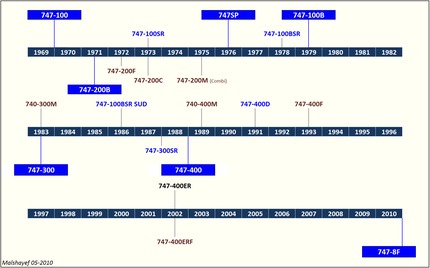
Boeing 747 Family
Every Boeing 747 variant built between 1968 and 2023 — the 747-100, -200, -300, -400 and 747-8, with freighter, combi and short-range models explained.
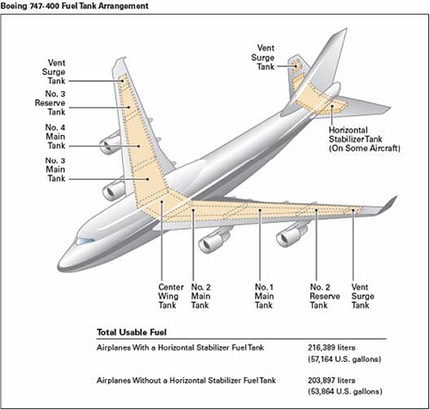
Boeing 747 Fuel System
Detailed Boeing 747 fuel system guide covering tank layout, pumps, transfer, crossfeed, refuelling, jettison, safety and every major 747 variant.
Boeing 747 Production Data
Download Boeing 747 production totals by generation, with a transparent method and links to Boeing's final programme record and technical documents.
General Electric CF6 on the Boeing 747
The General Electric CF6 powered 747s from the -200 through the -400ER, beginning with the first CF6 747 ordered by KLM in 1975.
KLM 747 Seat Maps
KLM's Boeing 747 cabins — the 353-seat 1971 -200, the 408-seat -400 and the 268-seat -400M Combi that closed the airline's jumbo era in 2020.
South African Airways 747 Seat Maps
South African Airways' refitted Boeing 747-400 carried 331 seats, with First Class in the nose and economy on the quiet upper deck.
More in Features
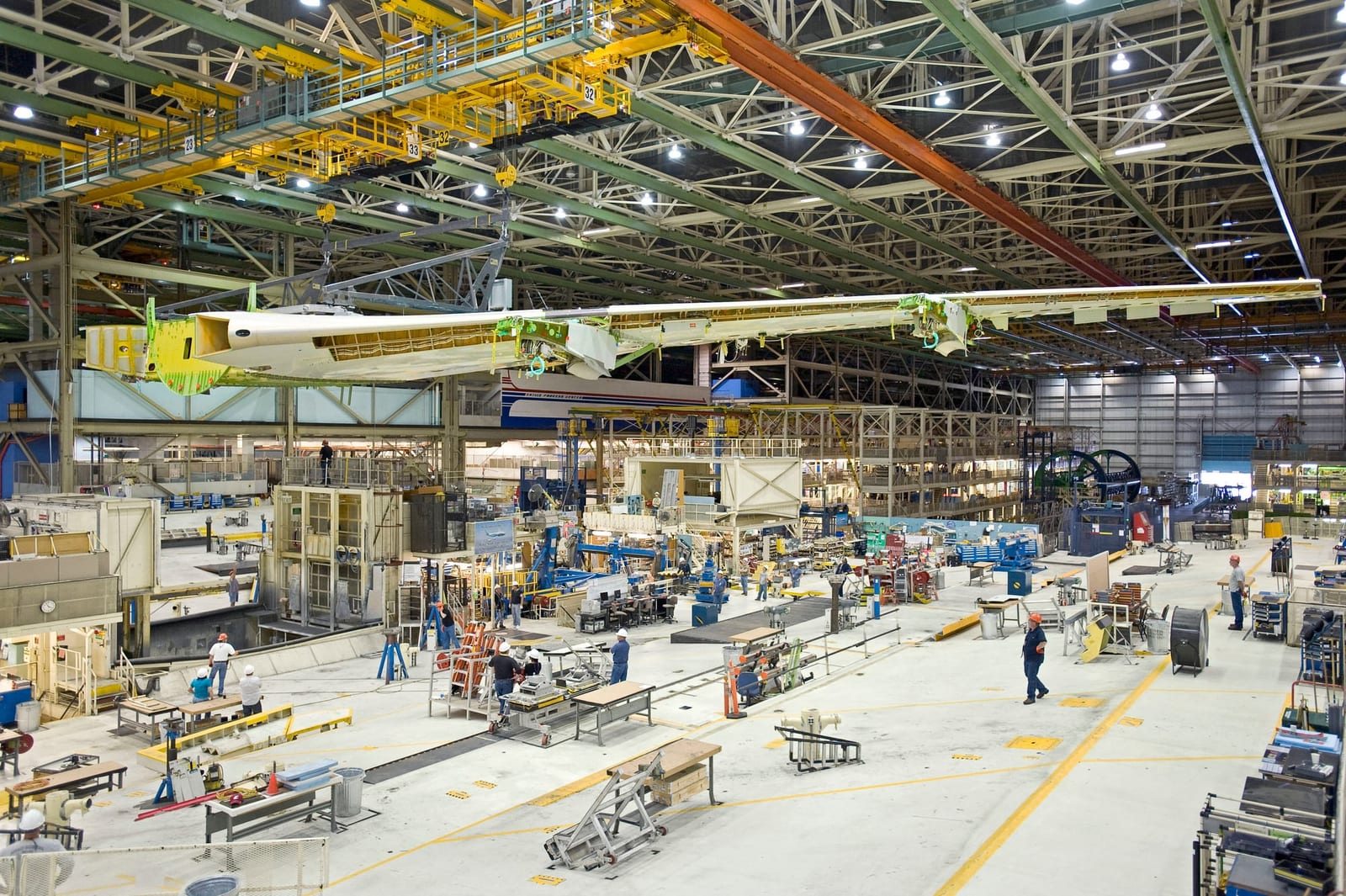
Features
Longer pieces on the Boeing 747 — the factory built to make it, how it compares to the A380, what became of the retired fleet, and what it is like to fly.
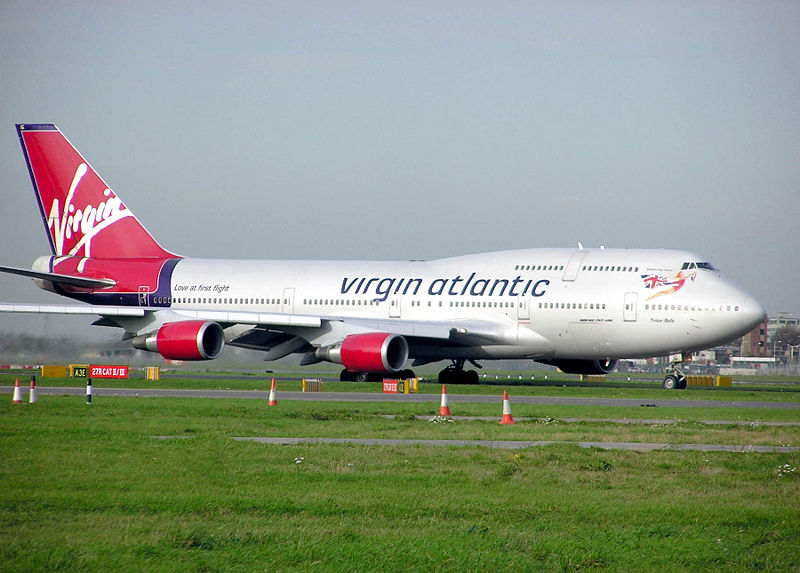
How to Identify Boeing 747 Variants
Identify Boeing 747 variants from photographs using upper-deck length, wingtip shape, fuselage length, engine nacelles and freighter doors.
The building that had to be built first
Boeing had no building big enough for the 747, so it built the largest building in the world by volume — and assembled the aeroplane while it was going up.
747 versus A380
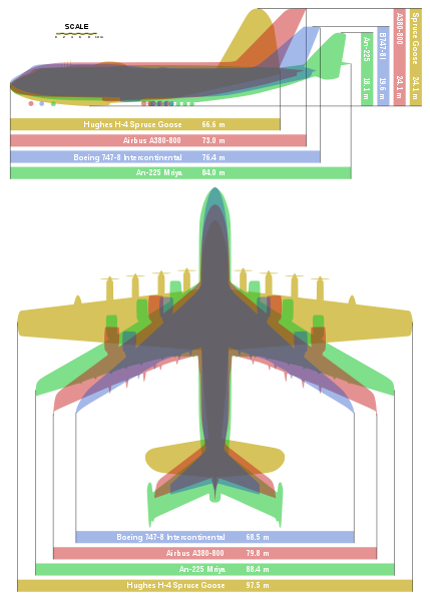
The two largest airliners ever built, compared — size, capacity, economics, and why both are now out of production.
Where the 747s went
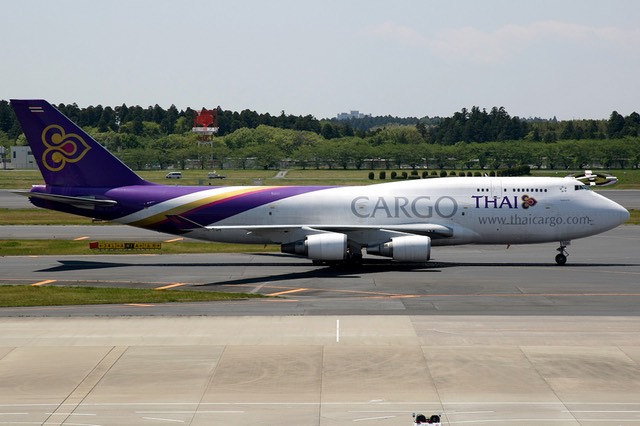
Most retired 747s were scrapped. Others became freighters, museum pieces, restaurants, a hotel — and one launched satellites into orbit.
Flying the 747
What the 747 is like to fly — the type rating, the view from 30 feet up, the handling, and why pilots talk about it the way they do.
