Galleys and crew rest
Galleys, carts, lower-deck facilities and crew rest compartments - and why the 747-8 moved crew rest upstairs to free revenue space.
A 747-400 carries 416 passengers on flights of up to fourteen hours. Feeding them, and resting the people who do it, takes a surprising amount of the aeroplane.
Galleys
Meals are loaded in carts that lock into galley units, so catering is a matter of exchanging trolleys rather than loading loose items. On an aircraft this size that is the only workable approach - several hundred meals, twice, on a long sector.
Galleys are distributed rather than centralised: forward, mid and aft, so that no cabin crew member is pushing a cart the full length of a 231-foot fuselage. The upper deck has its own, which is part of why it functions as a separate cabin.
Some 747 operators used lower-deck galley facilities connected by lift, moving food preparation off the main deck entirely and freeing floor area for seats. It is an idea that only makes sense on an aircraft with a hold tall enough to stand up in.
Crew rest
On a sector long enough to need a relief crew, those people have to sleep somewhere, and it cannot be a passenger seat.
747s carried crew rest compartments - bunks for flight crew, separate provision for cabin crew - located variously in the upper deck aft of the flight deck, in the crown space above the cabin, or in the rear of the main deck depending on the operator and generation.
The 747-300 offered an optional flight-crew rest area immediately aft of the flight deck as part of its stretched upper deck.
The 747-8's rearrangement
The 747-8 Intercontinental moved flight crew rest to the upper deck, and that decision had a larger effect than it sounds.
Taking crew rest out of the main deck and the lower hold freed space for passengers and cargo. It is a significant part of why the -8I carries 37,000 lb of cargo - a third more than a 747-400, and more than an A380 - despite being a passenger aircraft.
Boeing also proposed using the crown space above the cabin, normally occupied by air conditioning ducting and wiring, for galleys and crew rest by moving the services to the sides. The SkyLoft concept went further and tried to sell that space to passengers; it was dropped in 2007 when the pricing would not work, and airlines took the upper-deck galley storage instead.
Why none of this is visible
All of it is designed to be invisible. The measure of a galley is that meals arrive on time and nobody notices the machinery; the measure of a crew rest compartment is that the relief crew are alert when they take over.
It is a large fraction of the cabin, and the only part passengers are meant not to see.
Related
Sources
Facts on this page are checked against the primary and institutional references below.
Related topics
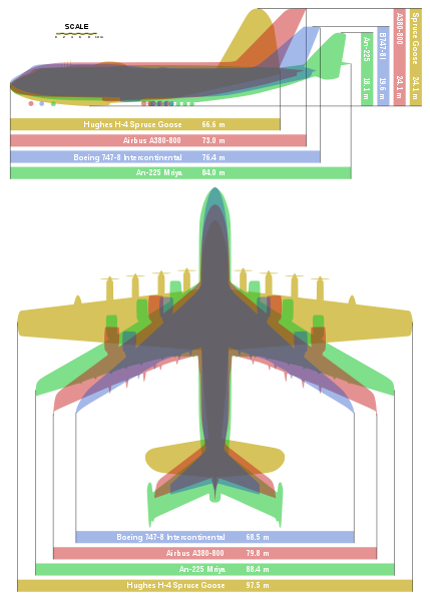
747 versus A380
The two largest airliners ever built, compared - size, capacity, economics, and why both are now out of production.
Compare aircraft sizes
Compare Boeing 747 variants, the Airbus A380 and Boeing 777 on one scale. Overlay their dimensions, switch views and see lengths and wingspans.
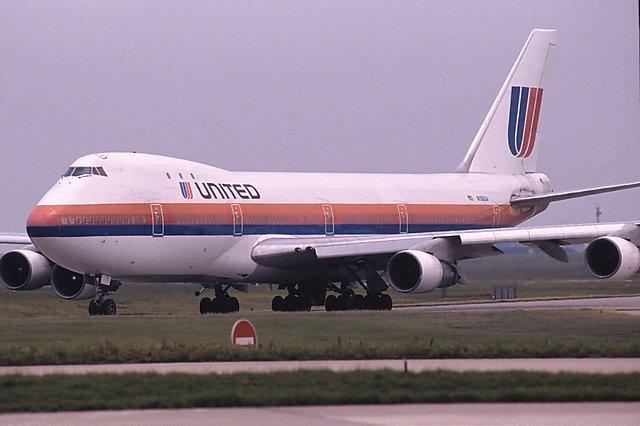
The story of the Boeing 747
How the 747 came to exist - the Pan Am bet, the factory built to make it, the hump that came from a freighter, and why production ended in 2023.
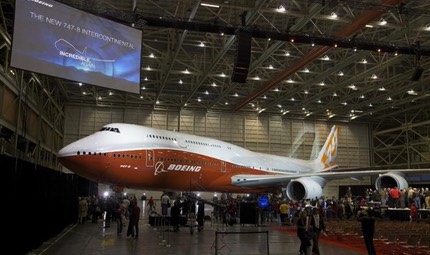
Boeing 747: History, Variants and Legacy
A complete reference to the Boeing 747, built from 1968 to 2023 - every variant from the 747-100 to the 747-8, plus special-mission jumbos and photos.
Listen to Boeing 747 engines
Listen to licensed Boeing 747 recordings, compare RB211 and GEnx-2B engines, filter by flight phase and download credited audio clips.
Explore the Boeing 747
Design a 747 livery, load a freighter, explore cockpit instruments, find flights and spotting locations, hear engines and share aircraft memories.
More in Interiors

Inside the 747
How the 747 cabin changed - upper-deck lounges and spiral stairs on the early aircraft, a 787-derived cabin on the last ones.
When the hump was a bar
Piano bars, swivel chairs and spiral staircases - what airlines put in the 747's upper deck before seat counts took it back.
Three staircases
Spiral, straight, then sweeping - the 747's stair to the upper deck changed three times, and each change was about floor area.
First class on the 747
Sleeper seats, upper-deck cabins and lie-flat beds - how the 747 carried the front of the aircraft for fifty years.
Boeing 747-8 Interior Guide: Cabin Architecture
The Boeing 747-8 cabin - 787-derived architecture, a curved staircase, larger windows, LED mood lighting and the VIP concepts.

Boeing 747-8 Forward Cabin: Ceiling and Lighting Concept
Boeing's rendering of the 747-8 forward cabin zone, showing the curved ceiling architecture carried over from the 787.