The door 2 entryway
A Boeing 747-8 entryway interior concept.
The entryway at door 2 on the 747-8 — for most passengers, the first part of the aircraft they see.
Why the entry mattered
Boarding is where passengers form an impression of the cabin, so Boeing spent disproportionate design effort on the door 2 area. The sculpted ceiling continues here, and the enlarged 787-derived windows let daylight into the space rather than leaving the entrance in shadow from kerb to seat.
The render also shows the staircase to the upper deck, which is the biggest structural change at the entrance. On the 747-300 and 747-400, the stair is straight and narrow, running from the door-2 galley to the back of the upper deck on the left. The 747-8 replaced it with a curved, sweeping stair, and extended the window line to where it meets the upper deck.
The stair was originally planned for the right-hand side and was moved back to the left after Lufthansa’s order — the launch customer’s preference winning, as it usually does.
What is behind the crunch
The jigsaw behind the entryway is the cabin’s services: galleys, crew-rest areas and the extra floor space the 747-8’s stretch created. Because the flight-crew rest moved to the upper deck, the main deck and lower hold lost less to crew accommodation — part of why the aircraft carries a third more cargo than a 747-400.
For the full cabin rundown, see the 747-8 interior section.

Sources
Facts on this page are checked against the primary and institutional references below.
Related topics
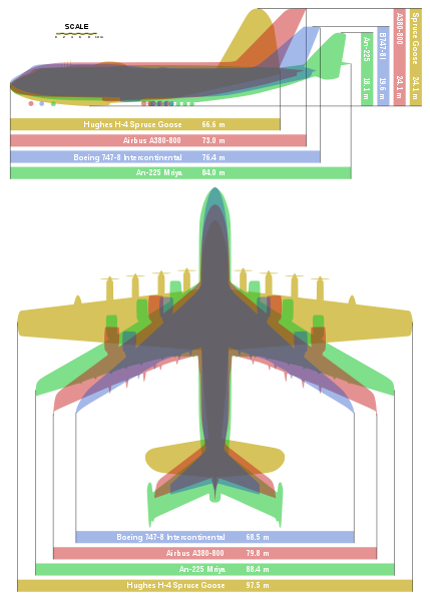
747 versus A380
The two largest airliners ever built, compared — size, capacity, economics, and why both are now out of production.
Boeing 747-400 vs 747-8
The 747-8 is bigger, heavier and quieter than the 747-400, with a new wing, GEnx-2B engines and a stretched fuselage — but it sells a fraction as well.
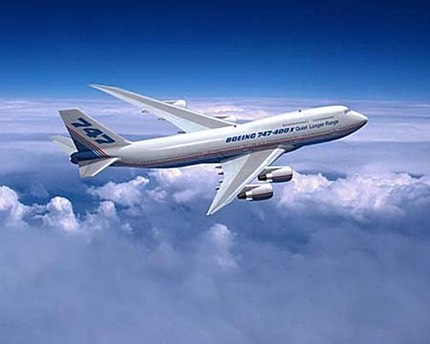
747-400XQLR
Announced at Asian Aerospace 2002, the 747-400XQLR studied quieter, longer-range improvements. It was dropped in favour of the 747-8.
747-8
Announced in 2005, the 747-8 was the final 747 generation, with a new wing, GEnx-2B engines and a 987,000 lb maximum takeoff weight.
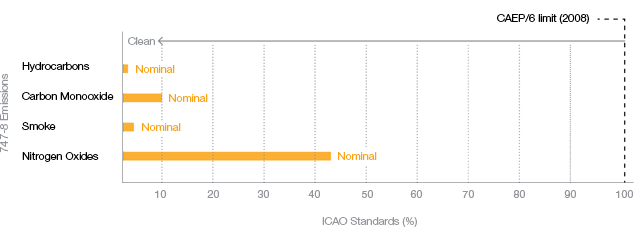
The 747-8 and the environment
The 747-8 meets emissions limits for hydrocarbons, carbon monoxide, smoke and nitrogen oxides, with a noise footprint about 30 percent smaller than the 747-400.
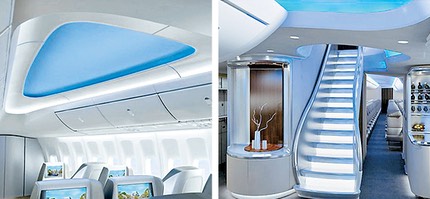
The 747-8 cabin experience
Larger windows, a sculpted 787-style ceiling, LED mood lighting and a quieter cabin than any previous 747.
More in Interiors

Inside the 747
How the 747 cabin changed — upper-deck lounges and spiral stairs on the early aircraft, a 787-derived cabin on the last ones.
When the hump was a bar
Piano bars, swivel chairs and spiral staircases — what airlines put in the 747's upper deck before seat counts took it back.
Three staircases
Spiral, straight, then sweeping — the 747's stair to the upper deck changed three times, and each change was about floor area.
First class on the 747
Sleeper seats, upper-deck cabins and lie-flat beds — how the 747 carried the front of the aircraft for fifty years.
Galleys and crew rest
Feeding 400 people and resting the crew that does it — the parts of a 747 cabin passengers never think about.
The 747-8 interior
The Boeing 747-8 cabin — 787-derived architecture, a curved staircase, larger windows, LED mood lighting and the VIP concepts.