From three inertial units to two flight computers
Classic 747s flew with three Litton LTN-72 inertial navigation units used as primary references. The 747-400 moved to twin Flight Management Computers driving glass PFD/NDs and EICAS displays, with navigation radios integrated through the FMS.
Navigation on the 747 traces the industry's digital shift: the classic's dark-panelled triple inertial units gave way to the 747-400's dual Flight Management Computers and six glass display units.
| Key facts | |
|---|---|
| Classic 747 | Three Litton LTN-72 inertial navigation units (INS) |
| 747-400 | Twin FMCs, inertial reference units, six display units |
| Displays | Captain's and F/O's PFDs and NDs, plus main and auxiliary EICAS |
| Integration | VOR/DME/ILS radios, air data and fuel systems all feed the FMS |
For classic 747s, three four-gimbal, all-attitude inertial platforms dead-reckoned the position across oceans, cross-checked against VOR/DME near land. The crew managed the navigation problem around a nav table.
The 747-400 folded all of that into software. Its dual Flight Management Computers use five processors each and integrate the air-data sensors, crew inputs, navigation radios, engine and fuel systems and inertial reference to provide flight control command, navigation, thrust management, map display and performance optimisation, all reached through a CDU keypad.
Why three inertial units on the classic
The triple-LTN-72 fit on the classic 747 is not redundancy for its own sake; it reflects a navigation architecture that treated position as the critical output of a chain of error-prone physical processes. Each unit integrated gyroscopes, accelerometers and a gimbal-stabilised platform to dead-reckon position from an initial alignment. A fourth-gimbal arrangement let the unit sense its own alignment, but the whole chain drifted, and drift had to be corrected against external references.
Three units meant the crew always had a cross-check. The navigation problem was managed by comparing the three and by updating from radio aids, and the workload sat squarely with the flight engineer and the pilots at a panel full of digital readouts and a navigation table. It was effective, but it was manual work.
The -400's integrated architecture
The 747-400 replaced that with a distributed computing architecture. Two Flight Management Computers, each with multiple processors, became the central nervous system, and the six display units (two PFDs, two navigation displays, and two EICAS screens) became the primary interface.
The functional shift is worth stating plainly: the FMS did not just compute position any more, it computed everything downstream of position. It managed flight guidance commands, thrust and speed control through autothrottle, the map and plan display, and performance optimisation. The radios, the air-data computers, and the engine and fuel management systems all fed into it and were all displayed through it. What had been a set of separate boxes became an integrated system reached through a control display unit keypad.
That integration is also why the NTSB safety letter in the sources concerned itself with how the 747-400's display units behaved on failure - the shared display electronics were a real design consideration for the type.
Related
Frequently asked questions
- What navigation did the classic 747 use?
- Three Litton LTN-72 inertial navigation units dead-reckoned position across oceans, cross-checked against VOR/DME and other radio aids near land.
- What changed on the 747-400?
- Twin Flight Management Computers took over, driving six glass display units and integrating the air-data sensors, radios, engine and fuel data.
Sources
Facts on this page are checked against the primary and institutional references below.
More in Aircraft Systems
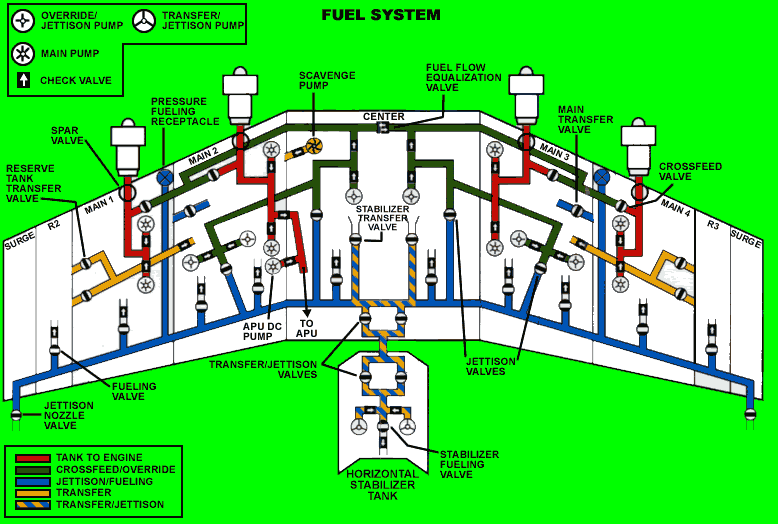
How the 747 works
The systems that make a 747 fly - fuel, hydraulics, landing gear, electrics and pressurisation, explained one at a time.
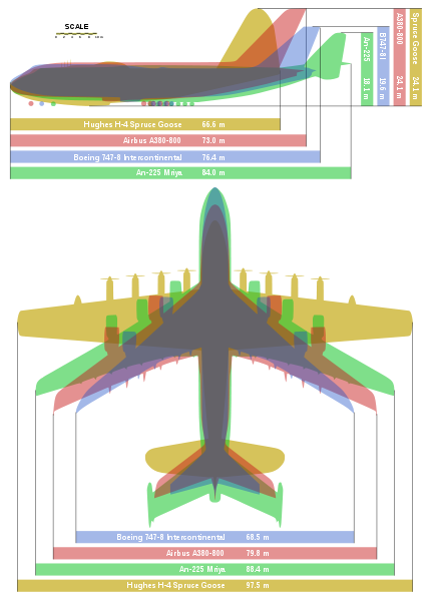
Boeing 747 specifications compared
Compare Boeing 747 dimensions, performance and detailed later-variant weights, fuel and cargo capacities, with Boeing planning configurations identified.
Boeing 747 Freighter Specifications
Compare Boeing 747-400F, 747-400ERF and 747-8F weights, structural payload, fuel and cargo volumes using identified Boeing planning configurations.
The four hydraulic systems
The 747 has four independent hydraulic systems, one per engine, each with a backup pump - and the reasoning behind splitting them that way.
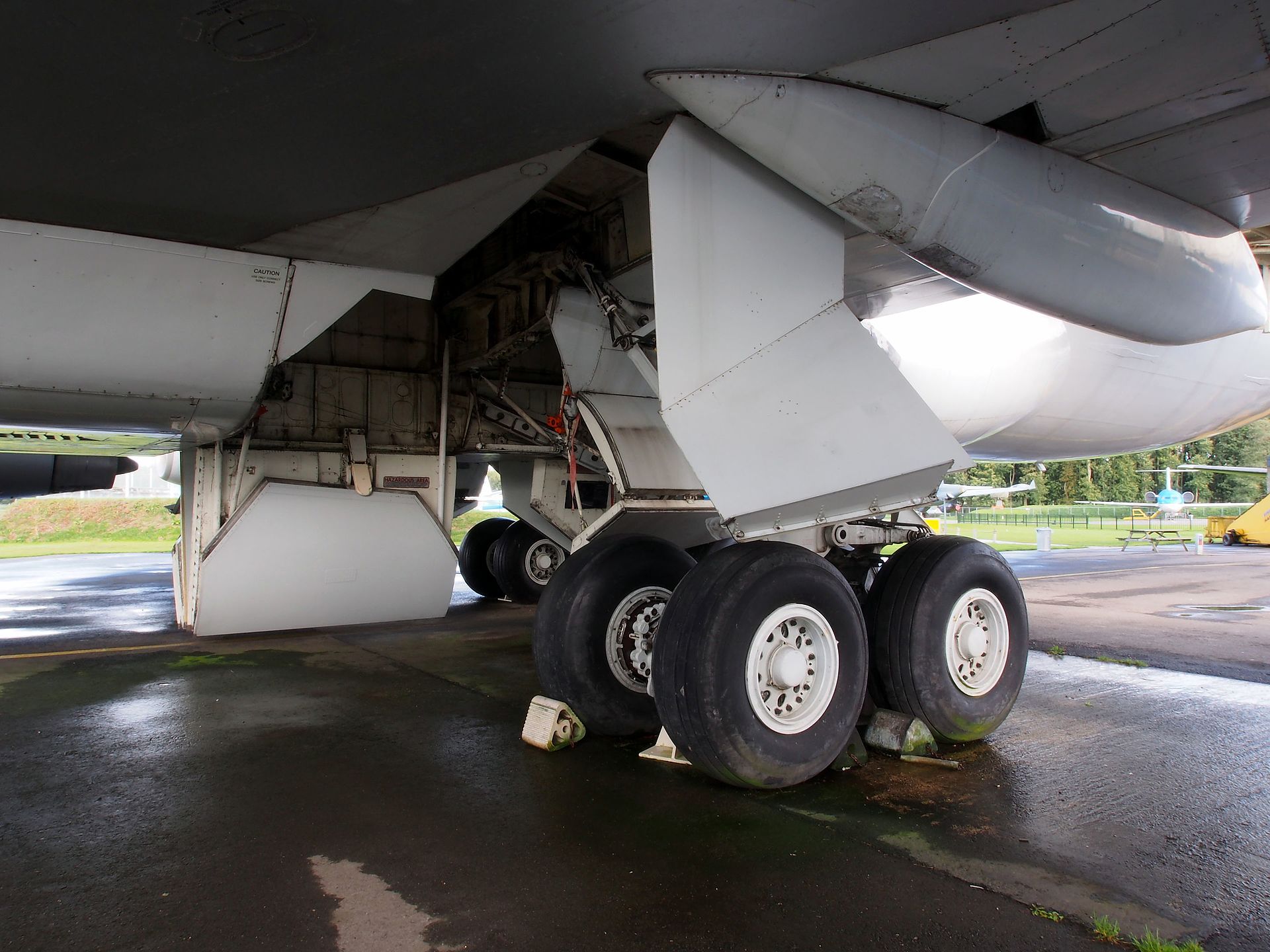
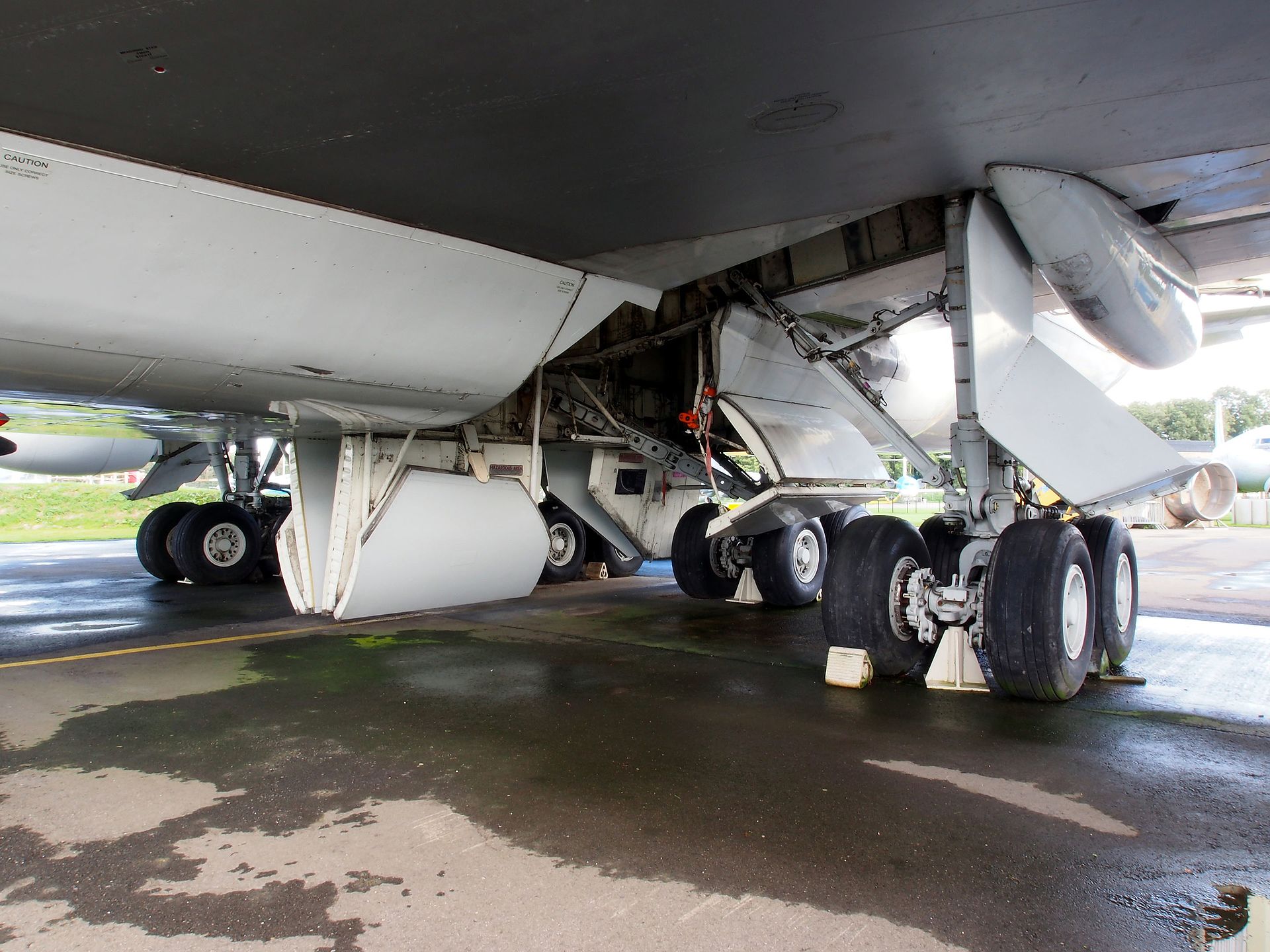
Eighteen wheels
The 747's five landing gear legs and 18 tyres, why the load is spread that way, and the body gear steering that stops it tearing up taxiways.
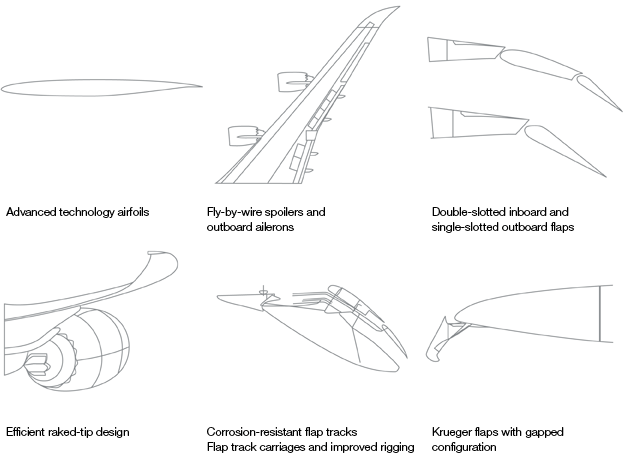
Flight controls and high-lift devices
How a 747 is flown - split ailerons, spoilers, triple-slotted flaps and Krueger leading edge devices, and what the 747-8 changed.