The 747's forward-looking weather sensor
A nose-mounted radar that returns energy only from precipitation, tilted to stay level as the aircraft pitches, and dispatch-critical because it feeds predictive windshear detection.

The weather radar is the one 747 system whose job is to see something that is not there. It does not look at the sky; it looks for energy coming back from rain, and it paints what returns on the navigation display as a WXR page alongside the traffic and terrain presentations the crew already have.
What it can and cannot see
Radar returns depend on hydrometeors - water in some form - reflecting or scattering the transmitted energy back to the antenna. That physical fact sets the limits, and they are worth being precise about because crews are trained to work around them:
- It sees precipitation, and the intensity of what returns is a reasonable proxy for how vigorous that precipitation is.
- It does not see clear-air turbulence. The classic in-flight turbulence encounter is in perfectly smooth-looking air, and the radar will show nothing.
- It is weak against icing in air that is not producing a significant return, which is a hazard in its own right.
- The beam has a limited width, so a cell narrower than the beam can be diluted or missed depending on where it sits in the beam.
This is the reason the aircraft's terrain awareness system uses its own onboard terrain database rather than the radar's returns. Radar tells the crew about weather; the terrain database tells them about the ground.
The tilt problem, and auto tilt
A radar antenna is mounted in the nose and fixed to the airframe. But an airframe pitches - and an airliner pitches a great deal on rotation and in the flare. A fixed beam would therefore point progressively away from where the crew is looking, so the display would be showing a different slice of atmosphere than the one they believe they are examining.
The answer is tilt: the beam is deliberately tilted upward relative to the airframe so that, in level flight, it sweeps the horizon. The 747-400's minimum equipment list treats this as a distinct, separately despachable function - auto tilt may be inoperative provided the manual tilt function still operates - and it lists the auxiliary side panel displays as separately despachable too, with the explicit note that operators' alternate procedures "should include reviewing windshear avoidance and windshear recovery procedures."
That note is the clearest indication of how seriously the system is treated. A degraded radar is not just a loss of a picture; it is a loss of a tool the crew might otherwise rely on in a windshear encounter.
Why it is dispatch-critical
The weather radar sits in the 747's minimum equipment list under ATA chapter 34, and the approved 747-400 entry is unusually detailed about the conditions under which an aircraft may depart with it unserviceable. In essence, a flight may commence with the radar unserviceable if:
- the display is provided to only one pilot, and the aircraft is flying only to a place where it is reasonably practicable for the system to be repaired; or
- the weather reports and forecasts available to the commander indicate that cumulonimbus or other potentially hazardous weather conditions which could be detected by the system if it were working are unlikely to be encountered on the intended route or any planned diversion from it - or the commander is satisfied that any such conditions will be met in daylight and can be seen and avoided.
In either case, the aircraft must be operated throughout in accordance with the relevant instructions in the operations manual.
The logic behind that wording is careful, and it is a good illustration of how these rules are constructed. The relief is written around the hazards the radar would have detected - radar was not the tool for the rest. Where the crew can establish that the specific hazard the radar exists to find is not going to be encountered, its absence is tolerable for that flight.
The other job: finding the shear before it finds you
Beyond the weather picture, the radar is an input to predictive windshear detection. A predictive system uses the radar's returns ahead of the aircraft to identify a developing microburst before the aircraft enters it, which is worth an enormous amount of margin compared with a reactive system that only knows what has already happened.
That distinction is the whole argument for predictive detection. A reactive system triggers on an airspeed change the aircraft has already experienced, at which point the crew's options are limited to whatever altitude remains. FAA guidance on windshear approval discusses both approaches, and specifically notes that a fixed warning threshold that is appropriate at one altitude will not leave enough room to execute a go-around at a lower one - which is the argument for a variable, altitude-programmed threshold. The radar feed is what makes looking ahead the preferred strategy, and it is why the alerting priority scheme places predictive windshear warnings above terrain awareness cautions but below reactive windshear, which describes a situation the aircraft is already in.
What replaced it, gradually
For a long time the 747's answer to "what is happening over the Atlantic" was to look out of the cockpit and interpret cloud shapes, with the radar as the only instrument. That changed on the type during its life, through approved modifications rather than new-build capability. Supplemental type certification records for the 747-400 show a long trail of connectivity installations, including the Connexion by Boeing satellite television and data system and its successor antenna, alongside cabin wireless installations and Iridium equipment.
By the time a 747-400 was retired, satellite reception had largely taken over the job the radar did on long over-water stages - providing the weather picture without the tilt, attenuation and clear-air blind spots that come with a 94-inch-band nose antenna. The radar remained on the aircraft, because it remains the instrument that sees vertically developed weather in front of the aircraft, and because the predictive windshear function depends on it.
Related
- Alerting and collision avoidance - where the radar's output becomes a warning
- Ice and rain protection - the hazards the radar partly cannot see
- Navigation and avionics - the display it is painted on
- EICAS
Frequently asked questions
- Can a Boeing 747 be dispatched with the weather radar unserviceable?
- In limited circumstances, yes. The approved 747-400 minimum equipment list permits a flight to commence with the radar unserviceable if the display is available to only one pilot and the aircraft is flying only to a place where repair is reasonably practicable, or if the weather information available shows the hazardous conditions detectable by the radar are unlikely.
- What can a 747 weather radar not detect?
- It detects energy returned from precipitation, so it cannot see clear-air turbulence, and it cannot see icing forming in air that is not producing a significant return. That limitation is why the terrain awareness and alerting systems on the aircraft use an independent terrain database rather than relying on the radar.
- What is the auto tilt function?
- A feature that keeps the radar beam pointed where the crew expects it as the aircraft pitches. The 747-400 minimum equipment list treats it as separately despachable: auto tilt may be inoperative provided the manual tilt function still works.
Sources
Facts on this page are checked against the primary and institutional references below.
- Supplement to Boeing/FAA Approved MMEL for Boeing 747-400 - UK Civil Aviation Authority
- AC 25-12 - Airworthiness Criteria for the Approval of Airborne Windshear Warning Systems - US Federal Aviation Administration
- Airworthiness Criteria for the Installation Approval of a Terrain Awareness and Warning System - US Government Publishing Office
- Boeing 747-400 Series Supplemental Type Certificates - FAA Supplemental Type Certificate records
Related topics
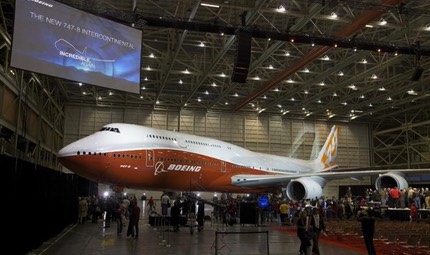
Boeing 747: History, Variants and Legacy
A complete reference to the Boeing 747, built from 1968 to 2023 - every variant from the 747-100 to the 747-8, plus special-mission jumbos and photos.
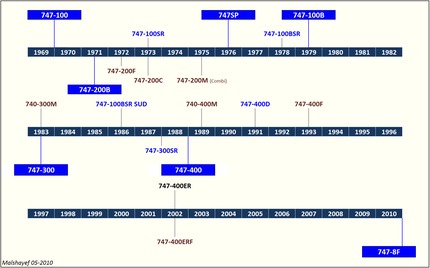
Boeing 747 Family
Every Boeing 747 variant built between 1968 and 2023 - the 747-100, -200, -300, -400 and 747-8, with freighter, combi and short-range models explained.
Boeing 747 Production Data
Download Boeing 747 production totals by generation, with a transparent method and links to Boeing's final programme record and technical documents.
The 747 Combi and the fire rule that caught up with it
The 747 Combi carried passengers and freight on one deck under 1940s-era fire rules. After South African Airways Flight 295, those rules were rewritten.
Maintaining a 747
Line checks, A checks, C checks and the D check - how a 747 is kept airworthy, and why maintenance decides when an aircraft is retired.
The Boeing 747 History Quiz
A 10-question Boeing 747 history quiz covering the launch airlines, the engineers who built the jumbo, and the bestsellers of the family.
More in Aircraft Systems
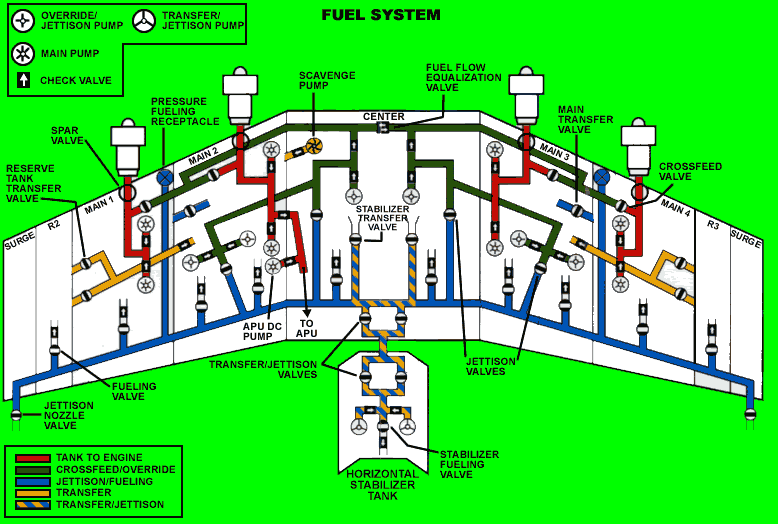
How the 747 works
The systems that make a 747 fly - fuel, hydraulics, landing gear, electrics and pressurisation, explained one at a time.
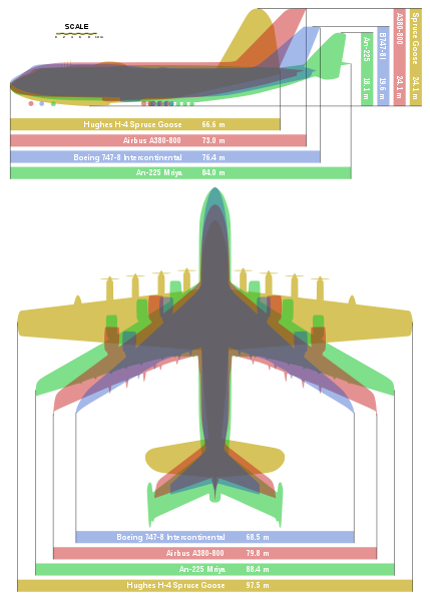
Boeing 747 specifications compared
Compare Boeing 747 dimensions, performance and detailed later-variant weights, fuel and cargo capacities, with Boeing planning configurations identified.
Boeing 747 Freighter Specifications
Compare Boeing 747-400F, 747-400ERF and 747-8F weights, structural payload, fuel and cargo volumes using identified Boeing planning configurations.
The four hydraulic systems
The 747 has four independent hydraulic systems, one per engine, each with a backup pump - and the reasoning behind splitting them that way.
Eighteen wheels
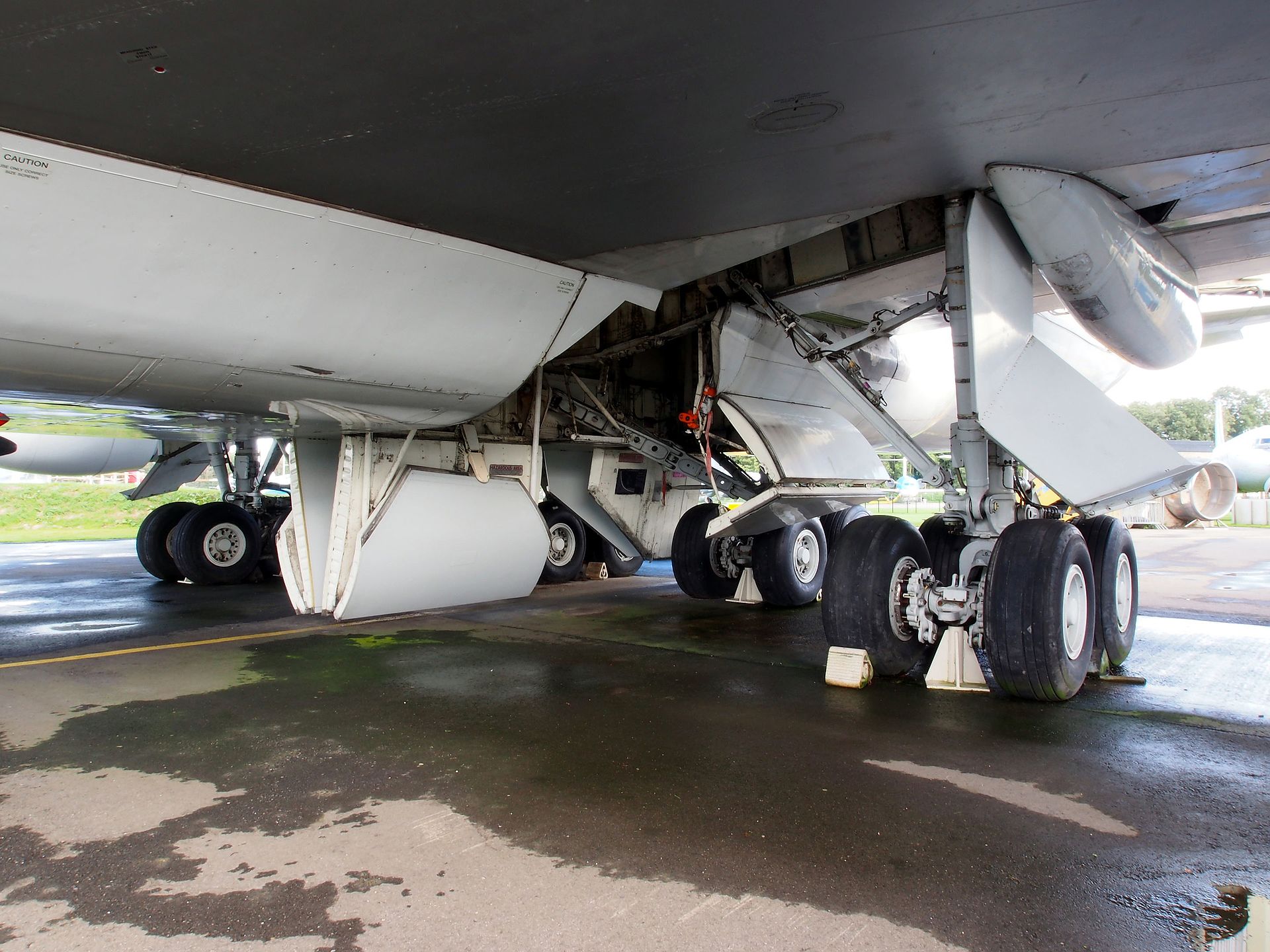
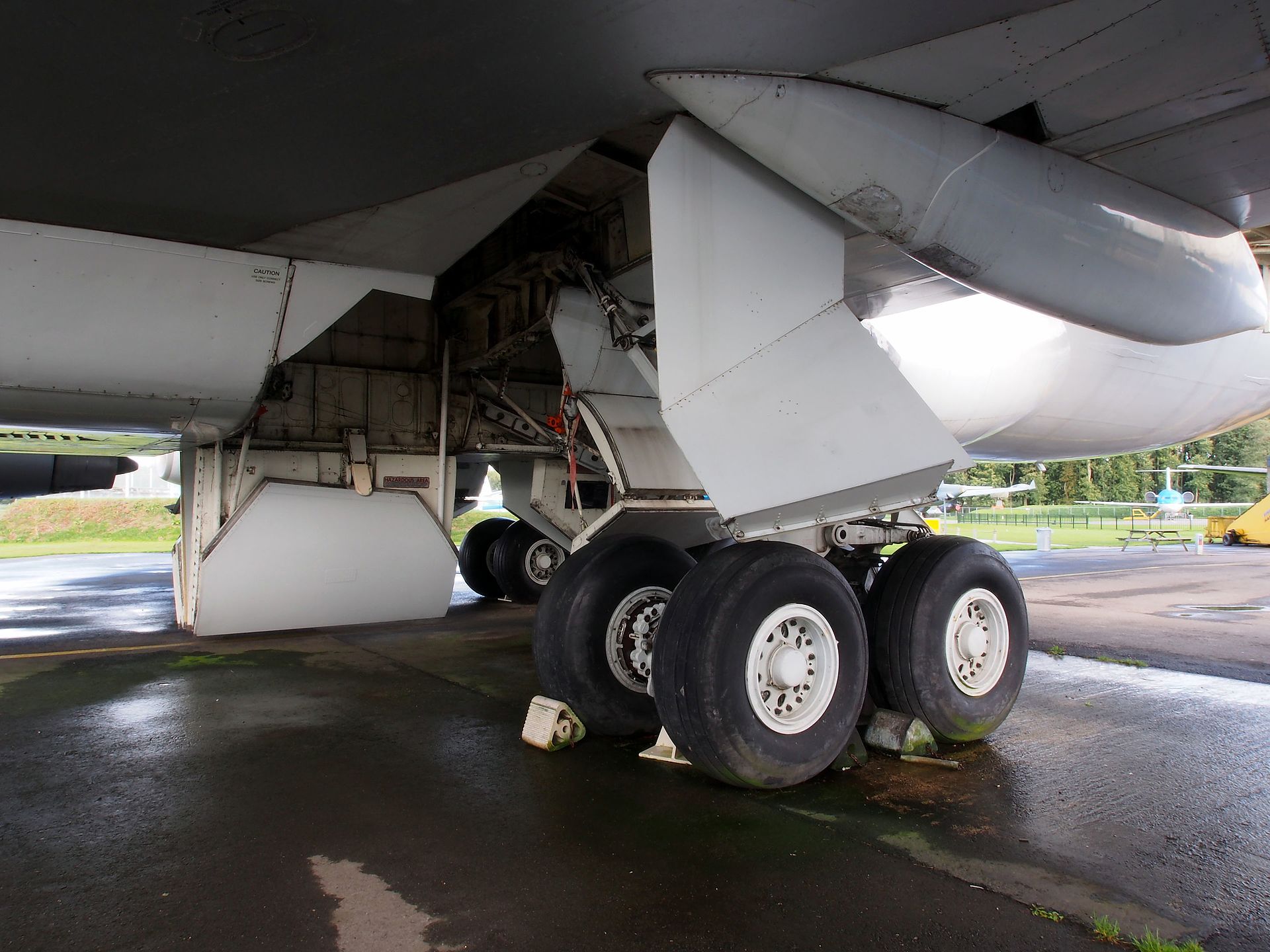
The 747's five landing gear legs and 18 tyres, why the load is spread that way, and the body gear steering that stops it tearing up taxiways.
Flight controls and high-lift devices
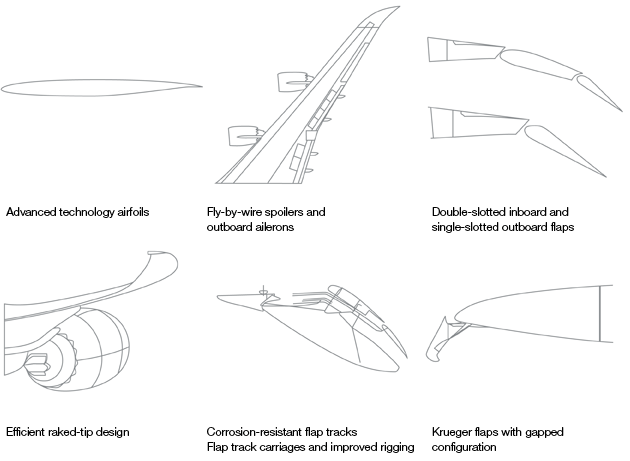
How a 747 is flown - split ailerons, spoilers, triple-slotted flaps and Krueger leading edge devices, and what the 747-8 changed.