Keeping 747 wings from shaking themselves apart
From mass-balanced control surfaces on the early 747s to the 747-8 freighter's Outboard Aileron Modal Suppression System, the first active flutter control approved on a commercial airliner.
Every 747 wing is built to a speed it must never exceed, and the reason is flutter. Flutter is a self-sustaining oscillation: at a critical speed, the aerodynamic forces on a flexible wing begin feeding energy into the wing's own bending and torsion faster than the structure can dissipate it, and the amplitude grows until something breaks. Getting that speed above the aircraft's dive speed, with margin, is one of the hardest problems in aeroplane design.
There are two ways to fight it, and the 747's fifty-year history runs from the first to the second.
The passive answer: mass, stiffness and balance
The traditional approach adds no electronics at all. FAA guidance on flight stability and flutter describes the three levers for a wing: torsional flexibility, aileron balance, and aileron free play, each with a limit expressed as a function of limit dive speed.
The subtle part is the aileron. A control surface that is not exactly balanced will try to rotate about its hinge in response to its own inertia, and that rotation changes the aerodynamics in a way that can drive the very mode that caused it. Balance is characterised by the ratio of the aileron's product of inertia about the wing's fundamental bending node line and its hinge line, to its own mass moment of inertia about the hinge - a parameter with a hard limit that tightens as dive speed rises.
Where the flutter mode is a simple rotation, a single concentrated ballast weight is the most efficient fix. But real flutter modes are rarely simple, and a distributed ballast that works against every mode is safer, mirroring the spanwise weight distribution of the surface. The guidance is blunt about what happens next: in most cases the flutter speeds of control surfaces are governed largely by the mass balance weights and their distribution, and improving one mode frequently degrades another.
There is also a maintenance warning buried in that document. Balance weights are attached to surfaces that flex in vibration, so they are fatigue-limited, and water, ice or dirt collecting inside a control surface can silently change its balance. Sealing and proper drain holes are a flutter requirement, not housekeeping.
The 747 got there actively, and first
The early 747s did not have to invent a lighter wing, so the passive route was the practical one - but the type was also the first production airliner to carry an active control feature of this kind. NASA research on active flutter suppression notes that a ride quality improvement system "was developed and certified for the Boeing 747 subsonic transport airplane" as the clearest early example of an active control system entering production.
A later NASA study of a 747 derivative worked through the same idea in detail, using the outboard ailerons as the control surface. Two functions were separated:
- Maneuver load control reduced the loads the wing has to survive in a turn. Deflecting the ailerons shifts the lift distribution inboard, which reduces the wing bending moment. That produces a nose-up pitching moment, and because the horizontal tail has to balance it, reducing the tail load cuts the wing design loads further. A smaller wing box follows.
- Gust load alleviation attacked the other half of the problem, using wing acceleration feedback to the same ailerons, plus elastic mode suppression of the first wing bending mode.
The control law filtered a single signal to the outboard ailerons and split it between the two functions, with the gains reduced once the flaps were extended. A wing accelerometer mounted in the outboard aileron path provided the feedback. One finding is notable for what it did not require: resizing the wing box for the reduced maneuver loads needed no added flutter material at all.
The 747-8 crosses the line
On the 747-8 the logic ran in reverse. The new 747-8 wing is a longer, more efficient structure, and the Maneuver Load Alleviation and Structural Technology system uses fly-by-wire outboard ailerons and spoilers to unload it - worth roughly 1,400 lb of structural weight, which was the point of designing the wing with the system in mind from the start.
Doing that on a freighter exposed a problem that had never before been certified. The 747-8F exhibits an aeroelastic mode that is self-excited and does not completely damp out after a disturbance - a sustained oscillation, or limit cycle oscillation. It exists only for a limited set of fuselage payload and fuel combinations inside the otherwise normal flight envelope. The mode is primarily symmetric: a 2.3 Hz sustained oscillation of the wings, engine pylons and fuselage.
The problem was that with that oscillation present, compliance with the flutter and control system requirements could not be shown. Passive methods were not enough.
OAMS, and the first active flutter control approval
Boeing's answer was the Outboard Aileron Modal Suppression System - OAMS - added to the 747-8F's fly-by-wire roll control system to damp the oscillation. It was, in EASA's words, "the first time the use of an active flight control system to control flutter is approved on a commercial transport aeroplane."
Because the approach was that new, it needed its own certification basis, and EASA Special Condition C-18 is unusually specific about what had to be demonstrated:
- With OAMS inoperative, the sustained oscillation must be shown to be stable throughout the nominal aeroelastic stability envelope and the whole flight envelope - including disturbances above the sustained amplitude of the oscillation. A flutter mode that is suppressed but goes unstable when kicked harder is not acceptable.
- With OAMS operative, the aeroplane must remain safe, stable and controllable, and the loads from the oscillation must have a negligible effect on structure and systems, including wear, fatigue and damage tolerance. Compliance had to include icing, manufacturing variations, spare engine carriage, engine-removed ferry flights, and MMEL items.
- After any failure that leaves the oscillation present, it must be stable and decay to a limited amplitude once the disturbance is removed, must not interfere with the crew's ability to read instruments or fly the aeroplane, and must not be confused with ordinary stall or high-speed buffet.
One requirement in that document stands out for its effect on operations: no MMEL dispatch is allowed with the OAMS system inoperative. No interval, no deferred rectification, no dispatch. It is the most absolute handling consequence of any system on the 747, and it is a direct measure of how seriously the limit cycle oscillation was taken.
Related
- Flight controls - the ailerons doing the work
- The 747-8 new wing - the structure OAMS protects
- 747-8 systems differences
- Engines - pylons participate in the mode
Frequently asked questions
- What is flutter?
- A self-sustaining aerodynamic oscillation. At a critical speed, aerodynamic forces on a flexible wing start feeding energy into its own bending and torsion faster than the structure damps it out, and the oscillation grows. Because the speed at which this happens is set by structural stiffness, mass distribution and control surface balance, flutter sets a hard limit on how fast an aircraft may legally fly.
- How is a 747's flutter prevented?
- Traditionally by passive means - carefully tuned torsional stiffness, mass-balanced control surfaces, and tight limits on free play in the ailerons. On the 747-8 freighter, Boeing added an active system, the Outboard Aileron Modal Suppression System, which damps the oscillation with the outboard ailerons.
- Can a 747-8 freighter be dispatched with the OAMS system inoperative?
- No. EASA Special Condition C-18 states explicitly that no MMEL dispatch is allowed with the OAMS system inoperative. This is one of the strictest handling consequences of any system on the aeroplane.
Sources
Facts on this page are checked against the primary and institutional references below.
- EASA Special Condition C-18 - Flutter Suppression Systems - European Union Aviation Safety Agency
- Selected advanced aerodynamics and active controls technology concepts development on a derivative B-747 - NASA Technical Reports Server
- AC 23.629-1B - Flight Stability and Flutter Criteria - US Federal Aviation Administration
- 747-400 Airplane Characteristics for Airport Planning - Boeing
Related topics
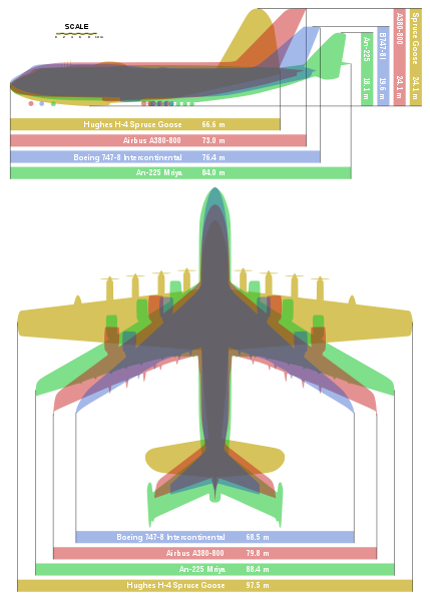
747 versus A380
The two largest airliners ever built, compared - size, capacity, economics, and why both are now out of production.
Boeing 747-8 Intercontinental vs 747-8F
The 747-8I and 747-8F share an engine, a wing and a weight, but split on the upper deck, the nose door and what they are built to haul.
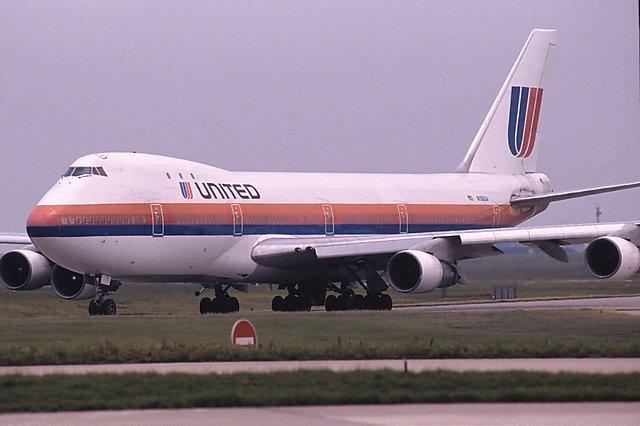
The story of the Boeing 747
How the 747 came to exist - the Pan Am bet, the factory built to make it, the hump that came from a freighter, and why production ended in 2023.
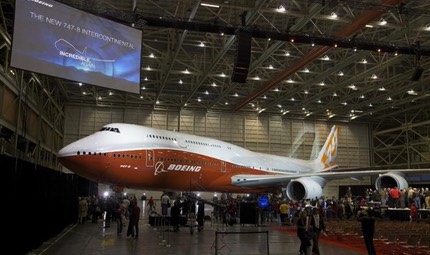
Boeing 747: History, Variants and Legacy
A complete reference to the Boeing 747, built from 1968 to 2023 - every variant from the 747-100 to the 747-8, plus special-mission jumbos and photos.
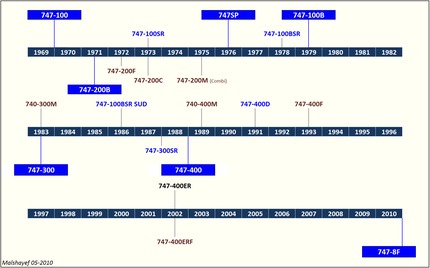
Boeing 747 Family
Every Boeing 747 variant built between 1968 and 2023 - the 747-100, -200, -300, -400 and 747-8, with freighter, combi and short-range models explained.
Boeing 747 Production Data
Download Boeing 747 production totals by generation, with a transparent method and links to Boeing's final programme record and technical documents.
More in Aircraft Systems
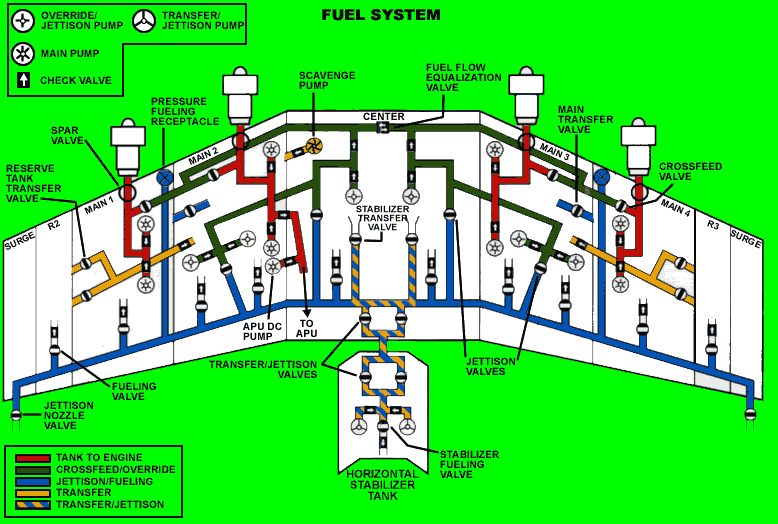
How the 747 works
The systems that make a 747 fly - fuel, hydraulics, landing gear, electrics and pressurisation, explained one at a time.
Boeing 747 specifications compared
Compare Boeing 747 dimensions, performance and detailed later-variant weights, fuel and cargo capacities, with Boeing planning configurations identified.
Boeing 747 Freighter Specifications
Compare Boeing 747-400F, 747-400ERF and 747-8F weights, structural payload, fuel and cargo volumes using identified Boeing planning configurations.
The four hydraulic systems
The 747 has four independent hydraulic systems, one per engine, each with a backup pump - and the reasoning behind splitting them that way.
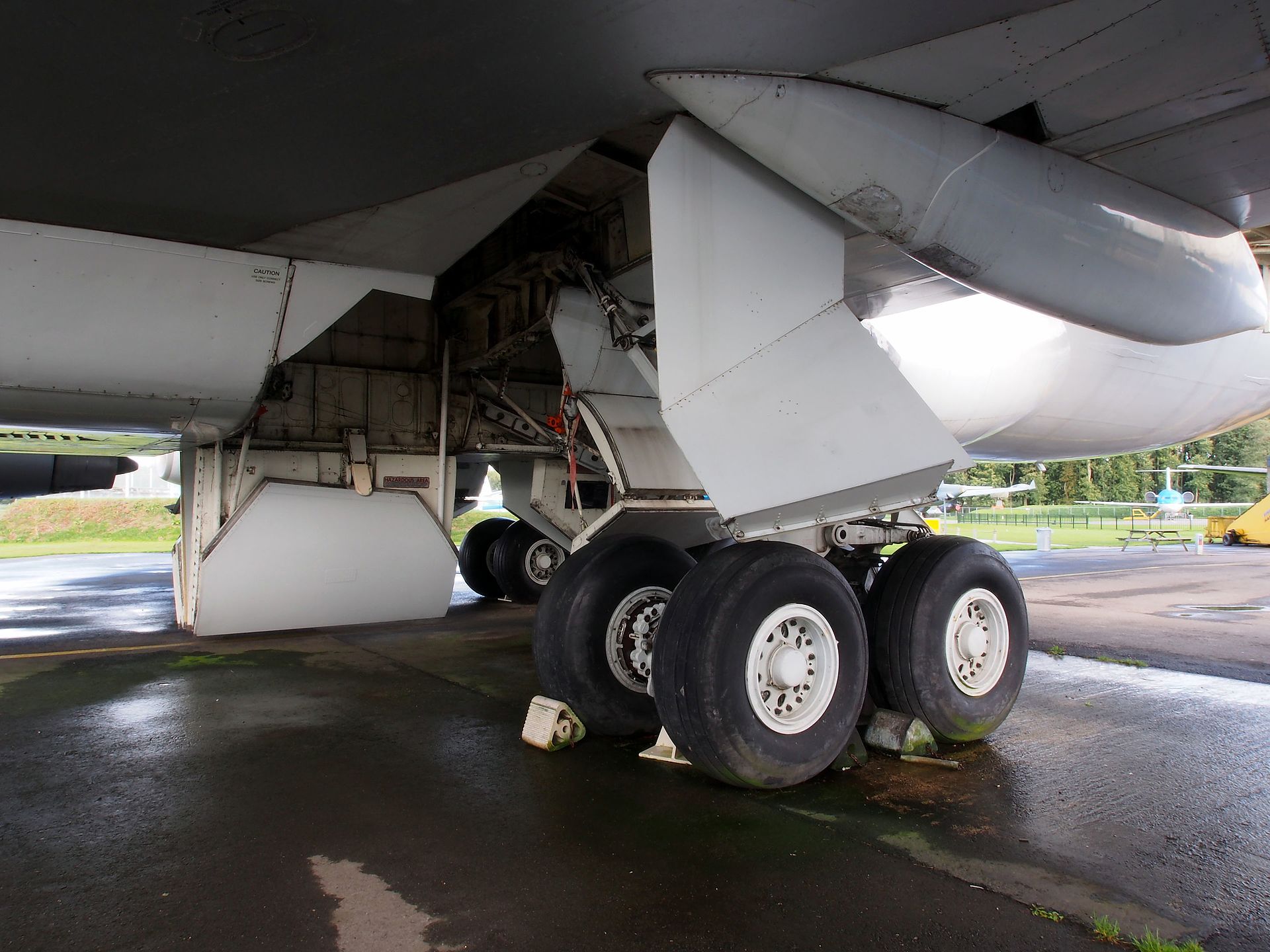
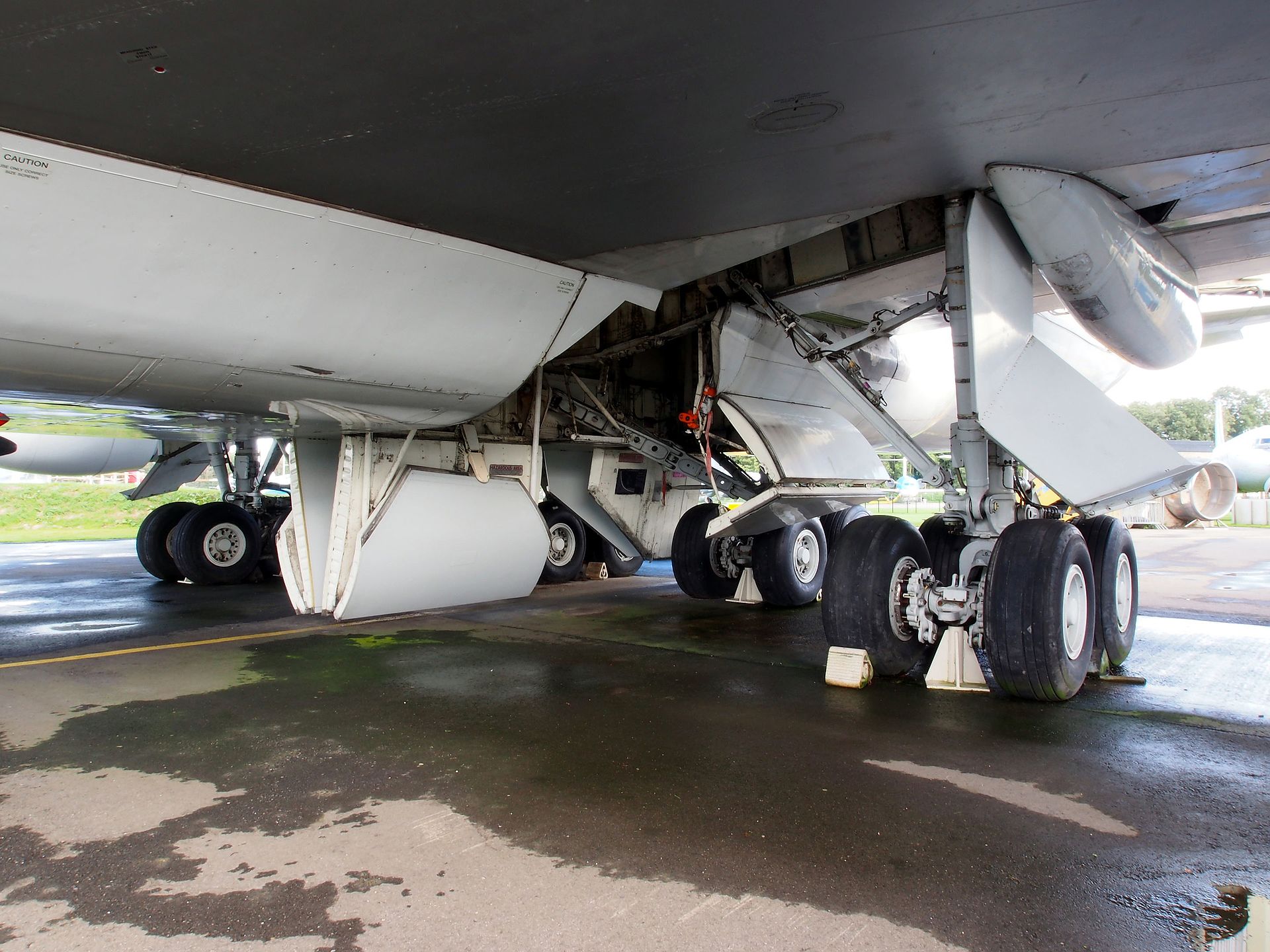
Eighteen wheels
The 747's five landing gear legs and 18 tyres, why the load is spread that way, and the body gear steering that stops it tearing up taxiways.
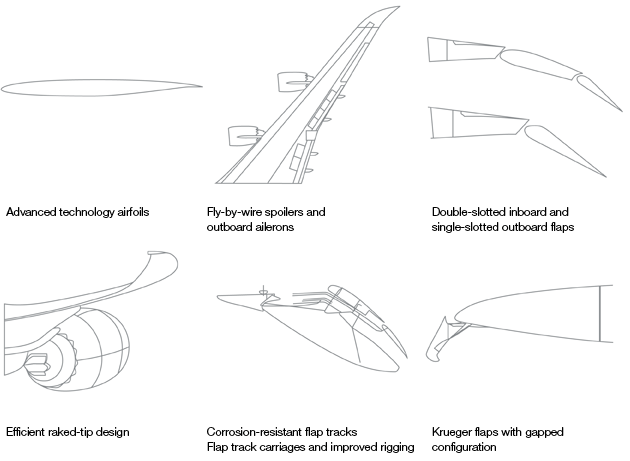
Flight controls and high-lift devices
How a 747 is flown - split ailerons, spoilers, triple-slotted flaps and Krueger leading edge devices, and what the 747-8 changed.