Explore inside a Boeing 747

An original interactive 747-400 cutaway connects ten aircraft parts to explanations of their functions, from the raised cockpit to the tail APU.

The hump, wings and tail hide a network of working spaces and systems. This cutaway connects those spaces to the equipment that keeps a 747 flying, with short explanations and links to the full guides.

Explore the aircraft

Inside a Boeing 747

A simplified passenger 747-400. Select a numbered part or a label to discover what it does.

Boeing 747-400 systems cutawayOriginal schematic cutaway showing a raised flight deck, passenger cabin, lower cargo holds, fuel in the wing centre section and wings, engines, landing gear, hydraulic and electrical connections, and the auxiliary power unit in the tail. Numbered HTML buttons and the text list below describe each part. Positions and pipe routes are simplified and not to scale.UPPER DECKMAIN DECKLOWER HOLDLOWER HOLDSchematic view: far-side engines and gear are offset for visibility
The original drawing opens the aircraft to explain its layout. Locations, system paths and the perspective are simplified. The fuel shown in the wing is inside its structure.

1Flight deck

The cockpit sits above the main deck

On the 747-400, two pilots use electronic flight displays and crew alerts to monitor the aircraft. Earlier classic 747s also had a flight engineer. The raised cockpit leaves the main-deck nose available for a cargo door on factory-built freighters.
2Fuel tanks

Most fuel is inside the wings

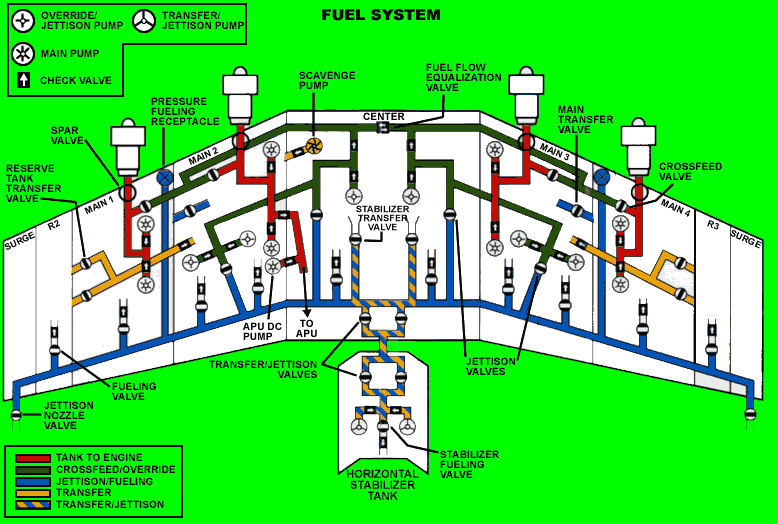
Integral tanks occupy the wing structure, with a centre wing tank between the wings. Pumps and crossfeed valves connect the tanks to the four engines. Tail tanks and auxiliary body tanks depend on the variant and installed options.

3Cargo holds

Baggage and freight travel below the cabin

A passenger 747 carries baggage and freight in lower holds ahead of and behind the wing centre section. Factory-built freighters add main-deck cargo space and an opening nose. Their pallets and containers are held in place by the loading and restraint system.

5Engines

Four turbofans provide more than thrust

The four wing-mounted engines propel the aircraft. They also drive generators and hydraulic pumps, while compressor bleed air supports pneumatic systems. Engine models changed across the 747 family, from the early JT9D to the 747-8’s GEnx-2B.

6Hydraulics

Pressure moves the heavy machinery

Four hydraulic systems supply actuators for flight controls, landing gear and other equipment. Each system has its own fluid circuit and pumping sources. The purple paths here show the idea of distributing hydraulic power, rather than the actual pipe routing.

7Electrical power

Several sources feed the electrical network

Engine-driven generators power the electrical system in flight. At the gate, the aircraft can use external power or APU generators. Distribution buses and protective devices connect these sources to lighting, avionics and other equipment.

8Tail APU

A small gas turbine serves the aircraft at the gate

The auxiliary power unit is a separate gas turbine in the tail cone. It can provide electrical power and compressed air on the ground when the main engines are off. That air supports cabin conditioning and main-engine starting.

9Cabin air

Conditioned air flows through a pressure vessel

Air-conditioning packs cool and condition compressor bleed air before it reaches the cabin. Outflow valves regulate how quickly air leaves, controlling cabin pressure. The drawing opens the fuselage for explanation; the real cabin is an enclosed pressure vessel.

10Flight controls

Surfaces change the aircraft’s motion and lift

Ailerons help control roll, elevators control pitch, and the rudder controls yaw. Spoilers help manage lift and roll. Leading-edge devices and trailing-edge flaps reshape the wing for low-speed flight; their position is separate from the main fuel tanks inside it.

Three levels, different jobs

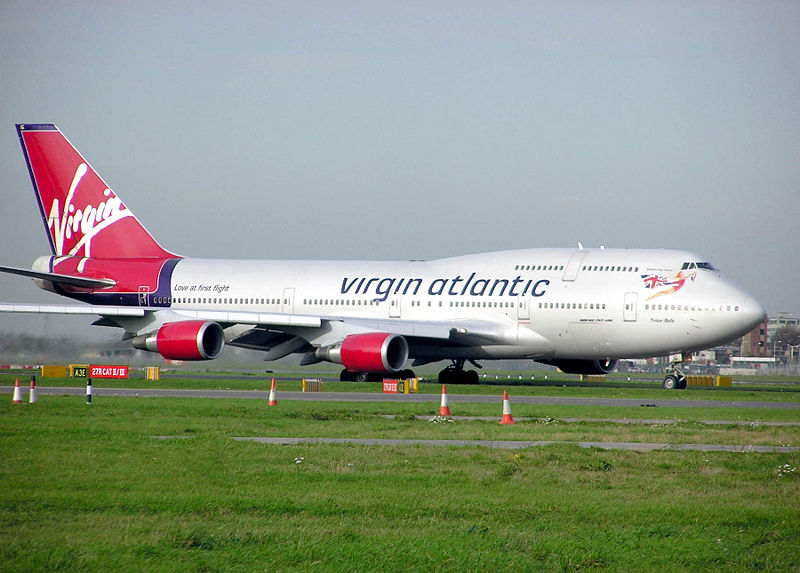
The upper deck starts with the flight deck and extends into a passenger cabin on a passenger 747-400. The main deck carries most passengers. Below it, the lower holds carry baggage and freight, separated by the wing centre section.

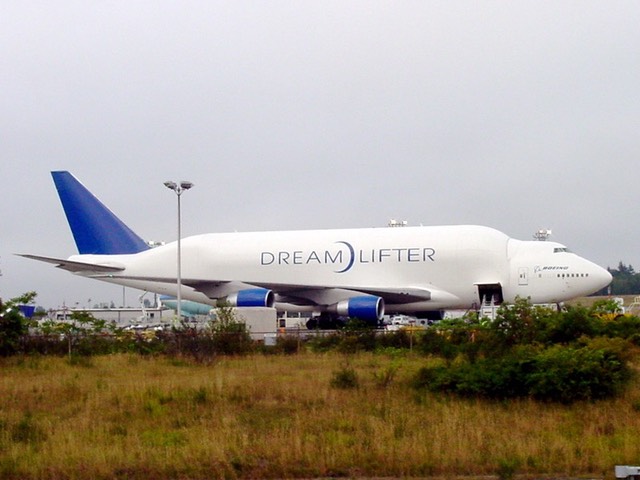
A factory-built freighter uses its main deck for cargo and has a shorter upper deck. Its raised cockpit leaves the nose free to open for loading. The passenger aircraft in this drawing has a fixed nose.

Connected systems

An engine produces thrust, but also supplies power to other systems. Fuel reaches it through pumps and valves; hydraulic pumps and electrical generators driven by the engine support the rest of the aircraft. Compressor bleed air feeds the pneumatic system.

The hydraulic and electrical guides explain how several sources and distribution paths provide redundancy. The lines in the cutaway illustrate these connections and do not reproduce actual installation routes.

Look closer

Frequently asked questions

Where does a Boeing 747 store its fuel?
Most fuel is stored inside the wings, with a centre wing tank between them. Tail fuel and auxiliary body tanks depend on the variant and configuration.
How many wheels does a Boeing 747 have?
Eighteen wheels on five gear units. The nose gear has two wheels, and four main gear units each have four wheels.
Does this drawing show every 747 variant?
The cutaway uses a simplified passenger 747-400 layout. Classic 747s, freighters and the 747-8 have differences in their decks, equipment and systems.

Sources

Facts on this page are checked against the primary and institutional references below.

  1. 747-400 Airplane Characteristics for Airport Planning, Revision F - Boeing
  2. Commercial auxiliary power units - Pratt & Whitney
  3. Fuel Tank Safety Project Report, including 747-400 tank diagrams - NASA and Federal Aviation Administration